

Victorian Inlay Walnut Credenza
A victorian inlay walnut credenza brings nineteenth-century drawing-room elegance to a modern interior through figured timber and gilt mounts.
Victorian Inlay Walnut Credenza
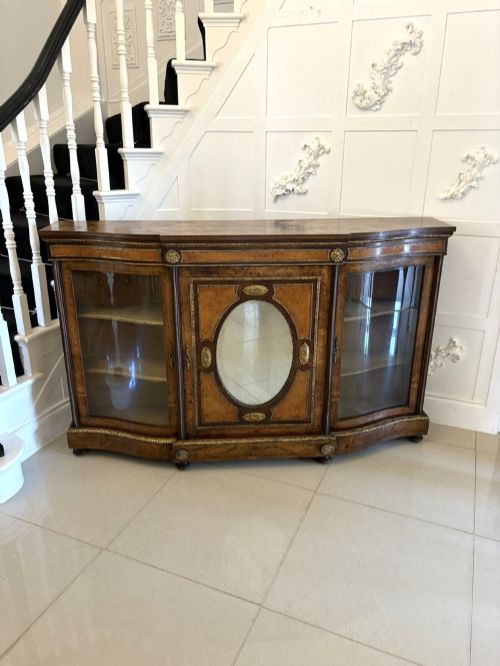
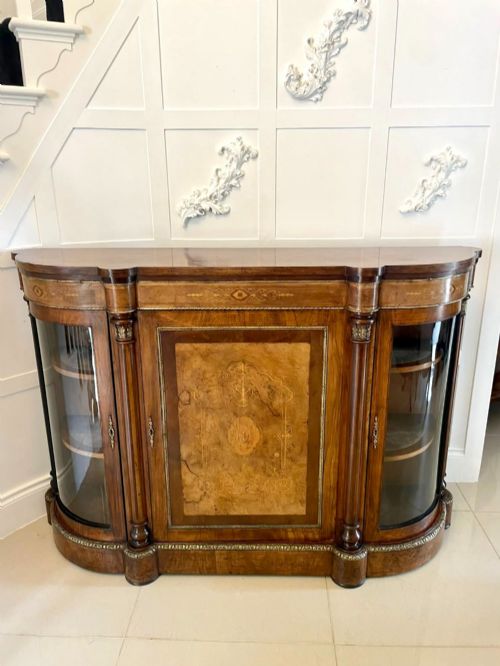
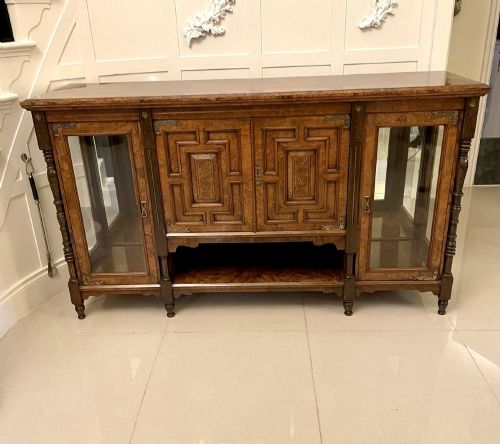
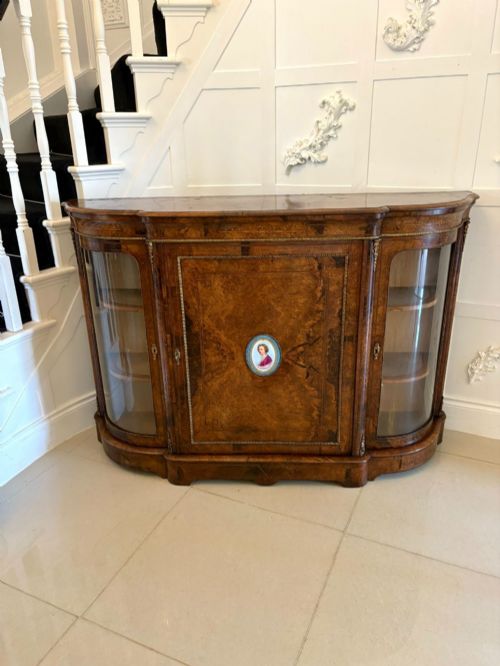
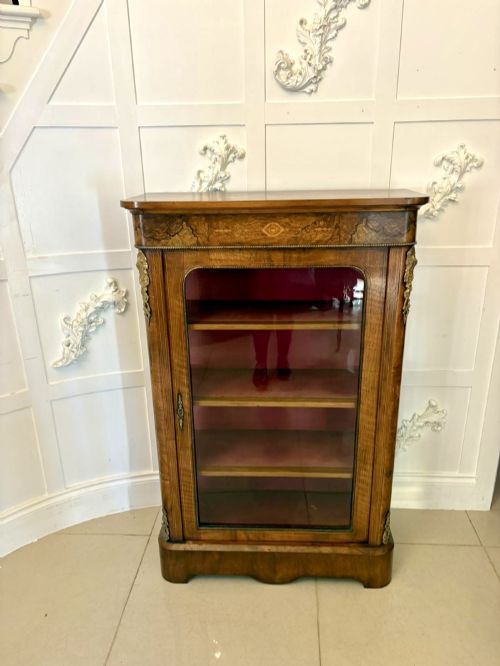
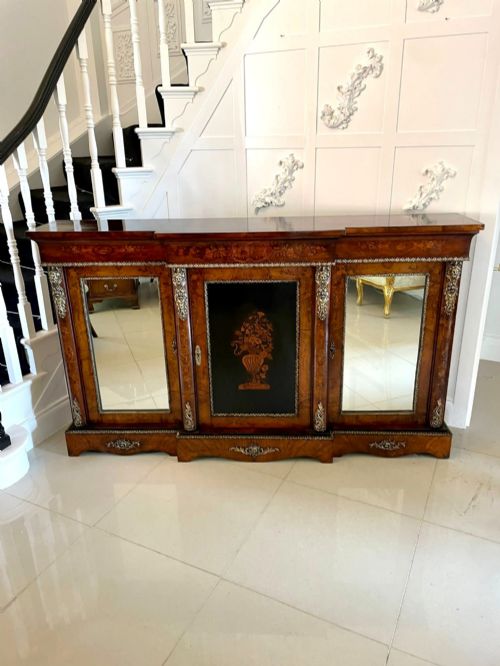
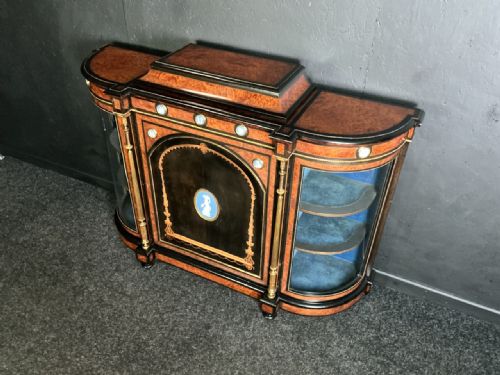
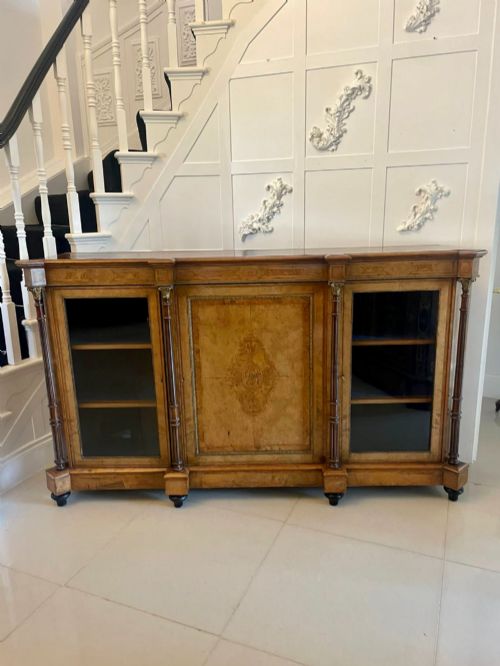
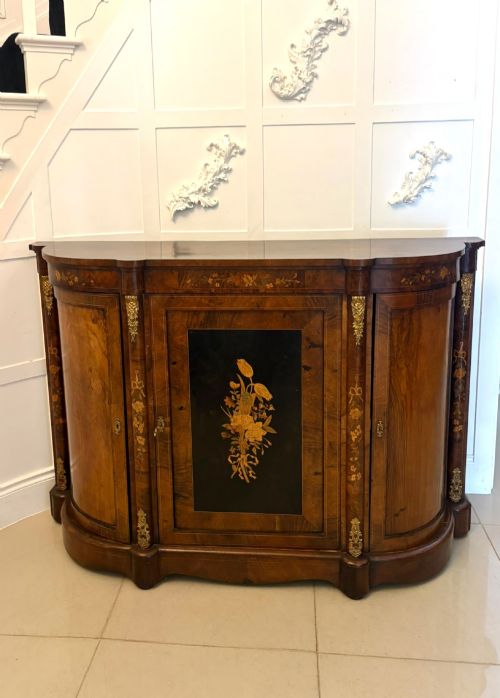
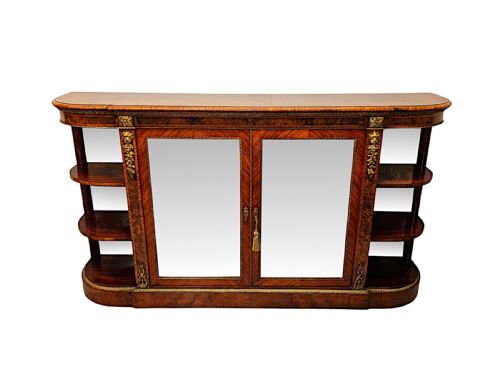
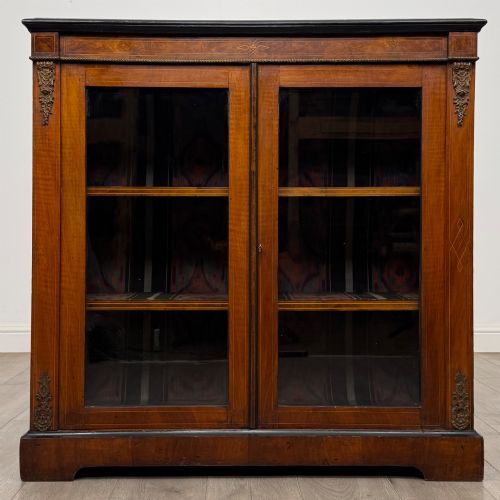
When searching for a victorian inlay walnut credenza, a buyer encounters formal nineteenth-century display furniture designed for reception rooms. The most common format on this page is the credenza or side cabinet, frequently shaped with glazed central doors flanked by curved side cabinets.
These pieces date predominantly from the Victorian period, spanning the mid to late nineteenth century around eighteen-fifty to eighteen-eighty. Makers built them to house porcelain, books, and decorative objects while showing off elaborate timber veneers.
How they were made
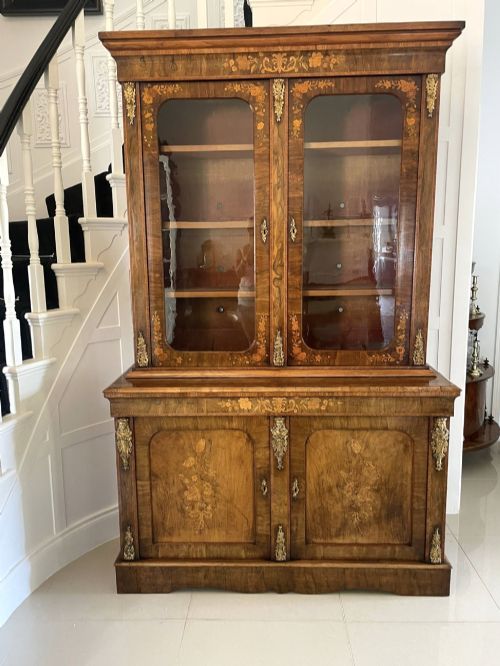
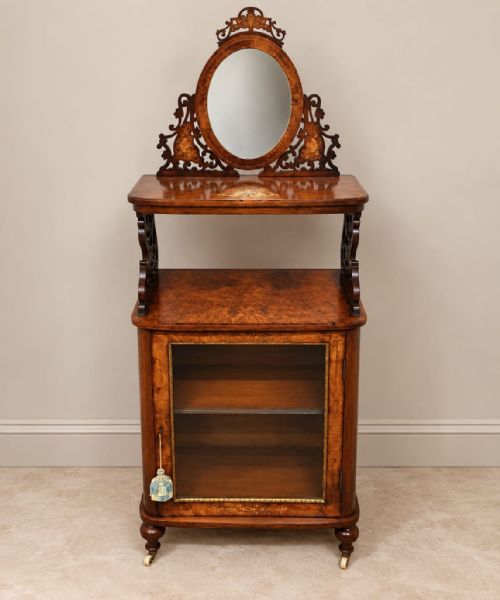
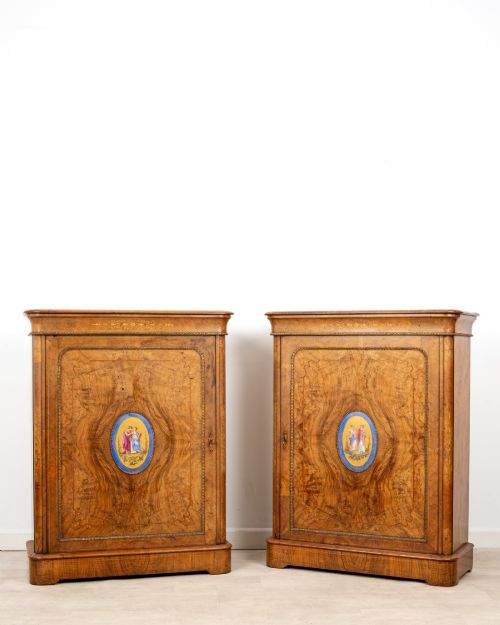
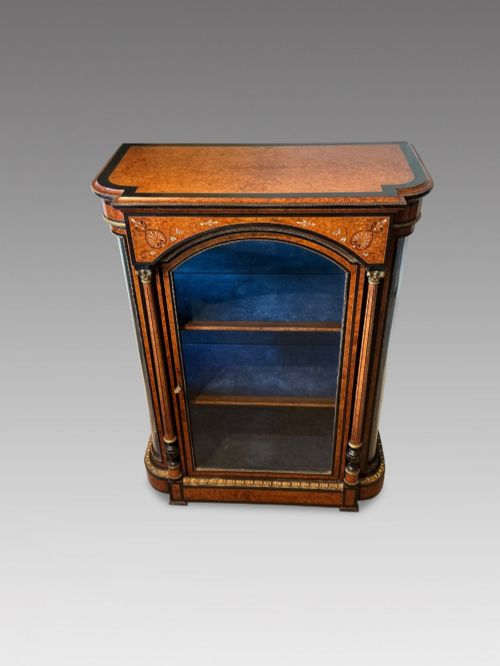
Cabinet makers applied highly figured burr walnut and plain walnut veneers over solid secondary timbers, often incorporating floral marquetry in boxwood, ebony, and amboyna. Artisans then mounted cast ormolu brass enrichments around glazed doors and framing panels.
Interiors typically featured velvet linings behind glass panels, while surfaces utilised contrasting stringing and banding to define the structural curves of serpentine and bow-front bodies.
Behind those velvet-lined glass doors, Victorian secrets mostly stayed quiet.
What varies in quality
The distinction between standard production and exhibition grade lies in the crispness of the marquetry cutting and the weight of the ormolu mounts. Finer examples display complex floral motifs executed in varied timber species without gaps in the inlay work.
Construction details such as serpentine curves, four-door configurations, and documented maker stamps separate basic side cabinets from exceptional pieces designed for nineteenth-century displays.
Gillows·Lamb of Manchester·Maison Gagneau
The Victorian Inlay Walnut Credenza Glossary
- Credenza
- A low cabinet for the display of porcelain and silver, usually featuring glazed central doors and side compartments. These forms anchor formal nineteenth-century drawing rooms.
- Marquetry
- Patterns formed by fitting together contrasting pieces of wood veneer to create floral or geometric pictures. Artisans apply this technique directly onto carcase doors and friezes.
- Ormolu
- Gilt-bronze mounts applied to the corners, friezes, and feet of cabinet work. This decorative metalwork highlights the architectural lines of nineteenth-century furniture.
- Burr Walnut
- Timber taken from walnut tree growths, yielding intricate swirling grain patterns. Cabinet makers prized this wood for veneering primary cabinet surfaces.
Victorian Inlay Walnut Credenza: Frequently Asked Questions
What was a credenza used for?
Nineteenth-century households used these low cabinets to store dining porcelain and display decorative ornaments in formal reception rooms. The glazed central sections kept treasured items visible yet protected from dust.
Their broad top surfaces also served as serving boards during gatherings or as display plinths for bronzes and clocks.
How do I date a walnut credenza?
Dating relies on examining the timber veneers, marquetry styles, and mounting details recorded across the Victorian period. Mid-century examples often combine heavy ormolu mounts with rich burr walnut.
Later Victorian variations shift toward aesthetic movement designs or simpler boxwood stringing patterns without gilt metal enrichments.
Where should I place a credenza?
These long, low cabinets suit principal living spaces or large hallways where their mirrored backs and glazed panels reflect natural light. Positioning them away from direct sunlight protects the delicate walnut veneers and internal velvet linings.
Sufficient wall space is essential to accommodate the curved serpentine or bow-front profiles properly.
Are pier cabinets different from credenzas?
Pier cabinets are narrower display pieces built to stand between windows, whereas credenzas are wider sideboard-style units designed for open walls. Both share similar walnut construction and glazed door formats.
Many listings group these related cabinet types together under broader nineteenth-century storage categories.