



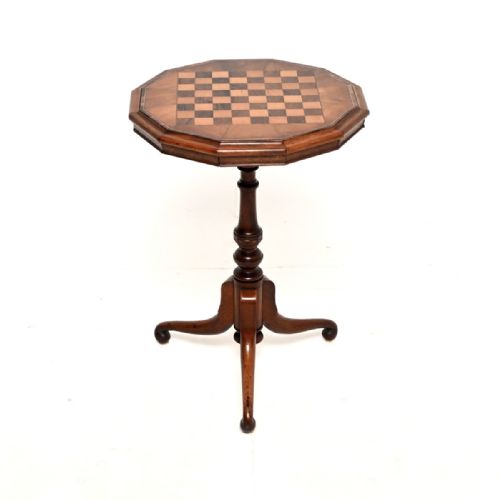
Victorian Inlay Games Table
When you select a victorian inlay games table, you acquire a dual-purpose piece of nineteenth-century furniture built for leisure and entertainment.
Victorian Inlay Games Table
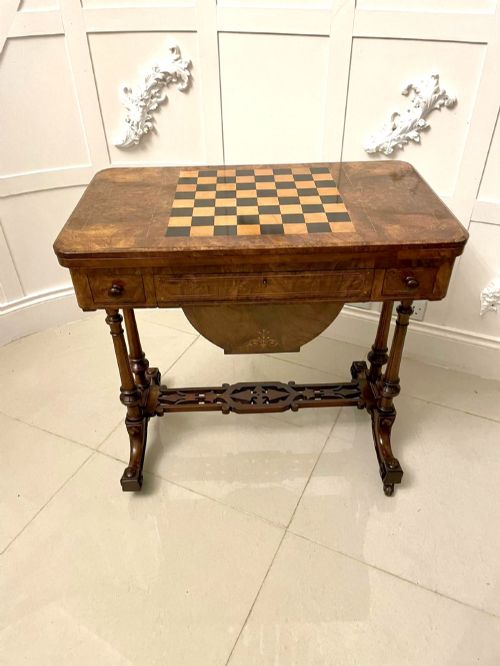
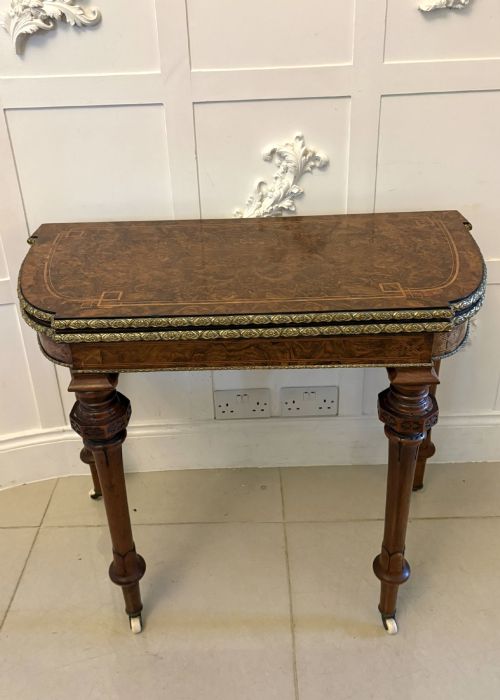
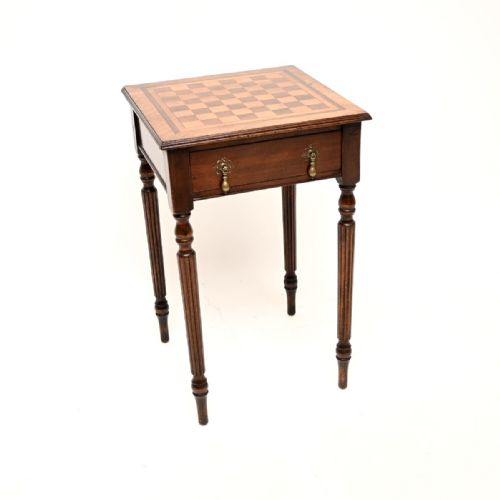
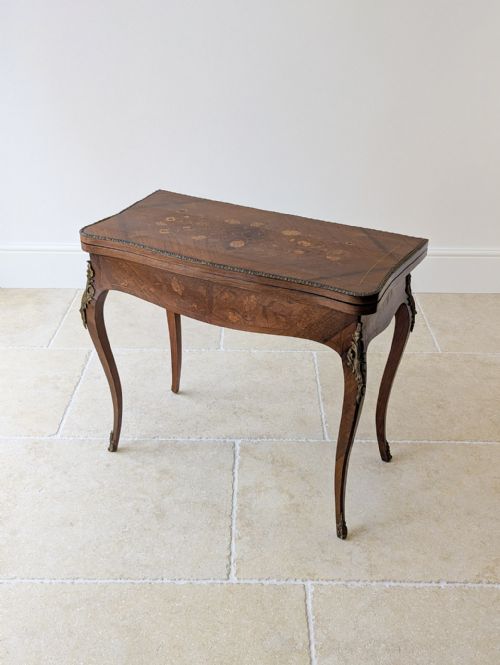
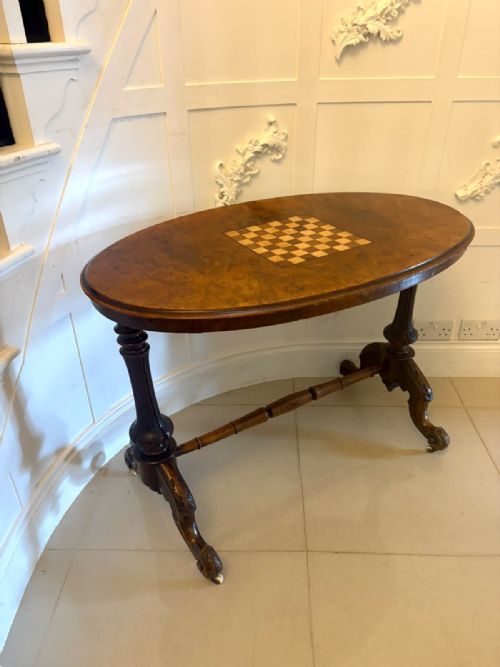
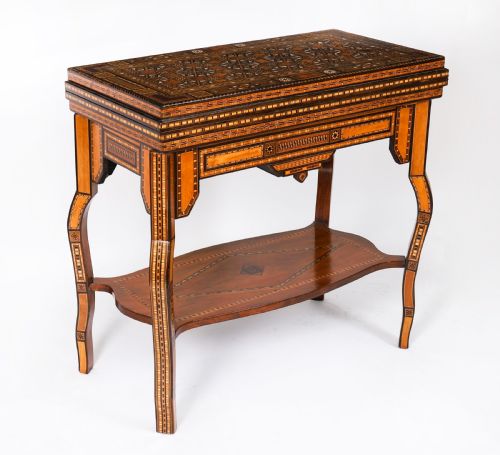
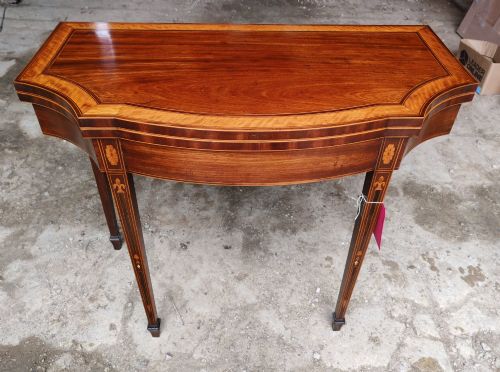
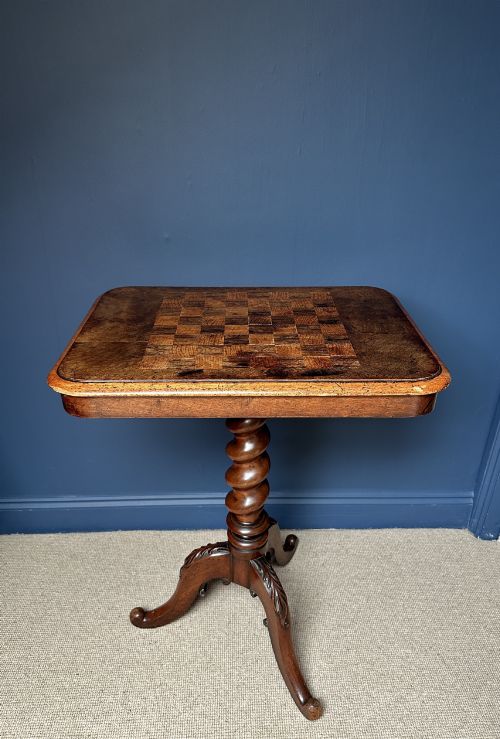
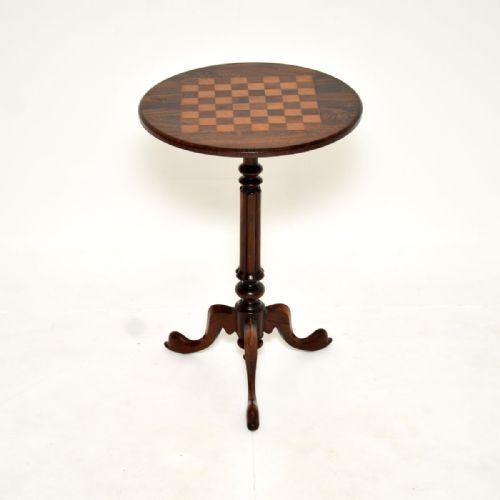
A victorian inlay games table is a multifunctional item designed for card playing, chess, backgammon or sewing, frequently taking the form of a fold-over card table, a swivel-top surface or a combined games and work table. The pieces appearing most frequently in these selections display burr walnut, rosewood or kingwood construction paired with intricate marquetry and wood inlay.
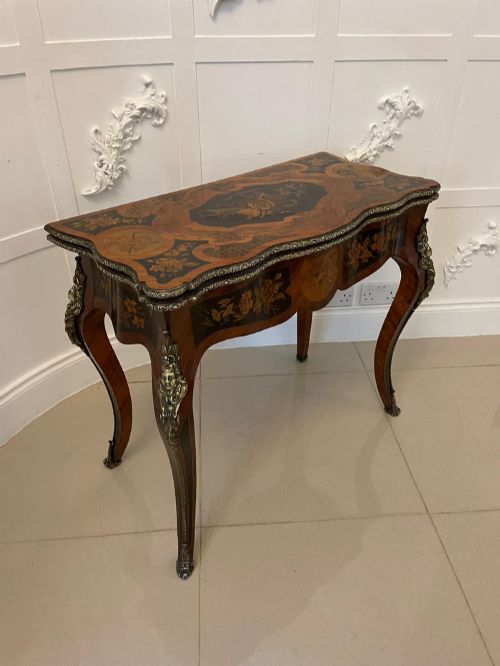
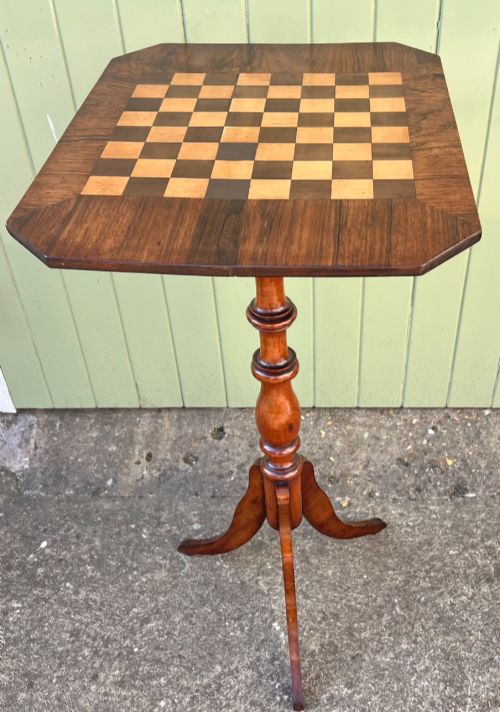
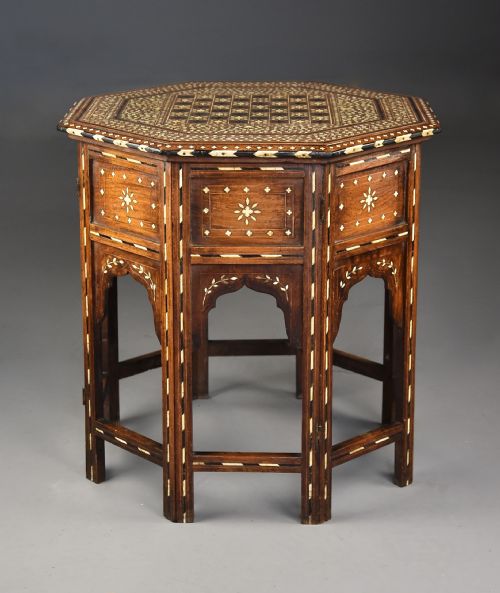
Makers and cabinet-makers produced these tables across the nineteenth century, ranging from mid-century burr walnut examples dated around eighteen-fifty to late-nineteenth-century items influenced by Louis XV revival or Aesthetic movement styles. Forms vary from serpentine console tables to octagonal occasional pieces and compact sewing tables fitted with internal compartments.
Construction and materials
Cabinet-makers utilised dense native and exotic timbers, predominantly burr walnut, figured walnut, rosewood, mahogany and kingwood, as the structural foundation for these tables. These woods provided stable surfaces capable of supporting elaborate decorative treatments.
The ornamentation relied heavily on wood inlay, marquetry, and boxwood lines, supplemented on select pieces by brass mounts, ormolu, and boullework. Skilled artisans cut contrasting veneers into floral, geometric or chess-board patterns, embedding them flush into the primary timber.
Listings feature walnut, rosewood, mahogany and oak spanning the Victorian era through to nineteen-twenty.
Judging quality
Quality separates ordinary production pieces from exhibition-grade examples through the depth of the timber figuring and the precision of the marquetry. Superior tables display rich burr walnut or finely cut kingwood veneers with tightly fitted joints and crisp, undistorted inlay work.
The sophistication of the mechanism also dictates grade, from simple drop-leaf actions to complex swivel tops and integrated sewing wells. High-tier pieces often incorporate cast ormolu mounts and maker signatures that reflect superior workshop standards.
Maple & Co.·Edwards & Roberts
The Victorian Inlay Games Table Glossary
- Marquetry inlay
- Decorative patterns formed by fitting contrasting veneers into a prepared wooden background. This technique creates pictorial or geometric designs across the table top.
- Burr walnut
- A specialised timber cut from the abnormal growth or burl of a walnut tree, yielding swirling, highly figured grain patterns. Cabinet-makers prized this wood for high-status table tops.
- Swivel top
- A table surface mounted on a central pivot that rotates to reveal a hidden compartment or unfolds to double the playing area. This mechanism allowed closed consoles to function as full card tables.
- Ormolu
- Gilt bronze mounts applied to furniture for decorative enrichment. Makers cast and chased these metal elements to accent the corners and aprons of revival pieces.
- Envelope table
- A card table featuring four triangular flaps that fold inward like an envelope over the centre. Rotating the top opens or closes the leaves simultaneously.
Victorian Inlay Games Table: Frequently Asked Questions
How do you open the top?
Many tables utilise a swivel mechanism where the upper leaf rotates ninety degrees before folding out onto a concertina or gateleg frame. Other variants feature hinged leaves that simply lift and rest upon pivoted wooden supports.
Care must be taken when operating older hinges and pivots to avoid straining the original timber joints. Checking the movement gently reveals the intended path of the mechanism without forcing antique brassware.
What games were played?
These tables accommodated chess, draughts, backgammon and card games such as whist or bridge. Inlaid boards on the exterior or reversible tops allowed users to transition between intellectual pursuits and social card playing.
Some multi-purpose versions included internal compartments for counters, dice and sewing implements. This versatility made them central items in nineteenth-century drawing rooms.
How do I date these tables?
Dating relies on stylistic clues, timber choices, and construction methods recorded across the nineteenth century. Mid-century pieces often showcase rich burr walnut and serpentine shapes, while later decades embraced ebonised details or revival styles.
Examining secondary timbers inside the frame and the style of the inlay provides further chronological context. Comparing pieces to dated exhibition examples helps narrow the production era.
Where should I place it?
These tables suit placement in sitting rooms, studies or hallways as console or occasional surfaces. Their finished backs and decorative tops allow them to sit away from walls as freestanding centrepieces.
Placing them away from direct sunlight and strong heat sources protects the polished veneer and delicate inlay work. Maintaining stable room humidity preserves the structural integrity of the timbers.