




Antique Work Well Table
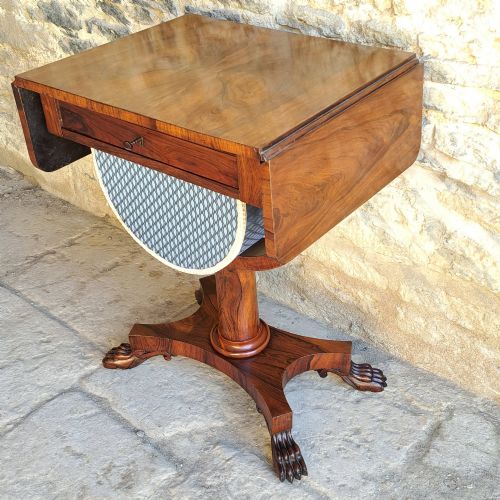
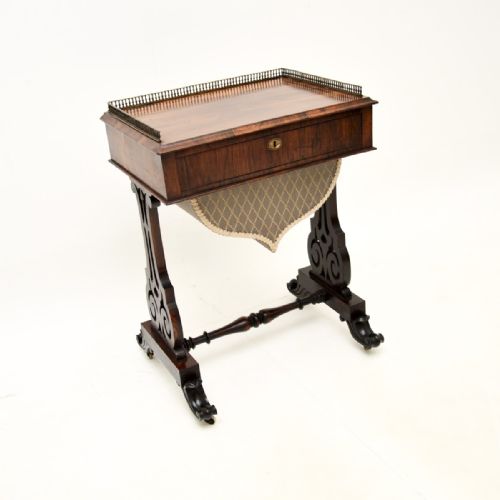
These antique work well table pieces are functional sewing and occasional furniture built to house needles, threads and writing materials.
Antique Work Well Table
An antique work well table combines the functions of a sewing station, occasional table and writing desk, designed primarily for domestic needlework and crafts. These pieces frequently appear in nineteenth century forms, spanning the Regency, William IV and Victorian eras.
The standard version met on this page is constructed from rich timbers like rosewood, walnut and burr walnut, often featuring fitted interior compartments beneath a hinged lid. Drop-leaf designs and foldover tops frequently expand the surface area for games or reading.
Makers produced these multipurpose tables in mahogany and pollard oak alongside the favoured decorative woods, sometimes incorporating marquetry inlay or fabric bags. They function today as side tables, lamp tables or compact writing desks in reception rooms.
How they were made
Cabinetmakers utilised dense hardwoods including mahogany, walnut and rosewood, applying burr walnut veneers to principal display surfaces for distinctive figuring. Solid timbers formed the structural frames, legs and internal framing of the compartments.
Decorative elements relied on precision techniques such as marquetry inlay, brass detailing and turned wooden supports. Silk or fabric sewing bags were suspended beneath the workboxes, while clever drop-leaf mechanisms and foldover hinges allowed components to move smoothly.
Listings feature 19th Century, Victorian, Regency and William IV periods, constructed primarily from rosewood, walnut, burr walnut and mahogany.
What varies in quality
The standard of timber selection and veneer matching dictates the visual appeal of each piece, with figured burr walnut and rich rosewood marking the upper tier of production. Superior examples display meticulous attention to internal compartment layout and secure joint construction.
Refined craftsmanship shows in the execution of marquetry inlay, the stability of drop-leaf mechanisms and the preservation of original fabric workbags or brass hardware. Simpler mahogany pieces present clean utility, whereas elaborate Regency and William IV iterations showcase sculptural pedestals and carved details.
The Antique Work Well Table Glossary
- Burr walnut
- A prized veneer taken from the warted growths of walnut trees, displaying intricate, swirling grain patterns. Cabinetmakers utilised this timber on the lids and exterior surfaces of high-end nineteenth century tables.
- Drop-leaf
- A hinged flap on the side of a table that folds down to save space or lifts up to extend the surface area. Supporting brackets swing out to hold the leaf steady when raised.
- Marquetry
- The art of applying decorative pieces of wood veneer to a structure to form intricate pictorial or geometric designs. Craftsmen embedded contrasting timbers into the top surfaces of games and work tables.
- Palisander
- A dense, dark timber resembling rosewood, frequently used during the Regency and William IV periods for cabinet furniture. It takes a high polish and exhibits strong grain contrast.
- Workbox
- A compartmentalised container built into the upper section of the table to organise sewing tools, threads and small personal items. Lids often feature lock and key mechanisms.
Antique Work Well Table: Frequently Asked Questions
What is an antique work well table used for?
These pieces served nineteenth century households as dedicated stations for needlework, sewing and letter writing. The integrated boxes and hanging bags kept threads, needles and documents neatly contained.
Today, buyers utilise them as functional side tables, lamp stands or compact writing desks in living spaces. Their multiple compartments remain practical for storing modern small items.
How do I identify a Victorian work table?
Victorian examples typically feature dense timbers like walnut, burr walnut or mahogany, often with turned pedestal bases or scrolling supports. The presence of a fabric sewing bag or a fitted internal tray is characteristic of the period.
Earlier Regency and William IV pieces tend to employ rosewood or pollard oak with architectural lines and brass mounts, while Victorian versions embrace more ornate carving and marquetry.
Are these tables sturdy enough for daily use?
Solid construction using hardwoods like mahogany and rosewood ensures these tables withstand everyday placement in a modern room. The heavy pedestal bases provide reliable stability for holding lamps or drinks.
Care should be taken with delicate drop-leaf mechanisms and hinged lids to prevent strain on antique joints and original brass hardware.
What woods were commonly used?
Makers favoured rich dark timbers, with rosewood and walnut appearing frequently across nineteenth century examples. Burr walnut provided highly decorative figured surfaces for tabletops and lids.
Mahogany offered a sturdy alternative for simpler utility pieces, while pollard oak and brass details added variety to specific Regency and William IV commissions.