



Victorian Inlay Bureau
A victorian inlay bureau brings rich timber surfaces and delicate marquetry to a home workspace.
Victorian Inlay Bureau
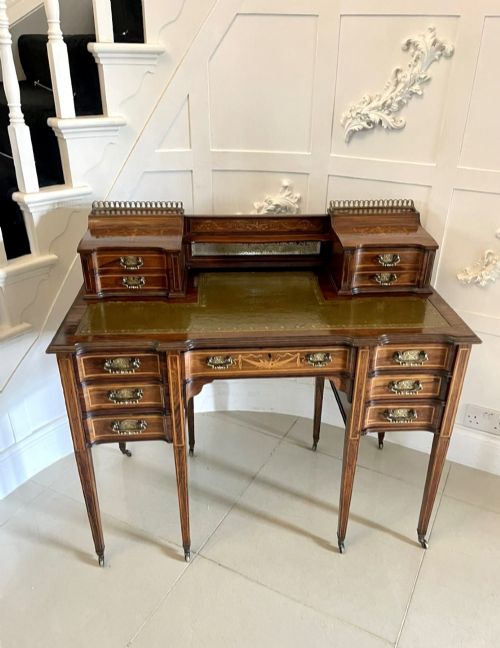
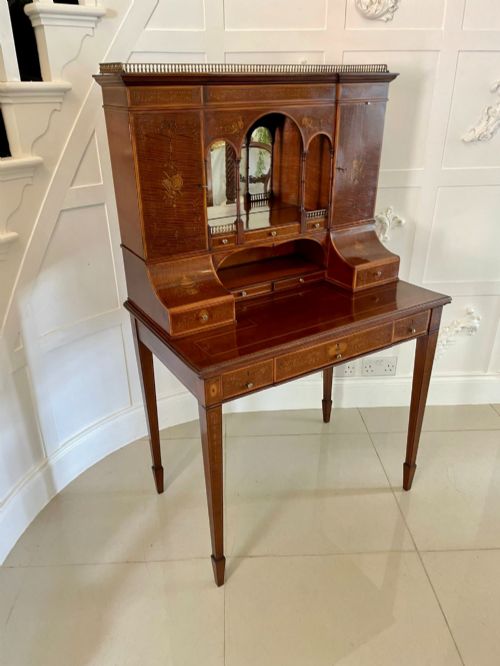
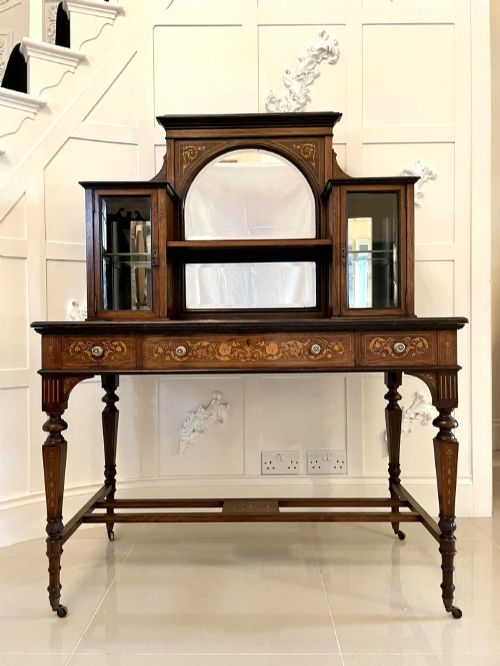
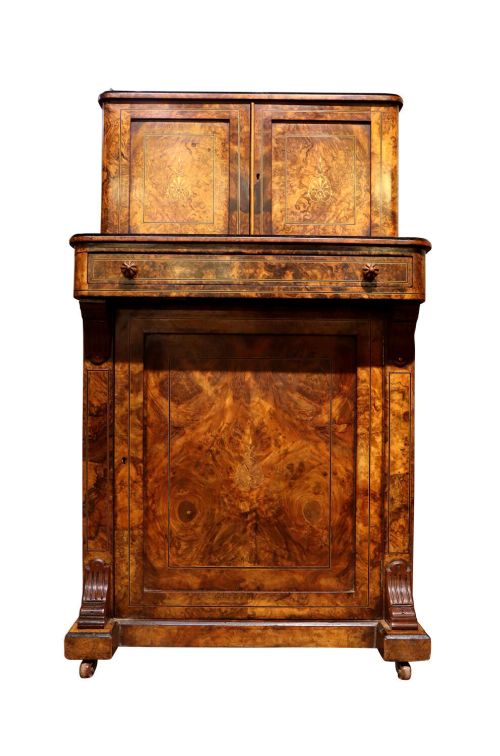
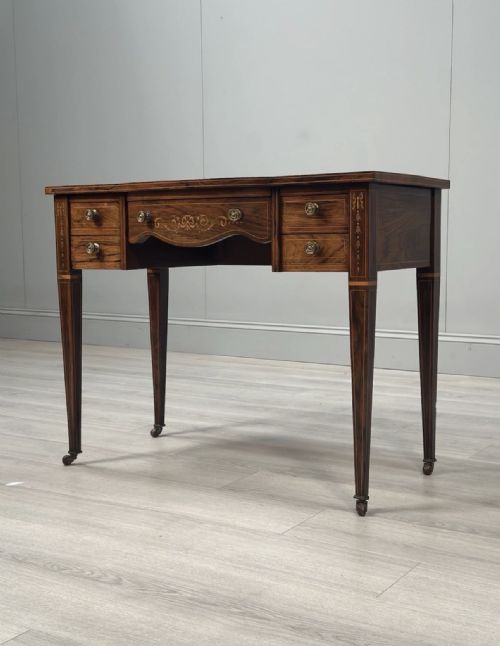
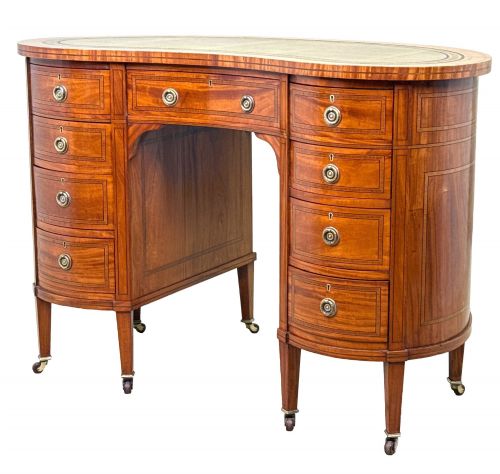
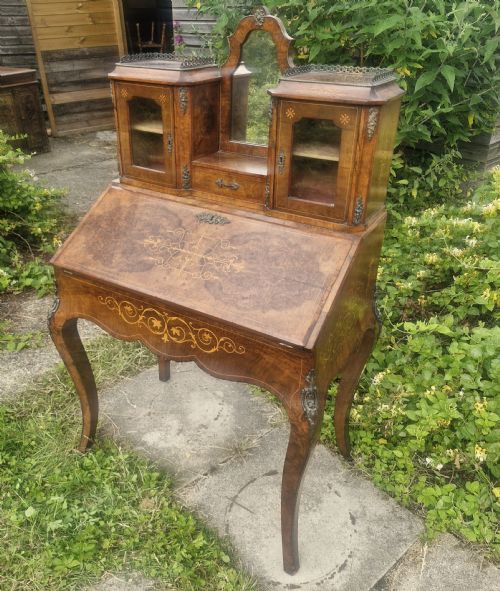
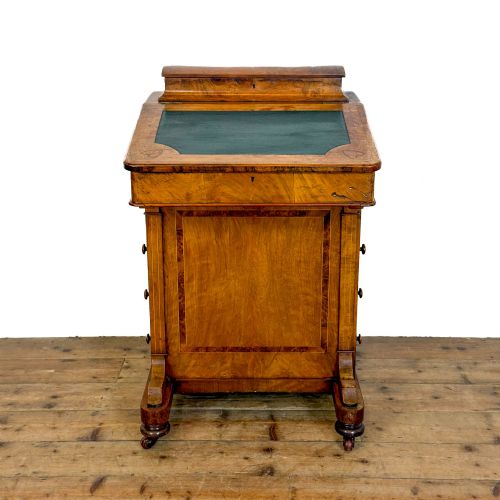
A victorian inlay bureau is a form of writing furniture designed during the nineteenth century, encompassing writing desks, writing tables, and specialised compartments like the bonheur du jour. These pieces span the Victorian and Edwardian periods, appearing in varieties such as the compact Davenport, the freestanding partner desk, and the elaborate Carlton House desk.
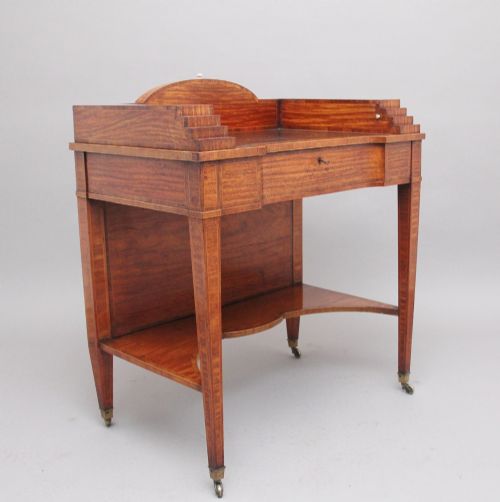
The materials seen on this page range from warm mahogany, rosewood, and walnut to lighter satinwood, maple, and amboyna, often enhanced by contrasting stringing and marquetry. Forms vary from simple writing tables to bureau de dame cabinets fitted with stationery storage and brass hardware.
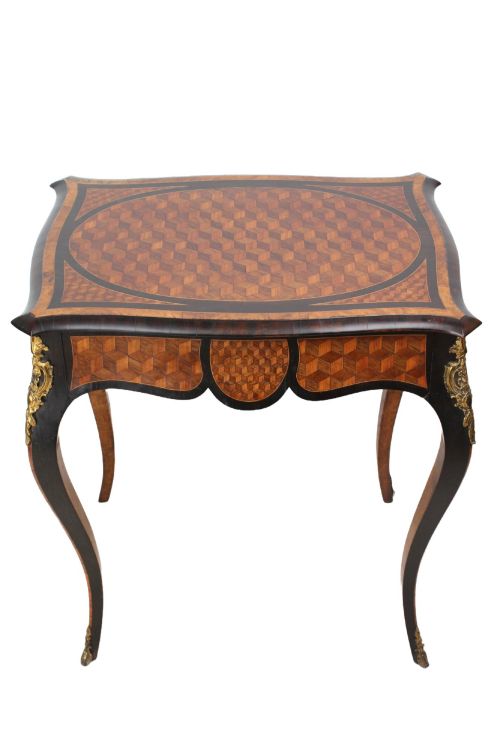
Buyers meet examples shaped by distinct revivals, including Sheraton Revival and French Louis XV styles, alongside pieces bearing parquetry or geometric inlay. Many incorporate leather writing surfaces and internal drawers suited for correspondence and administrative tasks.
Materials and Construction
Cabinet makers utilised solid hardwoods and dense fruitwoods as carcases, surfacing them with figured veneers such as burr walnut, kingwood, and mahogany. These timber grounds provide stable bases for intricate decorative work.
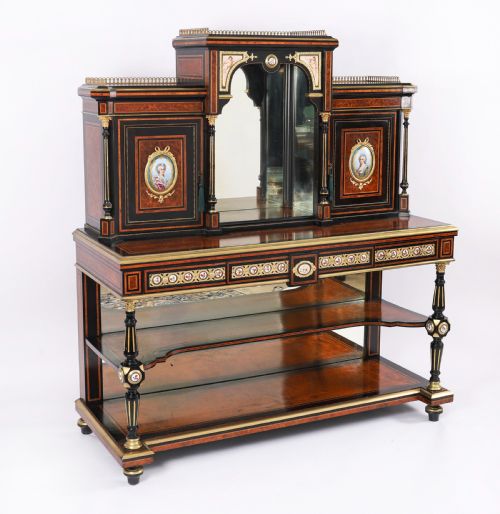
Inlay and marquetry techniques combine contrasting woods, brass, and mother-of-pearl to create floral motifs, urns, and geometric parquetry patterns. Surface details often include crossbanding, ebonised stringing, and applied ormolu mounts.
Working surfaces are frequently inset with tooled leather, while interior fittings involve small drawers, pigeonholes, and lockable compartments assembled with traditional joinery.
Materials recorded across current items include brass, leather, satinwood, rosewood, mahogany, walnut, burr walnut, and glass.
Markers of Quality
Quality rests in the depth of timber figure and the precision of the marquetry cutting, where tighter joints between contrasting woods distinguish superior work from simpler execution. The choice of rarer veneers like amboyna or satinwood elevates the status of a piece.
Structural integrity shows in the smoothness of writing slides, the snug fit of internal drawers, and the retention of original brass hardware or leather inserts. Pieces carrying recorded maker signatures or attributions reflect workshop standards of the period.
Maple & Co·JAS Shoolbred·Mawer & Stephenson·Donald Ross·Edwards & Roberts
The Victorian Inlay Bureau Glossary
- Marquetry
- Decorative patterns formed by fitting together thin slices of wood veneer and other materials into a wooden ground. This technique creates pictorial designs on writing desk surfaces and cabinet doors.
- Parquetry
- Geometric mosaic woodwork arranged in regular patterns like cubes or herringbone. It appears frequently on tabletops and bureau falls.
- Bonheur du jour
- A light ladies writing desk featuring a small cabinet or superstructure with drawers and pigeonholes above the main writing surface. These developed popularity during the nineteenth century.
- Davenport
- A compact pedestal desk with a sloping, hinged writing lid and drawers opening to the side. Interiors often conceal small stationery compartments.
- Crossbanding
- A border of veneer laid around the edge of a panel with the grain running perpendicular to the central panel. This frames the primary timber figure.
Victorian Inlay Bureau: Frequently Asked Questions
How do I clean a leather desk top?
Wipe the surface gently with a damp, soft cloth using mild, non-alkaline soap if needed, avoiding excessive moisture.
Condition the leather periodically with a suitable cream to maintain suppleness and prevent cracking.
Can I use a bureau for a laptop?
Most antique writing desks accommodate modern laptops on their pull-out slides or flat writing surfaces, provided the dimensions match the internal clearance.
Check the depth of the writing platform and ensure the slope mechanism remains fully supported when opened.
How do I tell Victorian from Edwardian pieces?
Victorian pieces typically employ darker, heavier timbers like walnut and mahogany with robust carving and dense marquetry.
Edwardian furniture often favours lighter satinwood finishes, simpler Sheraton Revival lines, and more delicate proportions.
Where should I place a bureau in a room?
Position the desk away from direct sunlight and heat sources to prevent timber warping, veneer lifting, and leather fading.
Freestanding models look effective positioned centrally, while slope-front bureaux suit placement against interior walls.