

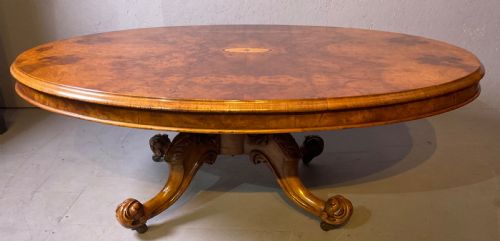
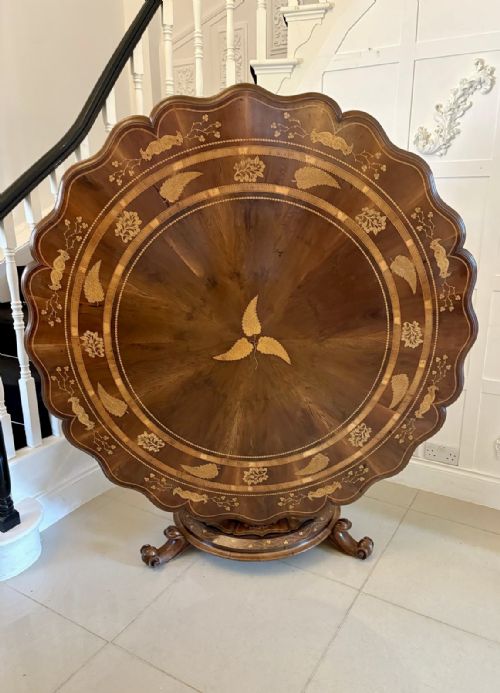
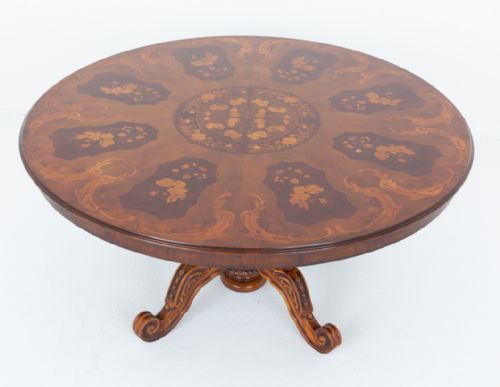


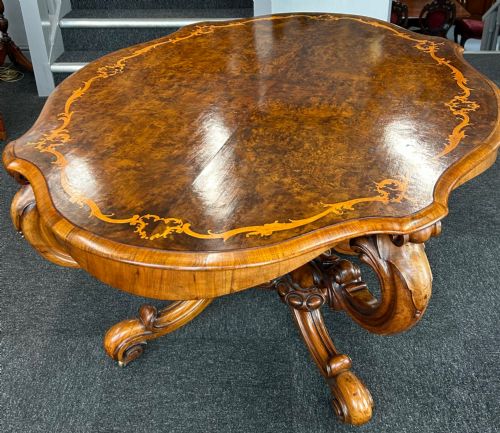

Victorian Inlaid Tilt Top Table
A victorian inlaid tilt top table brings together ingenious pivoting mechanisms and rich marquetry, offering a versatile surface that tucks away easily when not in use.
Victorian Inlaid Tilt Top Table
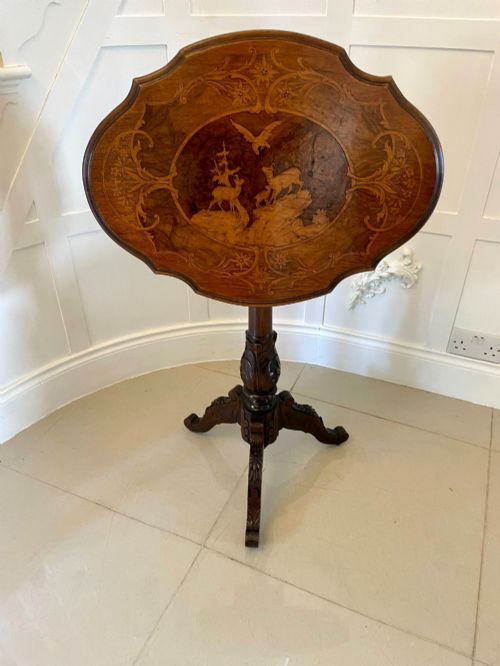
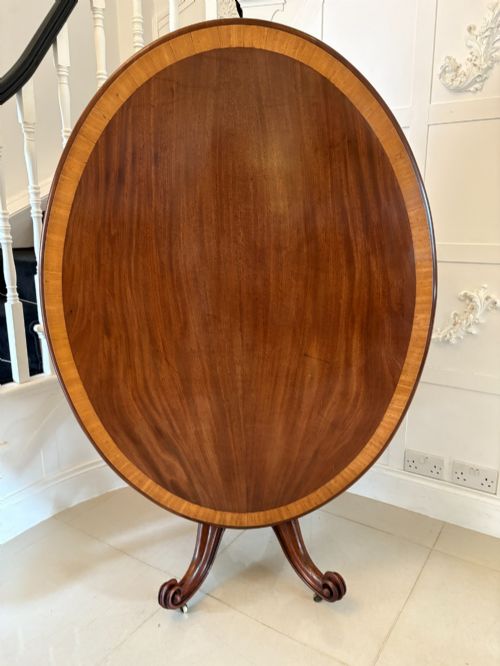
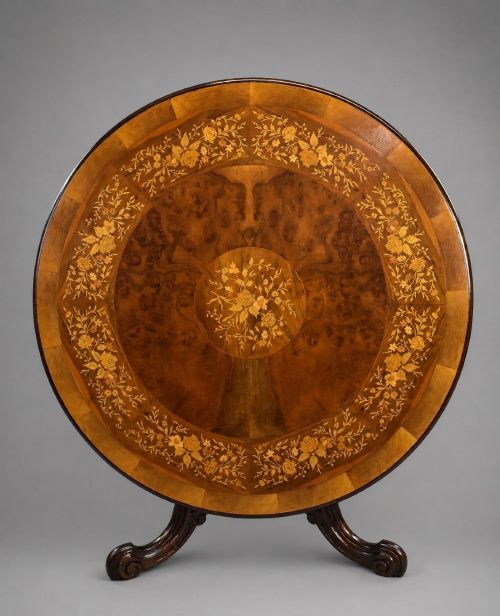
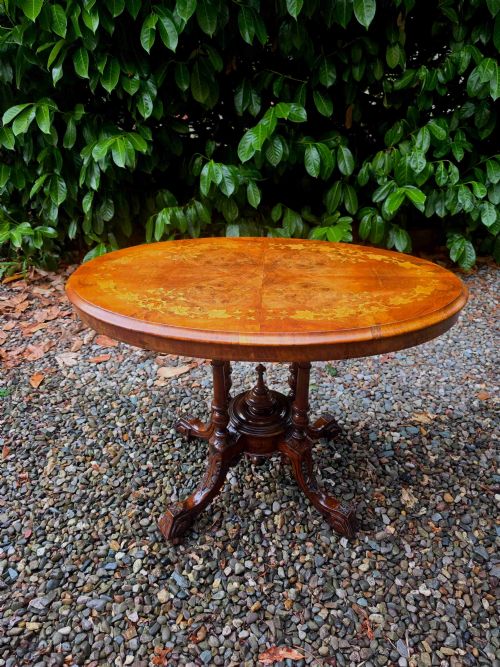
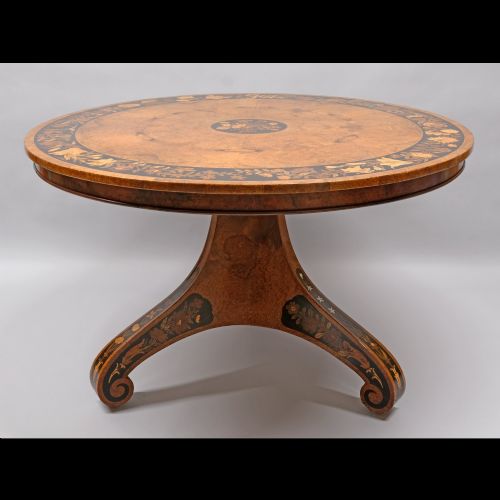
When searching for a victorian inlaid tilt top table, you are looking at nineteenth-century furniture designed to pivot upright for storage or display against a wall. The versions you are most likely to meet on this page include breakfast tables, loo tables and occasional tables with circular or oval tops.
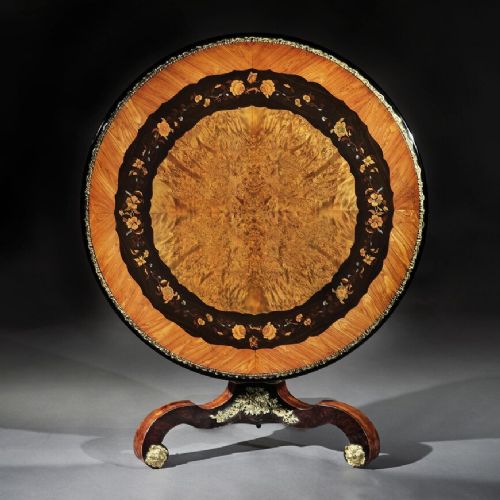
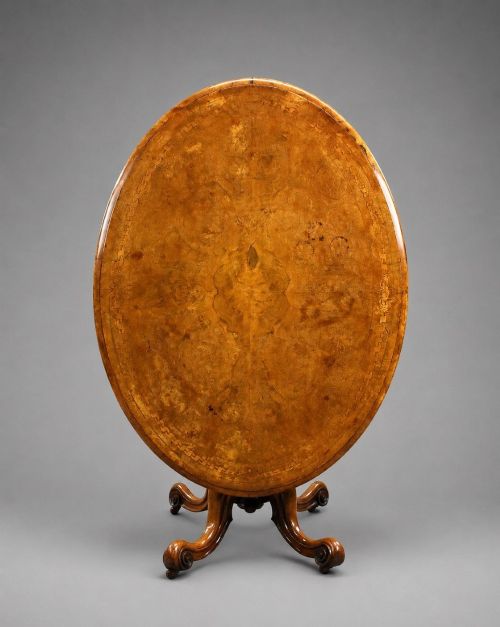
The form originates primarily from the Victorian period, though examples stretch from the Georgian era through to later nineteenth-century revivals. Makers utilised walnut, burr walnut and rosewood as primary timbers, often enhanced by elaborate marquetry inlay.
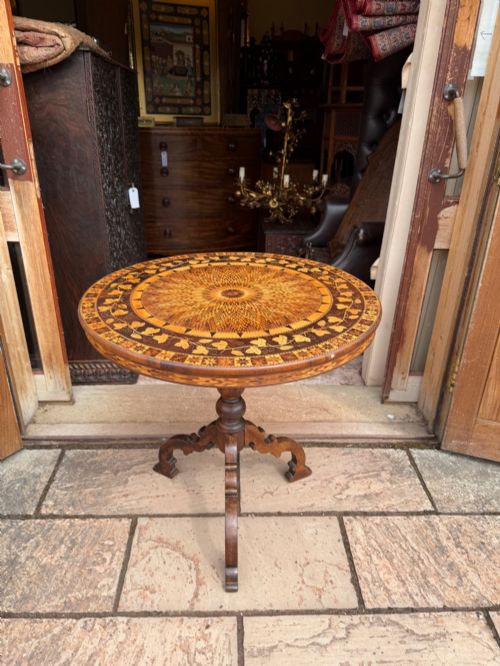
Regional variations span across British workshops as well as continental styles such as Italian Sorrento and Swiss Black Forest pieces. These tables served multifunctional purposes in reception rooms and parlours before transitioning into decorative centrepieces today.
How they were made
Cabinet makers built these tables using solid structural foundations of mahogany, oak or walnut, overlaid with highly figured veneers like burr walnut and rosewood. This technique provided stability while displaying rich natural wood grain patterns across the broad top surface.
Marquetry inlay was meticulously cut from contrasting timbers such as boxwood, ebony and various specimen woods to create floral or geometric motifs. Brass mechanism catches and pivots secured the heavy top safely to the pedestal base when lowered.
Some tables double as vertical art when pivoted upright against the parlour wall.
What varies in quality
Quality rests heavily on the depth and precision of the marquetry inlay and the choice of timber veneer. Finer examples display intricate, multi-wood pictorial or geometric panels set into dense burr walnut rather than simpler printed or painted motifs.
Structural integrity of the tilt mechanism and the stability of the central pedestal dictate long-term durability. Superior pieces maintain tight joints and smooth pivoting actions without excessive wobble in the tripod or platform base.
Edward Holmes Baldock·Egan Workshop
The Victorian Inlaid Tilt Top Table Glossary
- Tilt top
- A table mechanism allowing the surface to pivot ninety degrees vertically. This clever engineering enabled the furniture to be stored compactly against a perimeter wall when room space was required.
- Marquetry
- The art of applying small pieces of veneer to a structure to form decorative patterns. Artisans used contrasting woods to achieve striking pictorial designs.
- Burr walnut
- A highly prized wood cut from tree growths showing swirling grain configurations. It creates richly textured surfaces on nineteenth-century tabletops.
- Loo table
- A large round or oval parlour table used for card games. These frequently incorporated the pivoting top mechanism for convenience.
- Specimen wood
- Furniture constructed from or inlaid with numerous distinct timber species. Collectors appreciate these for their botanical variety and visual contrast.
Victorian Inlaid Tilt Top Table: Frequently Asked Questions
What is a tilt top table used for?
These tables functioned primarily as flexible furniture for nineteenth-century reception rooms, serving dining or card-playing needs before pivoting upright.
When stored against a parlour wall, the decorated tabletop acted as a vertical display piece that showcased intricate wood veneers.
How do I identify a Victorian table?
Authentic nineteenth-century pieces typically feature dense hardwood carcases, hand-cut marquetry and traditional hand-finished French polish.
Construction methods rely on visible dovetailing, brass pivot fixings and timber choices characteristic of the period such as burr walnut and rosewood.
Can I use these tables every day?
These pieces handle normal daily use quite comfortably, provided you protect the polished wood surfaces from moisture and direct heat sources.
The pivoting mechanisms remain sturdy if handled with care when transitioning the surface between vertical and horizontal positions.
What is Sorrento marquetry?
Sorrento inlay refers to decorative woodwork originating from the Italian coastal town famous for intricate geometric and pictorial designs.
Craftsmen there utilised pale and dark woods to create elaborate table surfaces imported extensively into Britain during the Victorian era.