



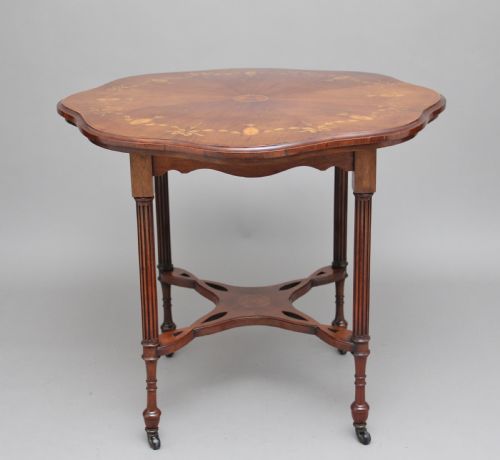
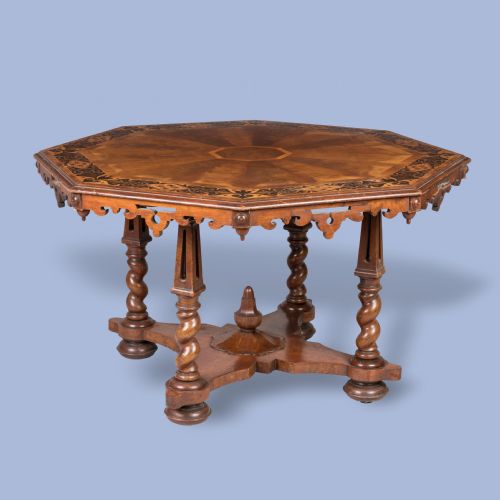


Victorian Inlaid Parlour Table
A victorian inlaid parlour table brings warmth and rich timber grain to a room, offering a surface designed for formal gatherings.
Victorian Inlaid Parlour Table
A victorian inlaid parlour table is typically encountered as a centre table or occasional table designed for the principal reception rooms of nineteenth-century homes. These freestanding pieces sit centrally in a room rather than against a wall, allowing them to be admired from every angle.
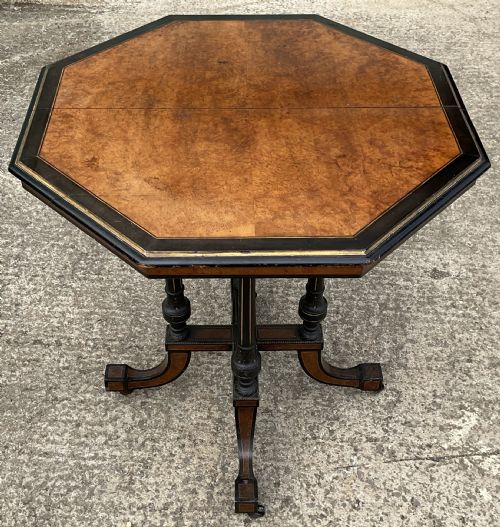
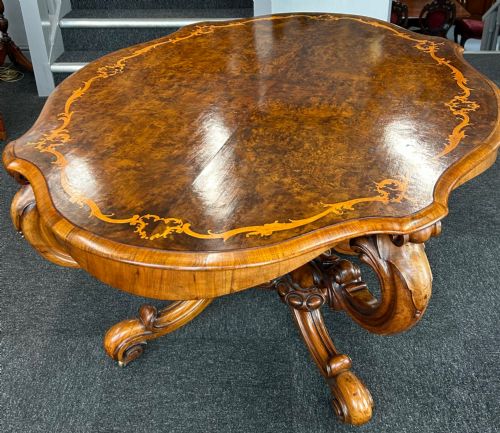
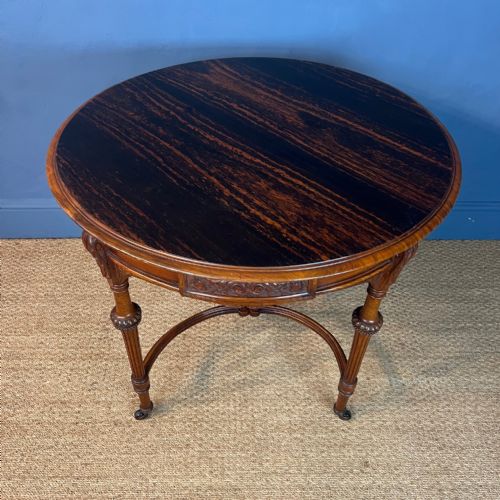
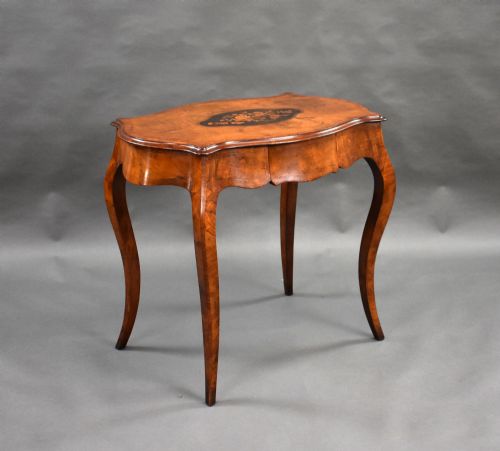
The selections on this page span the Victorian and Edwardian periods, stretching from the mid-nineteenth century through to 19th Century expressions. Walnut, burr walnut, and rosewood form the primary bodies, often enriched with boxwood and marquetry inlay.
Forms vary from oval and octagonal silhouettes to shaped tops supported by pedestals, basket bases, and tripod legs. Occasional tables and specialised games boards also appear, reflecting the social habits of the period.
What varies in quality
The choice of timber underpins the hierarchy of these tables, with highly figured burr walnut and richly grained rosewood commanding greater attention than plain mahoganies. The density and selection of the wood dictate the initial visual impact.
Inlay execution separates standard production from finer cabinet work, seen in the precision of boxwood lines and the complexity of marquetry patterns. Crispness in the cutting and fitting of decorative elements reveals the skill of the maker.
Structural complexity also defines the grade, moving from simple four-legged occasional tables to intricate pedestal designs with basket bases and games boards. The integration of supporting framework shows the ambition of the original workshop.
Victorian cabinet makers occasionally included integrated golf game boards, proving that a parlour table could double as a putting green.
James Winter
The Victorian Inlaid Parlour Table Glossary
- Burr walnut
- A prized timber harvested from the wart-like growths on walnut trees, yielding turbulent, highly decorative grain patterns. It was frequently used for the top surfaces of better Victorian tables.
- Marquetry inlay
- The art of applying pieces of veneer to a structure to form decorative patterns, often depicting floral or scroll designs. This technique required immense patience from the artisan.
- Centre table
- A freestanding table designed to be viewed from all sides rather than pushed against a wall. These anchor the layout of a traditional parlour.
- Ebonised
- Wood treated with chemical stains or paint to imitate ebony. This dark finish gained popularity during the Aesthetic Movement.
- Boxwood inlay
- Contrasting pale wood inserted into darker timbers to create sharp borders and linear definition. It highlights the geometric properties of the table top.
Victorian Inlaid Parlour Table: Frequently Asked Questions
Where did these tables sit?
These tables stood in the principal reception rooms and parlours of nineteenth-century homes. They served as central decorative focal points for displaying ornaments and hosting guests.
Because they are finished on all sides, they were placed in the middle of rooms rather than pushed against walls.
How do I date a table?
Dating relies on observing the timber choices, stylistic movements, and structural forms recorded across the periods. Walnut and rosewood dominate mid-Victorian examples, while ebonised surfaces often point towards the later nineteenth century.
Cabinet-making techniques and inlay styles shift from ornate floral marquetry to cleaner Aesthetic Movement designs as the decades progress.
Can I use one for games?
Certain examples incorporate dedicated surfaces for pastimes like chess and golf within the table top. These specialised pieces accommodated indoor recreation during the Victorian era.
They function as standard occasional tables when not in active use for gaming.
What is a basket base?
A basket base refers to an ornate pedestal support structure beneath the table top, often branching out into carved legs. This configuration provides sturdy support while adding sculptural detail.
It distinguishes freestanding centre tables from simpler pillar-and-tripod occasional designs.