
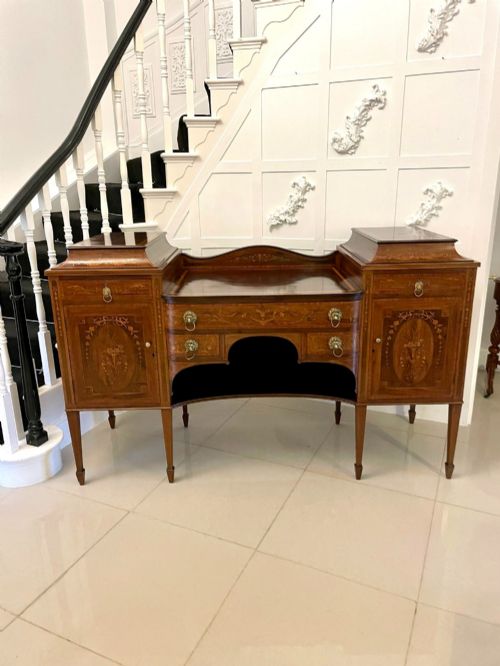

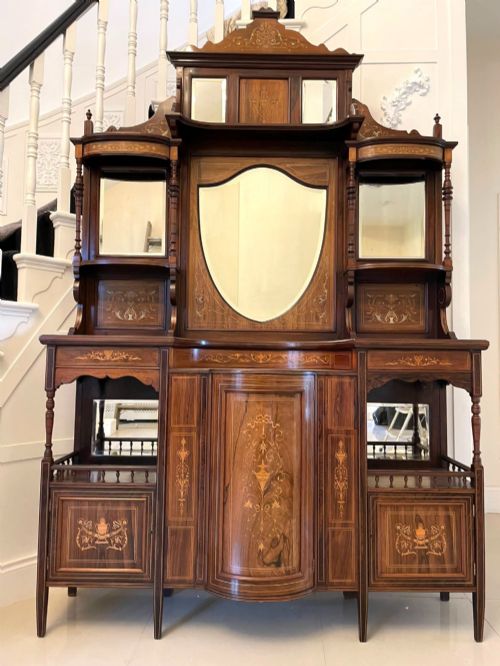
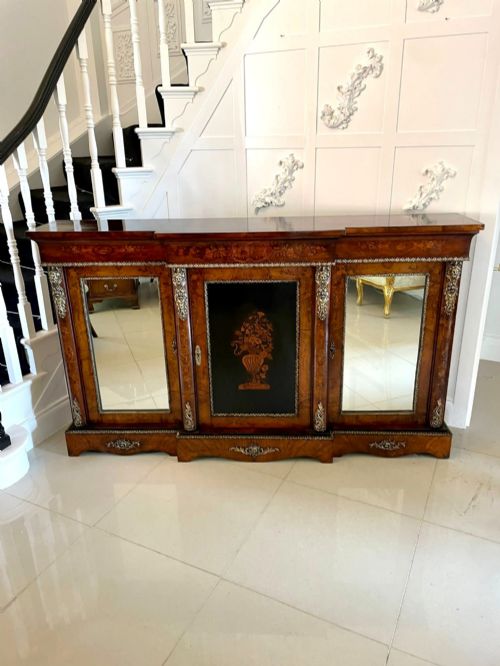
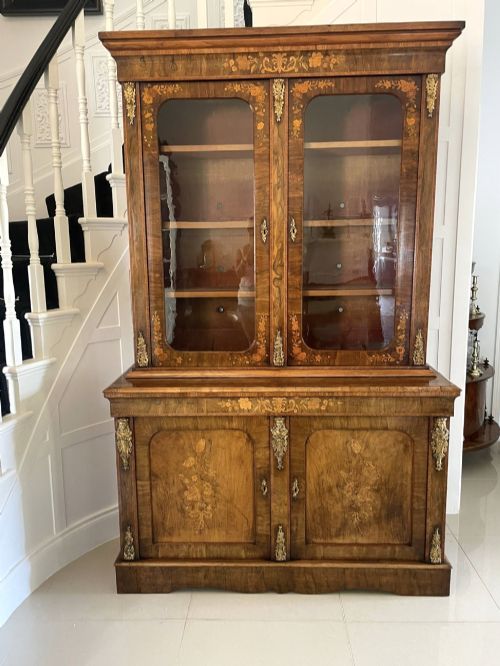
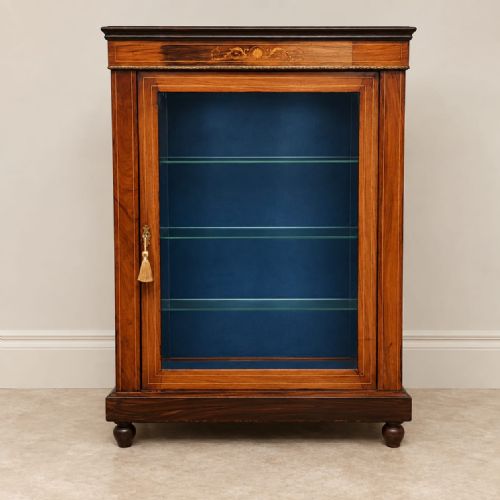
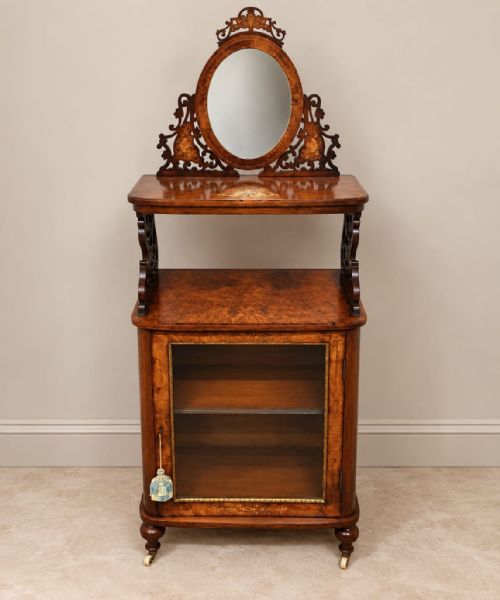
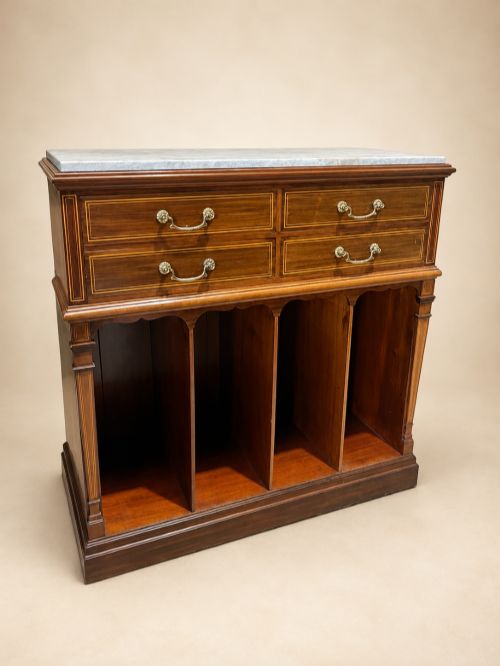
Victorian Inlaid Credenza Cabinet
These Victorian inlaid credenza cabinets bring grand nineteenth-century timberwork, glazed display space and gilt mounts into a room.
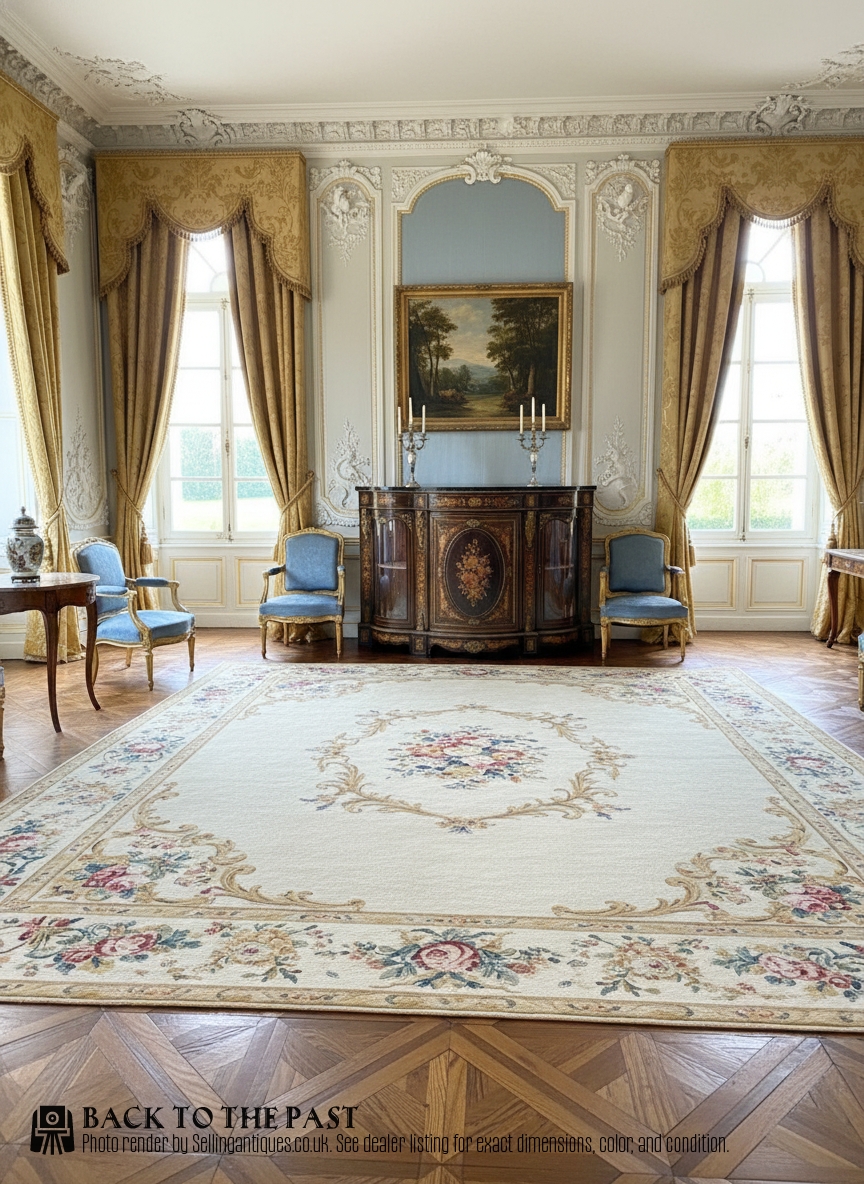
Victorian Inlaid Credenza Cabinet
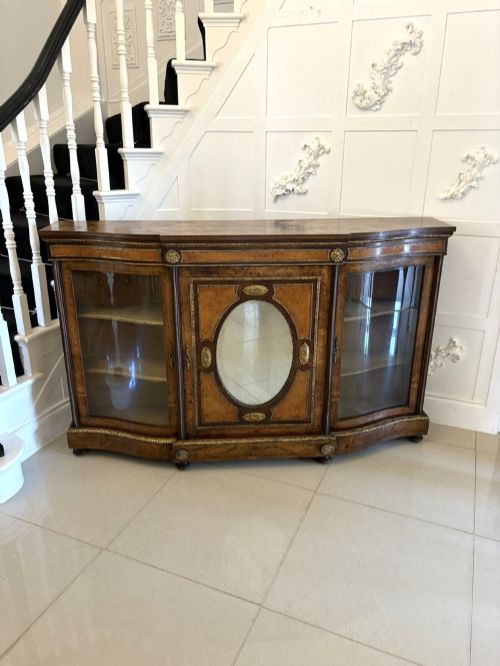
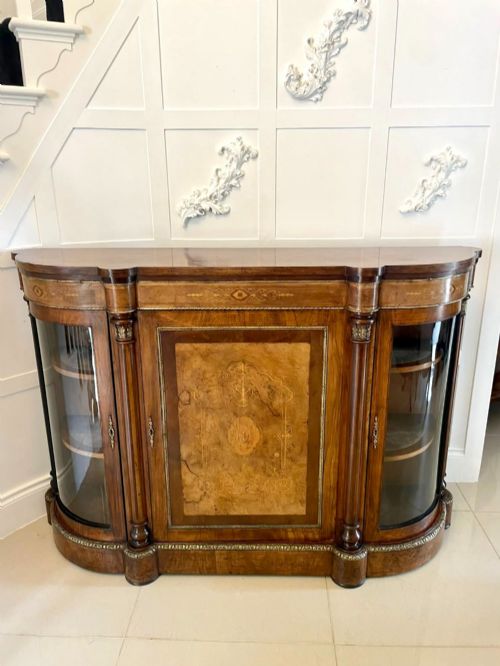
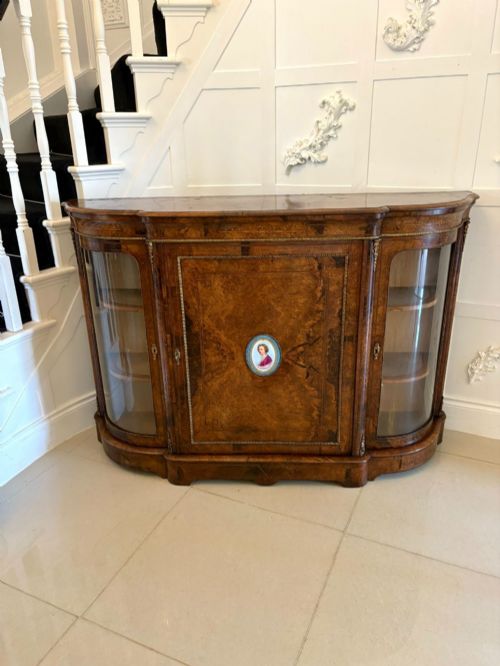
A victorian inlaid credenza cabinet combines low flanking display cupboards with a central glazed door, sitting squarely in the nineteenth century from the eighteen-fifties onward.
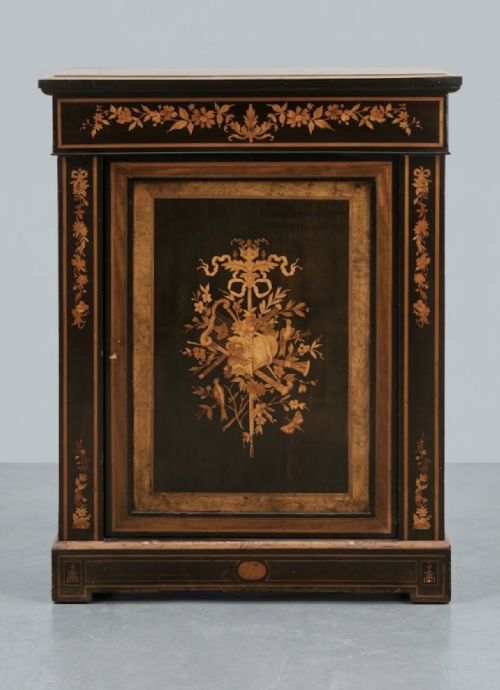
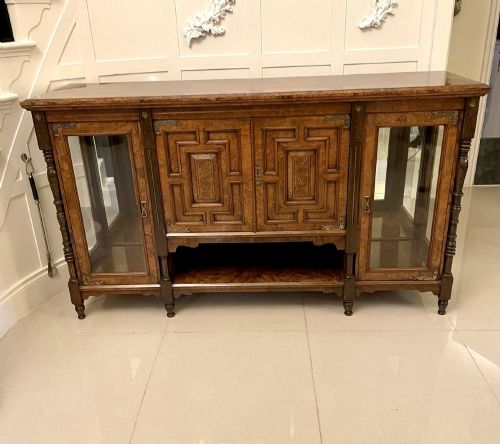
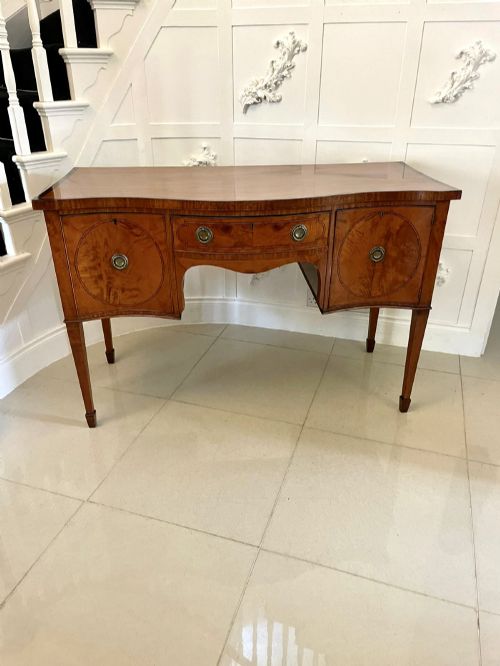
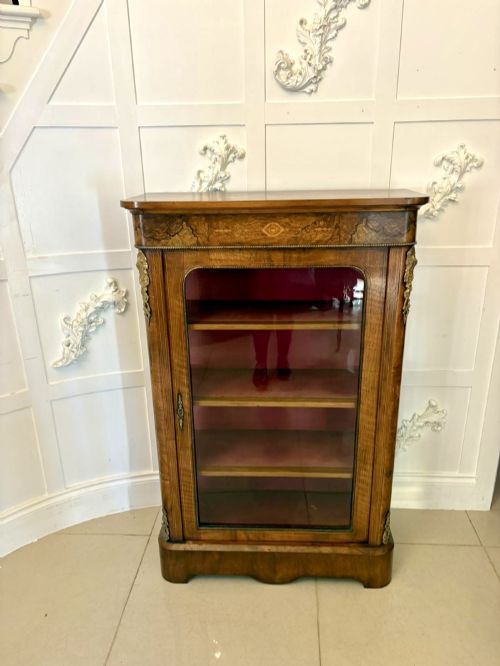
The pieces on this page span the Victorian and late Victorian periods, taking forms such as serpentine sideboards, narrow pier cabinets and multi-door display furniture.
Makers of the era drew on Sheraton Revival, Aesthetic Movement and French Revival styles, creating long, low statement furniture for formal reception rooms.
Materials and Technique
Cabinetmakers built carcasses from native and exotic timbers, selecting figured burr walnut, rosewood, mahogany and satinwood for their rich grain.
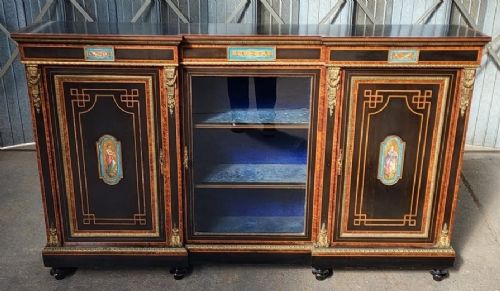
Surfaces received intricate floral marquetry and contrasting stringing in lighter woods, while ebonised finishes provided a dramatic dark ground.
Gilt bronze or ormolu mounts frame the doors and corners, often complemented by inset porcelain plaques and curved glass panels.
Some nineteenth-century cabinets include clever removable timber backs, allowing servants to slide delicate porcelain collections in from behind without disturbing the parlour.
Standards of Execution
Finer examples show superior timber selection, where burr veneers match symmetrically across curving serpentine fronts and door panels.
The crispness of the cast ormolu mounts and the precision of the marquetry cutting separate standard production from exceptional cabinet work.
Secondary woods, heavy brass locks and the weight of the marble or timber tops indicate the original tier of manufacture.
Hewetsons London·Collinson and Lock·Gillows·Lamb of Manchester·Maison Gagneau
The Victorian Inlaid Credenza Cabinet Glossary
- Marquetry
- The art of forming decorative patterns using thin veneers of different coloured woods. Craftsmen cut floral and geometric designs to adorn cabinet doors.
- Ormolu
- Gilt bronze mounts cast and chased with decorative foliage and scrolls. These metallic ornaments highlight the architectural lines of nineteenth-century furniture.
- Pier Cabinet
- A narrow display cabinet designed to stand against the wall space between windows. These tall, single-door pieces share the decorative vocabulary of larger credenzas.
- Burr Walnut
- Timber taken from the gnarled growths of walnut trees, yielding complex, swirling grain patterns. It remains the most sought-after veneer on nineteenth-century cabinets.
Victorian Inlaid Credenza Cabinet: Frequently Asked Questions
Where did these cabinets go in a Victorian home?
These large pieces stood against the main walls of drawing rooms and formal dining spaces, serving both as display surfaces and storage.
Their glass-fronted compartments held prized ceramics and books, while the flat top displayed decorative bronzes and lamps.
How do I spot a true nineteenth-century piece?
Examine the timbers used for the interior carcasses and backboards, which should show age-appropriate oak or pine construction.
Look for hand-cut dovetails in the drawer construction and cast brass hardware rather than modern substitute fittings.
What is the difference between a credenza and a pier cabinet?
A credenza is a wide, symmetrical low cabinet with a central door flanked by curved glass ends.
A pier cabinet is a much narrower, single-door upright case designed specifically for the masonry wall space between windows.
How do I care for burr walnut and ormolu?
Keep these cabinets away from direct sunlight and heat sources to prevent the delicate burr walnut veneers from drying and cracking.
Dust the timber gently with a dry cloth and avoid harsh chemical cleaners on the gilt bronze mounts.