




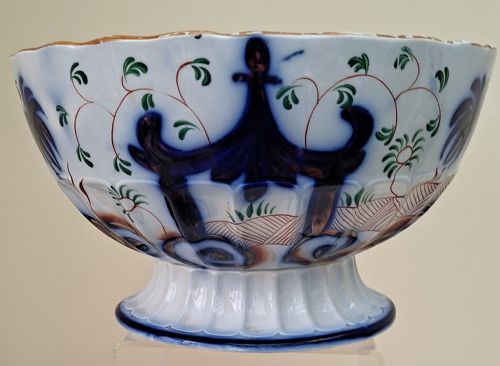


Victorian Imari China Bowl
A victorian imari china bowl brings rich ironstone bodies, deep enamel palettes, and gilt highlights straight to the table.
Victorian Imari China Bowl
When searching for a victorian imari china bowl, you encounter sturdy ceramic forms decorated in the characteristic Imari palette of iron red, cobalt blue, and rich gilding. These pieces emerge from the nineteenth century, spanning Victorian production through to early twentieth-century interpretations.
The selection here encompasses various utilitarian and decorative vessels, including deep lobed serving dishes, footed bowls, and complete tea services. Ironstone and bone china provide the substantial bodies for these wares, carrying complex Chinoiserie and traditional patterns.
Makers such as Mason's and Royal Crown Derby dominate the tradition, applying vibrant enamels and gold leaf to earthenware and ceramic surfaces. Each vessel demonstrates the enduring British fascination with Japanese-inspired ceramics adapted for Victorian dining habits.
How they were made
Potters shaped durable ironstone and fine bone china into bowls and serving dishes before applying an underglaze cobalt blue and hand-painted iron red enamels. These colours required multiple firings in the kiln to achieve their permanent, glossy finish.
Craftsmen heightened the rich designs by applying gold leaf and gilt accents directly over the glaze. This final layer added the characteristic metallic lustre seen across the decorated surfaces of nineteenth-century tableware.
Victorian Imari China Bowl Retail Price Guide 2026
Typical asking prices for victorian imari china bowl among the pieces listed under this phrase on Sellingantiques today, from the lower quarter to the upper quarter. They describe what is for sale here now, not the wider market.
Listings feature robust nineteenth-century ironstone alongside finer bone china, decorated with hand-applied enamel and gold leaf.
What varies in quality
The precision of the hand-painted enamel work determines much of the visual distinction between individual vessels. Crisp cobalt outlines and neatly applied iron red details indicate a higher standard of workshop production.
The thickness and stability of the underlying ironstone or bone china body also shift across different pieces. Finer potting yields lighter, more refined rims while maintaining structural integrity across large serving dishes and footed bowls.
Royal Crown Derby·Royal Davenport·Coalbrookdale
The Victorian Imari China Bowl Glossary
- Imari
- A decorative style originating in Japan, characterised by a palette of rich iron red, cobalt blue, and gold applied to ceramic bodies. British potters enthusiastically adopted this aesthetic during the nineteenth century.
- Ironstone
- A heavy, durable type of earthenware patented in the nineteenth century for domestic tableware. It resists chipping far better than standard pottery.
- Gilt
- A thin layer of gold leaf or gold paint applied to the surface of ceramics for decorative effect. It catches the light and highlights moulded or painted details.
- Chinoiserie
- European artistic interpretations of Chinese and East Asian decorative motifs. These designs often feature pagodas, exotic flora, and stylized landscapes.
Victorian Imari China Bowl: Frequently Asked Questions
What is a victorian imari china bowl?
A victorian imari china bowl is a nineteenth-century ceramic vessel decorated with traditional Japanese-inspired patterns in iron red, cobalt blue, and gold. These pieces range from large serving dishes to smaller footed bowls designed for domestic use.
Potters utilised durable ironstone or bone china as a base for these vibrant hand-painted enamels. They remain popular for their striking visual contrast and robust construction.
How were these bowls used?
Victorian households utilised these bowls for serving food at the dining table or as decorative centrepieces in the drawing-room. Deep lobed versions held side dishes, while footed examples often stood alone on sideboards.
Larger matching sets frequently formed part of afternoon tea services or comprehensive dinner wares. Their bright decoration made them suitable for both display and practical hospitality.
How do I care for my bowl?
Wash these ceramic pieces gently by hand using mild soap and warm water to protect the delicate enamel and gold leaf. Avoid soaking them for extended periods or placing them in modern dishwashers, which can damage the glaze.
Store them securely on stable surfaces away from direct edges where heavy knocks might occur. Careful handling preserves the historical surface decoration for daily appreciation.
How can I tell the period?
Examine the weight, the style of the ceramic body, and any maker marks stamped or painted on the underside. Nineteenth-century ironstone typically feels heavy and dense, while Victorian bone china offers a thinner, more translucent quality.
Stylistic shifts between mid-Victorian patterns and later twentieth-century reproductions also help date the piece accurately. Comparing the hand-painted enamel depth provides further clues to the era of manufacture.