


Victorian Hunting Scene Art
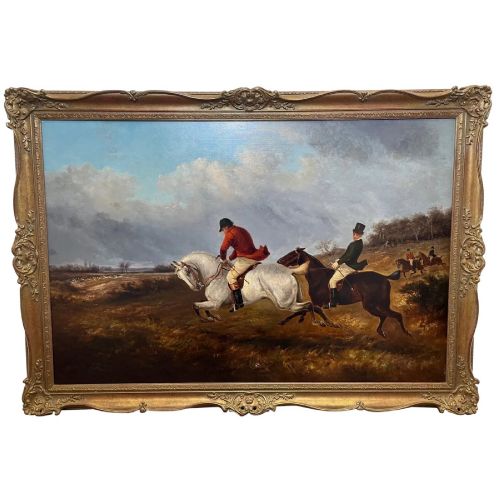
Victorian hunting scene art captures horses, hounds and riders across country landscapes in oil and watercolour.
Victorian Hunting Scene Art
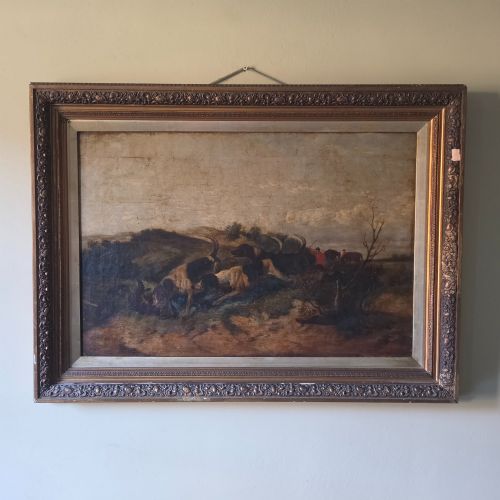
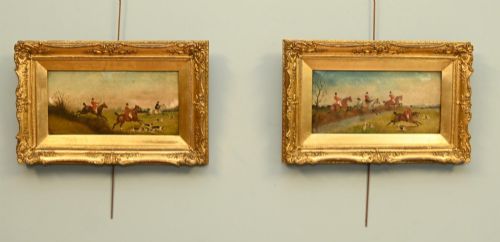
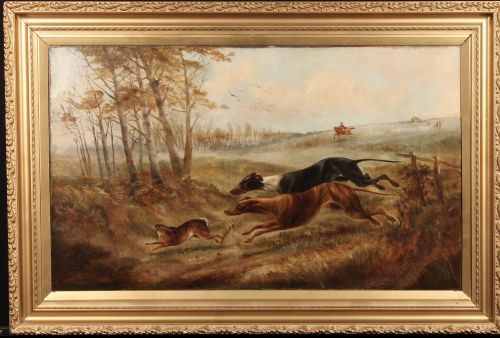
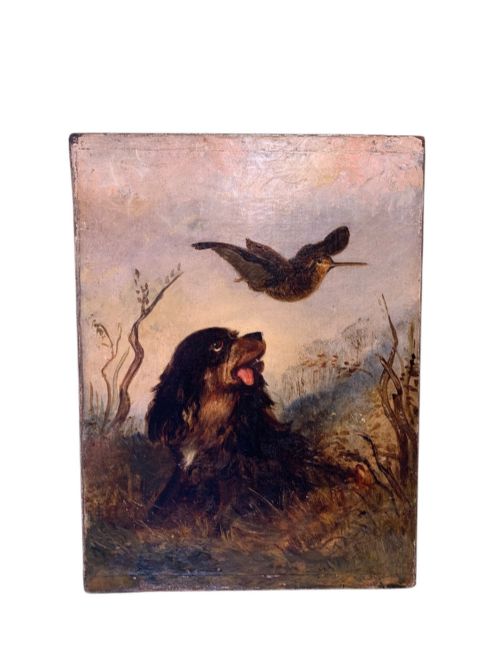
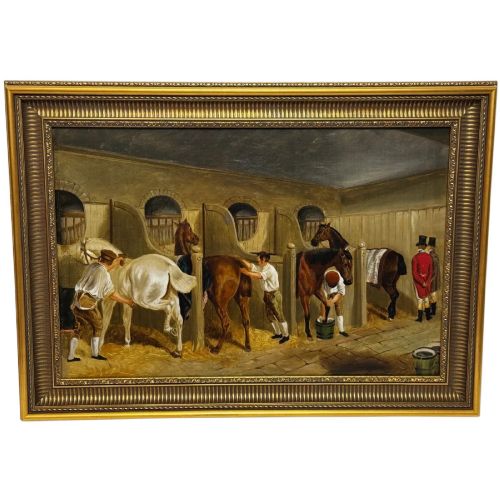
Victorian hunting scene art spans framed oil paintings on canvas, watercolours and engravings depicting equestrian pursuits, hounds and sporting dogs in rural landscapes. Buyers searching for victorian hunting scene art frequently encounter oil on canvas works alongside paper prints and reverse glass paintings. These pieces record the visual culture of nineteenth century sporting life, from the meet to the full cry.
The selections on this page concentrate on nineteenth century production, drawing from Victorian realism and British sporting art traditions. Canvases often portray specific packs like the Berkeley Hunt alongside mounted riders and gun dogs in moorland settings. Architectural panels carved in walnut also appear, extending the theme into three dimensional woodcarving.
Materials and technique
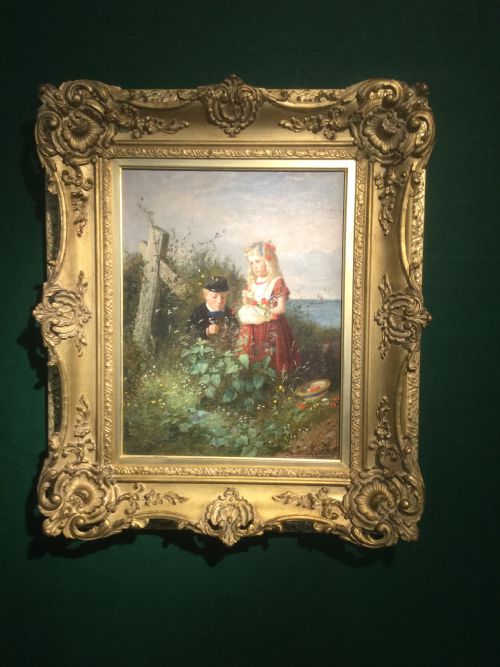
Painters utilised oil paint on canvas or board to build layered depictions of horses, riders and hounds, frequently housed in gilt wood frames. Watercolours on paper capture finer illustrative details, often finished with monochrome or coloured engraving techniques. Glass and paper serve as alternative mediums for silhouette and print works.
Carved walnut panels demonstrate woodworking and relief techniques applied to animal and hunting motifs. Giltwood frames complete many of the oil paintings, employing traditional moulding and gilding methods common in the nineteenth century.
Among the hounds and horses, a solitary guinea pig manages to supervise cottage life from the corner of a nineteenth century canvas.
Evaluating quality in sporting works
Anatomical precision in horses and dogs distinguishes superior works from more formulaic studio output. Artists who accurately render equine movement and canine posture elevate the piece beyond a standard decorative record.
Depth of landscape composition and handling of light in country settings separate accomplished painters from lesser hands. The integration of figures with the surrounding terrain determines the overall visual balance.
George Armfield·Thomas Smythe·Charles Hunt·Edgar Hunt·John Arthur Lomax·Charles Faulkner·John Frederick Herring Jnr·John Charles Tunnard·Heywood Hardy·Robert Cleminson·George Goodwin Kilburne·William J Hodgson·Thomas Blinks·Sir Edwin Henry Landseer·Francis Calcroft Turner·Frank Dadd·Edward B Herberte·Samuel John Egbert Jones·Charles Hunt Jnr
The Victorian Hunting Scene Art Glossary
- Animalier
- Art focusing on the realistic depiction of animals. This term applies to paintings and sculptures highlighting dogs, horses and wildlife.
- Engraving
- A printmaking technique where an image is incised into a metal plate. Impressions are then transferred onto paper.
- Reverse glass painting
- An artwork created by applying paint to the back side of a glass panel. When viewed from the front, the image gains depth and gloss.
- Sporting art
- Depictions of rural sports, equestrian events, shooting and fishing. This genre forms the core of nineteenth century rural painting traditions.
Victorian Hunting Scene Art: Frequently Asked Questions
What subjects appear in these paintings?
Paintings depict mounted riders, fox hunts, horses, hounds and rural landscapes. Domestic farmyard scenes and gun dogs also feature prominently.
Subjects extend to historical genre scenes, equestrian portraits and prints documenting rural pastimes of the period.
How do oil and watercolour works differ?
Oil paintings on canvas offer rich textures and deep colour layering suitable for large country landscapes. Watercolours on paper provide lighter, more illustrative detail.
Both mediums capture movement, but oils dominate the larger scale works on this page.
Where were these pieces produced?
Works originate from nineteenth century British artists and regional schools operating during the Victorian era. Many reflect established traditions of British sporting art.
Scenes frequently reference specific English hunts and countryside locations tied to the period.
How should framed pieces be displayed?
Oil paintings and watercolours require stable interior environments away from direct sunlight to protect pigments and paper. Gilt wood frames benefit from occasional gentle dusting.
Heavy carved panels need secure wall fixings suited to solid wood weights.