


19th Century Hunt Picture
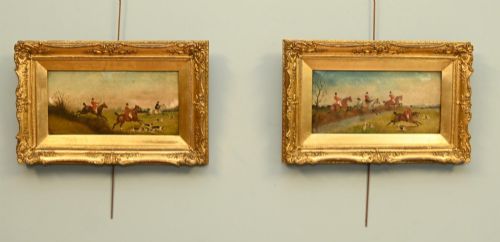
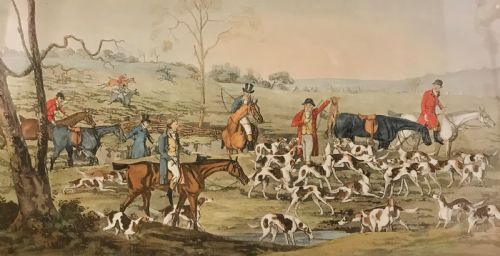
A 19th century hunt picture captures the motion of hounds and riders across open fields, bringing traditional sporting energy directly onto the wall.
19th Century Hunt Picture
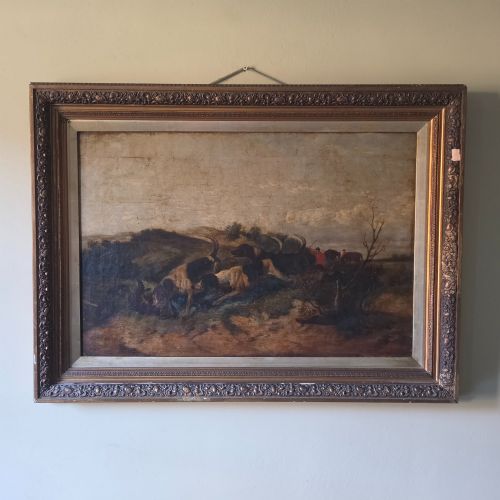
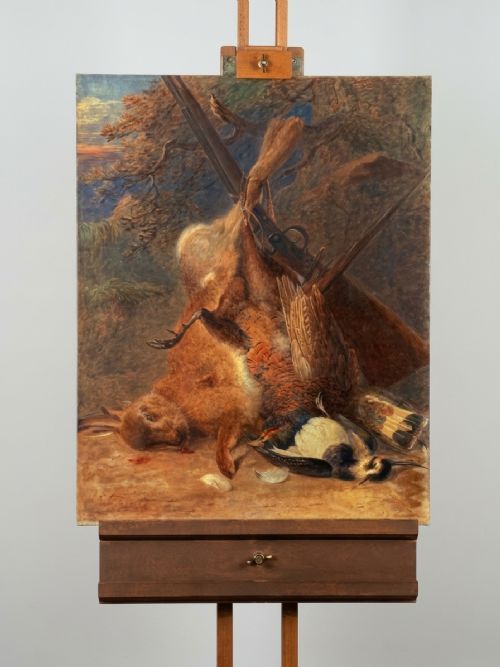
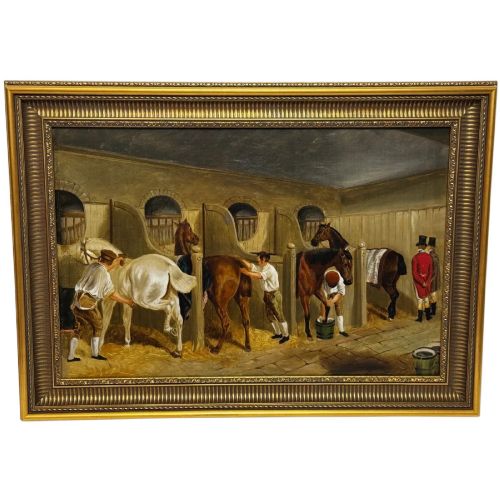
A 19th century hunt picture encompasses oil paintings, watercolours, engravings and reverse glass paintings depicting hounds, horses, country gentlemen and game. The subjects range from the brisk morning meet and full pursuit to quiet studies of gun dogs and rural still life.
Most examples found here date from the Victorian and Georgian eras, reflecting the high popularity of sporting art during the nineteenth century. These works frequently arrive in period giltwood frames that complement the rich tones of the canvas or paper.
Compositions vary from intimate watercolours of individual pointers and setters to large oil paintings chronicling famous packs like the Berkeley Hunt. Artists recorded the social ritual of the chase alongside the specific landscape details of the English and continental countryside.
How They Were Made
Artists worked primarily in oil on canvas or wood panels, alongside detailed watercolours and bodycolour on paper. Engravings and lithographs replicated popular compositions for wider distribution, often hand-finished with watercolour washes.
Frames utilise carved and gilded wood, known as giltwood or gilt wood, which provides the traditional heavy border typical of nineteenth-century picture framing. Reverse glass painting required applying silhouette and colour directly to the reverse side of the glass panel to achieve a smooth finish.
Among the hounds and horses, a diligent Jack Russell terrier stands guard over a trapped rat.
What Varies in Quality
Quality rests upon the artist's ability to render the anatomy of horses and hounds in motion, capturing tension and posture accurately. Weaker examples show stiff animals and static landscapes, while superior works convey genuine momentum and atmospheric light.
The handling of paint and pigment distinguishes standard decorative pieces from fine art. Skilful brushwork builds texture in animal coats and foliage, whereas lesser works rely on flat colour application and formulaic composition.
George Sydney Shepherd·Benjamin Blake·Samuel Raven·Colin Graeme Roe·Charles Faulkner·Henri Schouten·Robert Cleminson·Guillaume Urban Régamey·George Goodwin Kilburne·Edgar Hunt·William J Hodgson·Charles Hunt·Francis Calcroft Turner·Samuel John Egbert Jones·Charles Hunt Jnr·James Pollard·Frank Dadd
The 19th Century Hunt Picture Glossary
- Oil on canvas
- Pigments bound in drying oil applied to a stretched woven fabric support. This was the primary medium for substantial nineteenth-century sporting scenes.
- Watercolour
- A paint consisting of colour suspended in a water-soluble binder, used on paper to create luminous transparent washes. Bodycolour adds white pigment to make the paint opaque.
- Reverse glass painting
- An artwork created by painting or applying silhouettes onto the back of a glass sheet and viewing the image from the front. This technique protects the pigment and produces a glossy surface.
- Giltwood
- Wood that has been carved and coated with a thin layer of gold leaf or gold paint. Frames of this material define the presentation of nineteenth-century oil paintings.
19th Century Hunt Picture: Frequently Asked Questions
What is a hunt picture?
A hunt picture is a nineteenth-century artwork depicting equestrian sports, hounds, game, and rural gatherings. These pieces record the traditions of the countryside and the central role of field sports in society.
Artists documented everything from formal hunts and country estates to detailed portraits of prize gun dogs. They served as proud displays for landowners and sporting enthusiasts.
How were these pictures displayed?
These works hung primarily in country houses, libraries, and dining rooms alongside trophies and sporting equipment. Heavy gilt frames emphasised their status as important decorative and artistic statements.
Today, they suit traditional interiors, studies, and hallways, pairing naturally with wood panelling and antique furniture.
Are engravings considered original art?
Nineteenth-century engravings and lithographs were printed from engraved plates or stones after original paintings by notable artists. Many received hand-colouring with watercolour washes at the time of publication.
While multiple impressions exist, period prints remain collected historical items that record famous sporting scenes and master compositions.
How do I identify the period?
Periods are determined through artist signatures, historical subject matter, framing styles, and the materials used. Works often bear dates, inscriptions, or attribution details on the canvas, paper, or reverse.
Costume details, architectural elements, and specific hunt names also help date the composition to the Georgian or Victorian era.