

Traditional Countryside Landscape Artwork
Traditional countryside landscape artwork captures British rivers, farms and hills in oil and watercolour across the nineteenth and twentieth centuries.
Traditional Countryside Landscape Artwork
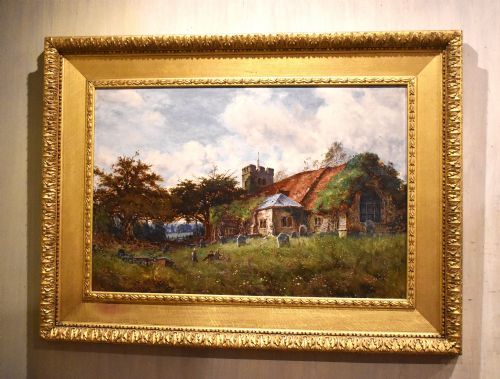
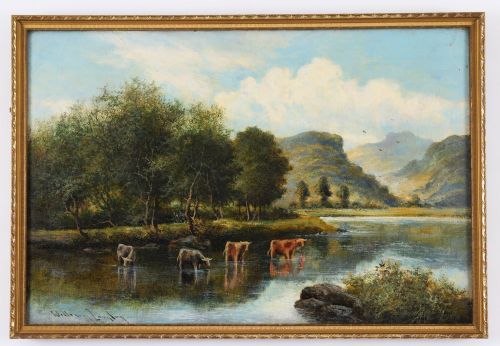
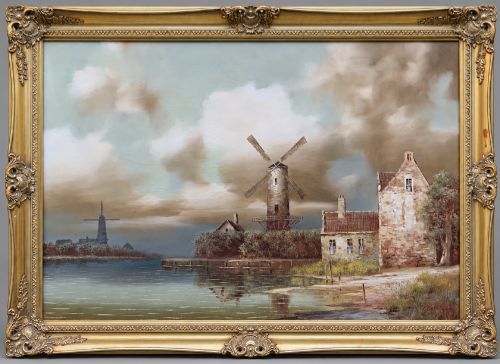
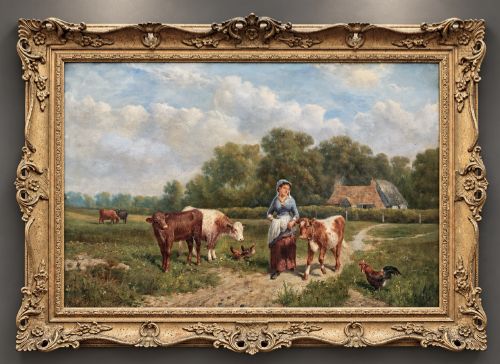
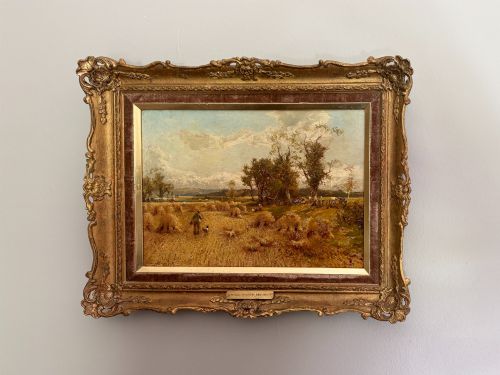
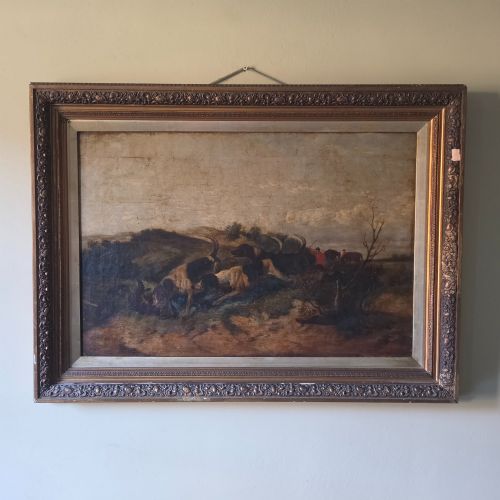
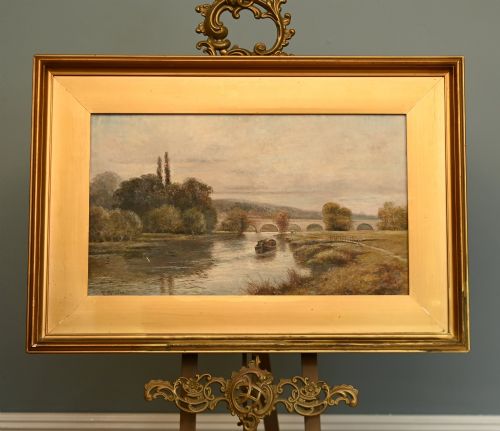
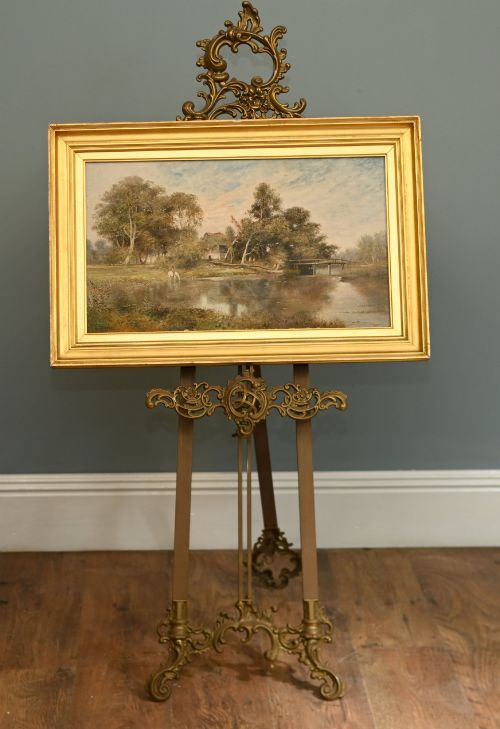
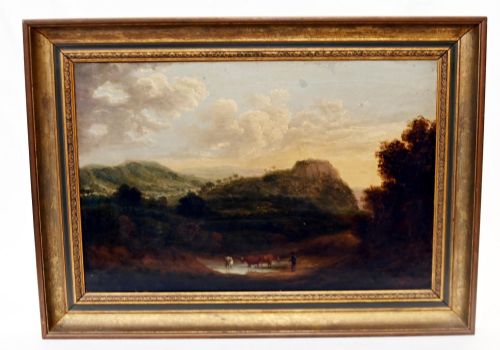
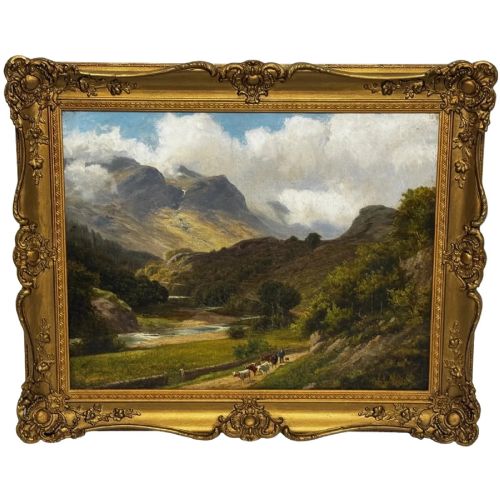
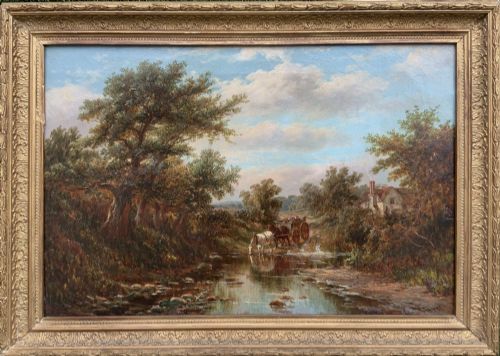
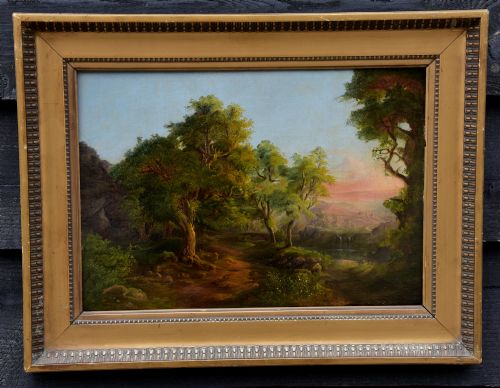
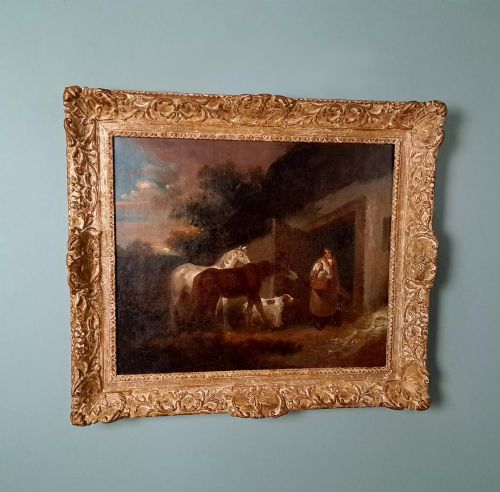
Traditional countryside landscape artwork captures rural scenes, pastoral riverbanks and agricultural life across Britain. Buyers encounter nineteenth-century canvases, Edwardian watercolours and early twentieth-century panels showing cattle, rivers and sheep.
Most pieces date from the Victorian era onward, recorded in oil on canvas, oil on board and watercolour on paper. Subjects range from Welsh valleys and Cumbrian lakes to quiet village lanes and river views.
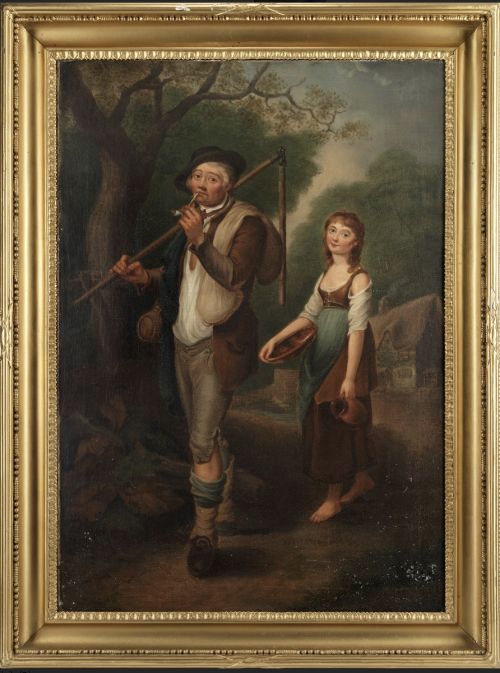
The selection includes framed oil paintings and watercolours signed by regional artists as well as works attributed to the British School. These pieces reflect historical artistic interest in local topography and pastoral daily life.
Materials and methods
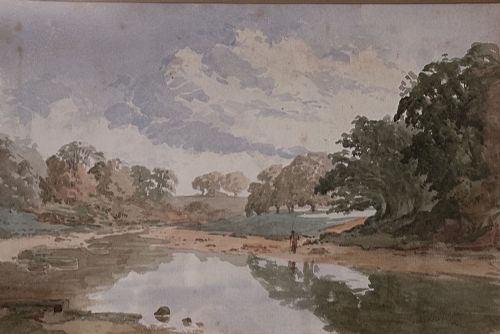
Painters utilised oil paint applied to canvas, wooden panels or boards, building rich textures for rural foliage and water. Watercolours on paper capture lighter atmospheric effects in river valleys and upland scenes.
Many works retain their original gilt and gesso frames which complement the palette of nineteenth and twentieth-century pastoral compositions. Supporting materials include heavy opaque gouache and paper mounted securely within wooden surrounds.
Listings span the nineteenth and twentieth centuries, incorporating Victorian oil paintings, Edwardian watercolours and mid-century canvas views.
Quality variations
Brushwork confidence and topographical clarity separate accomplished compositions from simpler decorative school pieces. Handling of natural light and atmosphere across water and pasture defines the strength of a painted scene.
Condition of the canvas, panel support and original giltwood framing influences the integrity of the surviving artwork. Signed works by documented artists display greater command over perspective and tonal balance.
Samuel Joseph Clark·William Manners·E Steele·F Staple·Thomas Thomas·William H Myers·Thomas Barker of Bath·William Joseph Boyes·David Bates·George Oyston·Russell Sidney Reeves·Vernon DeBeauvoir Ward·Alexander Wellwood Rattray·John Horace Hooper·Hubert Wellington·Charles Walter Simpson·Henry Charles Fox·William Henry Mander·Herbert Royle·John Sanderson Wells·Reginald Grange Brundrit·Frederick Septimus Lewis·William Hoggatt
The Traditional Countryside Landscape Artwork Glossary
- Oil on canvas
- Pigment mixed with drying oil applied to a stretched woven fabric support. This combination allows for deep blending of colour and rich surface texture.
- Watercolour
- Pigment suspended in a water-soluble vehicle painted on paper. Artists utilise washes to create transparent effects and luminous skies.
- Giltwood
- Timber carved and coated with gold leaf or metallic powder. It provides a reflective decorative border common in period framing.
- Gesso
- A plaster mix applied to wood panels or frames as a smooth base for gilding or painting. It creates a stable foundation for decorative elements.
- Board
- A rigid wooden or compressed material used as a flat support for oil paint. It offers a solid alternative to stretched canvas.
Traditional Countryside Landscape Artwork: Frequently Asked Questions
How do I hang a heavy oil painting?
Secure the hanging wire or brackets directly into wall studs using appropriate wall anchors and picture hooks rated for the weight of the canvas and frame.
Position the artwork at eye level, ensuring the balanced frame complements adjacent furniture and receives indirect natural illumination away from damp areas.
Can I place these watercolours in direct sunlight?
Sunlight fades watercolour pigments and degrades paper over time, so display these works away from windows or use UV-protective glass.
Keep framed pieces in rooms with stable humidity levels to prevent warping of the paper and degradation of the original mount.
How do I clean an antique oil painting?
Dust the canvas and frame very gently with a soft, dry brush without applying pressure to the painted surface.
Avoid using water, liquid cleaners or household solvents on oil paint or gilt frames, and consult a professional conservator for deeper cleaning.
What defines a Victorian pastoral landscape?
Victorian pastoral works depict idealised rural life, often featuring grazing cattle, sheep, rivers and rustic cottages under soft atmospheric skies.
These scenes reflect nineteenth-century sentimentality toward the British countryside, rendered through careful brushwork and naturalistic palettes.