



Framed Canvas Hunting Artwork
When you search for framed canvas hunting artwork, you meet centuries of sporting traditions captured in oils on canvas.
Framed Canvas Hunting Artwork
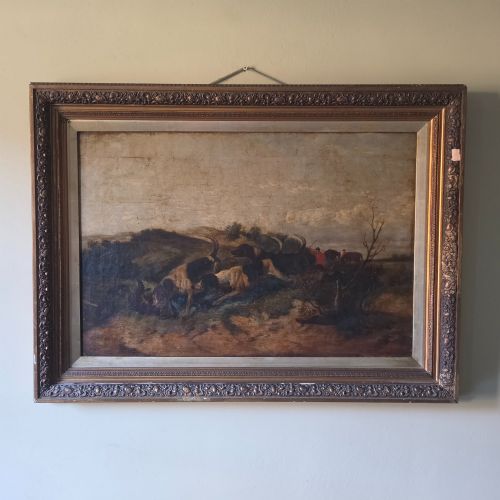
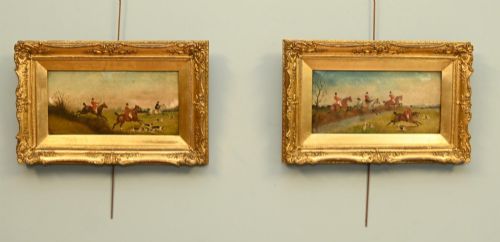
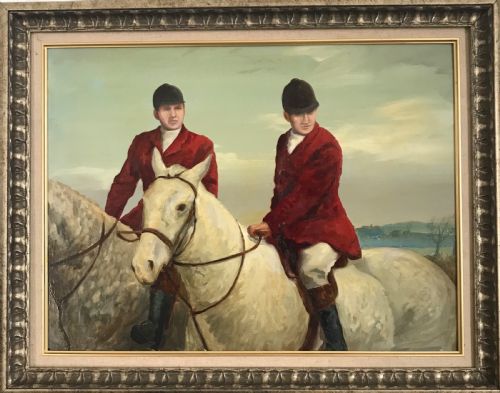
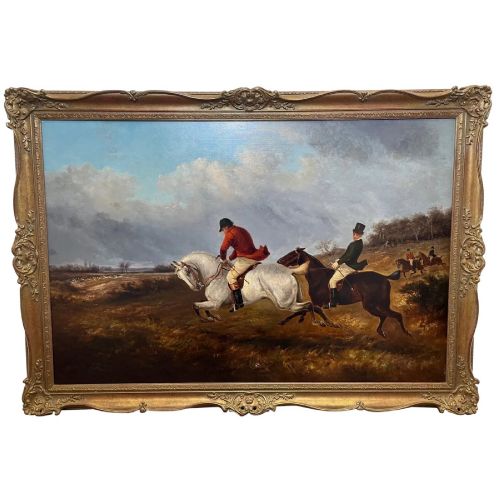
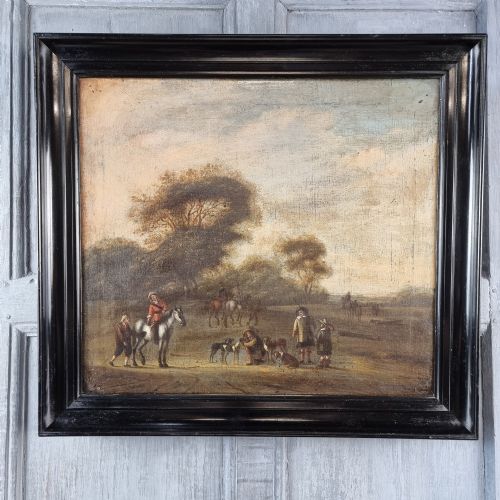
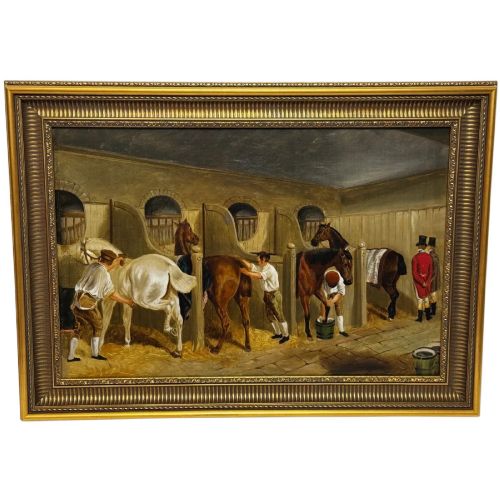
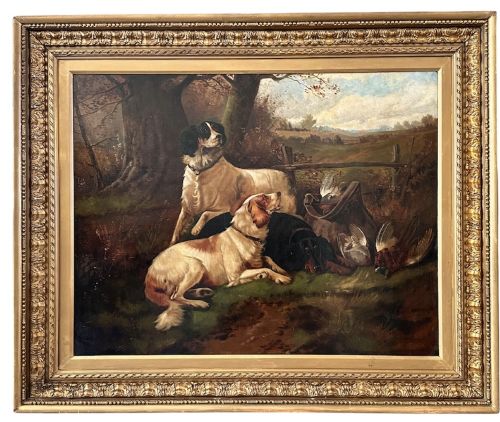
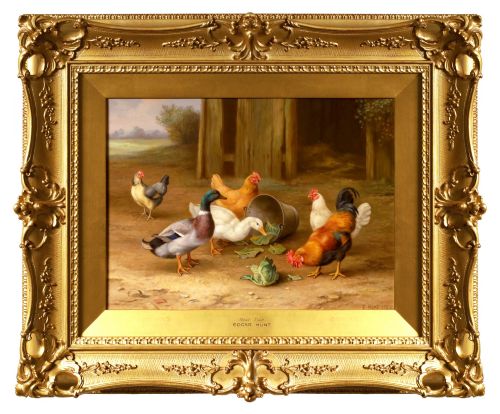
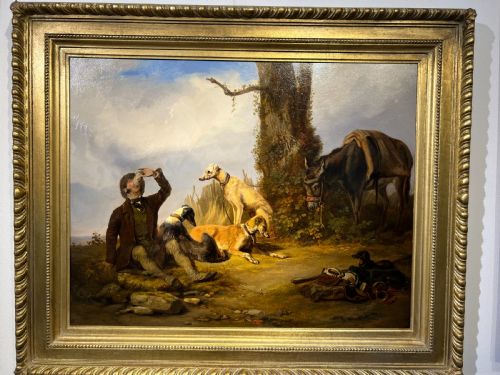
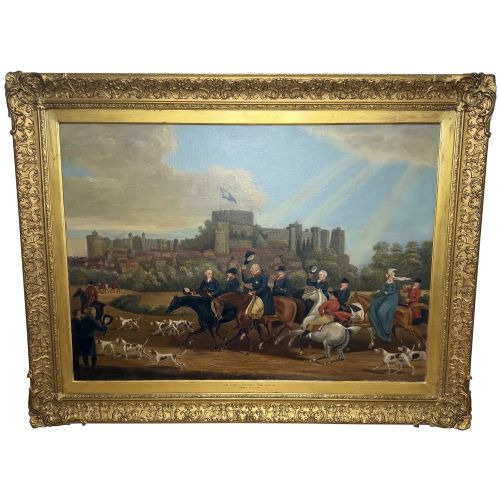
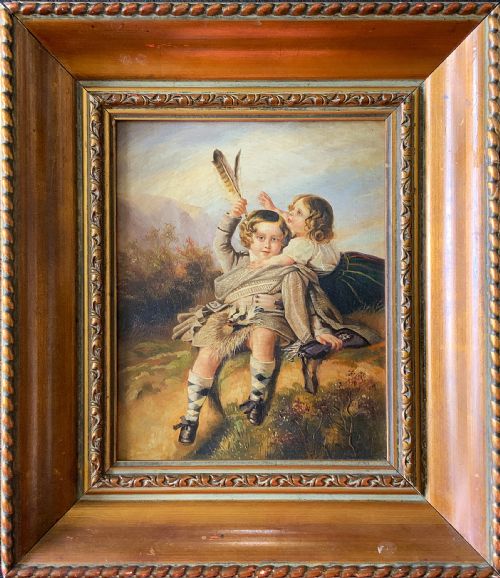
When you examine framed canvas hunting artwork, you look at oil paintings depicting fox hunts, equestrian subjects, and sporting dogs from the nineteenth century onward. The version you are most likely to meet on this page is a Victorian canvas housed in a timber or gilt frame.
Subjects range from grand mounted meets and hounds in full cry to quiet studies of gun dogs and game. These pieces record the social and sporting history of the countryside through the brush of period artists.
Materials and construction
The primary technique relies on oil paint applied to woven canvas stretched over wooden frames, often supported by heavy wooden mouldings finished with gilt or gold leaf. Many of these works retain their original frames, which show period gilding and joinery.
Artists built depth through layered oil pigments, capturing the sheen of horses' coats and the textures of moorland landscapes. The combination of durable canvas and robust timber framing ensures these paintings survive across generations.
Several canvases capture dogs in moments of high drama, from terriers guarding trapped rats to hounds deep in winter snow.
Distinctions in execution
Quality rests upon the artist's command of anatomy, movement, and light, distinguishing master sporting painters from routine studio work. A superior canvas portrays horses, hounds, and riders with convincing musculature and anatomical accuracy.
The sophistication of the framing and the preservation of the painted surface further separate fine examples from standard works. Original gilt wood frames with intact mouldings elevate the presence of the painting.
Thomas Smythe·Edgar Hunt·Henri Schouten·Colin Graeme Roe·John Sanderson-Wells
The Framed Canvas Hunting Artwork Glossary
- Oil on Canvas
- A painting medium where pigments are suspended in drying oils and applied to a stretched woven fabric support. This combination allows for rich colour blending and lasting durability.
- Gilt Wood
- Timber that has been decorated with a thin layer of gold leaf or metallic powder. It provides a bright, reflective border that enhances the composition within.
- Sporting Art
- A genre of painting dedicated to depicting rural sports, including fox hunting, shooting, and equestrian pursuits. These works document the animals, participants, and landscapes of traditional pastimes.
- Equestrian
- Pertaining to horses and horseback riding. In these works, equine subjects form the central focus of the composition.
Framed Canvas Hunting Artwork: Frequently Asked Questions
What periods do these paintings come from?
The works span from earlier historical interpretations up through the nineteenth and twentieth centuries, with a heavy representation of Victorian production.
Victorian sporting art forms the core of the selection, accompanied by pieces from later decades of the twentieth century.
How were these artworks framed originally?
Makers housed these canvases in wooden frames, frequently finished with gilt or gold leaf to complement the richness of the oil pigments.
Many retain their period surrounds, which show traditional joinery and decorative moulding styles appropriate to the date of execution.
What subjects appear most frequently?
Fox hunting scenes dominate the selection, featuring mounted huntsmen, packs of hounds, and galloping horses across open countryside.
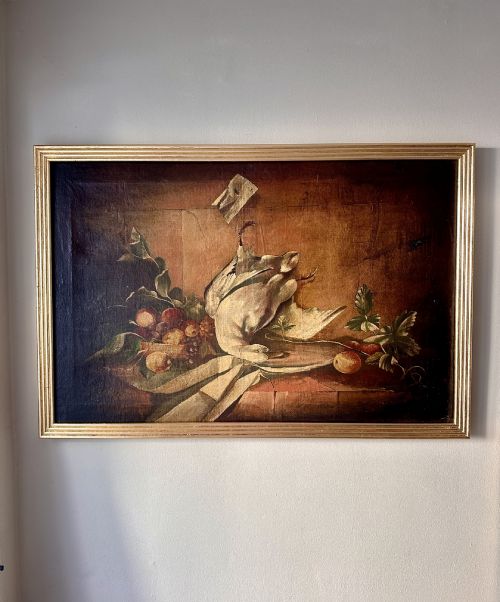
Other common subjects include gun dogs with game, equestrian portraits, and still life arrangements of game and fruit.
How do I care for an oil painting on canvas?
Keep the canvas away from direct sunlight and dramatic shifts in temperature or humidity to protect the oil pigments and wooden stretcher bars.
Dust the surface gently with a soft, dry brush and avoid using liquid cleaners on either the canvas or the frame.