


Victorian Helmet Coal Scuttle
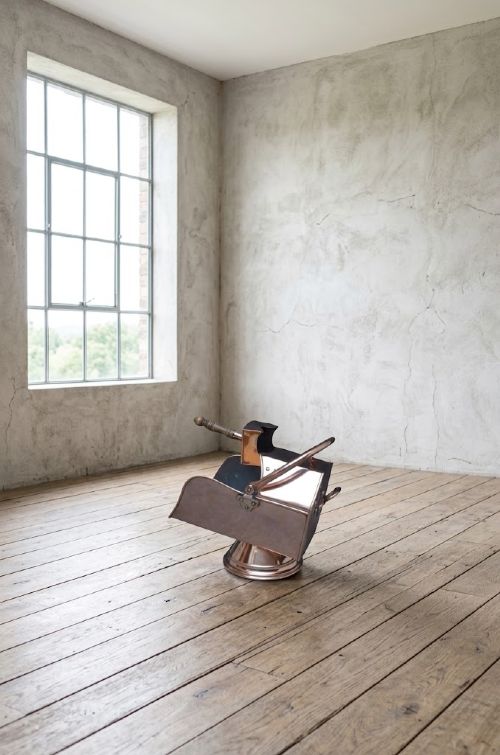
A victorian helmet coal scuttle brings functional hearthside metalwork into the room, shaped with a characteristic sloped lip for carrying fuel.
Victorian Helmet Coal Scuttle
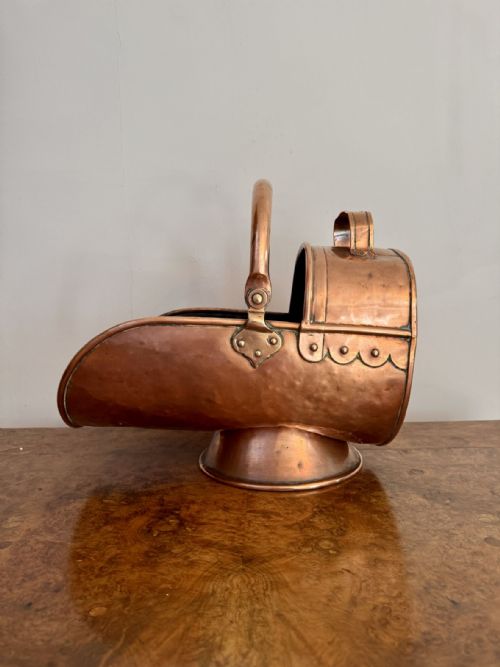
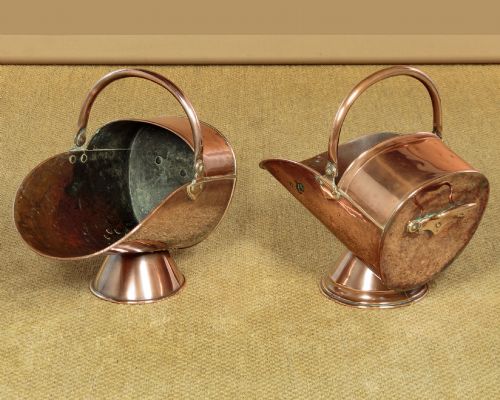
When you search for a victorian helmet coal scuttle, you encounter fireside vessels designed to hold and transport fuel to the grate. These pieces take their name from their distinctive silhouette, featuring a high back, side handle, and a projecting front lip reminiscent of a classical helmet.
The versions met most frequently on this page date from the nineteenth century, spanning the Victorian and Edwardian eras. They appear primarily in copper and brass, sometimes paired with iron or ebonised wood for handles and mounts.
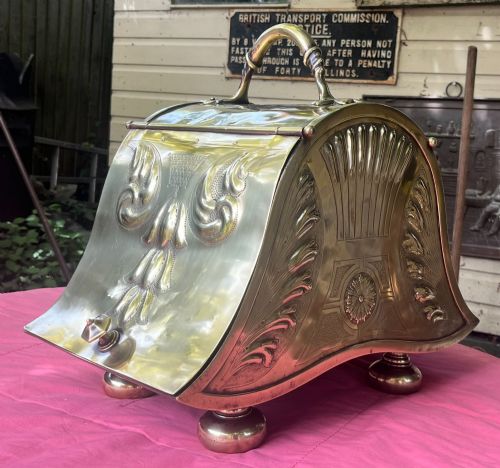
Makers produced these coal scuttles to sit beside the fireplace as practical accessories. Alongside the standard helmet form, variations include dual-lid designs, cylindrical log buckets, and pieces associated with the Arts and Crafts and Art Nouveau movements.
Materials and construction methods
Metalworking techniques define the construction of these fireside containers, utilising sheet copper and brass shaped by hand or machine. Artisans hammered, spun, or embossed the metal sheets to create rigid bodies capable of bearing the weight of coal.
Many examples incorporate cast brass handles, swinging bails, and feet riveted securely to the main body. Some pieces from the later period display hammer-beaten surfaces characteristic of Arts and Crafts production.
Some industrious Victorian households repurposed these metal helmets into umbrella stands once central heating reduced the need for coal fires.
Markers of distinction
The calibre of a coal scuttle rests in the weight of the metal utilised and the integrity of its assembly. Heavier gauge copper or brass provides structural rigidity, preventing distortion along the rim and base during daily use.
Detailing distinguishes individual pieces, such as the presence of an original matching shovel, cast handle mounts with decorative chasing, and well-fitted joints. Simpler stamped or machine-formed vessels lack the crisp definition found on superior examples.
Benham and Froud·Henry Loveridge and Co
The Victorian Helmet Coal Scuttle Glossary
- Helmet scuttle
- A fireside coal container featuring a high back and a downward-sloping front lip. This configuration allowed the user to tip fuel directly onto the fire.
- Bail handle
- A semi-circular swinging handle attached to the sides of the bucket. It enables the carrier to lift and tilt the vessel with both hands.
- Ebonised wood
- Timber treated with a dark stain or finish to imitate ebony. It appears frequently on the knobs and grips of these metal vessels.
- Embossed
- Ornamented with raised patterns pressed or hammered into the sheet metal from behind. This technique adds texture and visual interest to plain copper surfaces.
- Dual lid
- A configuration featuring two hinged flaps meeting at the top of the container. This design conceals the contents while permitting access from either side.
Victorian Helmet Coal Scuttle: Frequently Asked Questions
How were these coal scuttles used?
These vessels sat beside the hearth to store solid fuel close to the fireplace. Users lifted them by the swinging bail handle and tipped coal into the grate using the projecting front lip.
Many retained an accompanying shovel stored in a side sleeve or bracket for transferring smaller amounts of fuel without spilling dust.
How do I clean a brass or copper scuttle?
Maintenance depends on the desired appearance and the presence of any protective lacquer. Warm soapy water removes surface dust and soot without harming the metal.
Polishing agents restore brightness to bare copper and brass, though many collectors prefer to leave an aged patina intact.
Did these pieces include shovels originally?
Numerous examples left the workshop equipped with a matching brass or iron shovel designed to slide into a side mounting bracket. Surviving shovels add completeness to the ensemble.
Many pieces lost their original scoops over decades of domestic use, leading to scuttles appearing on their own.
How can I distinguish period styles?
Mid-nineteenth-century items often display plain, polished surfaces with heavy gauge construction and riveted joints. Later nineteenth and early twentieth-century examples incorporate embossed decoration or hammered textures aligned with the Arts and Crafts and Art Nouveau movements.
Edwardian production frequently utilises lighter brass and copper gauges alongside simpler commercial stamping methods.