

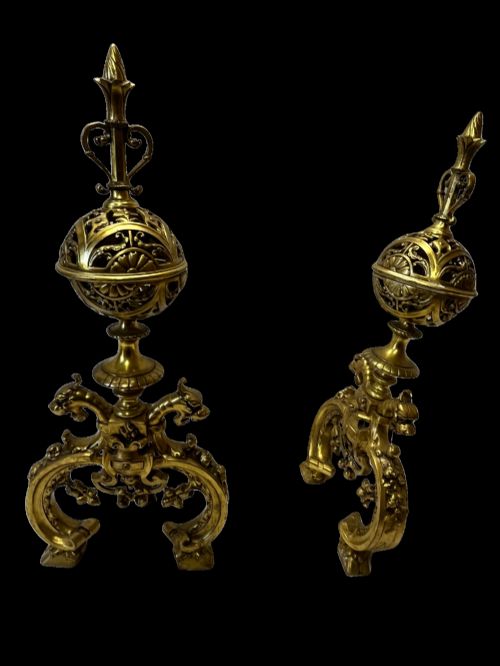


Victorian Hearth Andirons
Victorian hearth andirons anchor an open fire, supporting logs above the hearth floor while bringing brass, iron and bronze detail to the room.
Victorian Hearth Andirons
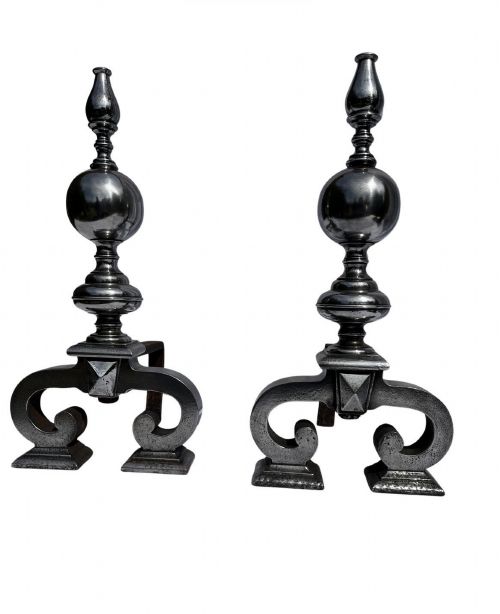
Victorian hearth andirons are functional fire dogs designed to hold logs within an open fireplace or fire basket. They appear frequently in brass, cast iron and wrought iron, often accompanied by matching companion sets or fire irons.
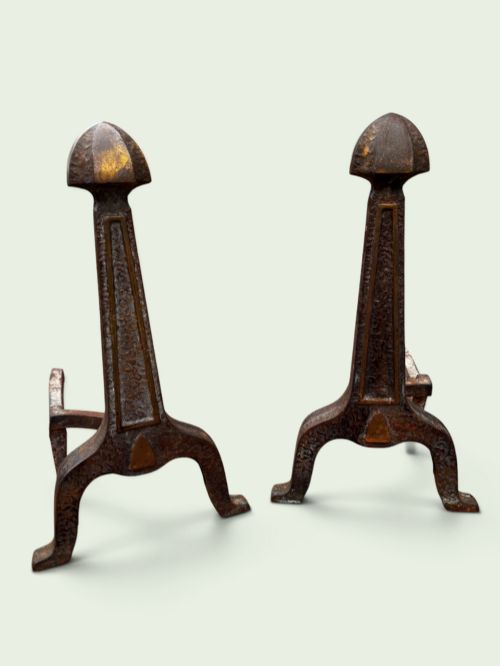
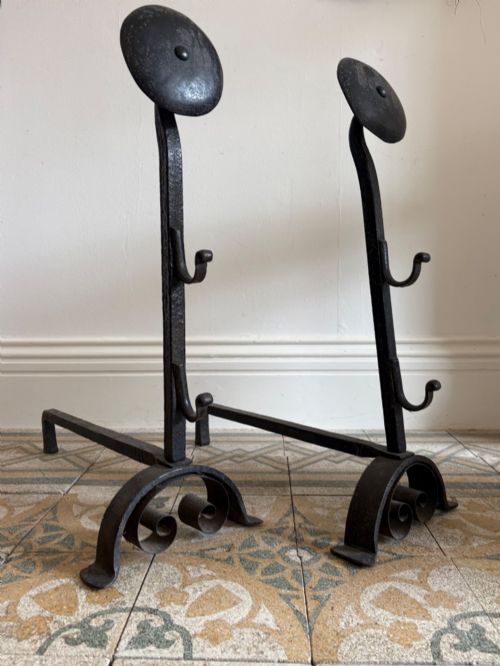
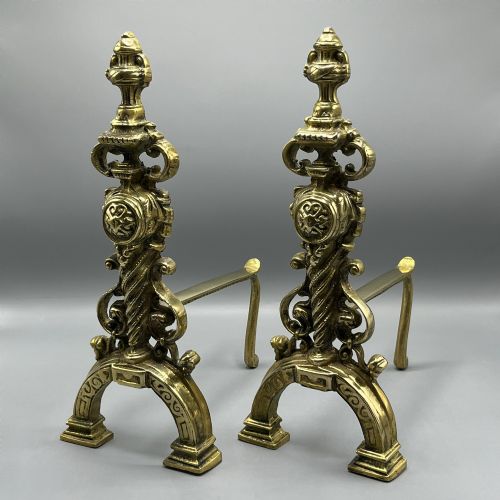
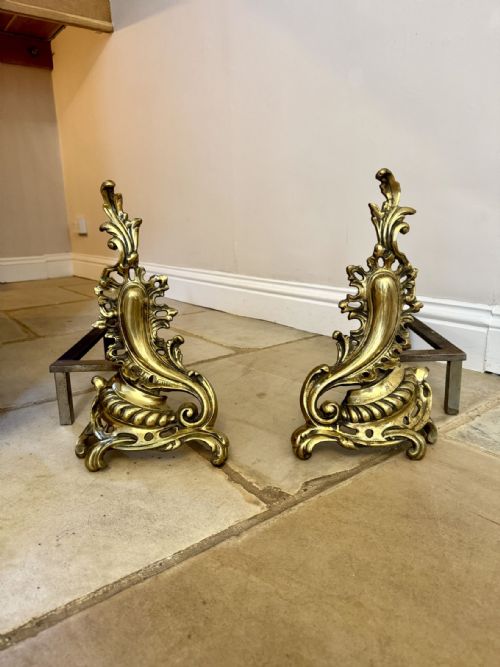
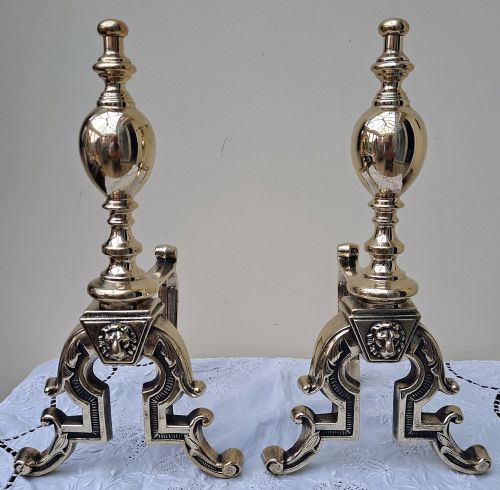
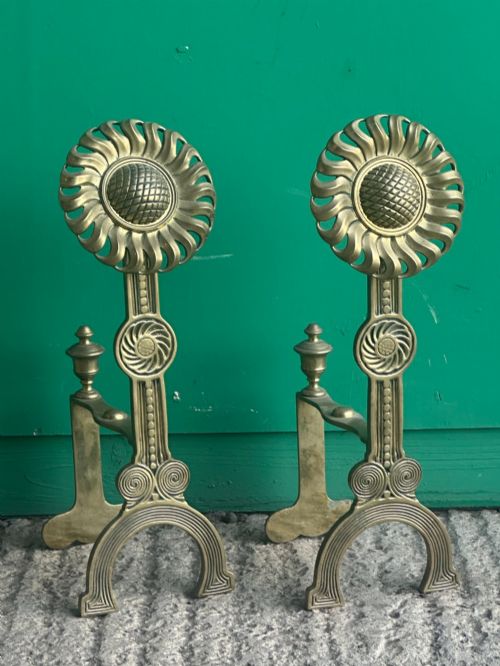
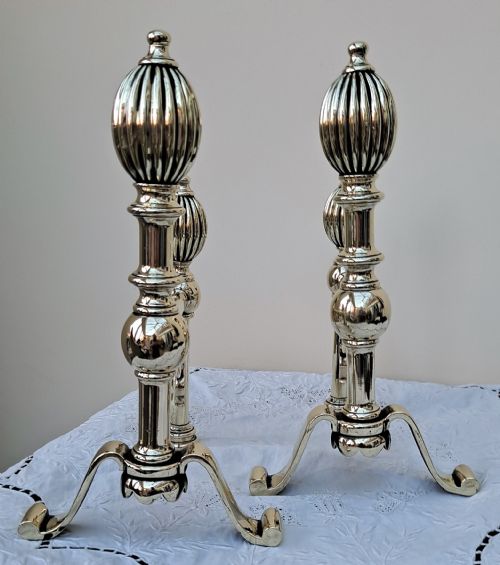
The pieces on this page span the nineteenth century and the early twentieth century, showing periods like eighteen eighty and nineteen hundred. Forms range from simple utilitarian iron supports to ornate cast brass pairings in Gothic Revival and Arts and Crafts styles.
Buyers will encounter substantial pairs intended for large inglenook hearths alongside neat domestic versions. Many examples incorporate rests for fire tools or integrate directly with fire grates.
Materials and Manufacture
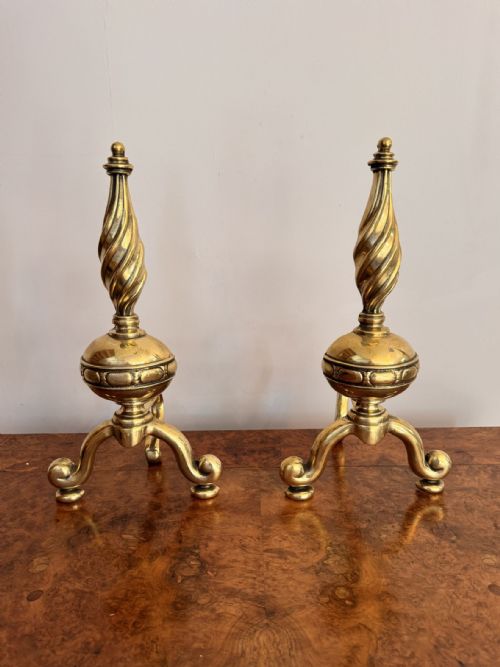
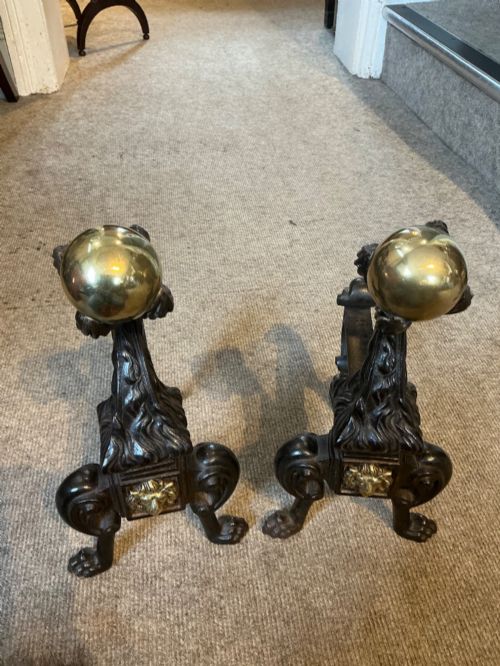
Makers utilised cast brass and solid brass for polished decorative fronts, employing sand casting to achieve sharp relief in styles such as French rococo and Victorian neoclassical. Heavy iron and wrought iron provided the structural strength required to bear burning timber.
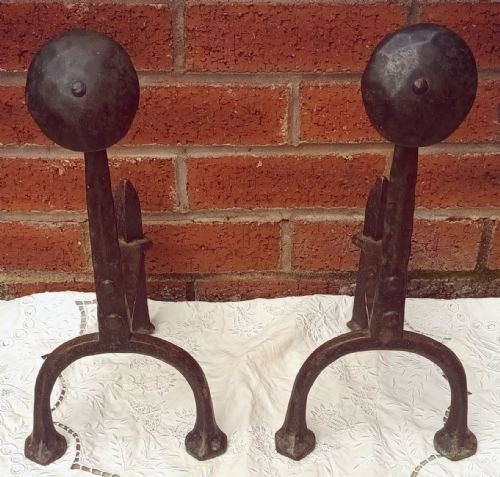
Wrought iron examples often show hand-forged shaping and riveted construction typical of the Arts and Crafts movement. Steel and bronze appear in select pieces, while surface finishes range from bright polished brass to blackened iron.
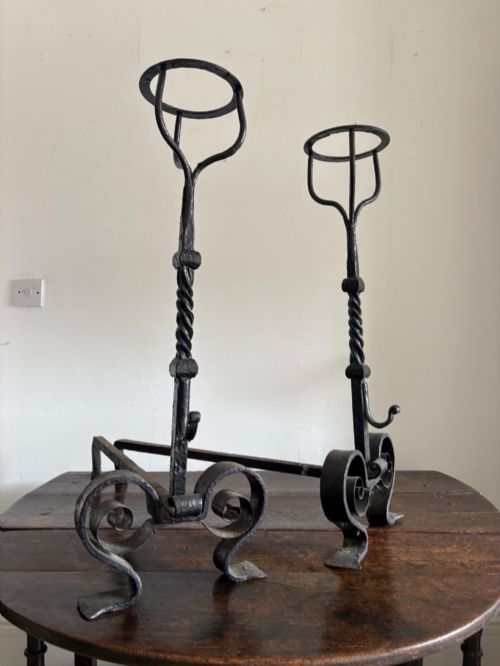
Some nineteenth century brass pairs include built-in rests specifically designed to hold poker handles cool while the logs burn.
Evaluating Quality
Quality rests in the weight of the metal and the crispness of the casting or forging. Finer examples display deep, clean modelling in brass ornamentation and robust, well-balanced iron billets that sit squarely on the hearth without rocking.
Superior pairs maintain their original matching components, such as integrated tool rests or associated fire irons, rather than assembled pairings. The depth of material gauge in the upright standards and legs dictates longevity under high hearth temperatures.
Thomas Jeckyll·William Tonks·James Cartland and Sons·Christopher Dresser
The Victorian Hearth Andirons Glossary
- Andirons
- Supports for burning logs in an open fireplace, consisting of a horizontal bar with an upright standard at the front. They are also known historically as fire dogs.
- Billet bar
- The horizontal iron bar extending backward from the upright standard to support the logs. This structural member bears the weight of the fire.
- Fire basket
- A metal grate holding fuel within a hearth, frequently used in conjunction with a pair of andirons. These assemblies often form part of a larger Victorian fireplace suite.
- Arts and Crafts
- A design movement prioritising visible handcraftsmanship and simple structural forms over mass-produced ornamentation. Iron and brass andirons from this tradition show clean lines and forged details.
- Gothic Revival
- An architectural and decorative style drawing on medieval motifs, popular during the nineteenth century. Pieces in this manner display pointed arches, trefoils and heavy ecclesiastical proportions.
Victorian Hearth Andirons: Frequently Asked Questions
How do I choose the right size for my fireplace?
Measure the width and depth of your hearth opening before selecting a pair. Taller and heavier pairs suit deep inglenook fireplaces, while neat domestic versions fit standard nineteenth century grates.
Ensure the billet bar length allows logs to rest securely between the upright front and the back of the fireplace.
Can these andirons support a real wood fire?
Most heavy iron and brass pairs are built for active hearth use, provided the metal gauge is substantial. Wrought iron and cast iron components handle thermal stress well during regular burning.
Lighter decorative brass versions are better suited for display or paired with gas fire baskets rather than heavy logs.
How should I clean and polish brass andirons?
Use a mild proprietary brass cleaner with a soft cloth to remove tarnishing while preserving the underlying metal. Avoid abrasive pads that scratch the surface and ruin the antique patina.
Cast iron parts benefit from a light application of grate polish or oil to prevent oxidation and maintain a dark matte finish.
What is the difference between andirons and fire dogs?
The terms are generally used interchangeably to describe fireplace supports with upright fronts. Historically, fire dogs sometimes referred specifically to the utility supports, while andirons described more decorative front standards.
Both serve the same primary function of elevating logs to improve airflow beneath the fire.