





Victorian Hand Painted Charger
These victorian hand painted charger examples bring nineteenth-century ceramic artistry to the wall or cabinet with hand-brushed scenes and rich enamels.
Victorian Hand Painted Charger
A victorian hand painted charger offers a broad decorative canvas, usually spanning earthenware, ironstone, porcelain, and bone china forms produced through the nineteenth century. Buyers encounter large display plates and wall plaques alongside cabinet plates and meat platters bearing detailed hand-painted decoration.
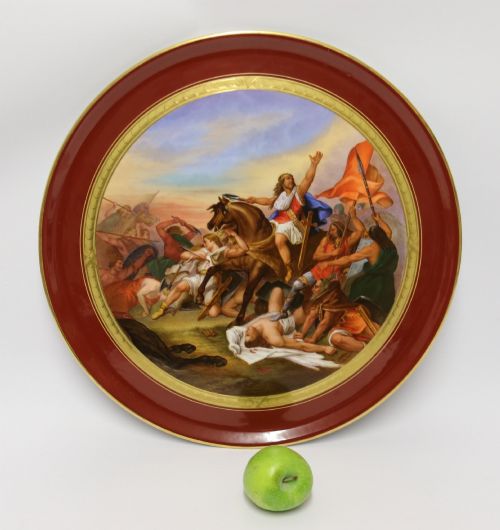
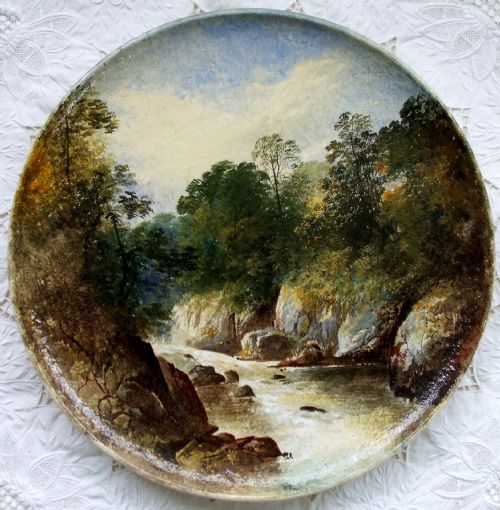
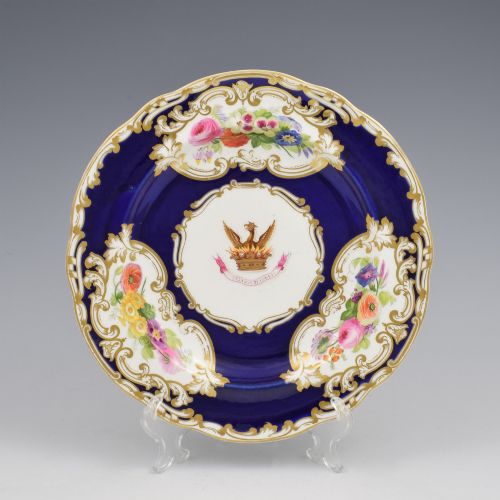
The selection ranges from English Copeland potteries and Royal Worcester to French Paris porcelain and Japanese Imari ceramics imported or styled during the period. These pieces frequently feature landscapes, armorial crests, mythological battle scenes, or exotic birds rendered in rich palettes.
Most entries align with late-nineteenth-century production dates, particularly the 1880s and 1890s, when painted ceramic plaques and large display chargers enjoyed great popularity. Collectors select them for their prominent scale and individual artistic execution.
Materials and methods
Potters shaped these large display items from clay bodies including bone china, heavy ironstone, earthenware, and fine Paris porcelain. Artisans then applied white or coloured glazes to form the smooth ground necessary for detailed miniature painting.
Painters used enamel colours, often heightened with gilt or gold leaf accents, to bring portraits, landscapes, and armorial crests to life before a final kiln firing fixed the pigments. Copeland and Royal Worcester pieces typically show precise brushwork over fine white glazes.
Imported Japanese Imari wares relied on traditional Arita ceramic techniques combined with underglaze blue and overglaze enamel iron-red and gold details. European factories adapted these influences into Rococo Revival and Victorian Historicism styles.
Copeland artists braved the Welsh weather to paint local views of Fairy Glen and the Llugwy.
Judging the work
Quality rests primarily in the ambition and execution of the hand-painted subject matter, distinguishing factory production work from signed artist pieces. Named views, historical depictions, and detailed bird studies by known ceramic painters command greater attention than standard floral patterns.
The crispness of the enamel work and the application of gilt or gold leaf dictate visual weight. Finer examples retain bright, unrubbed metallic highlights and subtle tonal shading across landscapes and figures.
The physical weight and stability of the ceramic base, whether heavy ironstone or thin porcelain, indicate the intended function. Plates with reticulated borders or scalloped edges require precise firing skill to avoid warping.
Royal Bonn·Copeland Pottery·Meissen·Pucher Deroche·Royal Worcester·Royal Crown Derby
The Victorian Hand Painted Charger Glossary
- Charger
- A large ornamental plate intended for display on a wall or sideboard rather than daily dining use. These wide surfaces provided artists with ample room for elaborate landscape or figural painting.
- Imari
- A style of Japanese ceramic decoration featuring deep underglaze blue, iron-red enamel, and gold highlights. European potteries frequently copied these distinctive palettes and motifs during the nineteenth century.
- Reticulated
- Describes ceramic borders pierced with openwork geometric or lattice patterns. This technique demands careful handling before firing to prevent structural collapse.
- Ironstone
- A durable type of earthenware patented in the nineteenth century for heavy tableware and platters. It provides a dense, heavy body that resists chipping.
- Armorial
- Bearing a family crest, coat of arms, or heraldic shield. Such ceramics were often commissioned specifically for noble or prominent households.
Victorian Hand Painted Charger: Frequently Asked Questions
Were chargers meant for dining?
Large nineteenth-century examples served primarily as decorative display pieces on walls, sideboards, or cabinet shelves rather than functional tableware.
Their substantial diameter and delicate painted surfaces made them vulnerable to cutlery marks, so owners showcased them as art.
How do I hang a heavy wall plaque?
Wall plaques and large dishes require specialist spring-clip hangers designed to distribute weight evenly across the rim without putting pressure on the ceramic body.
Ensure the wall fixing engages securely with brickwork or stud framing to support the considerable weight of ironstone or thick porcelain.
What is Japanese Imari influence?
Nineteenth-century European factories frequently copied the distinct red, blue, and gold palette of imported Japanese porcelain.
Potters in England and on the continent adapted these saturated patterns to suit Victorian tastes for ornate, colourful display wares.
Why are some Copeland pieces signed?
Factory artists occasionally signed landscape or portrait plaques to record individual authorship, particularly on bespoke topographical scenes.
Signed works by painters like William Yale indicate higher artistic ambition than standard transfer-printed or factory-decorated wares.