
Victorian Hallway Umbrella Storage
These Victorian hallway umbrella storage pieces keep entryways orderly while bringing period ironwork and timber into the home.
Victorian Hallway Umbrella Storage
Victorian hallway umbrella storage encompasses umbrella stands, stick stands, and larger hall furniture designed to receive wet weather gear upon entry. The pieces encountered here span the Victorian period, late nineteenth century, and Edwardian years, reflecting domestic routines of the past.
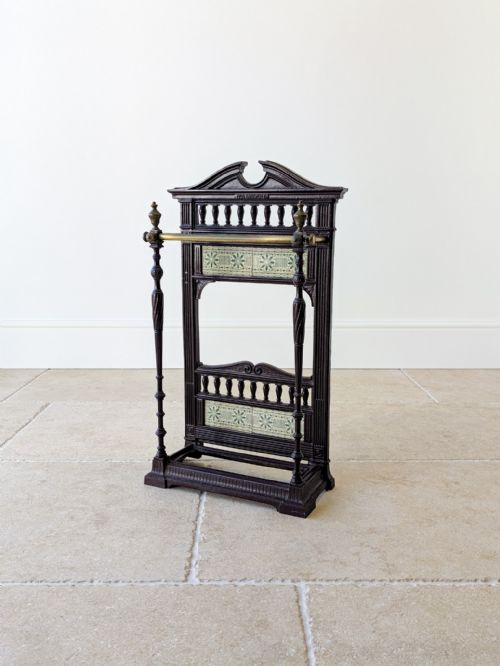
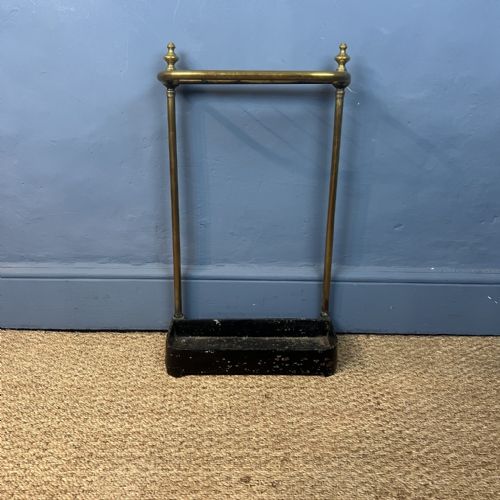
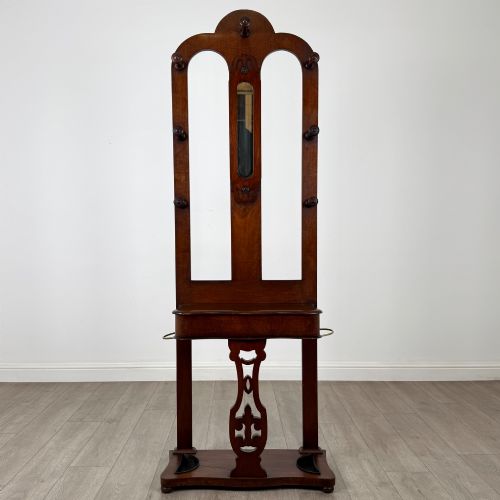
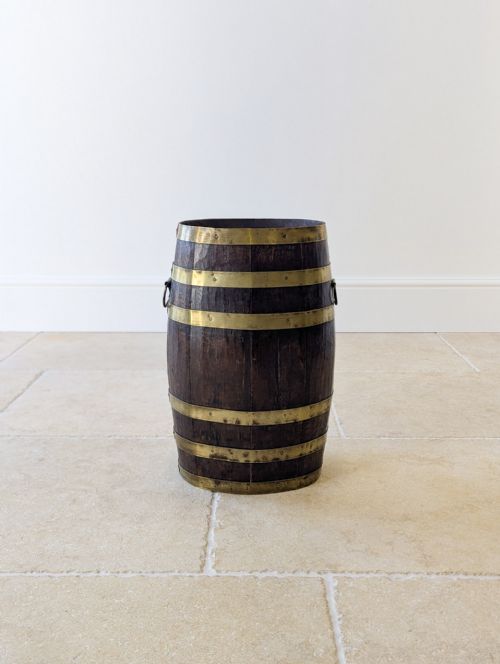
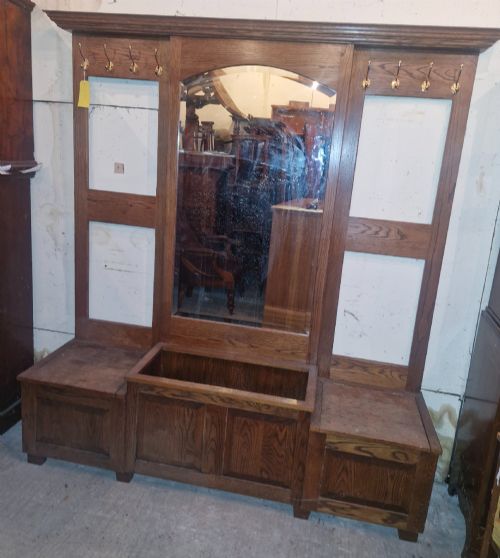
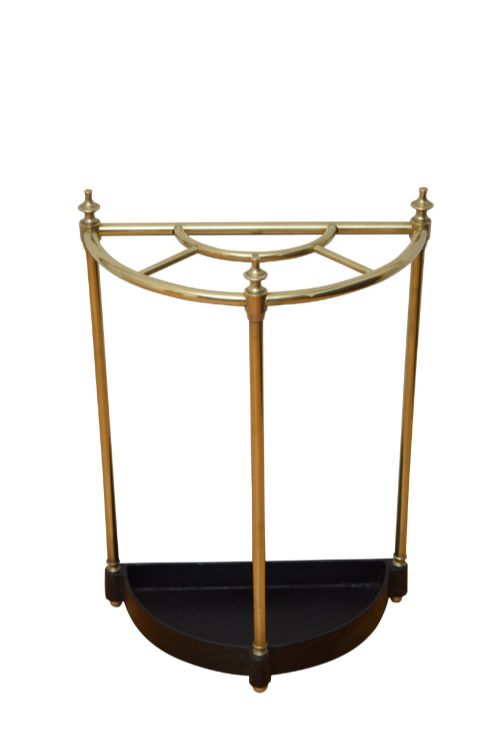
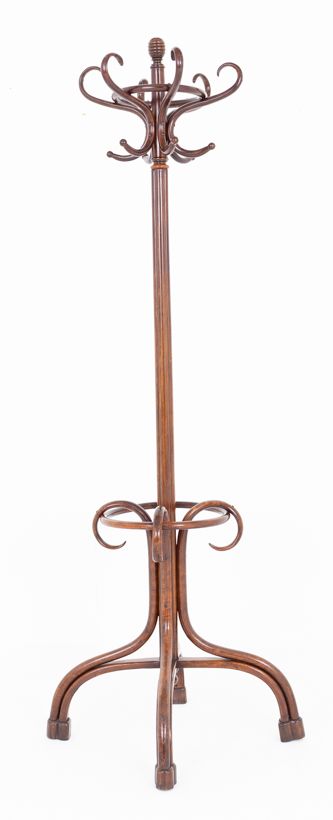
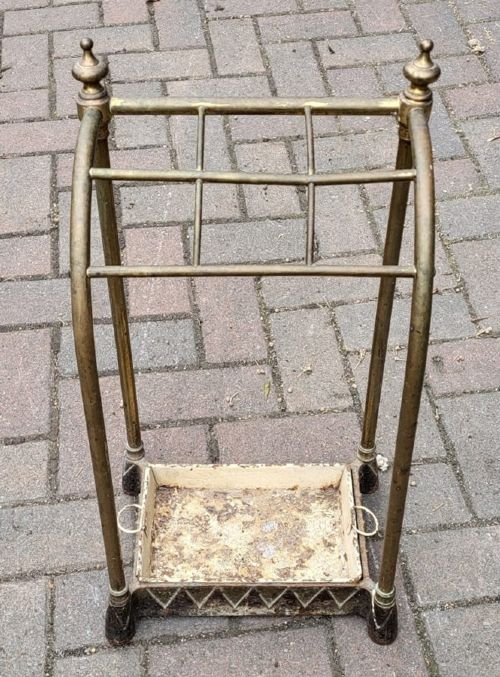
Stand forms vary from compact demi-lune brass frames and ceramic cylinders to substantial cast iron structures and coopered oak barrels. Many combine umbrella storage with coat hooks, hat racks, or marble shelves, forming substantial furniture pieces for the entrance hall.
Origins include English workshops, French studios, and Austrian makers, employing styles that range from Gothic Revival and Aesthetic Movement to country house vernacular and Art Nouveau. The frequent use of oak, mahogany, brass, and cast iron meets the practical demands of daily hallway use.
Materials and Construction
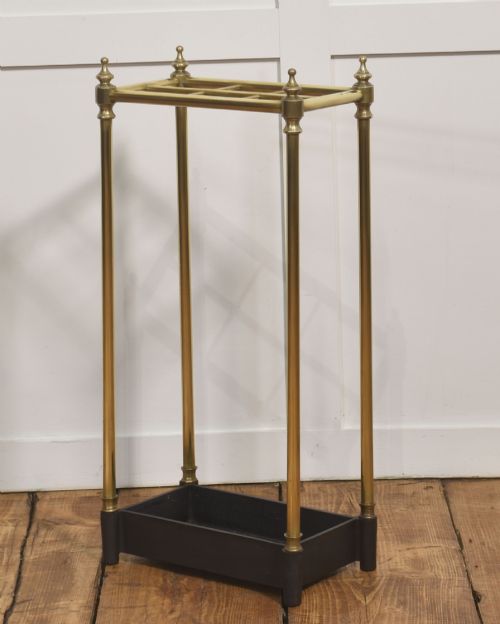
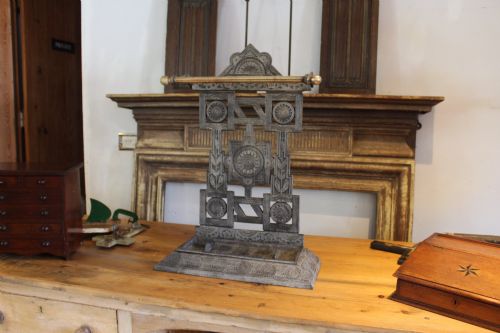
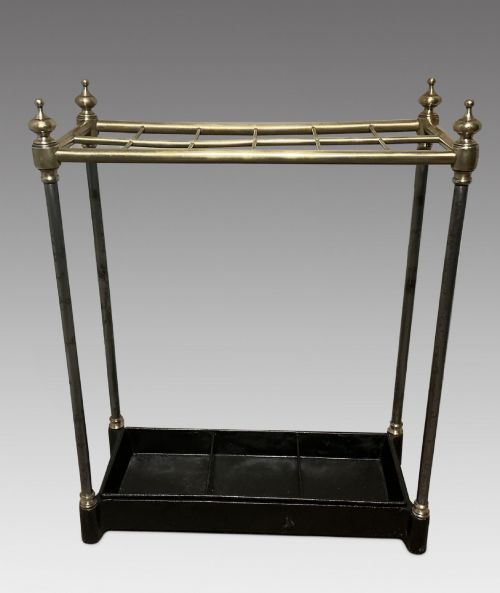
Cast iron and brass provide structural rigidity and moisture resistance for frames, often shaped through moulding or foundry work into openwork patterns. Metal components frequently feature integrated drip trays to protect hallway floors from wet umbrella tips.
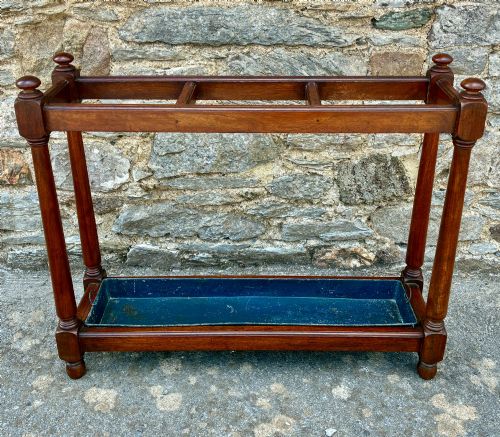
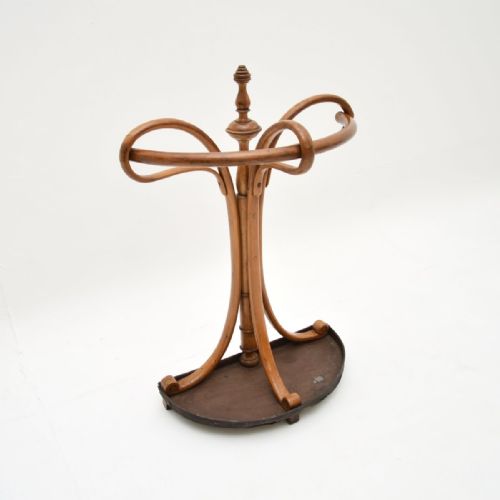
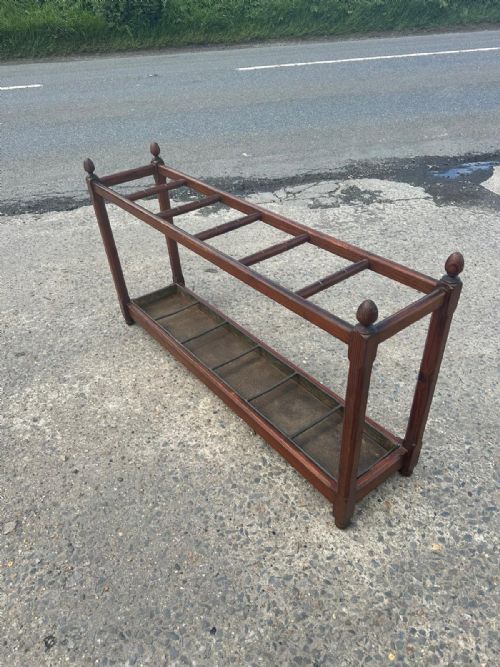
Timber elements rely on coopered construction for barrel forms, or traditional joinery for mahogany and oak hall stands. Faux bamboo turning, bentwood steaming, and carved detailing demonstrate the varied woodworking techniques applied to hallway furnishings.
Some Victorian hall stands incorporated revolving coat hooks so visitors could hang garments without tangling their umbrellas.
Quality and Craftsmanship
Quality reveals itself in the crispness of cast iron relief work and the weight of brass framing, where finer pieces display sharper detail and more robust gauge metal. Maker attribution through foundry stamps elevates the standing of iron pieces.
Timber examples demonstrate distinction through the selection of figured oak, walnut, or mahogany, alongside the tightness of coopered staves and the integrity of original brass mountings.
Coalbrookdale·Thomas Jeckyll·A. Kenrick & Sons·Thonet·Shoolbred
The Victorian Hallway Umbrella Storage Glossary
- Demi-lune
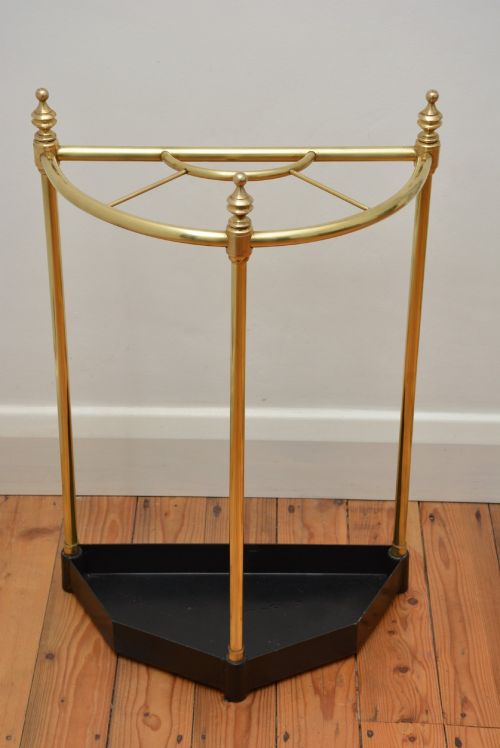
- A half-moon shape used for brass stick stands designed to sit flat against a hallway wall. This profile maximises floor space in narrow corridors.
- Coopered
- Woodwork constructed from vertical staves bound by metal hoops, similar to barrel making. This technique suits oak umbrella buckets exposed to dampness.
- Bentwood
- Wood heated and bent into curved structural forms, typical of Austrian umbrella stands. This method creates lightweight yet resilient frames.
- Faux bamboo
- Wood turned and carved to imitate natural bamboo stalks. It appears on Victorian stands influenced by nineteenth-century exoticism.
- Drip tray
- A removable metal basin positioned beneath umbrella loops to catch moisture. It protects wooden and tiled flooring from water damage.
Victorian Hallway Umbrella Storage: Frequently Asked Questions
What materials were used for Victorian umbrella storage?
Makers utilised cast iron, brass, oak, mahogany, pitch pine, ceramic, and glass. Metal components provided durability against moisture, whilst timbers matched domestic hallway furniture.
Foundry cast iron and coopered oak staves appear frequently across the period pieces.
How do I identify a Coalbrookdale stand?
Coalbrookdale ironwork typically displays registration marks, foundry stamps, or distinctive aesthetic movement ornamentation. The casting quality remains exceptionally sharp and refined.
These nineteenth-century pieces often feature intricate openwork foliage or geometric patterns.
Where should I place a demi-lune stand?
Demi-lune or half-moon stands suit narrow hallways because their flat backs sit flush against the wall. They occupy minimal floor space while accommodating multiple walking sticks.
Position them near the main entrance for practical daily use.
What is a coopered umbrella barrel?
Coopered umbrella barrels are constructed from curved wooden staves held together by brass or metal hoops, mirroring traditional barrel-making techniques. Oak is the primary timber for this robust form.
They offer deep cylindrical storage for long umbrellas and walking canes.
Did Victorian stands include drip trays?
Many metal and wood stands incorporated removable brass or iron drip trays at the base. These trays collected rainwater from wet canopies to protect interior flooring.
Original trays are an important feature of complete period examples.