




Brass Cane Container
These brass cane container pieces are robust hall receptacles designed to keep umbrellas and walking sticks tidy, combining utility with period metalwork.
Brass Cane Container
A brass cane container is fundamentally a hall vessel intended for holding umbrellas, parasols, and walking sticks. The pieces seen here span Victorian and Edwardian periods, stretching from the early nineteenth century through to the interwar decades of the twentieth century.
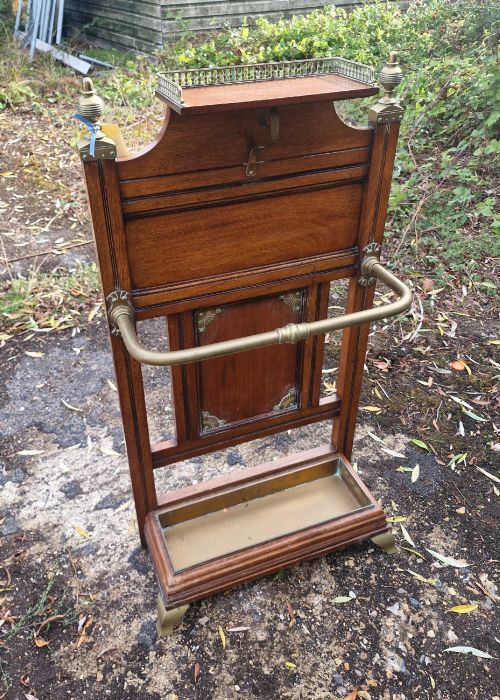
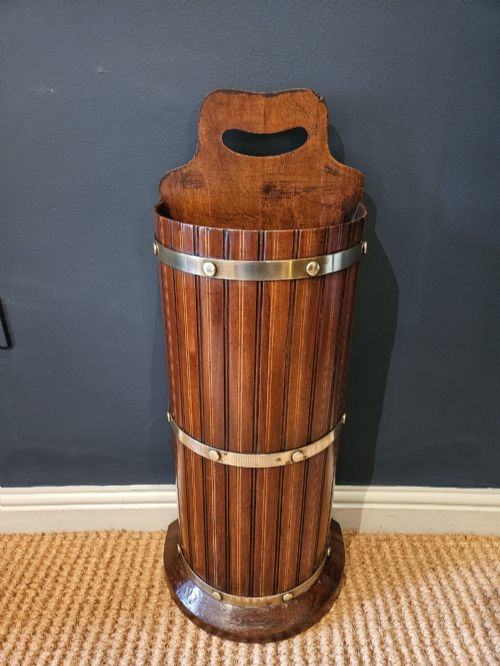
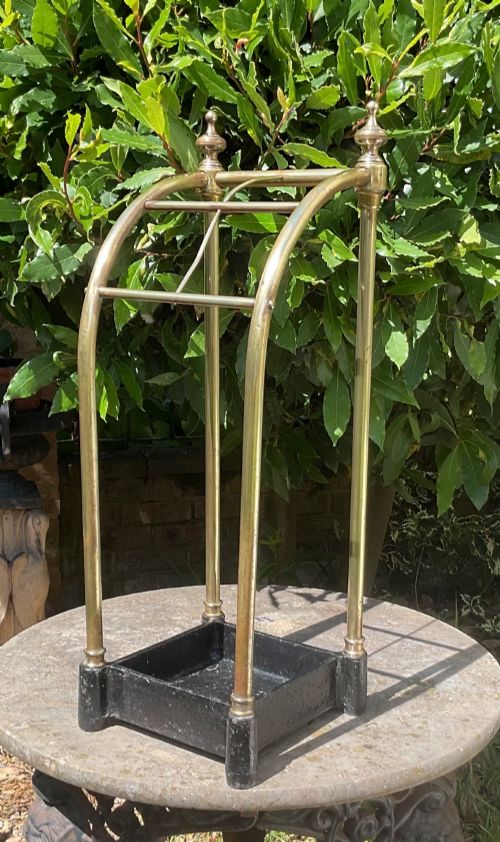
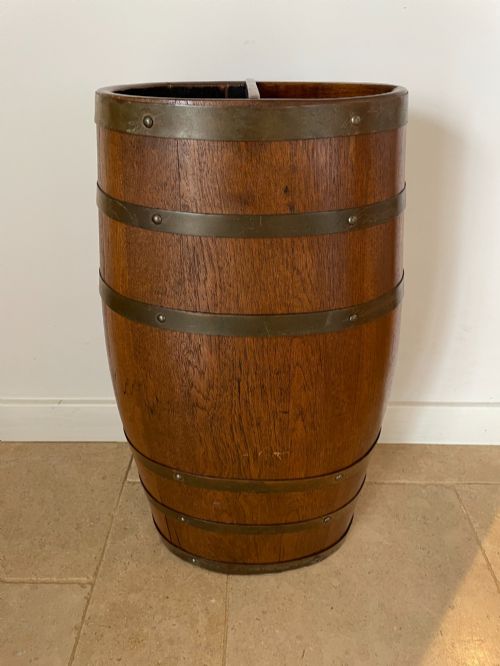
The form appears most frequently as a cylindrical or demi-lune metal receptacle, often supplemented by coopered oak or mahogany barrels bound in brass. Many examples utilise cast iron frames or heavy bases to prevent tipping when loaded with wet walking aids.
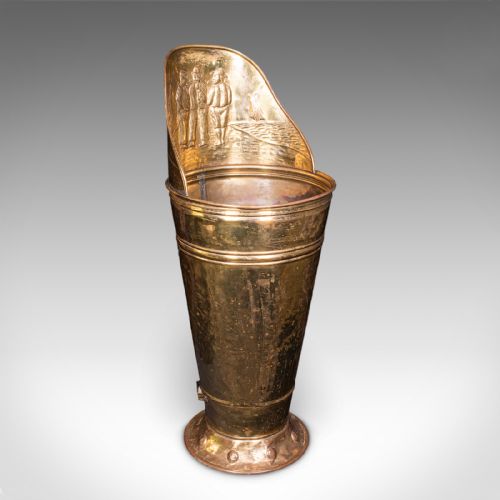
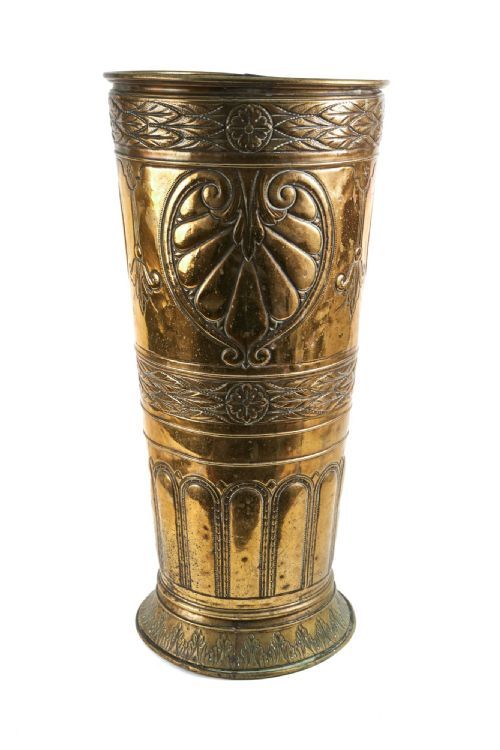
Within these pages, the typical brass cane container arrives in formats ranging from simple utilitarian copper buckets to decorative pierced brass cylinders and Dutch traditional designs. Buyers encounter both standalone metal vessels and timber barrels strengthened with brass bands.
Materials and construction
The construction relies heavily upon sheet brass and cast components, frequently combined with seasoned hardwoods like oak and mahogany. Coopered barrels employ traditional stave techniques bound tightly with heavy brass hoops.
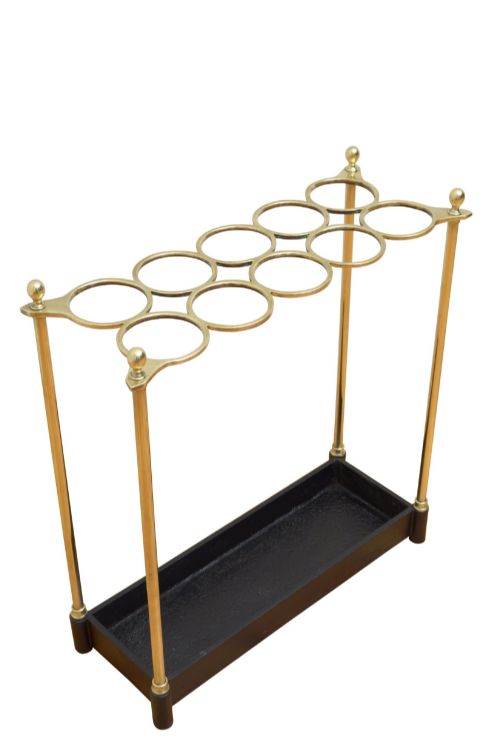
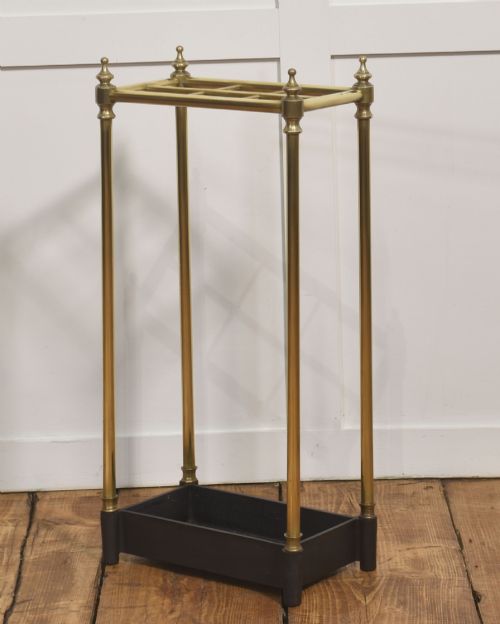
Decoration is achieved through surface piercing, ball finials, and cast relief work rather than applied colour. Heavier elements utilise cast iron to provide stability at the base of the upright body.
Brass Cane Container Retail Price Guide 2026
Typical asking prices for brass cane container among the pieces listed under this phrase on Sellingantiques today, from the lower quarter to the upper quarter. They describe what is for sale here now, not the wider market.
Some stands feature ball finials so shiny they double as security mirrors for spotting lingering guests.
Assessing quality and finish
Quality in a brass cane container rests on the weight of the metal gauge and the integrity of the underlying construction. Finer examples display crisp piercing, substantial cast ball finials, and secure joinery on coopered timber staves.
Simpler vessels rely on plain sheet metal with soldered or riveted seams. The presence of secondary materials like cast iron bases or rich mahogany framing elevates the architectural presence of the piece in an entrance hall.
The Brass Cane Container Glossary
- Demi-lune
- A half-moon shape allowing the container to sit flush against a hallway wall. This profile saves floor space while maintaining internal volume.
- Coopered
- Built from vertical wooden staves bound with metal hoops, identical to barrel-making techniques. This method provides natural resistance to moisture.
- Pierced brass
- Metal sheet perforated with decorative patterns to lighten the visual weight and aid ventilation. Holes allow damp air to circulate around wet umbrella tips.
- Ball finial
- A rounded decorative terminal capping the top corners or posts of a stand. These elements add a finished architectural silhouette to the rim.
Brass Cane Container: Frequently Asked Questions
Where should I place a brass cane container?
Position the vessel in an entrance hall or porch where wet umbrellas and walking sticks are gathered upon entry.
Ensure there is adequate flooring protection underneath if the base lacks an integrated drip pan.
How do I clean a brass cane container?
Dust the surface regularly with a dry cloth to prevent grime accumulation on the metal and timber elements.
Avoid harsh chemical polishes that strip historical patina, opting instead for gentle cleaning suited to antique brass.
Are these containers waterproof?
Many traditional brass and copper vessels hold moisture well, though wooden coopered barrels may require an internal liner.
Check the base construction of older pieces to confirm whether they retain their original waterproof integrity.
How do I identify a Victorian example?
Victorian pieces frequently display heavier cast components, ball finials, or traditional pierced brass decorative motifs.
Construction methods and material pairings like mahogany with brass banding also point toward nineteenth-century origins.