
Victorian Hallway Seating
Victorian hallway seating brings together solid oak, pine, and mahogany in practical forms designed to greet visitors at the front door.
Victorian Hallway Seating
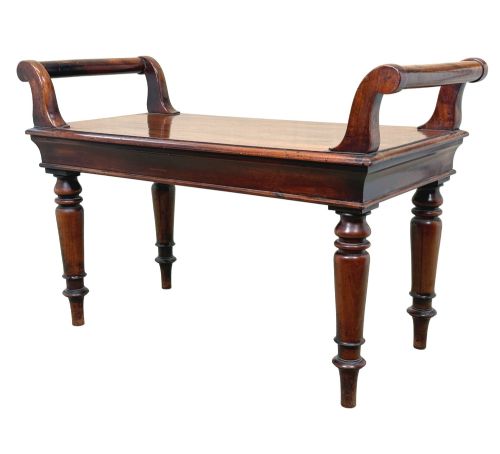
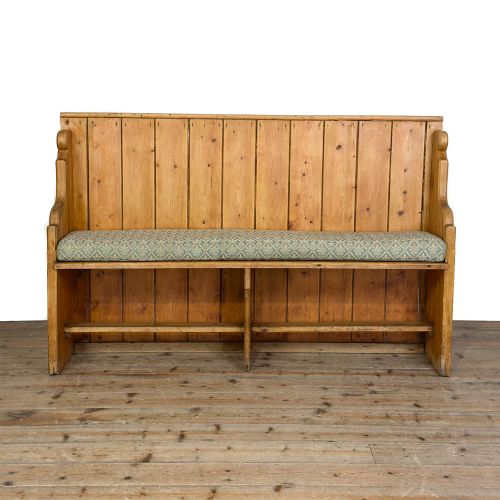
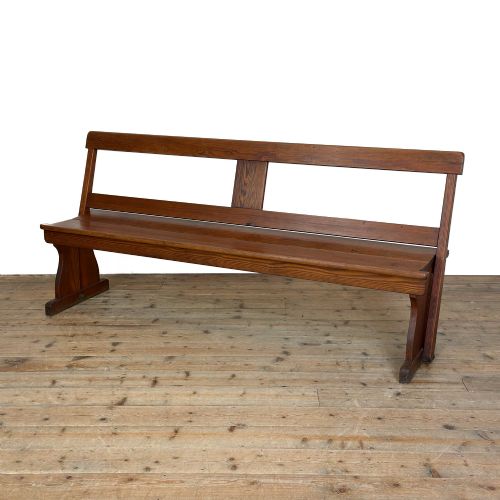
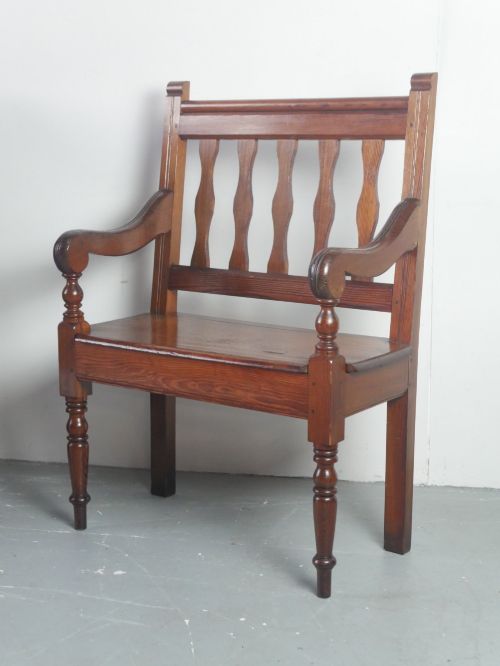
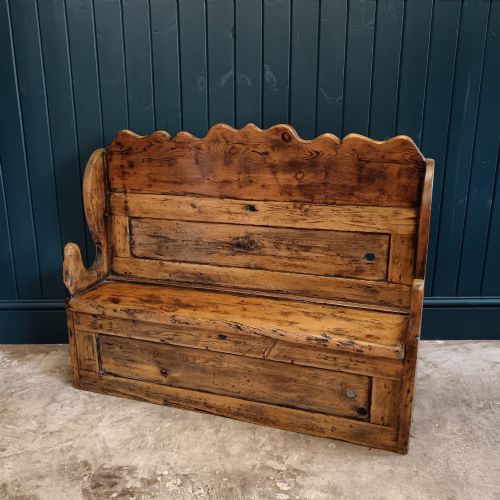
Victorian hallway seating encompasses robust benches, church pews, box settles, window seats, and upright hall chairs fashioned for the entrance of a home. Buyers exploring this category encounter sturdy pine and oak country pieces alongside formal carved mahogany and walnut designs.
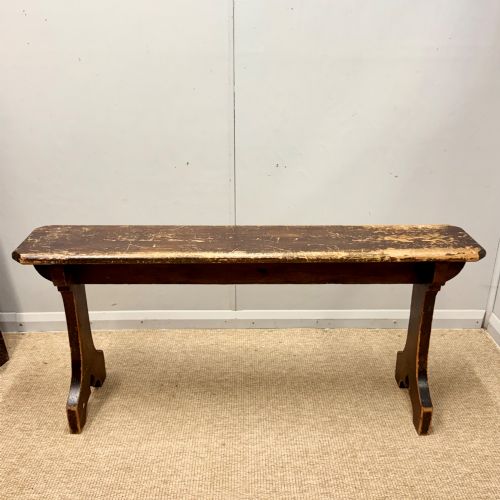
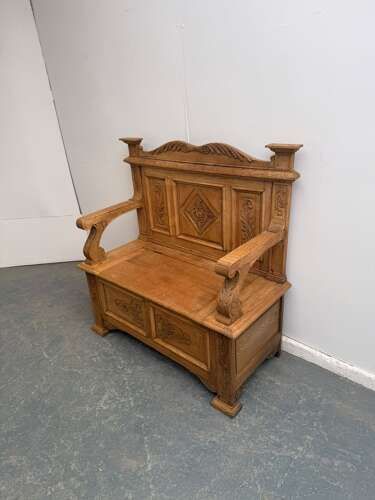
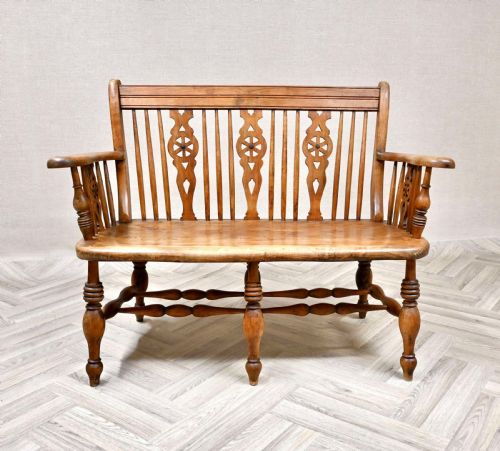
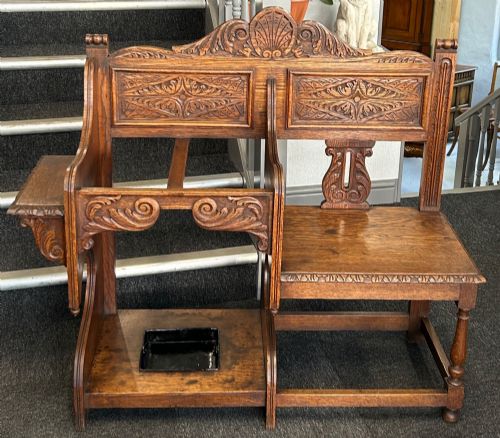
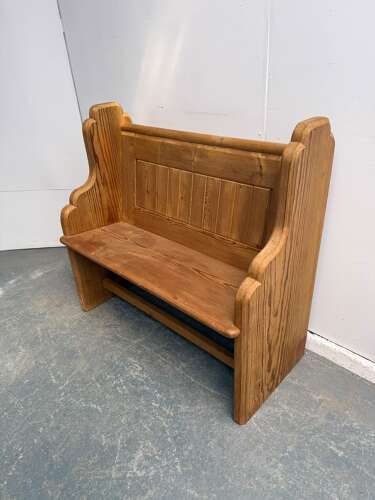
The most common forms on this page are nineteenth-century church pews, storage settles, and window seats originating from the Victorian period. These functional pieces range from simple slim pine benches to heavily carved oak seats incorporating stick stands.
Makers such as Gillows and James Shoolbred produced high-end examples, while rural joiners supplied the simpler elm and pine pews. Together, these objects reflect both domestic reception rooms and ecclesiastical settings adapted for everyday hallway use.
Materials and construction
Makers utilised solid timbers including oak, mahogany, pine, and pitch pine, often finishing the wood with traditional wax to highlight the natural grain. Structural joinery relied on pegged mortise and tenon joints to withstand heavy daily use in busy entrance halls.
Upholstered window seats and stools featured buttoned fabric and professional textiles such as Robert Kime materials over supportive stuffing. Brass mountings and storage compartments added both utility and decorative contrast to the timber frames.
Listings feature nineteenth-century oak, pine, and mahogany in forms ranging from window seats to church pews.
Assessing quality
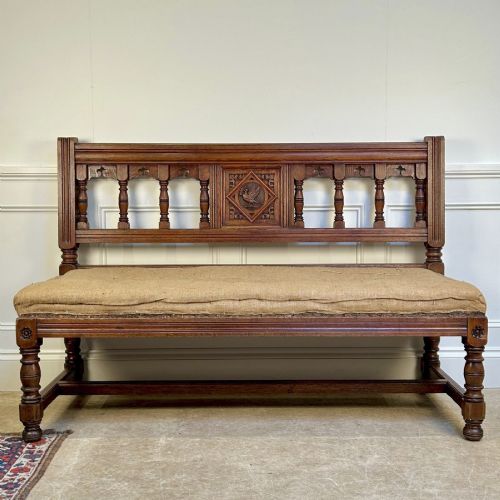
Quality rests primarily in the choice of timber and the crispness of the carved details, particularly on heraldic shield backs and panelled box settles. Dense solid oak and figured mahogany distinguish finer workshop productions from simpler utilitarian pine pews.
Proportion and structural integrity dictate the standing of a piece, with neat, well-balanced dimensions proving more desirable than clumsy alterations. Maker attribution, through stamps or known design characteristics, elevates certain oak and walnut benches above unmarked regional furniture.
Gillows·Jas Shoolbred·James Shoolbred & Co.
The Victorian Hallway Seating Glossary
- Box settle
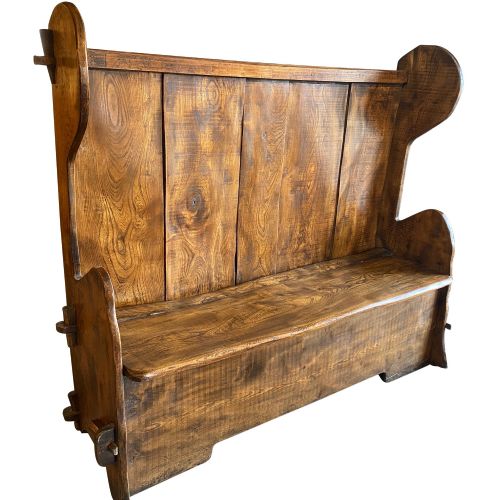
- A wooden bench featuring a high back, solid arms, and a concealed storage compartment beneath the hinged seat. This form kept draughts away from the doorway and stored domestic items.
- Church pew
- A long wooden bench originally designed for ecclesiastical interiors, frequently constructed from pine or pitch pine during the nineteenth century. These seats often display simple panelled backs and durable slab ends.
- Window seat
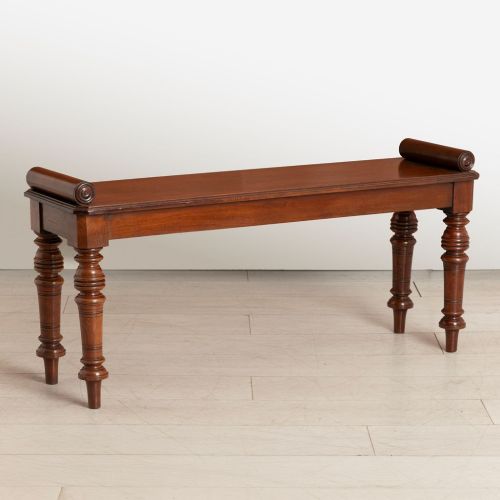
- A long, narrow bench designed specifically to fit into a window recess, often upholstered or featuring a buttoned top. Victorian examples frequently utilise mahogany or walnut frames.
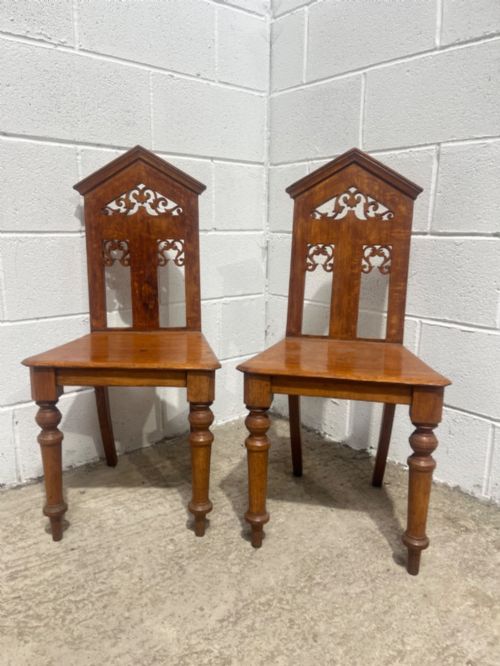
- Hall chair
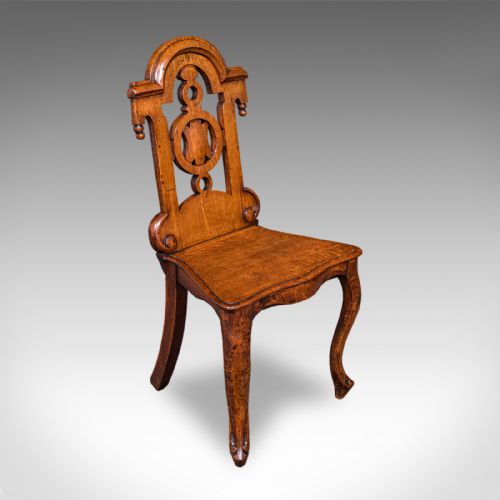
- An upright wooden seat with a solid, carved back, intended for brief use in an entrance hall rather than comfortable lounging. They were commonly produced in pairs or sets from oak or mahogany.
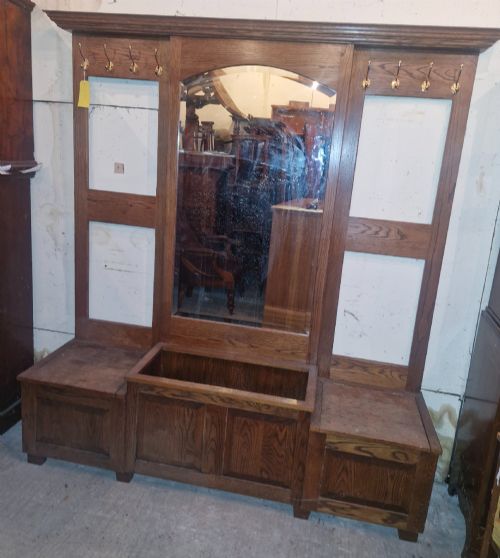
- Stick stand
- An integrated rack or trough designed into a hall bench or seat for holding umbrellas and walking sticks. This feature combines multiple hallway storage needs into a single piece of furniture.
Victorian Hallway Seating: Frequently Asked Questions
What is a box settle?
A box settle is a wooden bench with a high back and a hinged seat that lifts to reveal a storage compartment beneath.
These pieces were traditionally placed in hallways or kitchens to keep draughts at bay while storing blankets or boots.
Where were church pews used?
Church pews originated in ecclesiastical settings like chapels and churches before being repurposed for domestic hallways.
Their long pine or pitch pine construction made them durable enough to handle heavy traffic near the front door.
How do I style a hall bench?
A hall bench serves as a practical focal point in an entryway, offering a place to sit while putting on shoes.
Pair wooden settles with neutral textiles or keep them bare to showcase the waxed grain of the oak or pine.
Are hall chairs comfortable?
Hall chairs are designed with upright wooden backs and solid seats rather than deep cushioning.
Their primary purpose was formal reception rather than prolonged sitting, making them ideal for brief pauses in a hallway.