


Solid Mahogany Hall Chair
A solid mahogany hall chair offers a formal architectural presence in an entryway, combining dense timber construction with carved ornamentation from the eighteenth and nineteenth centuries.
Solid Mahogany Hall Chair
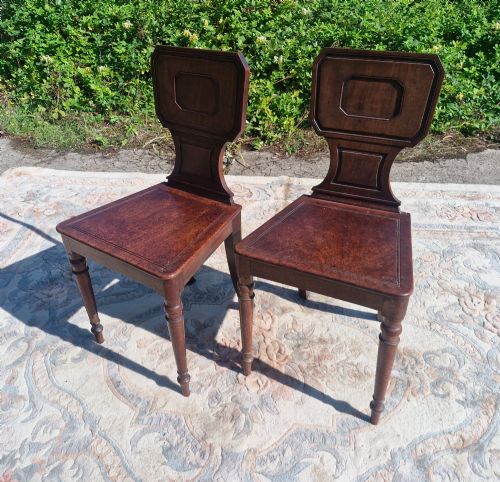
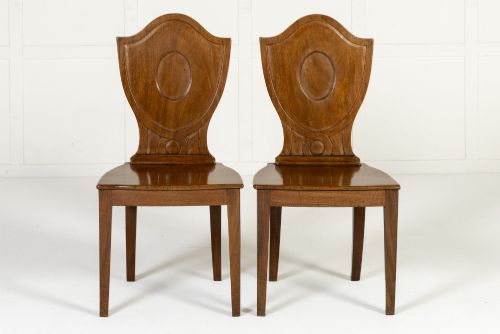
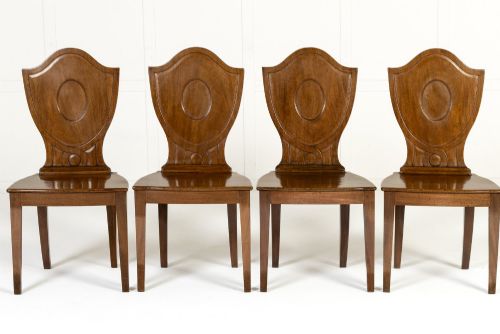
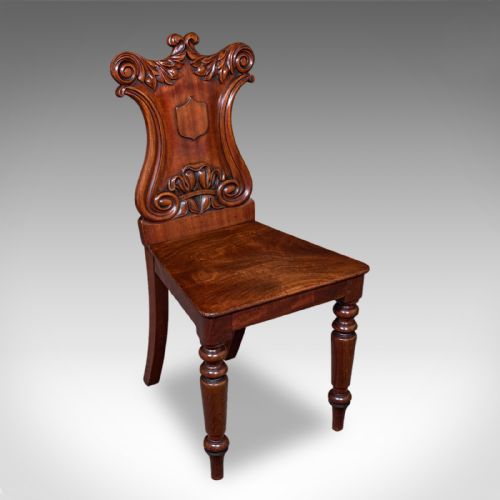
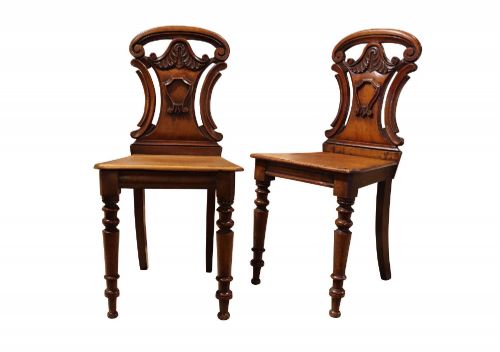
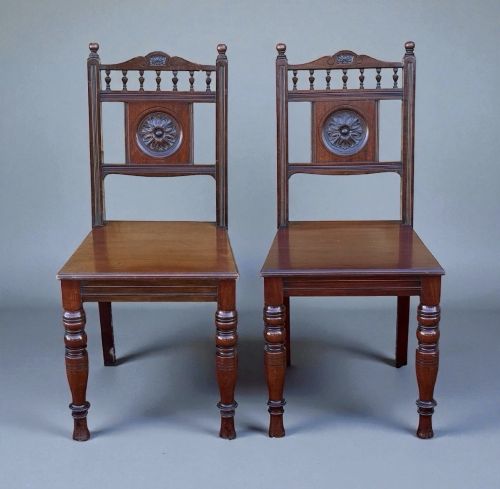
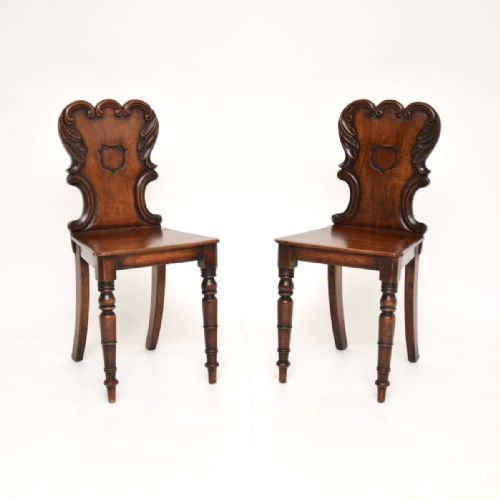
A solid mahogany hall chair functions primarily as a formal reception or occasional seat, designed historically to sit against a hallway wall rather than for prolonged sitting. These chairs emerge most frequently from the Georgian, Regency, William IV, and Victorian periods, often appearing in pairs or larger sets.
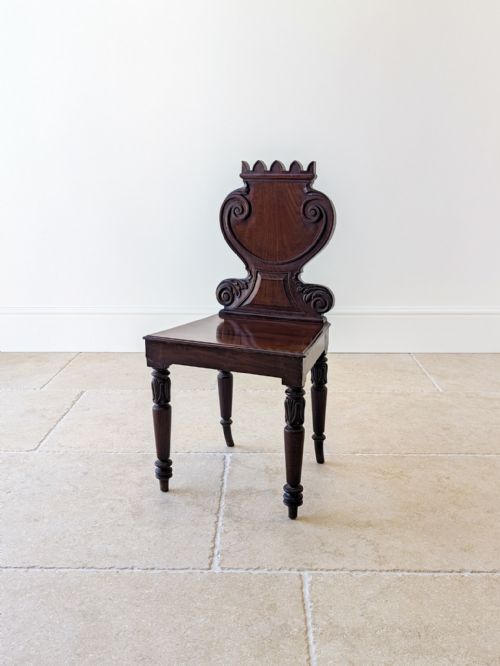
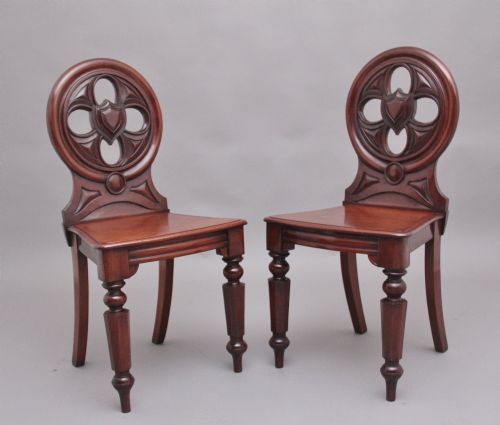
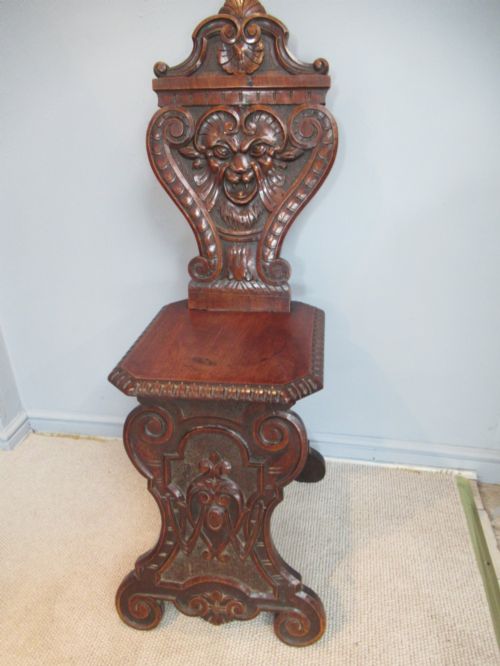
Makers fashioned solid mahogany hall chairs with rigid wooden seats and upright wooden backs, frequently incorporating sculpted shield, pelta, or shell shapes into the timber. The style ranges from classical Georgian restraint through elaborate Regency curves to heavier Victorian and Gothic Revival carving.
How they were made
Cabinetmakers built these seats using dense tropical hardwood, utilising solid mahogany planks for both structural frames and carved backsplats. Timber selection prioritised heavy, durable hardwood capable of holding crisp relief carving without splintering.
Construction techniques relied on sturdy joinery, occasionally enhanced with brass inlay or contrasting paint to accentuate the grain. Carvers worked directly into the solid wood of the backrest, shaping shells, crests, and heraldic motifs by hand.
Historic visitors waited on these rigid wooden seats while footmen decided whether to announce them.
What varies in quality
Quality rests upon the crispness of the carved detail and the natural figure of the mahogany timber. Pieces featuring deeply sculpted shell or pelta backs demonstrate superior craftsmanship compared to plain flat boards.
The architectural proportion of the turned or tapered legs relative to the solid seat dictates the visual balance of the piece. Sets matching identical grain patterns and precise proportions command greater interest than assembled groups.
Gillows
The Solid Mahogany Hall Chair Glossary
- Pelta back
- A shield-like backrest shaped in the form of an ancient Greek crescent shield. This outline appears frequently on Regency examples.
- Shell back
- A carved wooden backrest taking the fluted form of a scallop shell. It represents a popular decorative motif across Georgian and Victorian periods.
- Regency
- An English design period spanning the early nineteenth century defined by classical restraint and Grecian influence. Pieces from this era often feature bold wood grain and minimal brass detailing.
- William IV
- A transitional design era bridging the late Regency and early Victorian periods during the 1830s. Furniture from this time typically displays heavier proportions and robust carving.
- Gothic Revival
- A nineteenth-century style drawing inspiration from medieval architecture. Chairs in this manner incorporate pointed arches and ecclesiastical motifs into the timber.
Solid Mahogany Hall Chair: Frequently Asked Questions
Where should I place a solid mahogany hall chair?
These seats suit entryways, hallways, and reception rooms where their upright proportions and carved timber backs act as architectural accents against a wall.
Because they lack upholstery, they function well as occasional display pieces rather than lounging seats.
Are solid mahogany hall chairs comfortable to sit on?
Historic hall chairs were intended for brief seating while waiting in an entrance hall rather than for long periods of relaxation. Their solid wood seats and rigid upright backs reflect this formal, decorative purpose.
Adding a loose cushion can soften the seat if you intend to use it regularly at a desk or side table.
How do I distinguish Regency hall chairs from Victorian ones?
Regency examples generally display cleaner classical lines, lighter proportions, and occasionally subtle brass inlay or simpler carved shields. Victorian and William IV versions tend to feature heavier frames, darker timber finishes, and deeper, more exuberant relief carvings.
Examining the depth of the carving and the overall weight of the hardwood helps separate the earlier Georgian and Regency periods from later nineteenth-century revivals.
Did hall chairs always come in pairs or sets?
Makers frequently produced these chairs in matched pairs or larger sets of four to six to flank the sides of a grand entrance hall. Surviving pairs and larger matching groups remain highly desirable for interior symmetry.
Single examples still appear, serving effectively as standalone occasional seats in smaller spaces.