
Wooden Entryway Seating
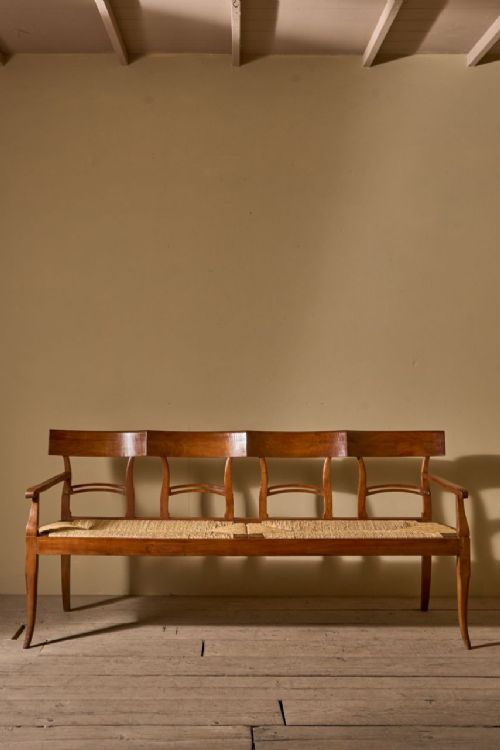
These wooden entryway seating options bring historic utility and presence to a hall, offering a practical spot for putting on boots.
Wooden Entryway Seating
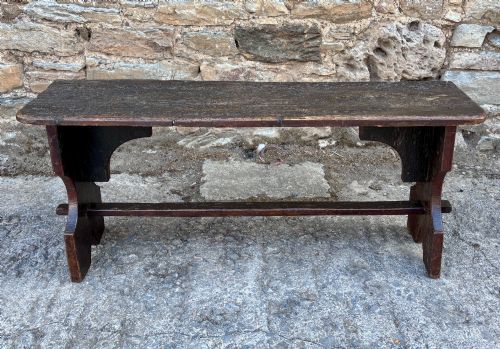
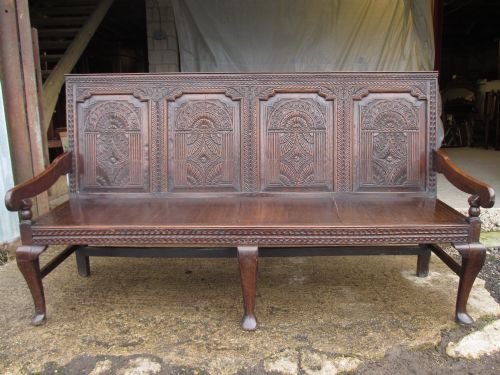
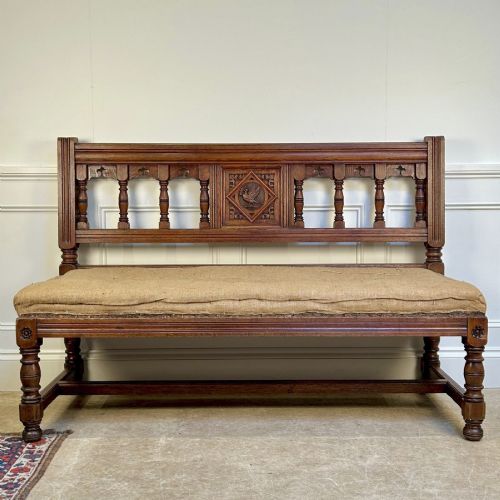
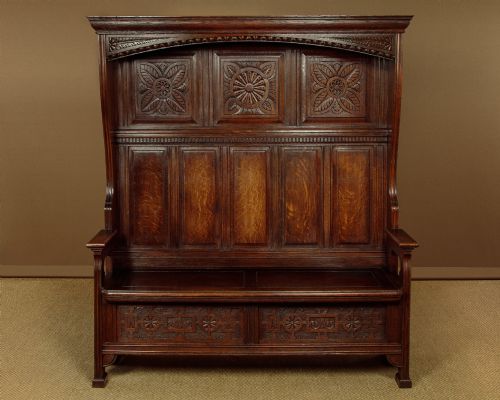
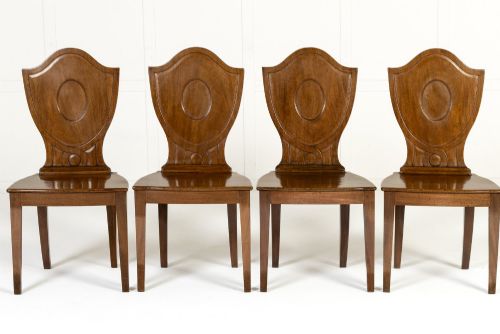
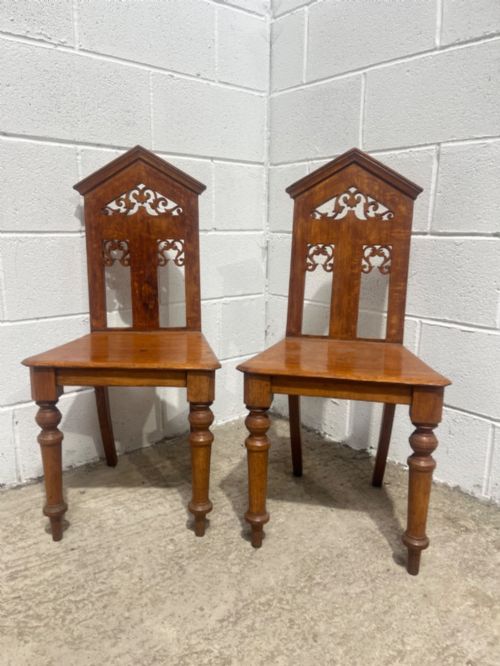
Wooden entryway seating spans functional hall chairs, settles, benches, and hall seats designed for corridors and passages from the seventeenth century through to the early twentieth century.
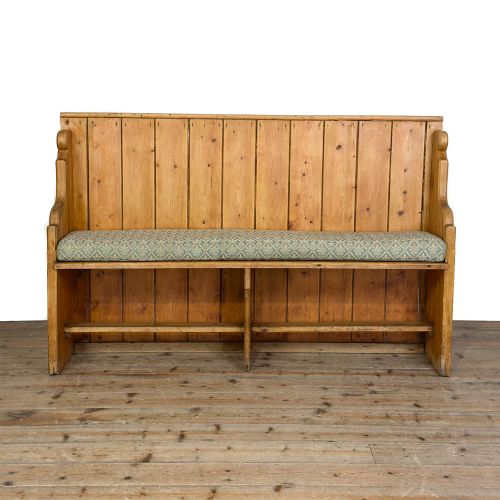
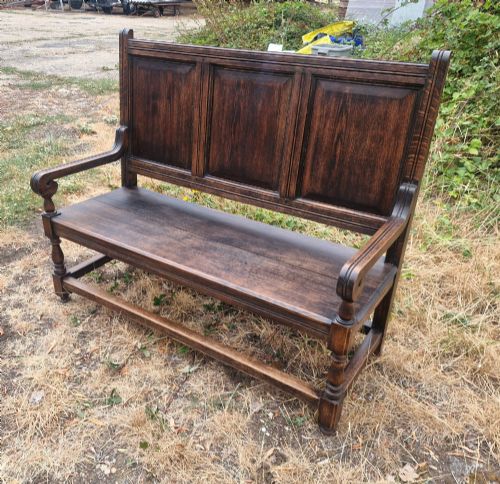
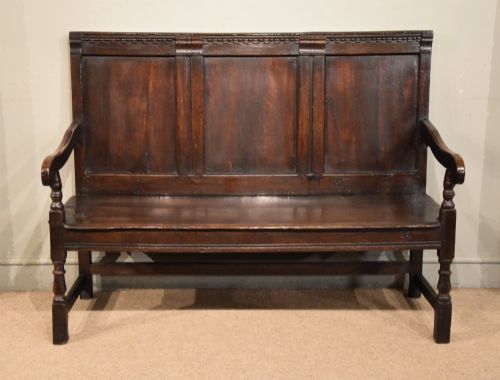
The versions most commonly met in these listings are nineteenth-century oak benches, church pews, and mahogany hall chairs originating from English, Irish, and Spanish country houses and churches.
Makers such as James Shoolbred and Liberty appear alongside vernacular pieces, offering everything from simple pine pews to elaborate Gothic revival and Arts and Crafts settles.
Materials and Construction
Makers relied principally on solid oak and mahogany, supplemented by pine for ecclesiastical pews and regional country pieces, often joined with traditional pegged mortise and tenon joints.
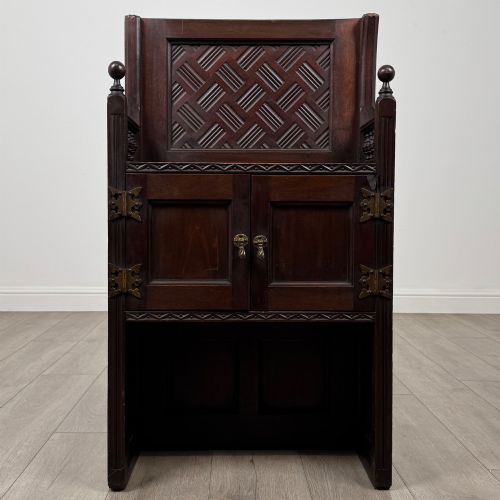
Surface treatments range from waxed or polished finishes highlighting the natural grain of oak and mahogany to painted surfaces and decorative carved panels, sometimes accented with brass mounts and iron hardware.
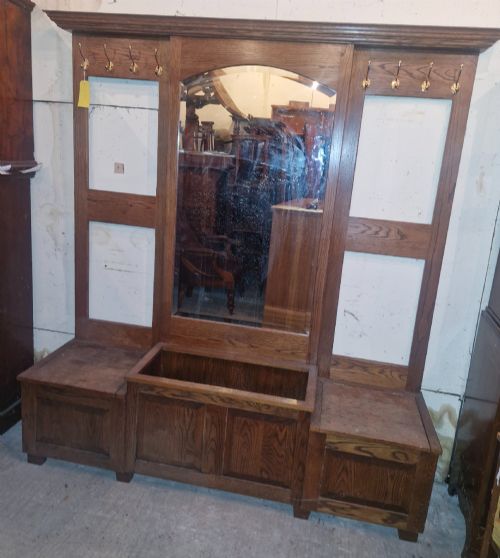
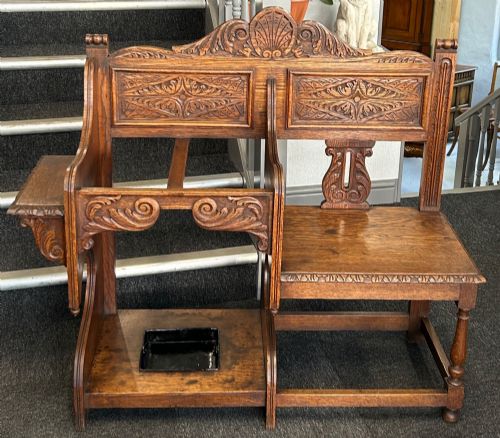
Some hall seats included built-in stick stands, ensuring umbrellas stayed upright while guests caught their breath.
Distinctions in Execution
Quality rests upon the crispness of the timber carving, the integrity of the structural joinery, and the retention of original surfaces rather than later heavy restoration.
Better examples demonstrate thoughtful proportions and substantial timber thickness, whereas lesser pieces often show simplified carving or replacement boards introduced during repairs.
James Shoolbred and Co.·Liberty
The Wooden Entryway Seating Glossary
- Settle
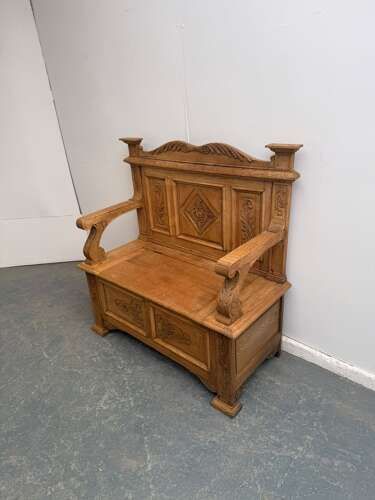
- A wooden bench with a high back designed to block draughts, often featuring a hinged seat forming a storage box underneath.
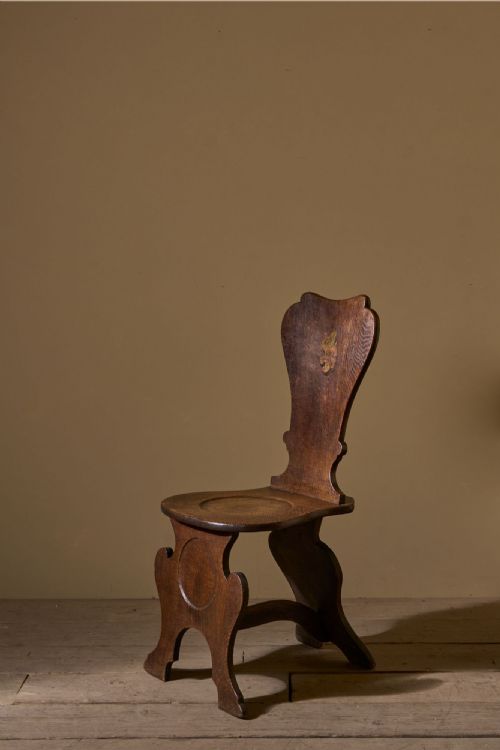
- Hall Chair
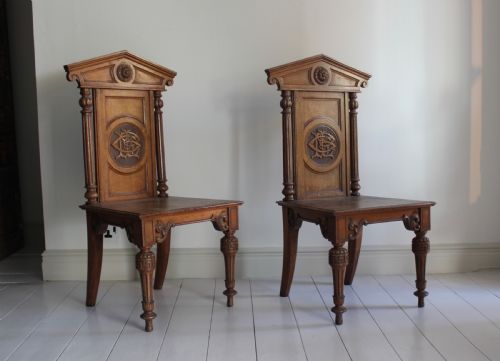
- A rigid, upright wooden seat traditionally placed in a hallway or landing, frequently carved with a family crest or armorial shield.
- Box Settle
- A form of seating incorporating a concealed storage compartment beneath the seat boards, accessed by lifting the lid.
- Pew
- A long wooden bench originally built for ecclesiastical use in churches and chapels, constructed from pine or oak.
- Gothic Revival
- A design style drawing inspiration from medieval architecture, characterised by pointed arches, tracery, and heavy carved woodwork.
Wooden Entryway Seating: Frequently Asked Questions
What is wooden entryway seating used for?
These pieces provide a practical spot in a hallway or boot room for changing footwear or receiving guests upon arrival.
Historically, they also served to deter draughts in large stone corridors and offered concealed storage for hats and gloves within box settle compartments.
Are church pews suitable for hallways?
Pine church pews and chapel benches fit narrow corridors exceptionally well due to their linear profile and narrow depth.
Their plain timber construction brings a restrained rustic character that complements both traditional and modern interior schemes.
How do hall chairs differ from standard chairs?
Hall chairs are made entirely of wood without upholstery, featuring solid carved seats and upright backs intended for short periods of sitting.
They were designed to make a formal visual statement in an entrance space rather than to provide deep comfort.