



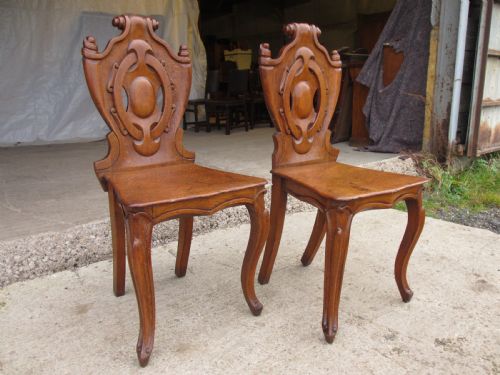

Victorian Carved Foyer Seating
Victorian carved foyer seating brings architectural presence to an entrance, offering solid wood construction and robust period character.
Victorian Carved Foyer Seating
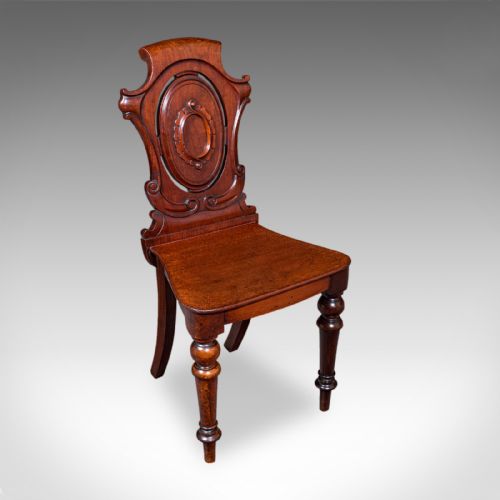
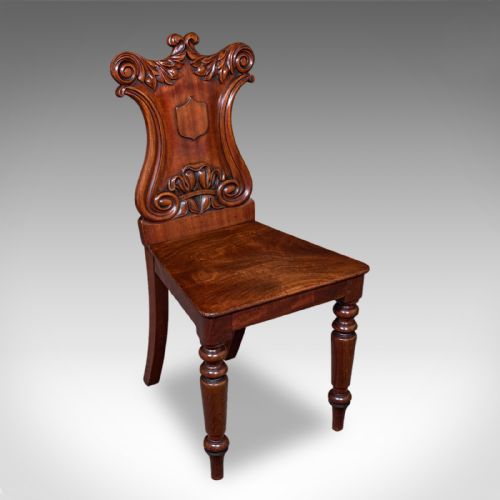
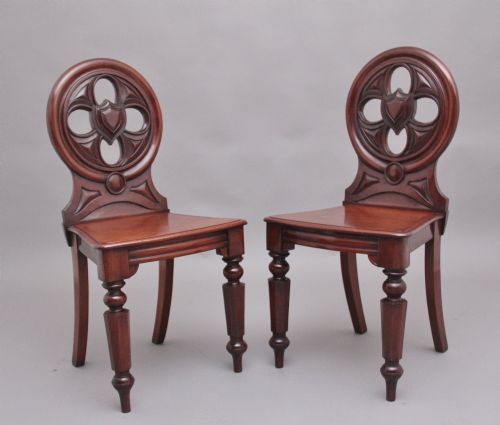
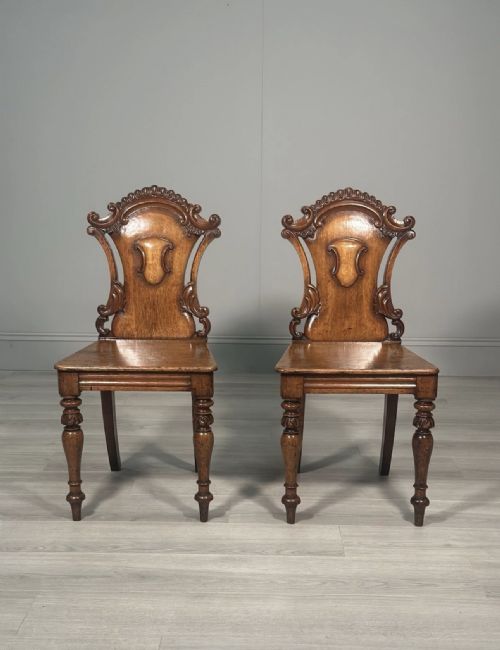
When buyers search for Victorian carved foyer seating, they are looking at heavy timber reception and hallway furniture designed for grand entrances, most commonly encountered here as single pieces or matched pairs of hall chairs.
The selections span the broader Victorian era alongside specific dates around 1850, 1860, and 1890, reflecting regional variations from Scottish workshops and 19th Century Irish cabinet makers.
Forms include shield back designs and occasional side seats, typically shaped from substantial hardwoods intended to stand against hallway walls.
Materials and construction
Makers utilised dense hardwoods including mahogany, walnut, oak, and general solid wood to build these substantial entrance seats.
Carpenters employed deep carving techniques, particularly visible on shield backs and cabriole legs, alongside regional Gothic Revival styling details.
Recorded dates span mid to late Victorian periods, including specific examples from 1850, 1860, and 1890.
Judging quality in these pieces
The distinction between standard examples and exceptional pieces rests in the depth and crispness of the carved ornamentation.
Cohesion of timber grain across pairs and larger sets elevates the visual weight of the seating within a hallway.
Holland & Sons
The Victorian Carved Foyer Seating Glossary
- Hall chair
- A rigid wooden seat designed for an entrance hall or reception room rather than prolonged lounging. These pieces typically feature high carved backs and solid wooden seats.
- Shield back
- A chair back shaped like a heraldic shield, frequently embellished with carved crests or foliage. This form is common in formal 19th Century seating.
- Cabriole leg
- A furniture leg that curves out and then narrows inward, terminating in a foot. This shape derives from ancient animal forms.
- Gothic Revival
- An architectural and decorative style drawing on medieval forms, featuring pointed arches and heavy geometric carving. It gained popularity during the Victorian period.
Victorian Carved Foyer Seating: Frequently Asked Questions
Where should I place hall chairs?
These pieces suit entrance halls, corridors, and reception spaces where their architectural backs and narrow profiles make a strong visual statement against a wall.
Because they lack upholstery, they handle high-traffic areas easily without absorbing dust or wear from everyday comings and goings.
Are these seats comfortable for daily sitting?
Hall chairs were constructed primarily for brief waiting or as decorative furniture in formal entrances, featuring rigid wooden seats rather than cushions.
They function best as occasional seating or accent pieces rather than chairs for long periods of relaxation.
How do I identify Gothic Revival styling?
Gothic Revival pieces display architectural motifs borrowed from medieval stone buildings, including pointed arches, quatrefoils, and heavy structural framing.
On these chairs, such details appear carved directly into the solid timber backs to project a serious, historic character.
What woods were used in these chairs?
Cabinet makers relied on durable hardwoods such as mahogany, walnut, and oak to withstand the heavy daily use expected in busy Victorian entryways.
Golden oak and dark mahogany finishes reflect the specific timber preferences of different regional workshops across Britain and Ireland.