
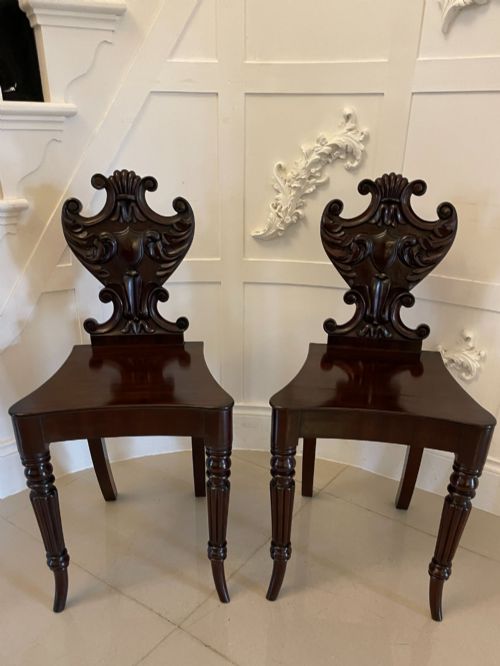
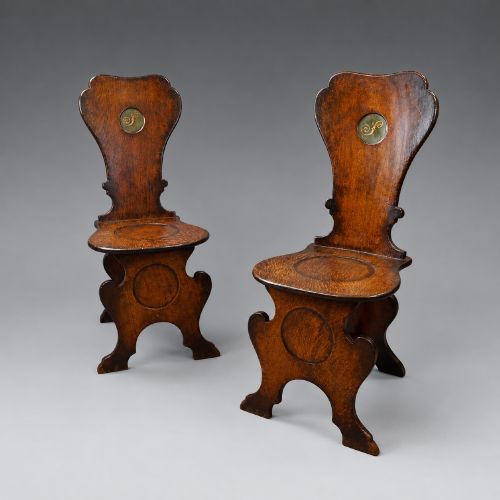
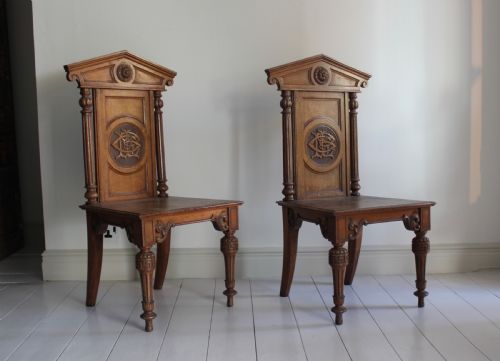

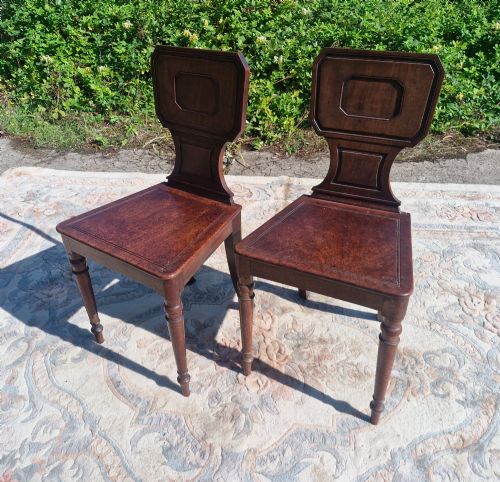
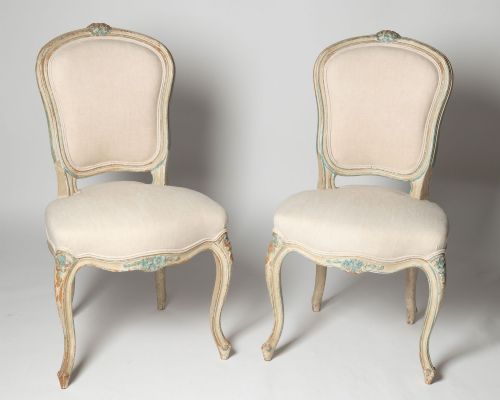
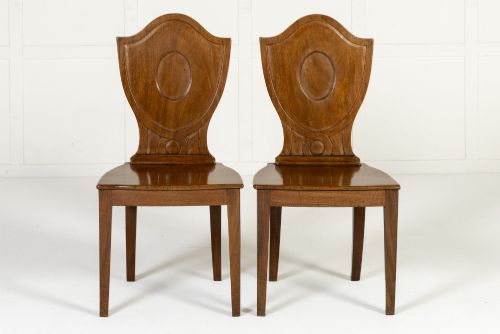
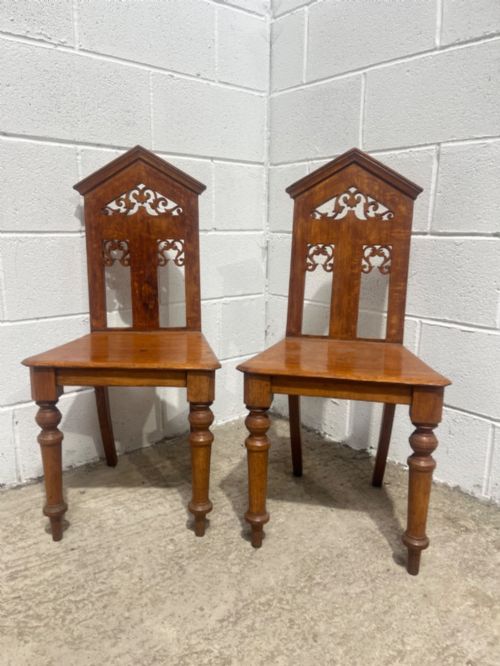
Pair Wooden Accent Chairs
These pair wooden accent chairs combine functional seating with distinct period character, offering structural harmony to a room through matching design.
Pair Wooden Accent Chairs
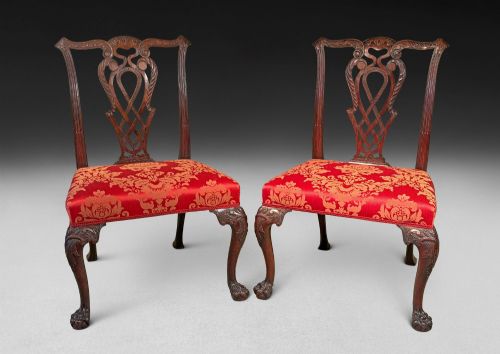
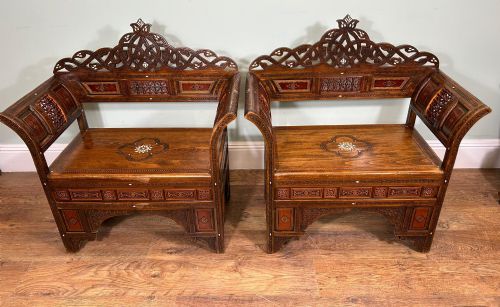
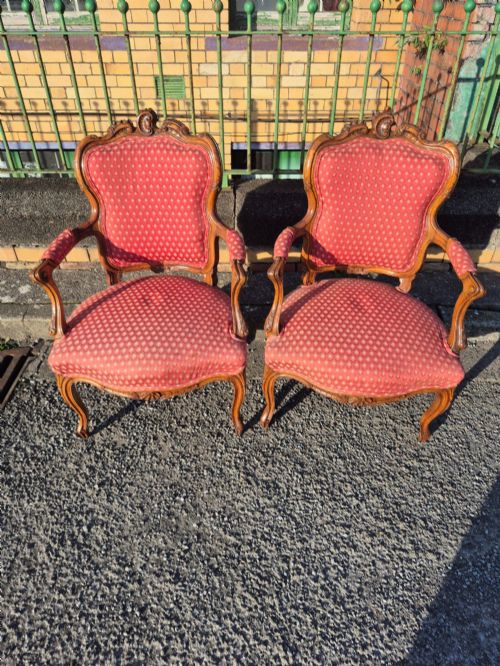
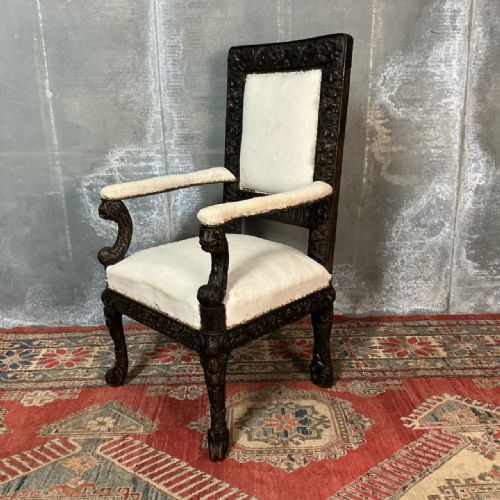
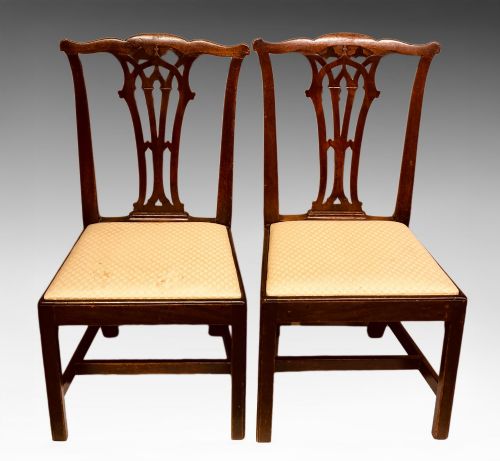
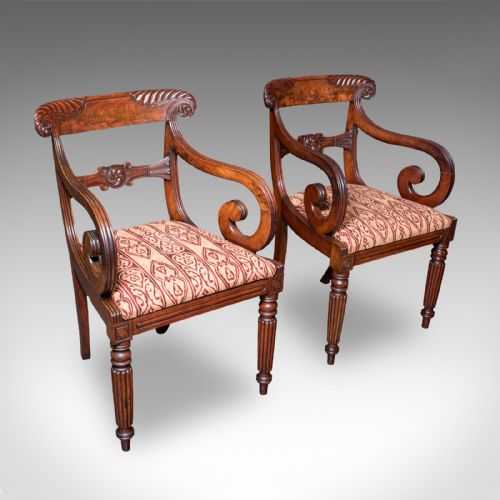
When searching for pair wooden accent chairs, buyers encounter matched seating spanning the eighteenth, nineteenth, and early twentieth centuries. The selection encompasses diverse forms including hall chairs, side chairs, armchairs, and nursing chairs originating from English, French, Chinese, and Scottish workshops.
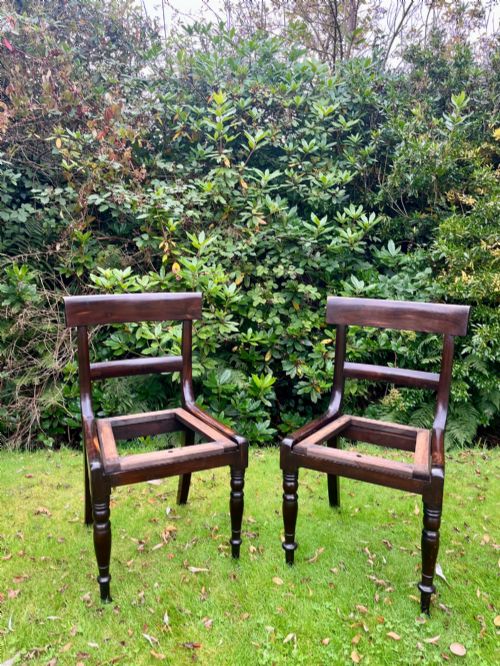
The most common examples on this page are nineteenth-century hall chairs and armchairs constructed from mahogany, oak, and walnut. These pieces reflect styles ranging from Georgian and Regency to Victorian and Renaissance Revival.
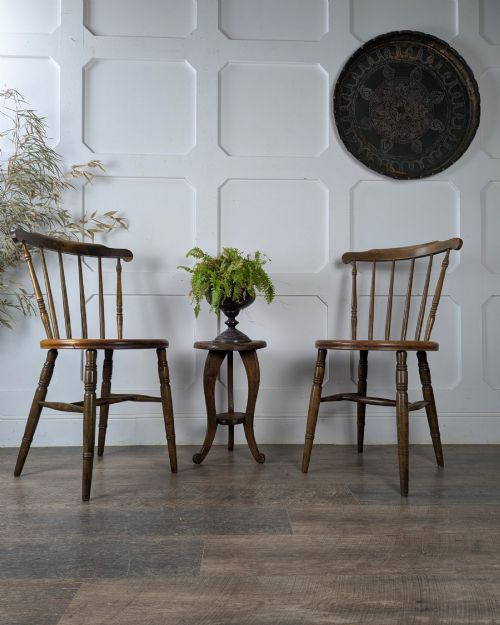
Seating types range from formal dining chairs and elbow chairs to occasional corner chairs and comb-back Windsor designs. Each pair provides matched decorative presence and practical utility for reception rooms and living spaces.
How they were made
Makers utilised solid timbers such as mahogany, oak, walnut, elm, and pitch pine, often shaping the wood through turning, carving, and joinery. Bobbin-turned structures, inlaid details, and carved reliefs demonstrate traditional woodworking competence.
Upholstered variants integrate fabric, velvet, and textile coverings over internal frames, combining structural timber work with soft furnishings. Surface finishes include original red lacquer, gilt finishes, and polished wood grains.
Listings feature wooden chairs spanning from the 18th century through to the 1930s, constructed from mahogany, oak, walnut, elm, and pitch pine.
What varies in quality
The degree of refinement in carved detail and timber selection determines the distinction between standard examples and finer items. Crispness in carved walnut or mahogany ornament and the preservation of original surface finishes indicate superior origin.
Structural integrity and the matching consistency of the timber grain across both items dictate the overall coherence of the pair. Uniformity in proportion and the retention of original upholstery textiles or lacquer enhance the character of the seating.
The Pair Wooden Accent Chairs Glossary
- Hall chair
- A rigid wooden seat, often un-upholstered, designed for entrance halls and featuring carved or painted crests on the backboard.
- Bobbin turned
- A method of woodturning that produces a series of rounded, spool-like shapes along the length of a furniture leg or stretcher.
- Yokeback armchair
- A traditional Chinese seating form characterised by a top rail that curves resembling the yoke of an ox.
- Glastonbury armchair
- A folding wooden chair design with intersecting X-form legs and a sloping back, frequently constructed from pitch pine or oak.
- Grecian side chair
- A Regency style form inspired by classical antiquity, featuring curved saber legs and an outward-scrolling top rail.
Pair Wooden Accent Chairs: Frequently Asked Questions
Where should I place a pair of accent chairs?
These matching chairs suit placement in entrance halls, drawing rooms, or as balanced additions flanking a fireplace or console table. Their matched design creates visual symmetry in a room arrangement.
They function effectively as reception seats in hallways or as occasional seating in bedrooms and living spaces, providing both decorative impact and practical utility.
Are these chairs comfortable for daily use?
Comfort varies significantly depending on the specific form, ranging from upright wooden hall chairs designed for posture to upholstered armchairs and nursing seats. Rigid timber seats prioritize architectural form over cushioning.
Upholstered variants provide softer support, though period dimensions can feel more compact than modern seating. Selecting the right form depends on whether the priority is decorative presence or relaxed lounging.
How do I care for wooden antique chairs?
Maintenance involves keeping the timber away from direct heat sources and strong sunlight to prevent the wood from drying out or splitting. Gentle dusting with a dry cloth preserves the polished surface.
Avoiding excessive moisture and applying appropriate wax sparingly helps maintain the natural patina of woods like mahogany and oak over time.