
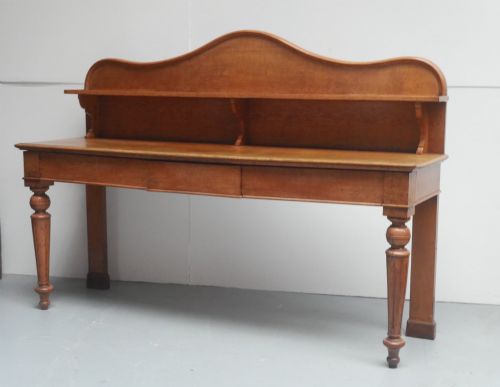
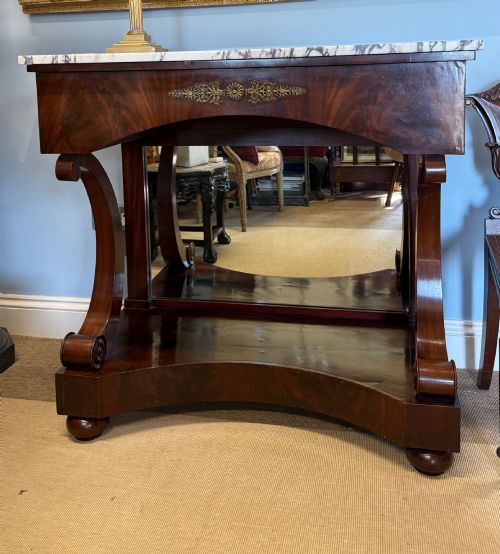
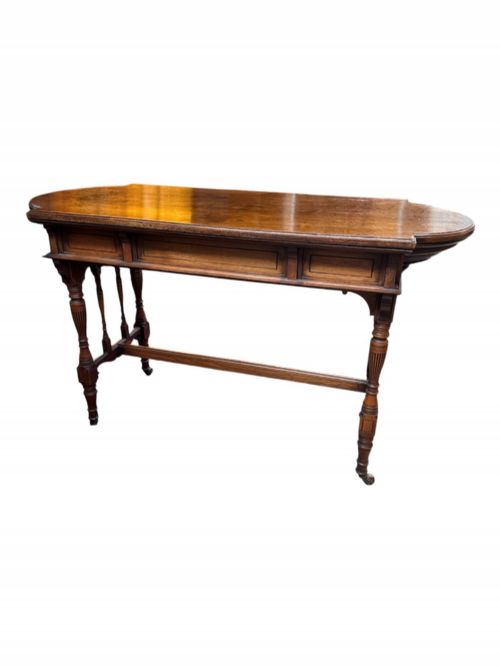
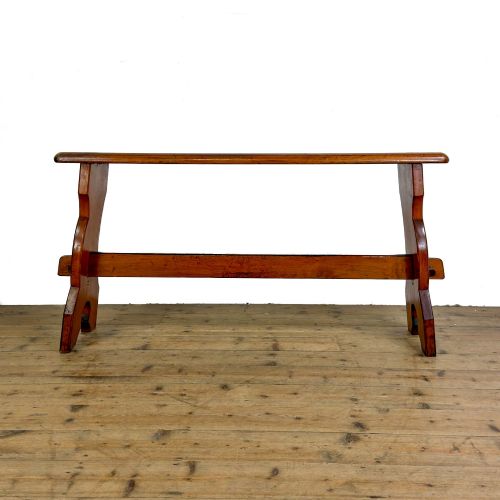
Victorian Hallway Console
A victorian hallway console brings architectural presence and utility to an entrance, offering surface space built for narrow spaces.
Victorian Hallway Console
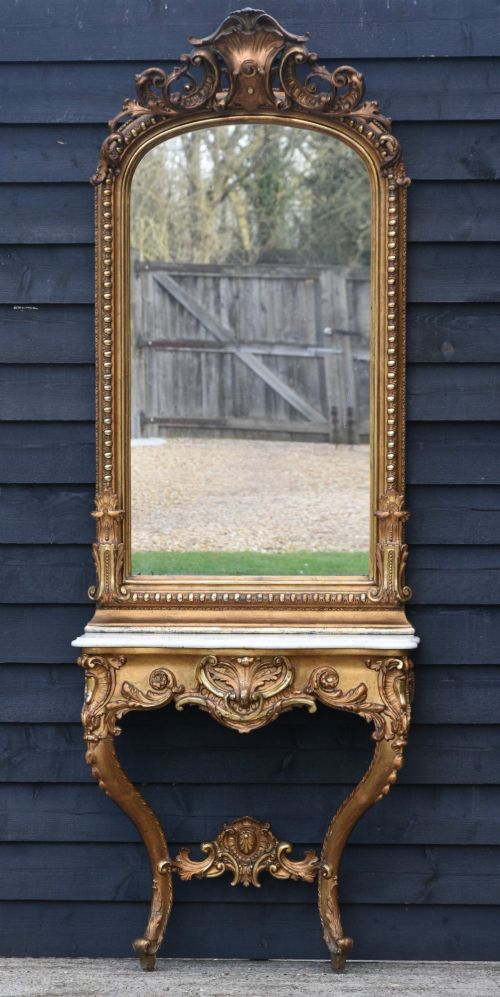
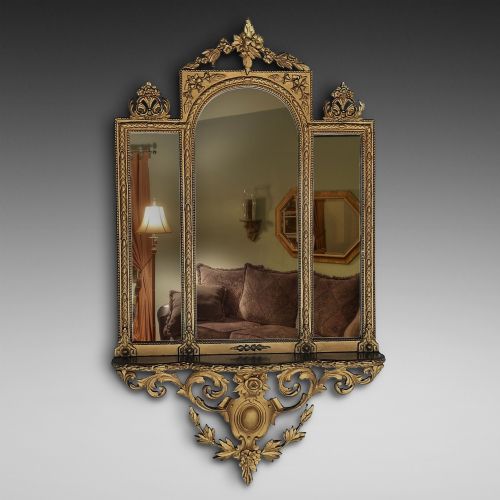
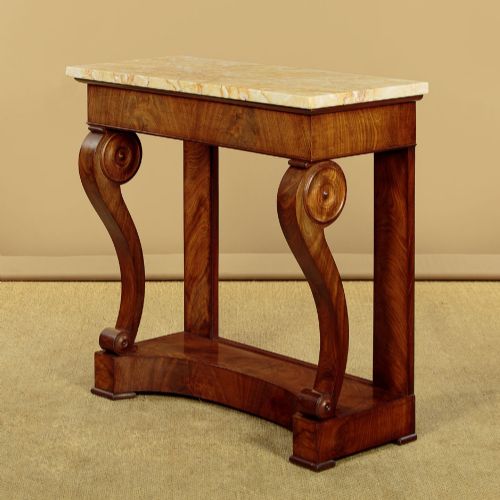
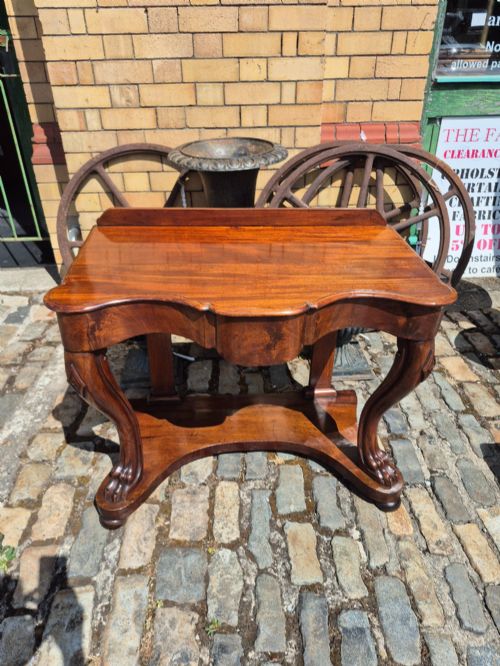
A victorian hallway console comprises narrow side tables, console tables, and hall tables designed specifically for entryways and passages during the nineteenth century. These pieces serve as functional furniture where daily items were placed upon entering the home, often accompanied by matching mirrors or wall attachments.
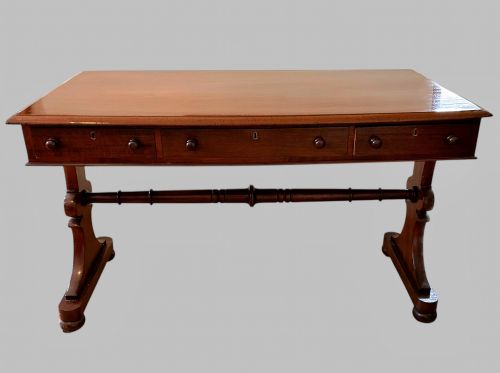
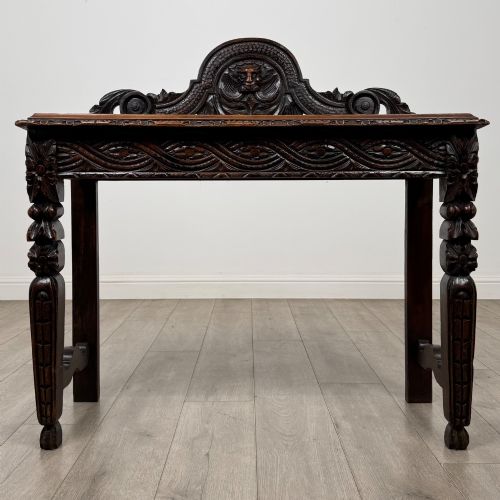
The selections on this page span the Victorian era alongside related nineteenth century periods, featuring forms ranging from formal mahogany and marble-topped designs to rustic pine and oak variants. Buyers will frequently encounter mahogany and oak constructions, alongside marble surfaces and giltwood frames that reflect the diverse domestic interiors of the period.
How they were made
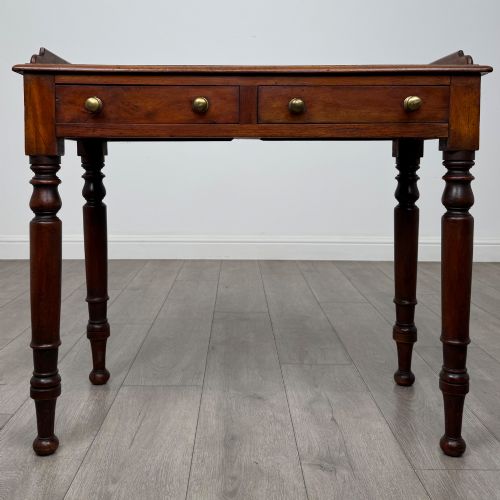
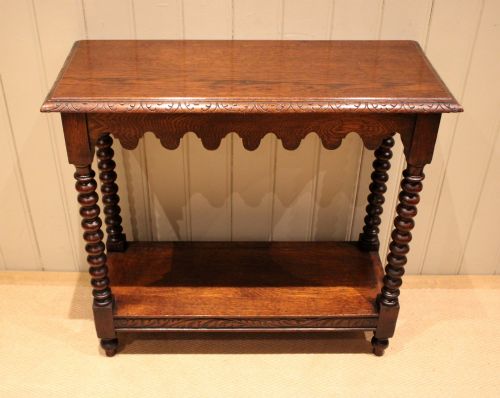
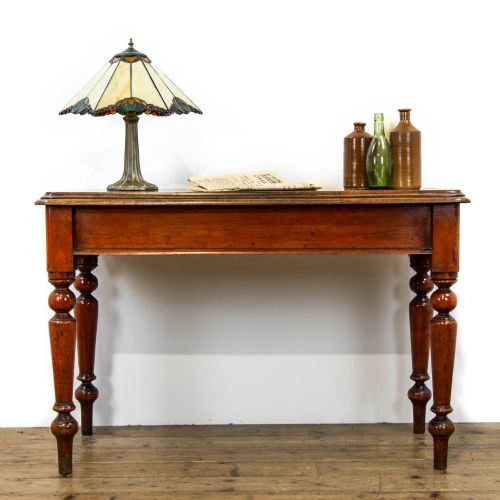
Cabinet makers utilised dense hardwoods such as mahogany, oak, rosewood, and walnut, alongside softer utility timbers like pine for secondary or regional pieces. Construction often involved hand-carved detailing, turned legs such as triple barley twists, and fitted brass hardware.
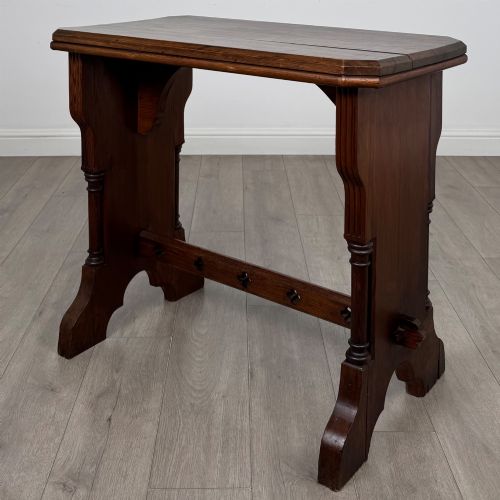
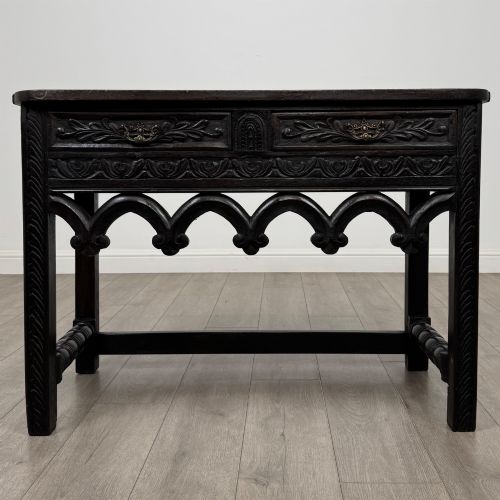
Many formal examples integrate heavy marble tops and inset brass campaign fittings, whilst others exhibit carved Gothic revival motifs or giltwood frames. Joinery relied on traditional methods appropriate to the cabinet maker's workshop and the intended domestic function.
Pine organ benches occasionally cross over into service as narrow side tables in country houses.
What varies in quality
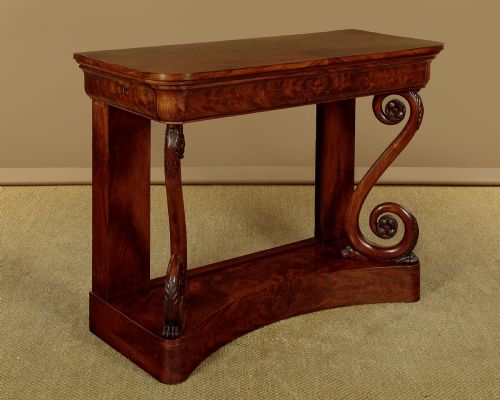
Quality rests upon the selection of timber and the crispness of the carving, distinguishing standard utility furniture from pieces produced for grander houses. Figured mahogany grains, well-fitted marble slabs, and substantial structural timber separate finer examples from simpler pine or utilitarian workshop pieces.
The integrity of the construction and the proportional balance of the base to the top dictate the piece's success. Higher quality consoles display refined joinery, original brass components, and harmonious decorative elements rather than mass-produced uniformity.
Druce and Co
The Victorian Hallway Console Glossary
- Console table
- A table designed to stand against a wall, frequently supported by brackets or legs at the front. These pieces provide surface area in hallways and reception rooms without obstructing thoroughfares.
- Marble top
- A polished stone surface fitted to the top of a console or serving table. This material offered a durable, heat-resistant surface that protected the wood underneath from damp or heavy objects.
- Giltwood
- Timber that has been coated with a thin layer of gold leaf or gesso paint. It appears primarily on the frames of mirrors and decorative console tables associated with revival styles.
- Barley twist
- A type of turned wooden leg resembling the spiral twist of barley sugar. This decorative turning appears frequently on nineteenth-century tables and stands.
- Campaign style
- Portable furniture constructed for travel, typically featuring recessed brass handles, corner brackets, and folding elements. These pieces were built for durability and ease of transport.
Victorian Hallway Console: Frequently Asked Questions
Where should I place a console table?
These tables fit naturally in entrance halls, corridors, and narrow passageways where floor space is limited. Their shallow depth allows them to sit flush against walls without blocking movement.
They also function effectively in reception rooms beneath wall mirrors or windows, providing a surface for lamps and decorative objects.
How do I care for a marble top?
Marble surfaces require regular cleaning with a damp cloth and mild, non-acidic soap to prevent staining. Avoid placing citrus fruits or vinegar directly on the stone, as acid etches the polished finish.
Applying a specialist stone wax helps protect the surface from moisture and everyday wear.
What is the difference between a console and a side table?
Console tables are specifically designed to stand against a wall and sometimes rely on the wall or front legs for stability. Side tables are freestanding pieces finished on all sides and can float away from walls.
In nineteenth-century usage, however, the terms frequently overlap depending on the room and function.
Can I use a hall table for writing?
Most hall consoles lack adequate knee clearance and proper height proportions for sustained writing work. Writing tables and desks on this page feature drawers and flat surfaces built specifically for sitting at.
Using a console strictly for display and occasional drop storage preserves its intended purpose.