
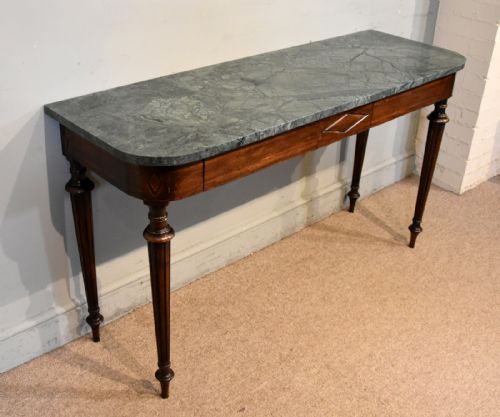




Antique Grey Wall Table
An antique grey wall table offers slender proportion and architectural presence, anchoring a hallway or drawing room with painted wood or carved detail.
Antique Grey Wall Table
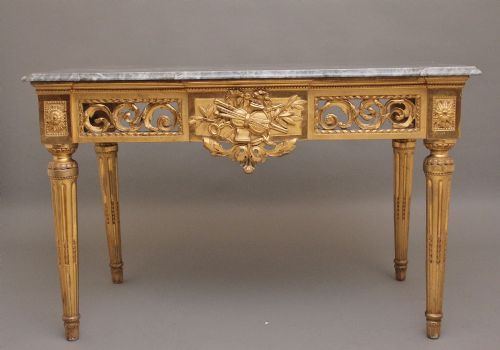
When searching for an antique grey wall table, buyers encounter console tables shaped for narrow spaces, often featuring painted wood surfaces or marble tops. These pieces emerge from periods spanning the eighteenth century through the early twentieth century, taking stylistic cues from French provincial, neoclassical, and rococo designs.
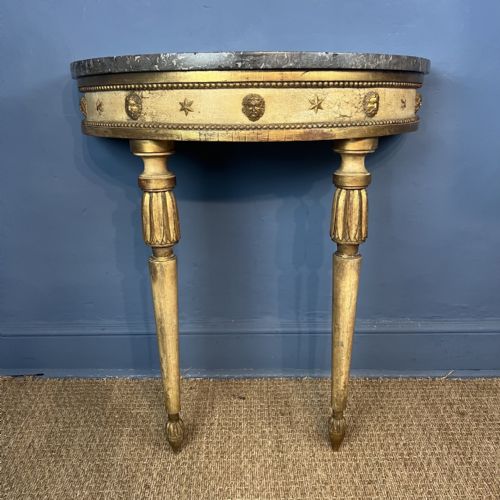
The console tables found here frequently originate from French, Italian, and Swedish workshops, displaying demi-lune or serpentine fronts designed to sit flush against a wall. Alongside console tables, the selection includes related decorative forms and paintings, though wall-mounted console tables remain the primary focus of this search phrase.
Materials and construction
These tables combine timber carcasses of pine, walnut, or oak with applied decorative layers of paint, gesso, and gold leaf. Painted finishes often employ muted or cream tones that develop a soft patina over decades of use.
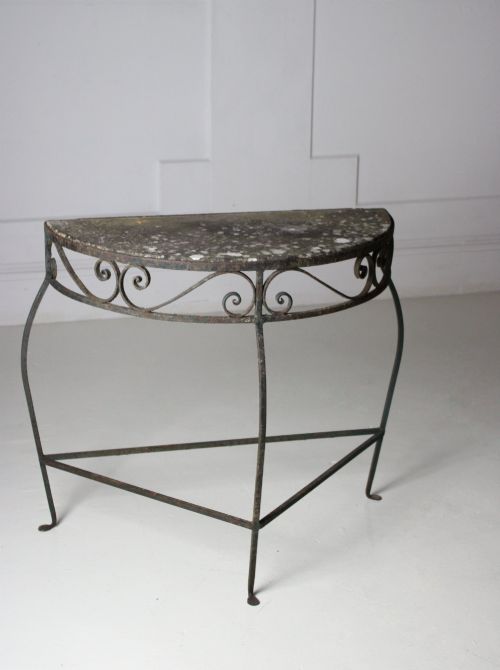
Many examples incorporate heavy stone surfaces, utilising inset marble slabs fitted to carved wood or wrought iron frames. Joinery reflects period traditions, relying on hand-carved elements and pinned joints rather than modern fasteners.
Listings span the eighteenth, nineteenth, and early twentieth centuries, incorporating neoclassical, rococo, and regional European stylistic traditions.
Distinctions in craftsmanship
Quality reveals itself in the crispness of carved wooden ornament and the depth of layered gesso beneath painted surfaces. Finer pieces demonstrate careful proportion in serpentine or demi-lune curves and harmonious integration between stone tops and wooden bases.
The integrity of the original painted or gilt finish dictates much of the character. Examples retaining uncompromised period paintwork display a depth and subtlety that distinguish them from later surface updates.
John Tubb
The Antique Grey Wall Table Glossary
- Console table
- A side table designed to be fixed against a wall, frequently supported by two front legs and secured with wall brackets.
- Demi-lune
- A half-moon shape characteristic of tables built to stand flat against a wall with a curved front edge.
- Giltwood
- Timber that has been coated with a thin layer of gold leaf or gold paint to create a reflective surface.
- Gesso
- A plaster-like mixture applied to wood surfaces to prepare them for painting or gilding.
- Serpentine front
- A furniture front characterised by a central convex curve flanked by two concave curves.
Antique Grey Wall Table: Frequently Asked Questions
Where should I place a wall table?
These tables suit entrance halls, narrow corridors, or living rooms where floor space is limited. Their shallow depth allows them to sit neatly against vertical surfaces without obstructing movement.
They also function effectively beneath mirrors or large paintings, creating a balanced focal point in a reception room.
How do I care for a painted wood table?
Dust the surface regularly with a soft, dry cloth to prevent dirt accumulation on painted or gilt finishes. Avoid using liquid cleaners or abrasive materials that might degrade historic paint layers.
Keep the timber away from direct heat sources and strong sunlight to prevent the painted surface from drying out or cracking.
Can these tables support heavy objects?
Tables featuring heavy marble tops possess considerable inherent weight and stability, though they still benefit from being secured to the wall if specified by their design. Lighter wooden versions rely on their structural wall brackets for ultimate security.
Placing moderate decorative items such as lamps or ceramics poses no difficulty, but heavy loading should be avoided.
How do I distinguish French styles?
French provincial pieces display restrained carved details and simpler painted finishes suited to country houses. Rococo and neoclassical variants introduce more elaborate scrolling, gesso work, and gilt surfaces.
Examining the underlying timber and the character of the paint helps indicate whether a piece follows provincial or courtly traditions.