


Victorian Green Glass Vase
A victorian green glass vase brings deep forest tones and brilliant colour to a room, catching the light through varied periods and forms.
Victorian Green Glass Vase
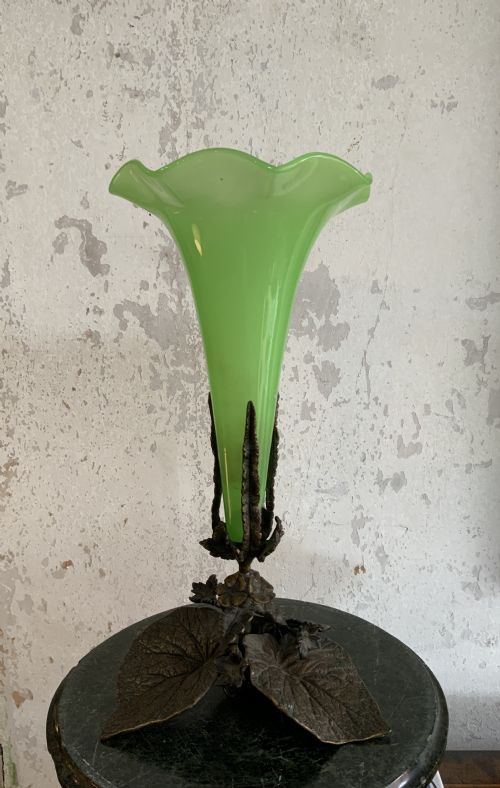
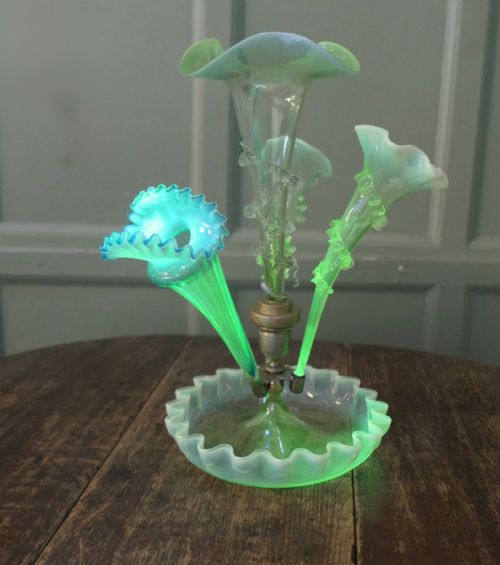
When searching for a victorian green glass vase, buyers encounter everything from slender posy vessels to multi-trumpet epergnes and glowing table lustres. These objects emerge primarily from the nineteenth century and the Victorian era, spanning styles from classic Bohemian work to early Art Nouveau.
The assortment on offer brings together standard single vessels and grander garniture sets, often incorporating uranium glass or delicate hand-painted enamel decoration. Most examples adhere to traditional Victorian forms, though occasional pieces cross over into Arts and Crafts or Impressionist influences.
How they were made
Maker techniques rely upon hand-blowing molten glass into moulds or free-forming shapes, frequently incorporating uranium for a vibrant green glow under ultraviolet light. Artisans then applied surface ornamentation through enamelling, gilding with gold leaf, or creating cameo layers.
Many items combine glass bodies with brass, bronze, or silver-plated mounts and stands. Double-walled construction and overlaid portraits further demonstrate the intricate manipulation required during the nineteenth century.
A painted fox hunting scene brings British field sports directly onto a vibrant green glass surface.
What varies in quality
Quality rests upon the crispness of the hand-blown form and the precision of surface decoration, whether hand-painted enamel scenes or intricate gold leaf engraving. Superior examples display balanced proportions and crisp details that remain sharp upon close inspection.
The depth of the green colour and the clarity of any secondary materials like brass or bronze mounts separate standard production items from finer studio output. Pieces bearing attribution to known makers or specialised houses command greater attention for their artistic execution.
Stuart for Liberty·Thomas Webb and Sons·Konstantin Stoitzner·Baccarat
The Victorian Green Glass Vase Glossary
- Uranium glass
- Glass containing uranium dioxide which produces a distinct fluorescent green glow under ultraviolet light. This material appears frequently in nineteenth-century decorative pieces.
- Epergne
- A central table centrepiece featuring multiple trumpets or baskets for holding flowers or fruit. Victorian examples often combine green glass with bronze or silver.
- Mantle lustre
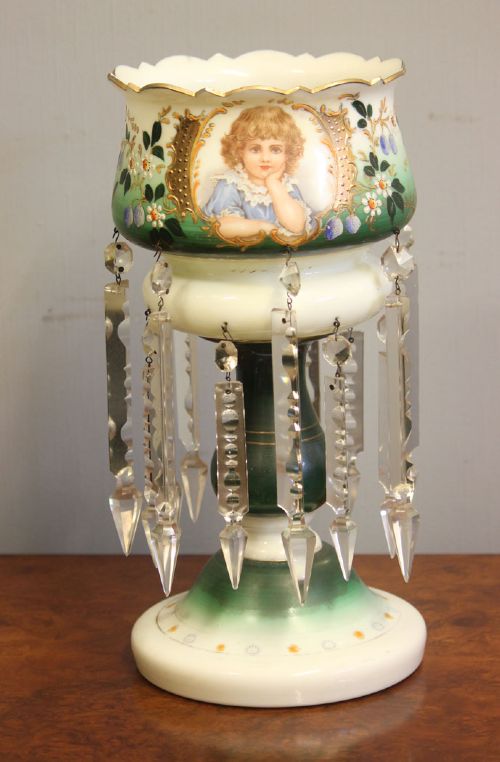
- A decorative vase hung with cut glass prisms designed to catch the firelight on a mantelpiece. These pieces often arrive in pairs alongside single table versions.
- Mary Gregory
- A style of white enamel painting depicting silhouetted Victorian children engaged in pastoral scenes. This decoration is commonly found applied to green glass vessels.
- Vaseline glass
- A transparent or translucent yellow-green glass variety named for its oily appearance. It is an alternative descriptor for uranium-reactive wares from the period.
Victorian Green Glass Vase: Frequently Asked Questions
How do I spot uranium green glass?
Uranium glass displays a distinct yellowish-green hue in normal daylight and emits a bright neon green fluorescence when exposed to a blacklight.
This chemical reaction results from the addition of uranium oxide to the molten batch during the manufacturing process.
What is a mantle lustre used for?
Mantle lustres served as decorative garnitures placed upon drawing room mantelpieces to reflect ambient candlelight through hanging crystal prisms.
Pairs of these vases created a symmetrical display that enhanced the formal appearance of nineteenth-century interiors.
How should I clean my glass vase?
Clean antique glass gently using lukewarm water and a mild detergent, avoiding harsh abrasives that might damage surface gilding or enamelwork.
Dry thoroughly with a soft cloth to preserve the finish of the glass and any attached brass or bronze components.
Are these pieces strictly Victorian?
While the majority originate from the Victorian era and the nineteenth century, related items span from eighteen-sixty through the early twentieth century.
Design influences stretch across Bohemian, Arts and Crafts, and early Art Nouveau movements depending on the specific origin.