
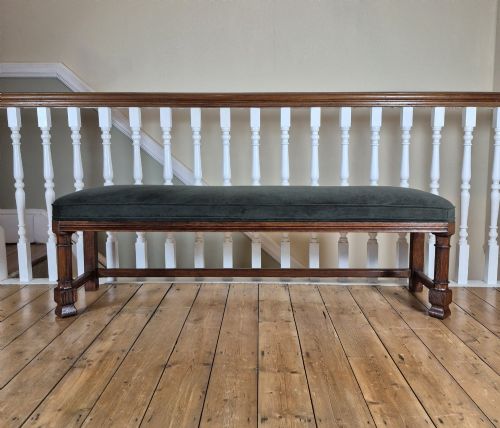
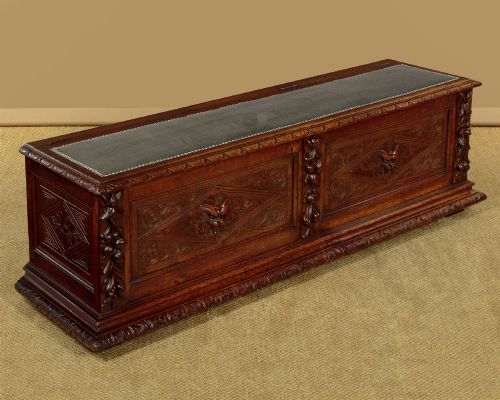
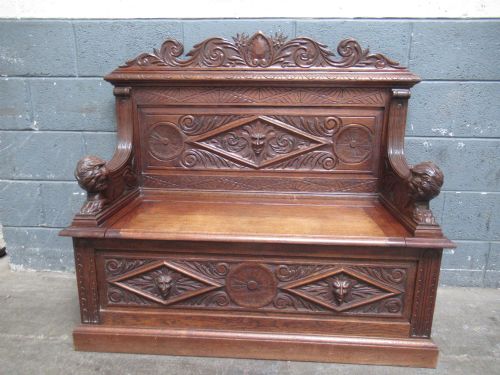
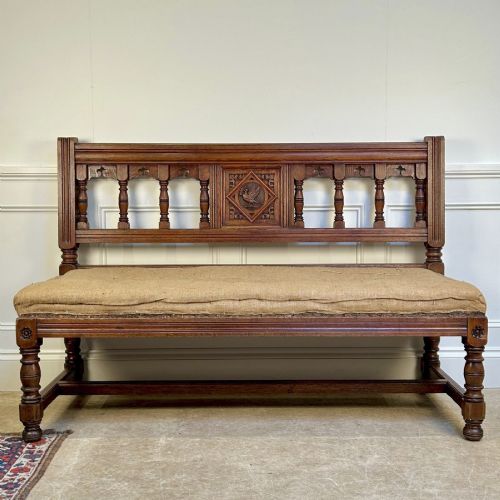
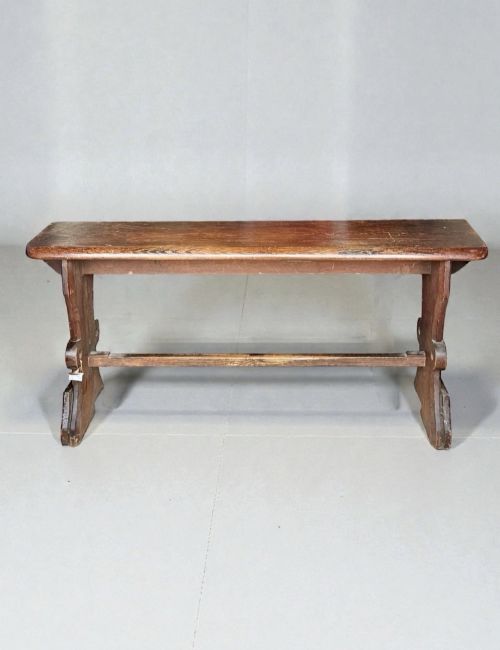





Victorian Gothic Hall Bench
A victorian gothic hall bench brings architectural presence and heavy timber construction into an entranceway, offering robust seating designed to anchor large spaces.
Victorian Gothic Hall Bench
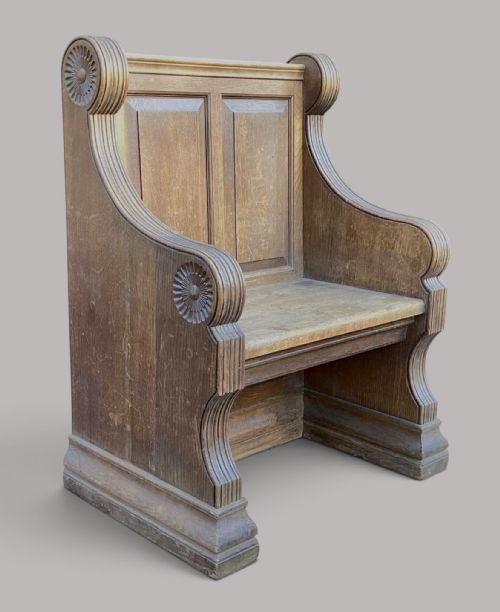
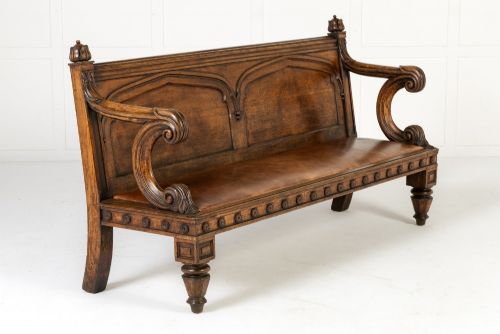
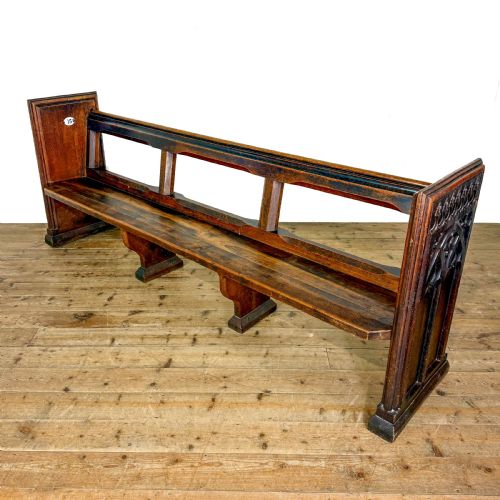
A victorian gothic hall bench combines heavy structural timber with medieval architectural motifs such as pointed arches, tracery, and linenfold panelling. Most examples date from the nineteenth century, spanning decades from eighteen fifty to nineteen twenty, with frequent appearances from the eighteen eighties.
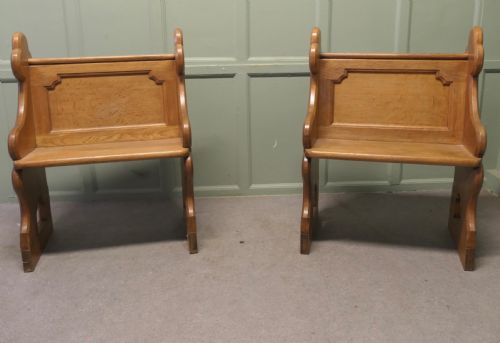
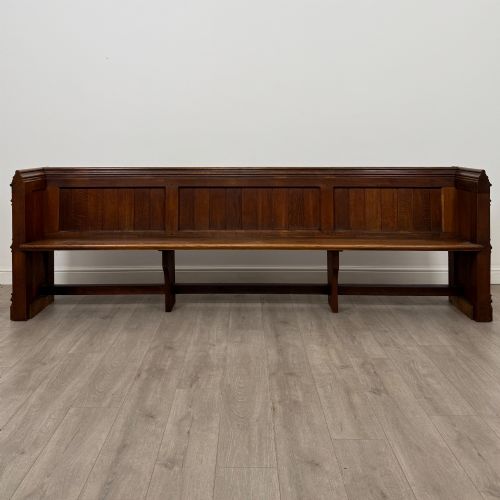
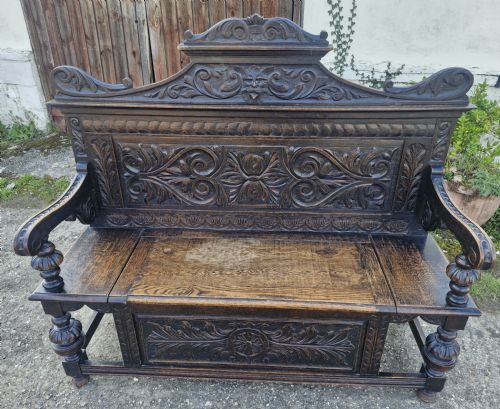
The category encompasses varied seating forms including settles, monks benches, pew-style seats, and architectural window seats. Many feature high panelled backs, lift-up storage compartments beneath the seat, or integrated arms designed for grand reception halls.
Origins range across English workshops, Scottish country houses, and continental interpretations, often reflecting gothic revival or arts and crafts design influences.
Craftsmanship and Proportion
Quality reveals itself in the crispness and depth of the timber carving, distinguishing sharp architectural mouldings from softer, shallower execution. The weight and selection of the oak timber, alongside the integrity of the joinery in high-stress areas like arm supports and lift-up seats, dictate structural longevity.
Proportion and scale separate standard utility pieces from grand architectural forms, with superior items displaying balanced linenfold panels, well-integrated storage boxes, and harmonious revival detailing.
Watch out for watchful green man masks peering out from the carved oak foliage on nineteenth-century monk benches.
GIllows·Pugin
The Victorian Gothic Hall Bench Glossary
- Gothic Revival
- An architectural and decorative style popular during the nineteenth century that draws inspiration from medieval design, featuring pointed arches and structural verticality.
- Settle
- A wooden bench with a high panelled back, solid armrests, and frequently a box seat compartment beneath the hinged lid.
- Linenfold
- A style of woodcarving used on panels to imitate vertical folds of draped cloth, common in gothic and revival cabinetwork.
- Green Man
- A sculptural motif depicting a human face surrounded by or sprouting from foliage, frequently carved into nineteenth-century oak furniture.
Victorian Gothic Hall Bench: Frequently Asked Questions
What is a hall bench?
A hall bench is a heavy wooden seat traditionally placed in entrance halls and vestibules to provide formal seating for visitors and household members. These pieces frequently incorporate storage compartments beneath the lid for boots, textiles, or outdoor accessories.
Nineteenth-century versions often utilise architectural framing and high panelled backs to create an imposing decorative statement upon entering a property.
How do I date these benches?
Dating relies on examining timber characteristics, construction methods, and decorative motifs associated with nineteenth-century revival movements. Pieces often feature specific stylistic markers from decades between eighteen fifty and nineteen twenty.
Archival records and dated comparative examples help narrow the production window, though many workshop items carry general nineteenth-century attributions.
Where should I place one?
These benches suit grand entrance halls, wide corridors, or reception rooms where their substantial timber frames and high architectural backs can be viewed against plain walls. Placing them away from direct heat sources prevents the solid oak from drying out or splitting.
Ensure adequate floor space to accommodate the depth of the seat and any hinged lift-up lids or folding tabletops.
What is a monks bench?
A monks bench is a dual-purpose piece of furniture featuring a hinged wooden back that pivots downwards to rest on the armrests, creating a flat table surface. This clever configuration allowed small spaces to serve multiple functions in Victorian interiors.
They are constructed from solid oak and frequently embellished with deep relief carvings and storage boxes beneath the seat.