


Pair of Oak Benches
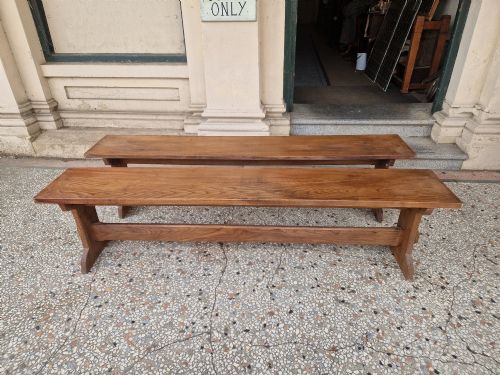
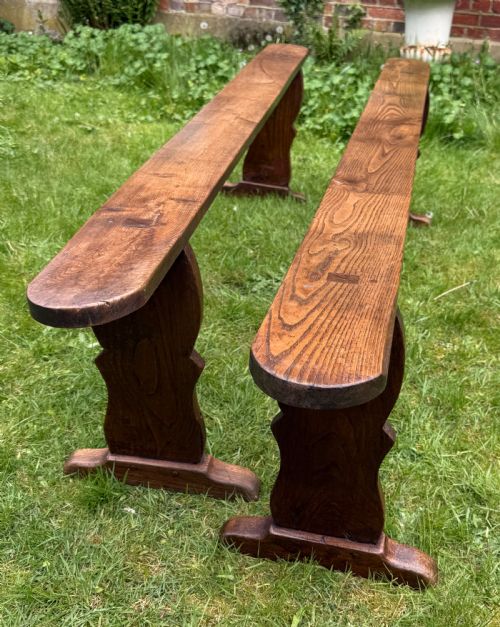
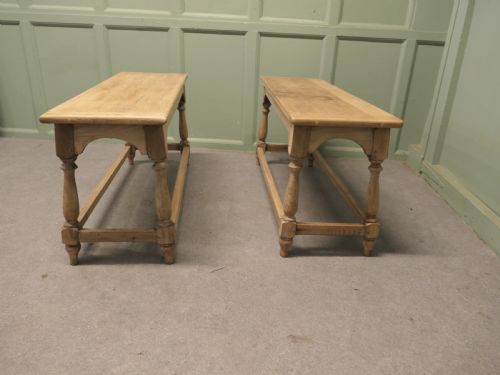
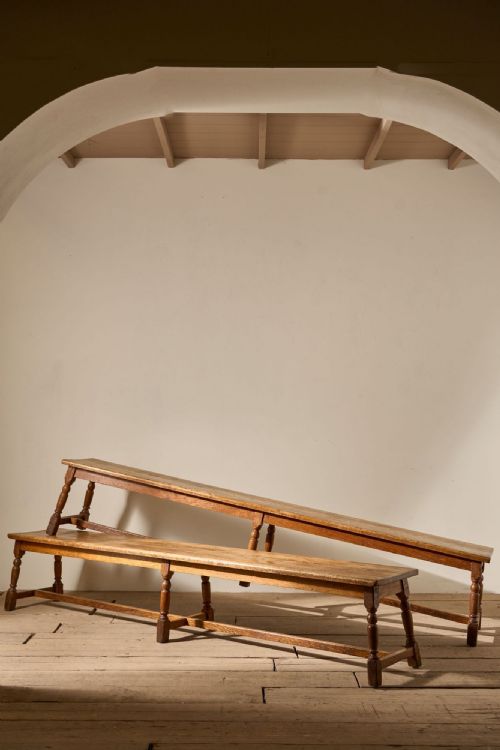
A pair of oak benches brings sturdy utility and rich grain to hallways and dining spaces, rooted in centuries of dependable craftsmanship.
Pair of Oak Benches
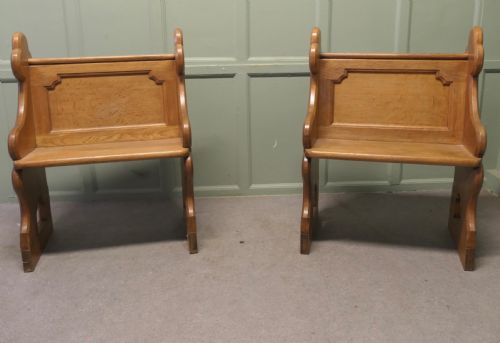
A pair of oak benches supplies matching seating for long tables, hallways, and entrance spaces. These pieces span from the late eighteenth century through the Art Deco decades of the nineteen-thirties.
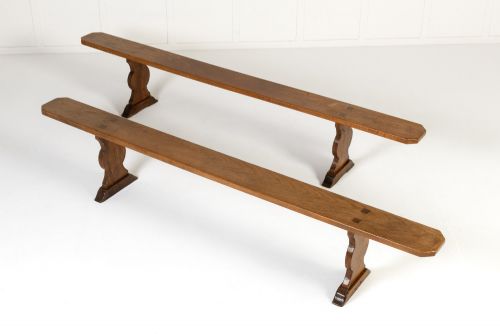
The selection here includes solid timber dining benches, joint forms, trestle designs, and hall seats with Gothic or Victorian styling. Regional variations such as Irish country house seating and French provincial pieces appear regularly.
Most examples originate from the nineteenth and early twentieth centuries, reflecting both domestic utility and formal architectural schemes. Buyers often encounter sturdy refectory formats alongside slender window seats and club fenders.
Materials and construction methods
Solid oak serves as the primary structural timber, chosen for its density and durability. Joinery often relies on traditional pegged joints, mortise and tenon construction, and heavy trestle supports.
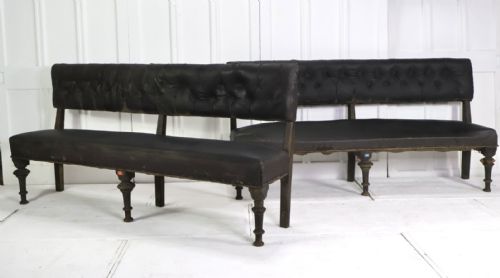
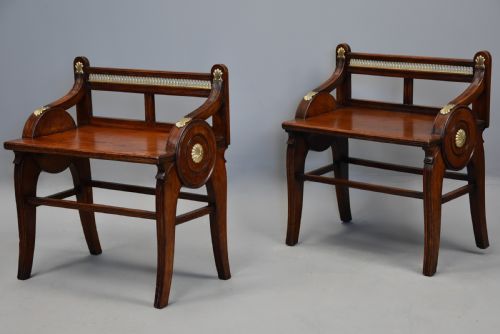
Secondary materials appear selectively to enhance function, including brass mounts, steel frames, and leather upholstery. Bleached or painted wood surfaces also occur, modifying the natural tone of the timber.
Listings feature oak, brass, leather, and steel across Victorian, Gothic Revival, and Arts and Crafts styles.
Distinctions in quality and execution
The standard of a pair of oak benches depends heavily on the selection of timber and the crispness of any carved detail. Heavy solid construction with tight, stable joints separates utilitarian items from finer architectural commissions.
Provenance and maker attribution elevate certain pieces, particularly those bearing the marks of established cabinet makers or specific country house origins. The integrity of the surface finish and the retention of original brass or iron hardware further define superior examples.
James Shoolbred & Co.·George Faulkner Armitage
The Pair of Oak Benches Glossary
- Joint bench
- A piece constructed using traditional joinery techniques, typically featuring pegged mortise and tenon frames. These form stable, rigid seating platforms.
- Refectory bench
- A long, narrow seating form traditionally paired with a communal dining table. They offer substantial length and sturdy stretcher bases.
- Club fender
- A low, padded hearth seat built around a metal frame, often incorporating brass or steel. They combine upholstery with rigid metal perimeters.
- Trestle design
- A structural arrangement where the top board rests upon two or more supporting upright frames. This format allows for maximum legroom beneath the seat.
- Aesthetic Movement
- A late nineteenth-century design style emphasising visual beauty over narrative function. Pieces from this movement often display refined geometric lines and artistic detail.
Pair of Oak Benches: Frequently Asked Questions
How were oak benches used historically?
These benches served communal dining halls, domestic kitchens, and grand entrance passages where durable seating was essential. Long refectory and trestle formats accommodated multiple diners along substantial tables.
In hallway settings, narrower forms provided temporary seating for visitors removing outdoor garments. Some specialised variants acted as club fenders around hearths or window seats within country houses.
What styles do these benches follow?
The inventory encompasses Gothic Revival, Arts and Crafts, and Aesthetic Movement interpretations alongside vernacular French and Irish country styles. Many later pieces also adopt seventeenth-century revival characteristics.
Victorian examples frequently display carved ornamentation and heavier proportions. In contrast, twentieth-century iterations tend towards simpler solid oak constructions or bleached wood finishes.
How do I care for antique oak furniture?
Maintain oak timber by keeping pieces away from direct heat sources and sudden humidity shifts to prevent splitting. Regular dusting with a dry cloth protects the wax or polish finish.
Avoid commercial silicone sprays that can penetrate the grain and damage historical surfaces. Gentle application of natural beeswax preserves the lustre of the wood over time.
How are different periods identified?
Dating relies on tool marks, construction methods, and stylistic cues unique to specific decades. Eighteenth-century examples show hand- Hewn timber and pegged joinery, while late-Victorian pieces often feature machine-planed boards and crisply carved motifs.
硬件 and upholstery traces also offer chronological clues, matching the manufacturing standards of the era in which they were produced.