

Victorian Gothic Furniture
Victorian gothic furniture brings medieval architecture indoors through heavy timbers and pointed arches designed to anchor a room with serious presence.
Victorian Gothic Furniture
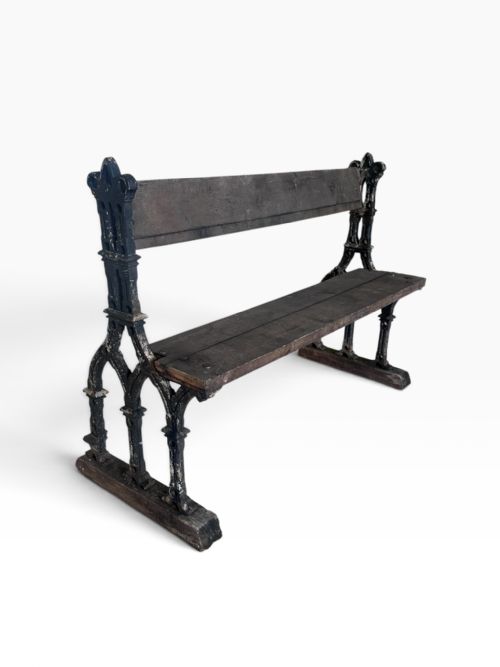
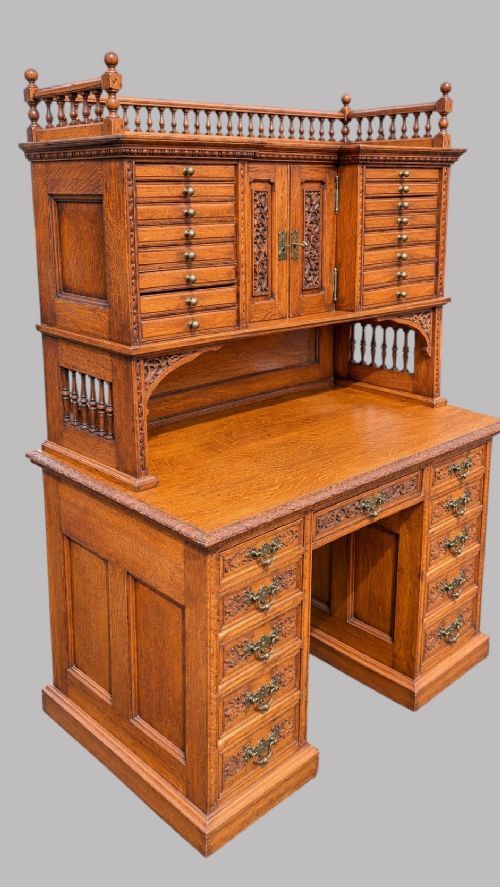
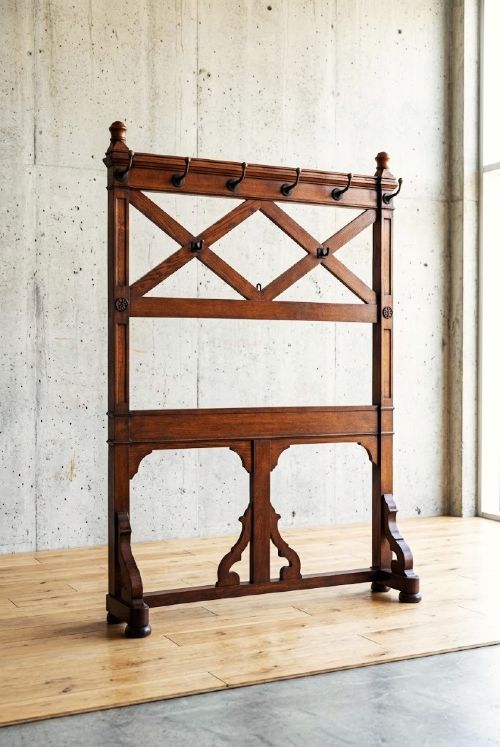
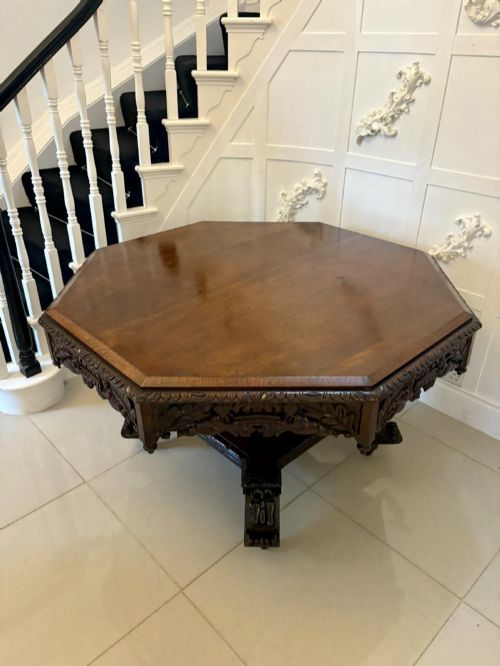
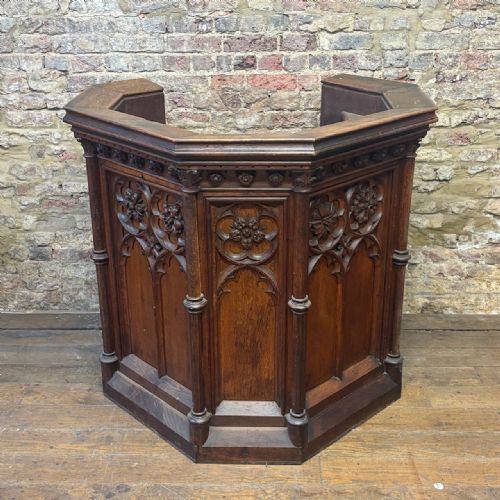
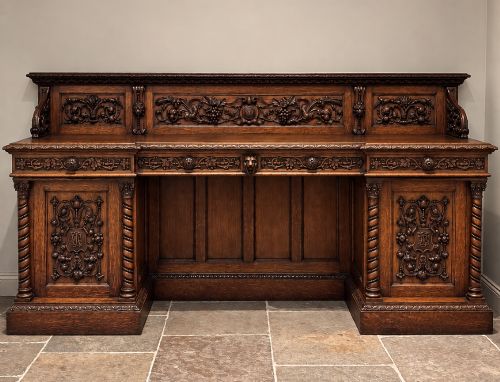
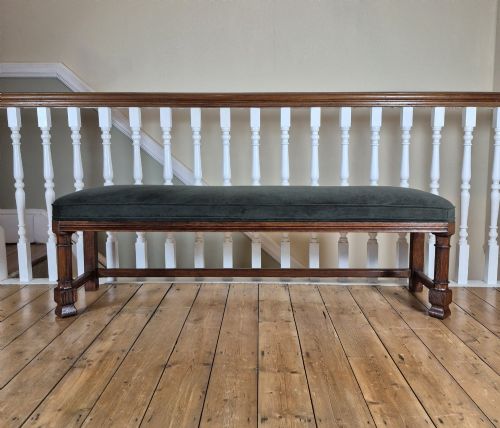
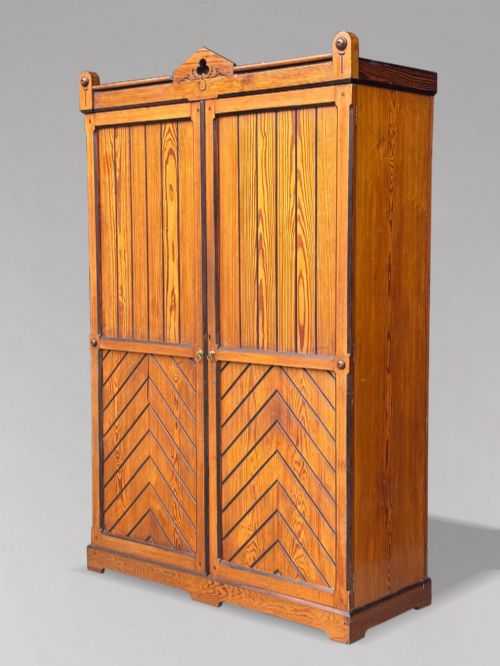
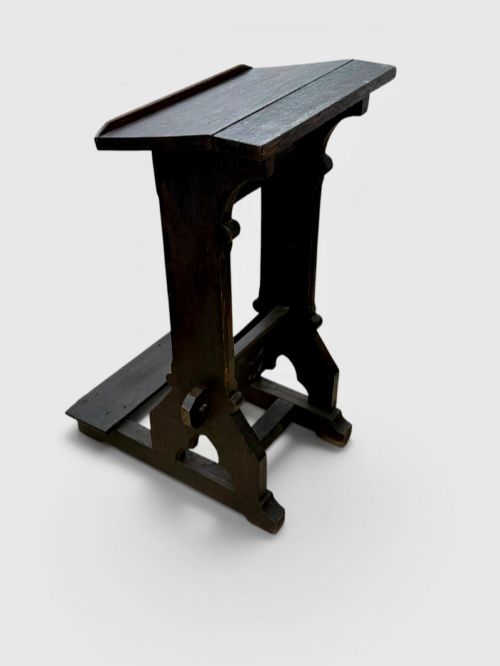
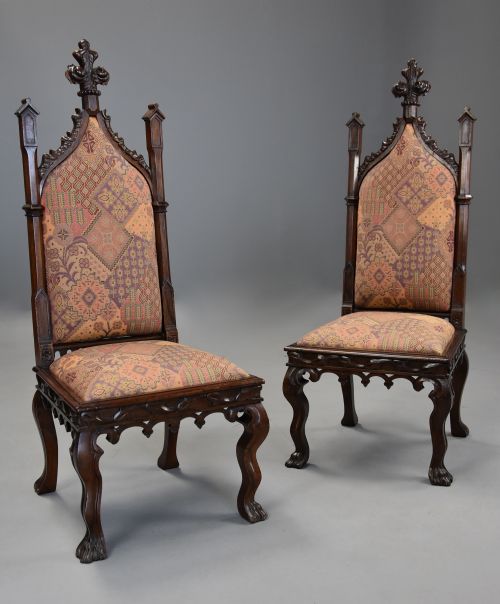
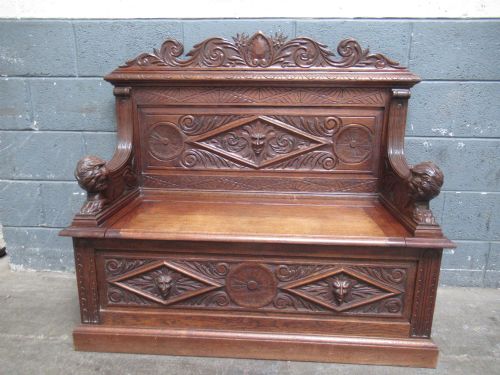
When you search for victorian gothic furniture, you find heavy oak seating, church-derived desks, and architectural storage pieces built during the nineteenth century. The selection leans heavily toward robust hall benches, carved sideboards, and occasional tables reflecting a revival of medieval design.
Most items on this page originate from the Victorian period, appearing alongside related pieces in styles like Gothic Revival and Arts and Crafts. Forms range from domestic tables and bookcases to ecclesiastical pulpits and prayer desks.
Domestic pieces adapt architectural motifs for the home, including linenfold panels, pointed archways, and grotesque carvings. These items served functional roles in hallways, libraries, and parlours while projecting a solemn dignity.
How they were made
Makers relied on solid oak as the primary structural timber, complemented by pine, walnut, and exotic woods like rosewood and satinwood for specific forms. Cabinetmakers shaped these heavy materials using traditional joinery methods, mortise and tenon frames, and deep hand-carving.
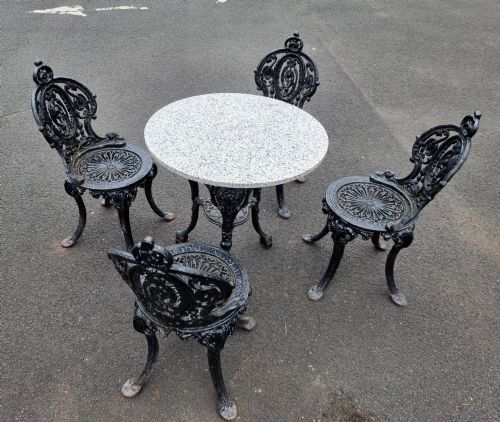
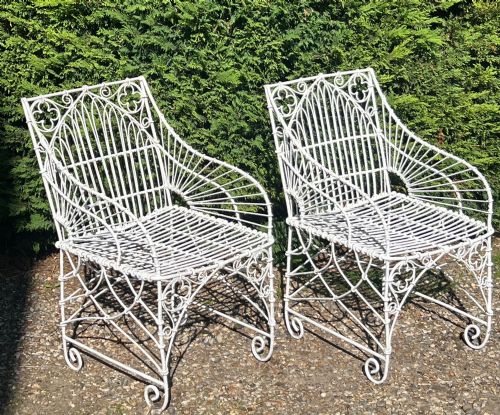
Metalwork played a structural and decorative role, with cast iron and brass utilised for garden furniture, umbrella stands, and strap hinges. Upholstered elements incorporated leather and heavy fabric fixed with brass studs to match the dark timbers.
Victorian Gothic Furniture Retail Price Guide 2026
Typical asking prices for victorian gothic furniture among the pieces listed under this phrase on Sellingantiques today, from the lower quarter to the upper quarter. They describe what is for sale here now, not the wider market.
Listings feature nineteenth-century oak, cast iron, and pine across styles including Gothic Revival, Arts and Crafts, and Black Forest.
What varies in quality
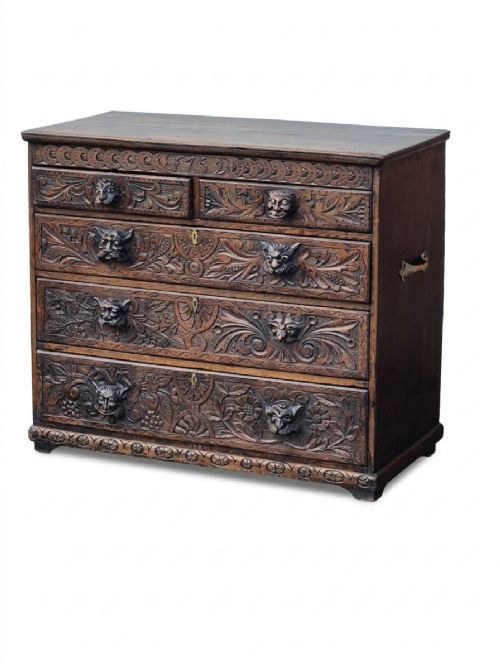
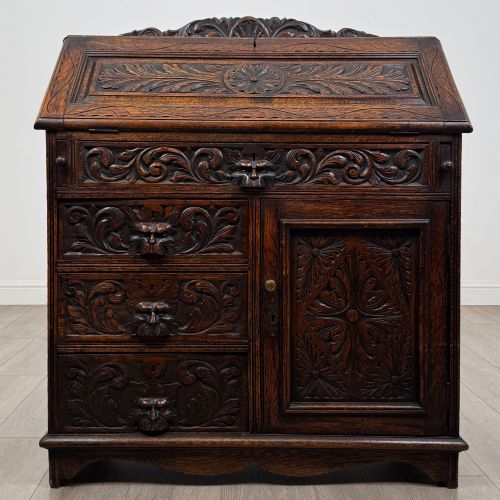
Quality rests in the depth and clarity of the hand-carving, particularly on figural elements like Green Man faces and botanical motifs. Crisp undercut details separate exceptional workshop production from simpler commercial output.
The choice of timber and the integrity of the joinery dictate longevity, with dense quarter-sawn oak providing superior stability over softer woods. Original hardware, locks, and maker labels elevate a piece above standard examples.
Gillows·Liberty & Co.·W.A. Willcocks·George Edmund Street
The Victorian Gothic Furniture Glossary
- Gothic Revival
- An architectural and decorative movement drawing inspiration from medieval forms, pointed arches, and ecclesiastical motifs. It dominated nineteenth-century design across domestic and public buildings.
- Green Man
- A sculptural motif depicting a human face emerging from or entwined with foliage and vines. This ancient symbol frequently appears on nineteenth-century carved woodwork.
- Ecclesiastical
- Pertaining to the Christian church or clergy, describing furniture originally made for chapels, pulpits, and vestries. These items often feature heavy religious iconography.
- Quarter-sawn
- A method of milling logs that produces timber with enhanced dimensional stability and a distinctive striped grain pattern. Cabinetmakers favoured this cut for high-grade oak construction.
- Turners Chair
- A traditional seating form constructed entirely from turned wooden spindles and posts rather than flat panels. Examples often date back centuries or imitate earlier vernacular designs.
Victorian Gothic Furniture: Frequently Asked Questions
How do I identify true Victorian gothic furniture?
Look for structural use of solid oak, distinct architectural elements like pointed arches, and hand-carved details such as linenfold panels or grotesque masks.
Examine the construction methods underneath and at the back to confirm nineteenth-century joinery before relying on style alone.
Where were these heavy pieces originally used?
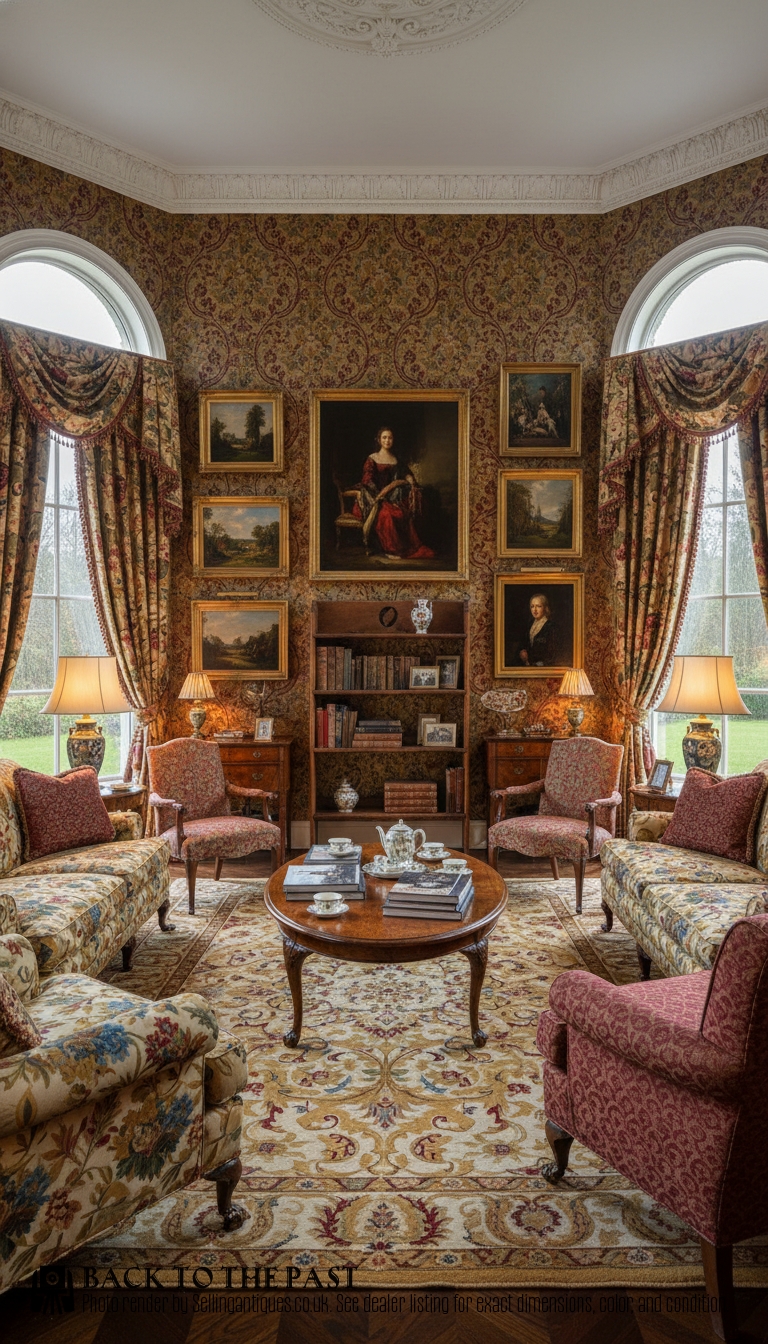
Domestic examples anchored hallways, libraries, and dining rooms, projecting authority and historical permanence in affluent nineteenth-century homes.
Other items originated directly from churches, chapels, and convents, serving specific ecclesiastical functions like prayer and reading.
How do I care for antique oak furniture?
Keep wooden pieces away from direct heat sources and dramatic humidity shifts to prevent the heavy timbers from splitting or warping.
Apply a traditional beeswax polish sparingly and buff with a soft cloth to maintain the deep lustre of the dark finish.
Can I mix these dark pieces with modern interiors?
The dense grain and strong architectural lines create a powerful focal point that grounds neutral contemporary spaces.
Pair a single substantial table or hall stand with minimalist surroundings to let the nineteenth-century craftsmanship stand out.