





Victorian Gothic Foyer Table
These Victorian gothic foyer table pieces bring imposing architectural presence and rich timber carving straight into a grand entrance.
Victorian Gothic Foyer Table
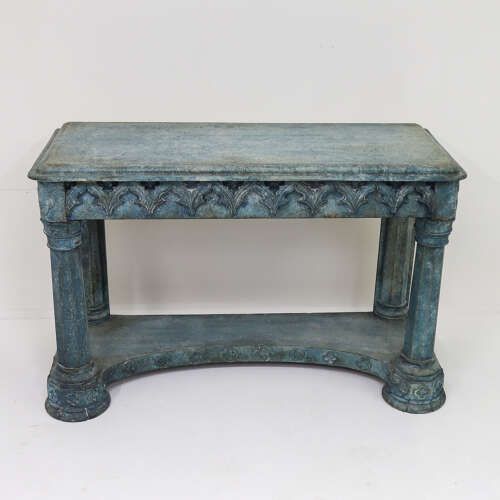
A victorian gothic foyer table brings architectural revival styles into the entrance hall, drawing on nineteenth century design traditions. The listings show a strong presence of centre tables and console tables designed for hall spaces.
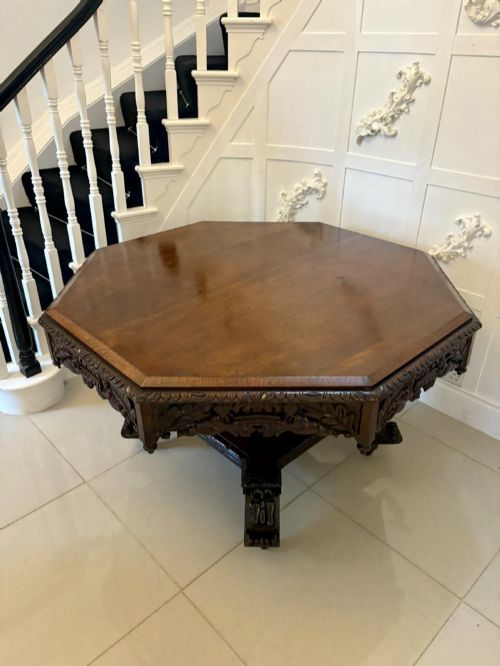
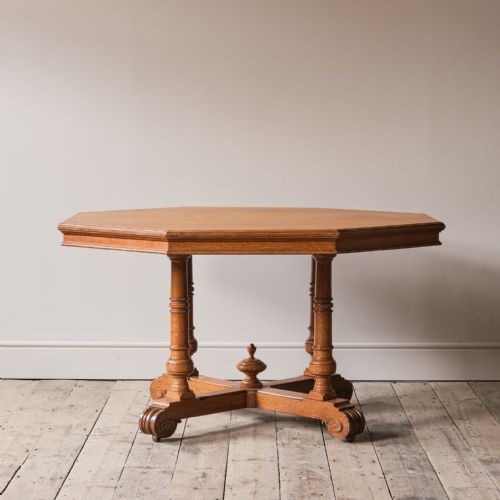
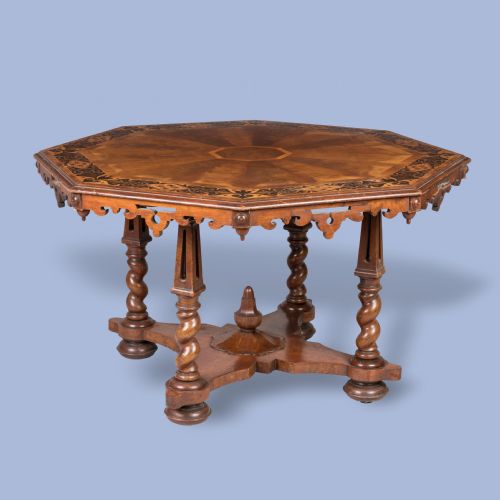
Most examples date across the nineteenth century, including specific years like eighteen-sixty, eighteen-eighty, and eighteen-ninety, alongside pieces from nineteen-twenty. Forms range from octagonal and oval centre tables to console formats shaped in the gothic taste.
Materials and construction methods
Construction relies heavily on solid timber, with oak appearing frequently in honey, bleached, and country finishes alongside ebonised hardwood, painted wood, mahogany, and walnut. Artisans utilised traditional techniques to build robust frames suited to heavy domestic use.
Carving defines the ornamentation, featuring scrollwork and gothic details executed directly into the wood. Additional surface interest comes through brass elements, marquetry, and inlay work embedded within the timber structures.
Listings span the nineteenth century into nineteen-twenty, featuring oak, walnut, mahogany, brass, and marquetry across centre and console table forms.
Assessing quality in revival tables
Quality rests upon the crispness of the carved details and the depth of the timber grain, whether in honey oak, bleached oak, or blackened surfaces. Superior pieces display deliberate execution in scrollwork and gothic motifs rather than superficial surface decoration.
The choice and treatment of materials also drive distinction, from straightforward country oak to finer hardwoods enhanced by marquetry, inlay, and brass highlights. Structural proportion determines whether a console or centre table holds an imposing presence in a hall.
James Winter
The Victorian Gothic Foyer Table Glossary
- Centre table
- A freestanding table designed to be viewed from all sides, commonly placed in the middle of a room or grand hall rather than against a wall.
- Console table
- A table fixed against a wall, frequently supported by front legs or brackets, often utilised in entrance halls.
- Gothic Revival
- An architectural and decorative style drawing inspiration from medieval design, featuring pointed arches, heavy timber, and elaborate carving.
- Marquetry
- Decorative veneer patterns applied to the surface of a table to form geometric or pictorial designs using various woods.
Victorian Gothic Foyer Table: Frequently Asked Questions
Where should a centre table be placed?
A centre table stands away from walls, allowing access and viewing from every angle. In a large foyer or hall, it anchors the room and often serves as a surface for decorative objects.
Octagonal and oval formats work particularly well in central locations because their shapes guide movement around the piece.
How do I distinguish oak finishes?
The evidence records several treatments for oak, ranging from natural honey tones to bleached surfaces and blackened or ebonised finishes. Each finish alters the visual weight of the timber and highlights the grain differently.
Country oak examples show simpler rural interpretations, while pieces in the style of Pugin or attributed to makers like James Winter exhibit more formal architectural detailing.
What is the difference between a console and a centre table?
Console tables are designed to stand against a wall, sometimes relying on structural support from the vertical surface or wall brackets. Centre tables are freestanding objects meant for central placement in a space.
Both forms served important decorative and practical functions in nineteenth century interiors.