
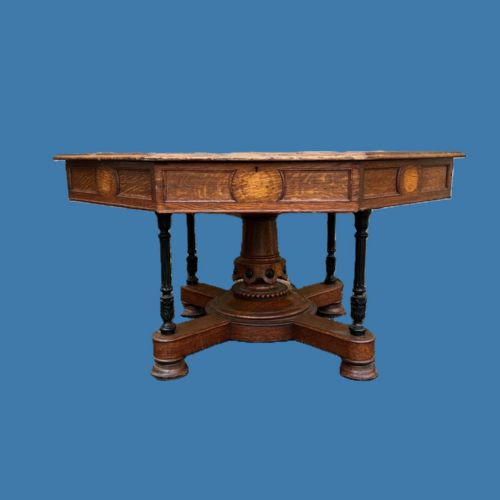


Oak Pedestal Hall Table
An oak pedestal hall table brings solidity and character to an entrance, offering a sturdy surface framed by nineteenth- and twentieth-century craftsmanship.
Oak Pedestal Hall Table
When you search for an oak pedestal hall table, you are looking at substantial wooden furniture designed for corridors and entrance spaces, frequently taking the form of centre tables, side tables, and occasional tables. These pieces span several distinct eras, drawing on Victorian, Edwardian, and earlier revival aesthetics to create a commanding focal point in a hallway.
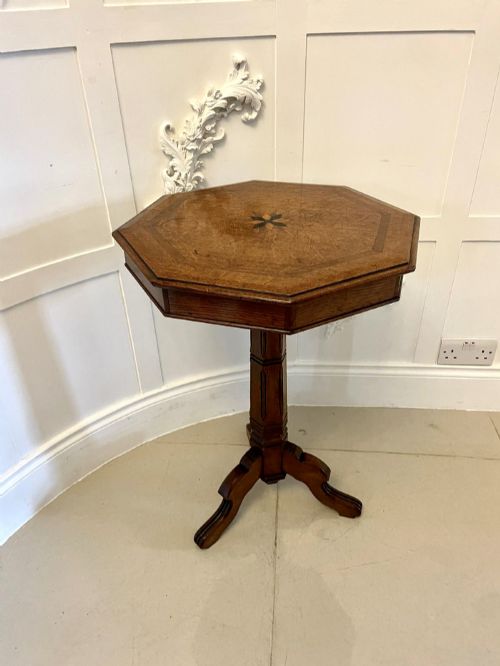
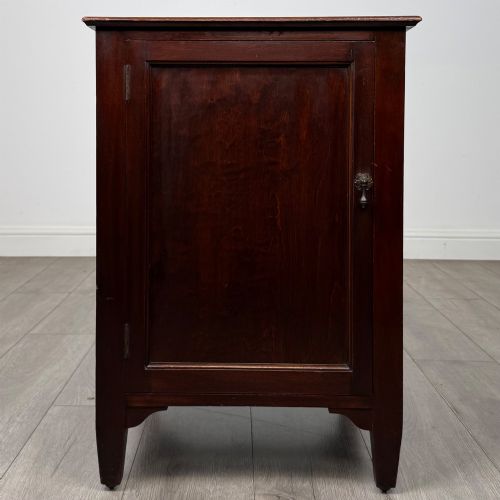
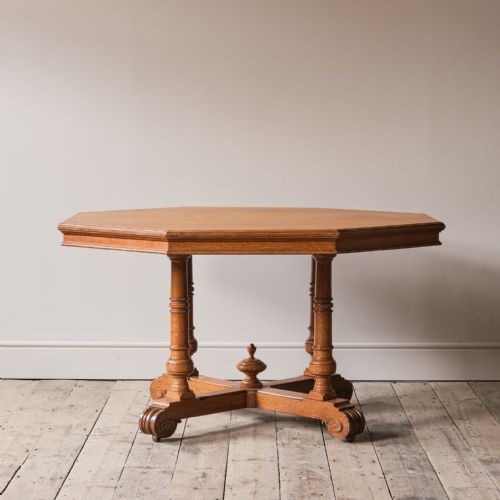
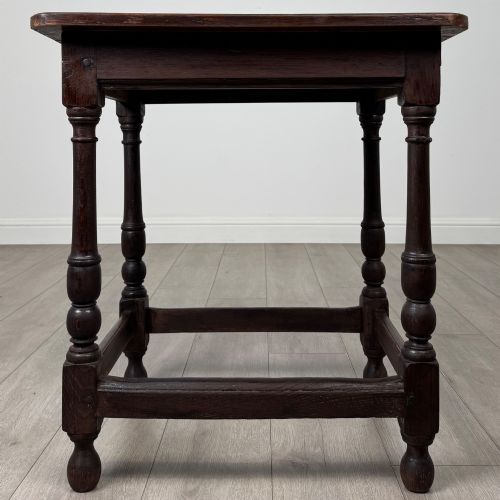
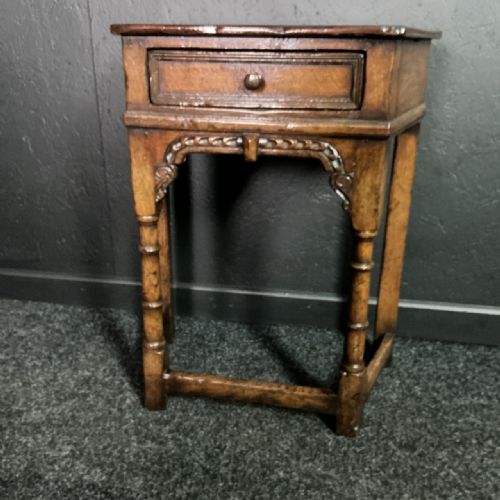
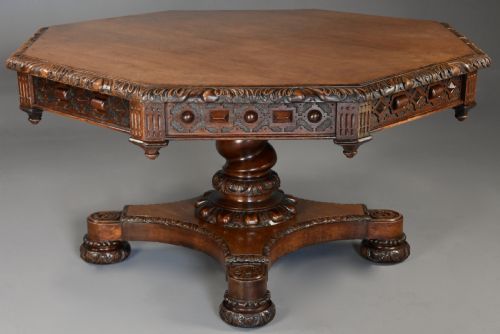
The versions you are most likely to encounter on this page range from nineteenth-century Victorian designs to Edwardian and nineteen-twenties examples. They appear in various configurations, including octagonal, oval, and rectangular formats, sometimes incorporating storage cupboards or stretcher bases beneath the main surface.
Originating across different periods from the Regency era through to the early twentieth century, these tables reflect shifting domestic tastes. Makers adopted styles such as Gothic Revival, Jacobean Revival, and Art Deco, applying them to robust timbers to suit the grand or modest entranceways of their day.
How they were made
Carpenters relied primarily on solid oak, frequently selecting burr oak and pollard oak to introduce striking grain patterns and rich natural figuring to the tabletops and pedestals. Ebonised wood and stained wood treatments were also applied to achieve darker, more uniform finishes or to accentuate specific architectural details.
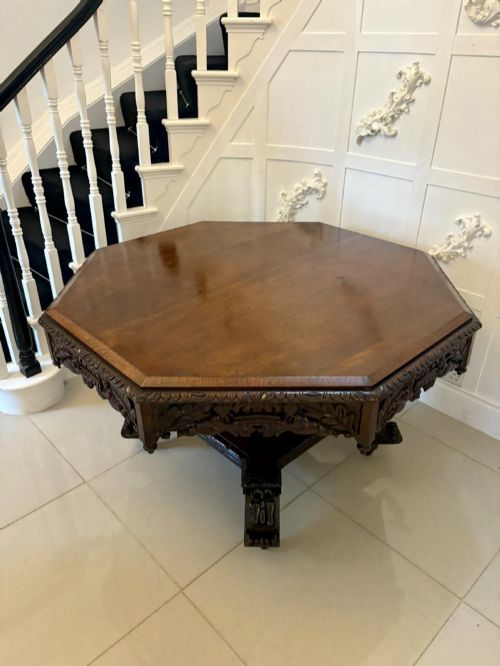
Construction techniques varied according to the period and stylistic influence, ranging from carved Victorian ornamentation to cleaner geometric lines seen in later Edwardian and Art Deco pieces. Wood veneer and decorative inlay occasionally feature on surfaces, while structural metal components provide hidden reinforcement in tables built to carry heavy library or centre table proportions.
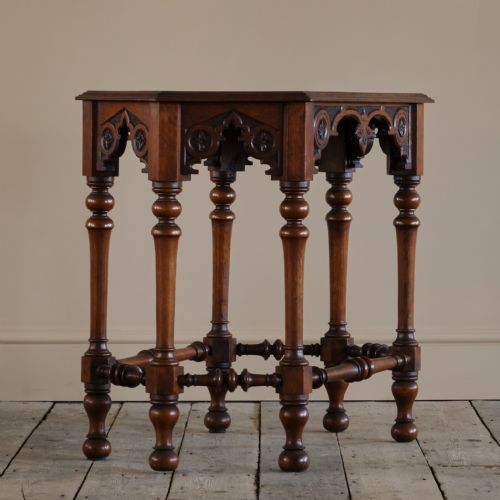
One table wears its Pugin-inspired gothic seriousness so heavily you might feel compelled to whisper your arrival.
What varies in quality
The distinction between a standard piece and a superior example often lies in the selection of timber and the ambition of the woodworking. Tables utilising burr oak or pollard oak display a depth of natural grain that elevates the visual impact far beyond plain stained wood.
Carving and adherence to specific historical revivals, such as Gothic or Jacobean influences, determine the artistic merit of the piece. Crispness in carved details and thoughtful integration of pedestals and stretchers separate utilitarian tables from those commissioned with greater craftsmanship.
The Oak Pedestal Hall Table Glossary
- Burr oak
- A growth on an oak tree that produces tightly curled, highly decorative grain patterns when sliced into veneer or timber. It is prized by cabinet makers for tabletops.
- Pollard oak
- Timber taken from a tree that has been pruned at a high level to promote a dense branch system, resulting in rich and knotted grain formations.
- Centre table
- A freestanding table designed to be viewed from all sides, traditionally placed in the middle of a room or a large hallway rather than pushed against a wall.
- Gothic Revival
- An architectural and design movement drawing inspiration from medieval forms, featuring pointed arches, heavy tracery, and robust carved ornamentation.
- Stretcher table
- A table featuring horizontal wooden bars connecting the legs or pedestal base near the floor to provide additional structural stability.
Oak Pedestal Hall Table: Frequently Asked Questions
Where should I place an oak pedestal table?
These pieces suit entrance halls, corridors, and large landings where a sturdy surface is useful for post and keys. Their freestanding nature allows them to anchor an empty space effectively.
Because many examples function as centre or library tables, they also sit comfortably in studies or open reception rooms where foot traffic surrounds them.
How do I identify a Victorian oak table?
Victorian pieces frequently display heavier proportions, darker finishes, and distinct stylistic revivals such as Gothic or Jacobean influences. Carving is often deeper and more pronounced on these nineteenth-century examples.
Later Edwardian and nineteen-twenties versions tend to show cleaner lines and simpler structures, distinguishing them from the more ornate mid-Victorian output.
What is pollard oak?
Pollard oak comes from trees that were cut back near the trunk to encourage dense branching, which creates a tightly patterned, swirling grain when milled. Cabinet makers utilised this timber for its decorative qualities.
It appears on specific Regency and nineteenth-century pieces to draw the eye to tabletops and prominent focal areas.
Are these tables suitable for daily use?
Oak is a hard and resilient timber well-equipped to handle the demands of everyday household activity in hallways and reception rooms. Solid construction and central pedestals provide a stable base for lamps, bowls, and daily items.
Routine maintenance involves simple dusting and protection from excessive moisture to preserve the polished wood surfaces over time.