
Victorian Gothic Dining Chairs
Victorian gothic dining chairs bring substantial architectural presence to a room, uniting medieval vertical lines with nineteenth-century craftsmanship.
Victorian Gothic Dining Chairs
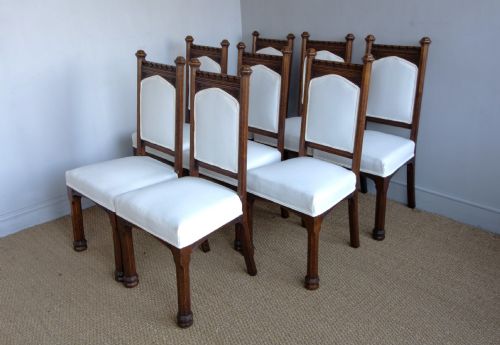
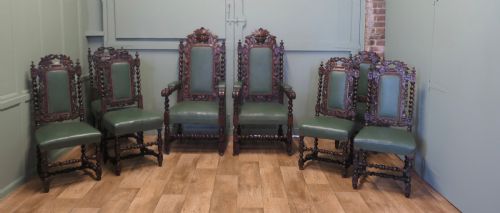
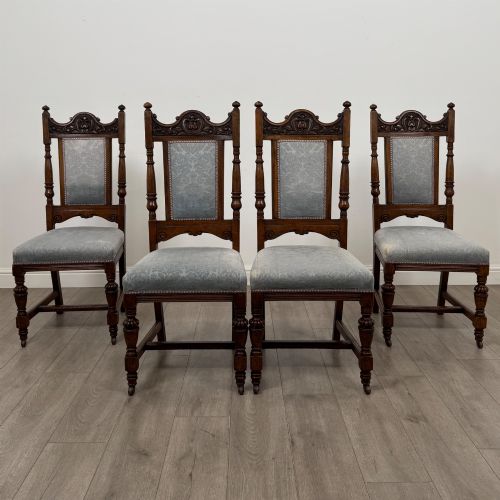
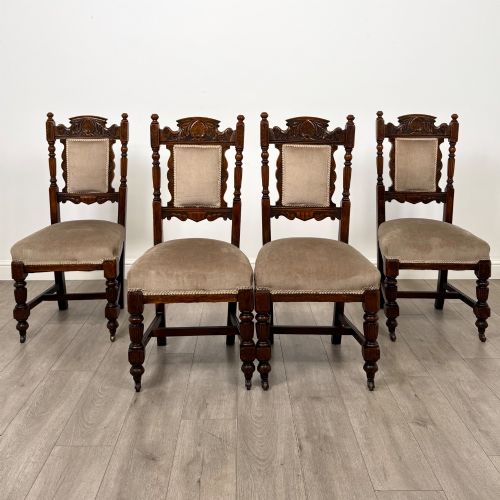
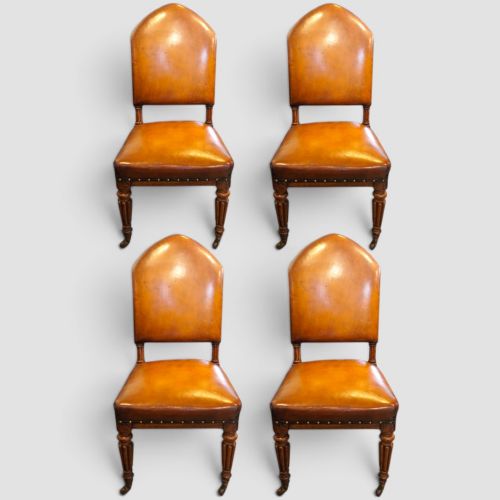
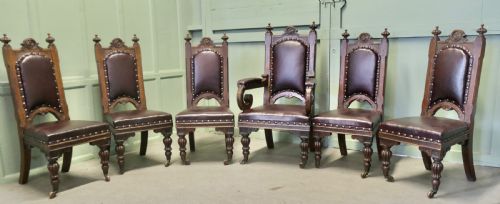
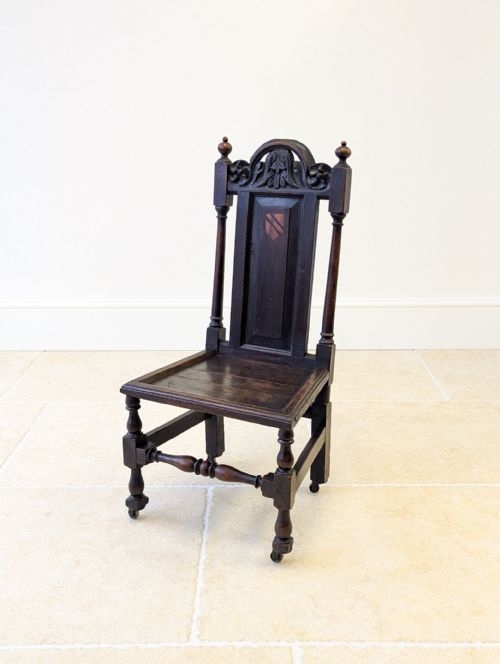
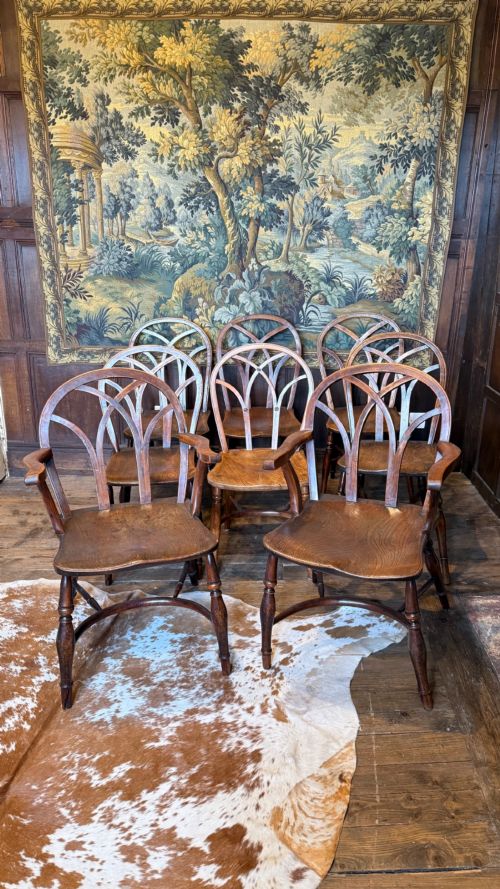
Victorian gothic dining chairs draw on medieval architectural motifs, translating pointed arches, lancet windows and tracery into solid timber seating for the Victorian interior. When seeking victorian gothic dining chairs, buyers encounter sturdy oak constructions heavily carved with linenfold panels, cusped arches and high, imposing backs.
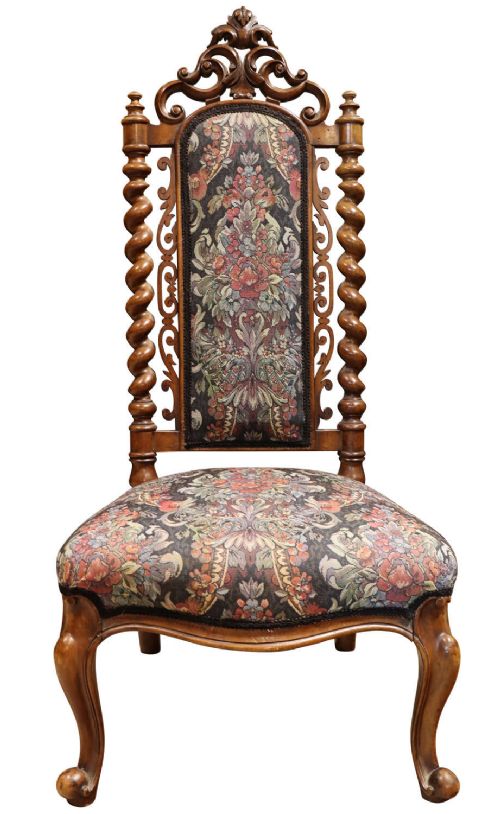
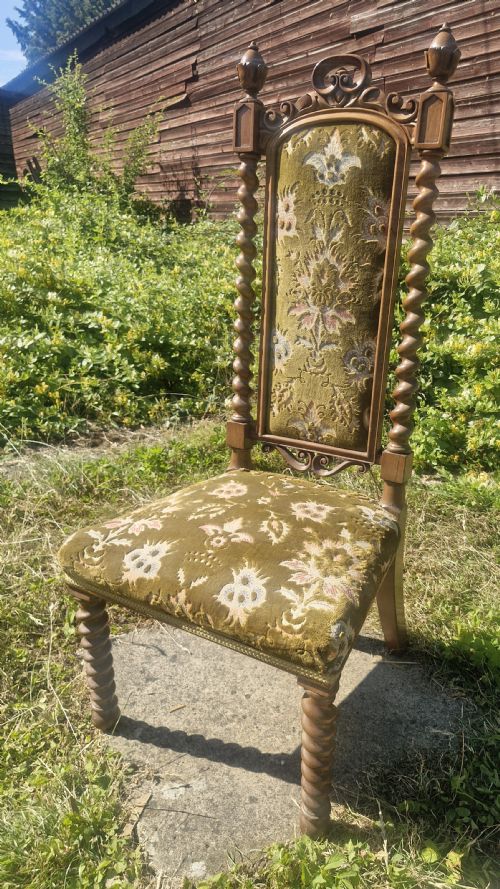
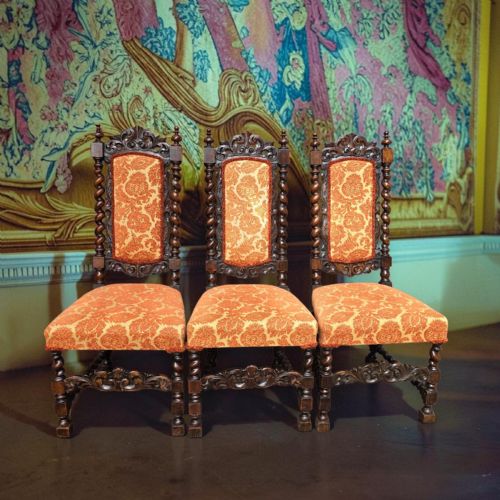
Most examples found in commerce date from the mid-to-late nineteenth century, often appearing in sets ranging from four to eight pieces alongside individual side chairs. Makers frequently combined the gothic revival style with Jacobean influences, incorporating barley twist members and square framing alongside pointed crestings.
Beyond standard dining seats, related forms include high-back hall chairs and armchairs upholstered in leather or tapestry. These pieces served both formal dining functions and ceremonial display in grand entrance halls.
Materials and Construction Techniques
Oak dominates the production of these chairs, selected for its strength and ability to hold crisp, deep hand-carving along the rails and splats. Cabinetmakers also employed walnut and mahogany, particularly for pieces leaning towards Chippendale or aesthetic movement interpretations.
Joinery relied on traditional mortise and tenon construction, pegged securely to withstand the heavy daily use expected in nineteenth-century dining rooms. Seat pads were stuffed with natural fibres and finished in full-grain leather, velvet or tapestry, secured with brass tacks.
Assessing Craftsmanship and Proportion
Quality rests primarily on the depth and execution of the timber carving, distinguishing crisp hand-tooled tracery from shallow, mechanical work. Superior sets maintain consistent grain patterns and uniform colour across every chair in the group.
Structural integrity dictates value, particularly in high-back designs where leverage places heavy strain on the lower joints. The weight of the timber and the tightness of the joinery determine whether a set survives centuries of service without looseness.
Bruce Talbert·Lamb Of Manchester·Goodall Lamb And Heighway·Gillows
The Victorian Gothic Dining Chairs Glossary
- Gothic Revival
- An architectural and decorative movement reviving medieval forms, characterised by pointed arches, quatrefoils and vertical emphasis. It heavily influenced Victorian furniture design.
- Tracery
- Ornamental stonework-style openwork patterns translated into woodwork, frequently seen in the backs of dining chairs. It mimics the stone frames found in cathedral windows.
- Jacobean Revival
- A style incorporating seventeenth-century English motifs, including geometric mouldings, strapwork and heavy turned legs. It often merges with gothic designs in nineteenth-century seating.
- Barley Twist
- A cylindrical furniture leg or stretcher carved in a helical spiral resembling a twisted rope. This technique was popular during the mid-nineteenth century.
- High-Back Chair
- A seating form featuring an elongated backrest that emphasises vertical proportion. These chairs were designed to command authority in dining rooms and halls.
Victorian Gothic Dining Chairs: Frequently Asked Questions
How do I spot a true Victorian gothic chair?
Look for authentic architectural details such as hand-carved lancet arches, cusped tracery and pegged mortise and tenon joinery executed in heavy oak.
Genuine pieces from the period carry the natural patina and tool marks of nineteenth-century hand woodworking, distinguishing them from later reproduction items.
Were these chairs used daily originally?
These robust oak and mahogany seats were built for formal dining rooms in substantial nineteenth-century homes, engineered to withstand heavy, repeated usage.
Their solid construction and durable leather or heavy fabric upholstery meant they functioned as practical dining furniture rather than mere decorative objects.
How do I care for antique leather seats?
Maintain nineteenth-century leather upholstery by applying appropriate conservation-grade leather balms periodically to prevent the hide from drying and cracking.
Keep the chairs away from direct heat sources and strong sunlight, which cause timber shrinkage and fade historical hide finishes.
Can I mix these with modern dining tables?
The strong architectural presence of these dark timber seats pairs effectively with large, simple modern dining tables to create a striking contrast.
Ensure the seat height and knee clearance align properly with your table, as nineteenth-century proportions can occasionally sit lower than contemporary standards.