



White Upholstered Dining Chairs
White upholstered dining chairs are seating built across multiple eras, pairing fabric upholstery with wooden frames for formal meals.
White Upholstered Dining Chairs
White upholstered dining chairs encompass dining chairs, side chairs, and salon chairs found in sets or pairs, spanning the nineteenth century up to nineteen twenty. When searching for white upholstered dining chairs, buyers encounter pieces derived from distinct aesthetic revivals and regional designs.
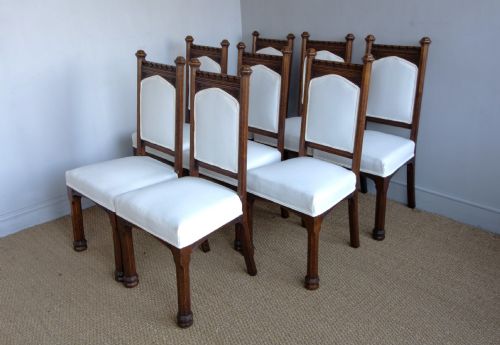
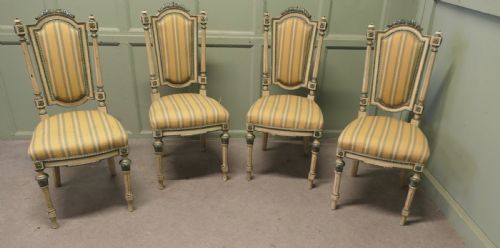
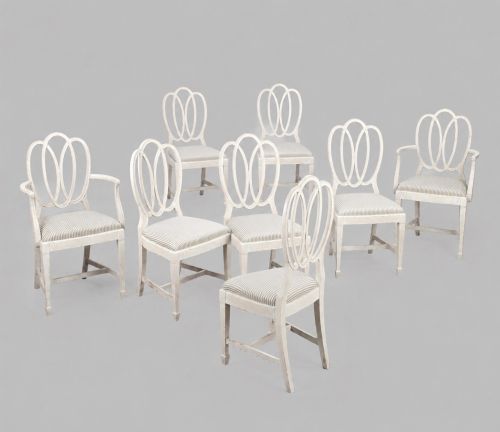
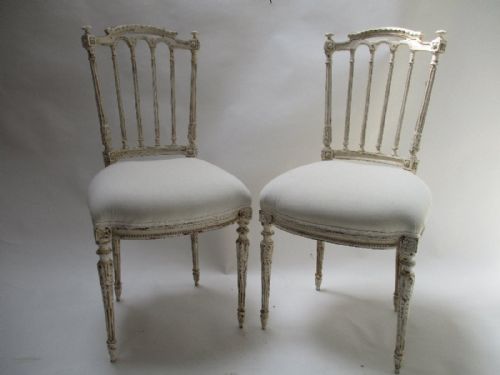
The evidence shows forms ranging from single pairs to sets of fourteen, reflecting varied historical contexts. Styles represented on this page include Gothic Revival, Louis XVI Style, Hepplewhite, Queen Anne Revival, French Neoclassical, Gustavian, Queen Anne Style, and Art Deco.
Origin and period markers in the listings point to Victorian pieces, specific years such as eighteen sixty, eighteen eighty, nineteen hundred, and nineteen twenty, alongside nineteenth-century examples. These seating options combine textile or fabric coverings with structural wooden frames.
How they were made
Construction relies on wood materials such as oak, beech, walnut, and mahogany, shaped through carving or painted and lacquered finishes. The timber forms the structural skeleton of the dining chair, supporting the vertical backrests and legs.
Upholstery involves textiles, fabric, horsehair, and leather applied to the seat and sometimes the back support. Paint, carved wood, and lacquer provide surface treatment on frames dating from the nineteenth and early twentieth centuries.
The inventory records dining chairs grouped in sets ranging from pairs up to fourteen matching pieces.
What varies in quality
Quality differences emerge in the execution of carved wood details and the durability of painted or lacquered surfaces applied to the frames. The precision of historical style reproduction, whether Gothic Revival, Gustavian, or Queen Anne influenced, defines the ambition of the piece.
The integrity of the structural timber, selecting woods like oak, walnut, or mahogany over softer alternatives, separates robust frames from weaker ones. Upholstery standard, from basic fabric to horsehair and leather, dictates the finish and tactile feel of the seating.
The White Upholstered Dining Chairs Glossary
- Gothic Revival
- A nineteenth-century design movement drawing on medieval architectural motifs and pointed arches. It appears on chairs with architectural framing.
- Gustavian Style
- The Swedish interpretation of French neoclassical design, characterised by pale painted finishes and restrained ornamentation. It provides a light aesthetic.
- Hepplewhite
- A Georgian design style associated with slender tapered legs and shield-back chair forms. Original and revival pieces reflect this graceful geometry.
- Salon Chair
- An elegant seating form intended for reception rooms rather than heavy daily dining use. These tend to feature decorative carved wood and refined proportions.
White Upholstered Dining Chairs: Frequently Asked Questions
What periods do these chairs come from?
These dining chairs originate from the nineteenth century and the early twentieth century, including specific years like eighteen sixty, eighteen eighty, nineteen hundred, and nineteen twenty. Victorian examples also appear alongside pieces influenced by earlier historical reigns.
Date attribution relies on construction methods, timber selection, and stylistic markers recorded in the historical record.
How do I care for painted wooden frames?
Painted and lacquered wooden frames require gentle dusting with a dry cloth to protect the surface finish from abrasion. Avoid harsh chemical cleaners that can degrade nineteenth-century or early twentieth-century paint layers.
Keeping the chairs away from direct sunlight and excessive humidity preserves the timber underneath and prevents paint flaking.
What materials are used for upholstery?
Upholstery materials seen across these listings include standard fabric, textile, traditional horsehair, and white leather. Each material contributes a different texture and historical accuracy to the chair.
Horsehair and leather often indicate specific period methods, while general textiles and modern fabrics appear across various revival styles.
How do I identify different furniture styles?
Style identification depends on specific decorative vocabulary, such as the painted restraint of Gustavian pieces or the pointed motifs of Gothic Revival. Comparing leg shapes, backrest contours, and carved details helps distinguish between Louis XVI, Queen Anne, and Art Deco influences.
Reference points in the design history of the nineteenth and twentieth centuries guide the attribution of each set.