

Victorian Gothic Desk
A victorian gothic desk brings robust architectural forms, deep timber carvings and purposeful writing surfaces straight from the nineteenth century into a modern study.

Victorian Gothic Desk
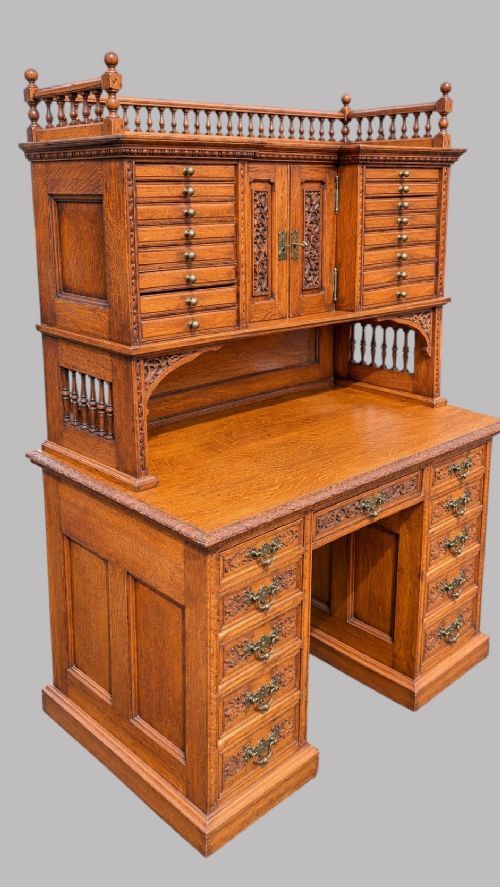
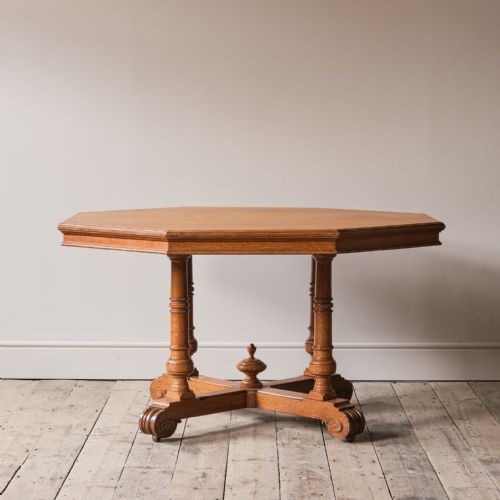
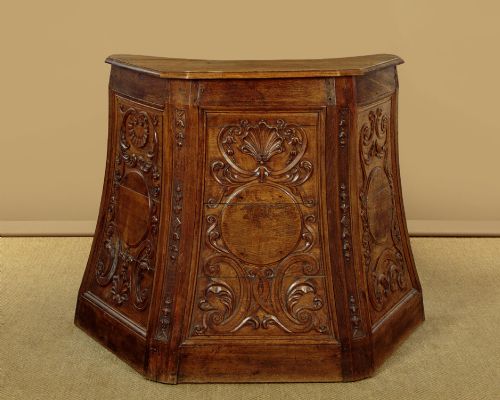
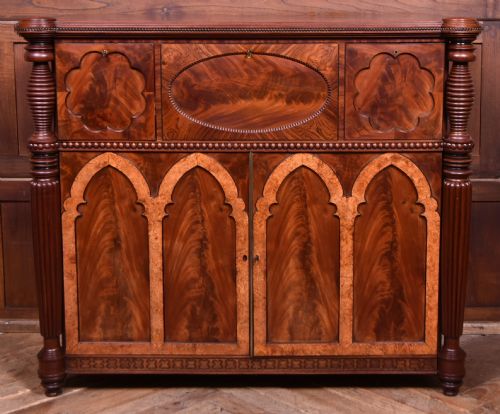
A victorian gothic desk represents a distinct meeting of nineteenth-century revivalism and heavy domestic utility, drawing heavily on medieval ecclesiastical and collegiate design. Buyers searching for a victorian gothic desk encounter substantial timber writing tables, pedestal desks with leather surfaces, and specialised slope-front forms.
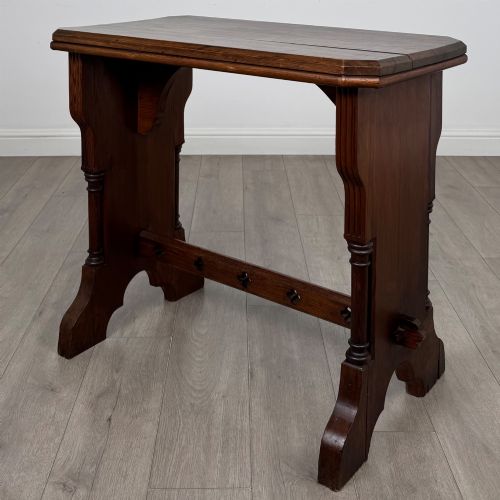
The pieces appearing in these listings lean heavily into the Gothic Revival and Victorian Gothic styles, often constructed during the latter half of the nineteenth century. Oak predominates as the primary timber, complemented by occasional examples in walnut, mahogany, and pitch pine.
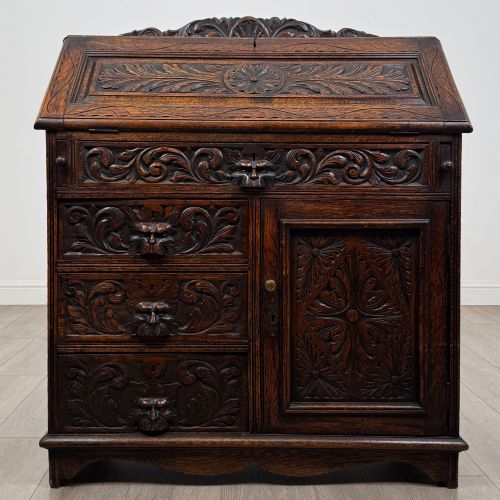
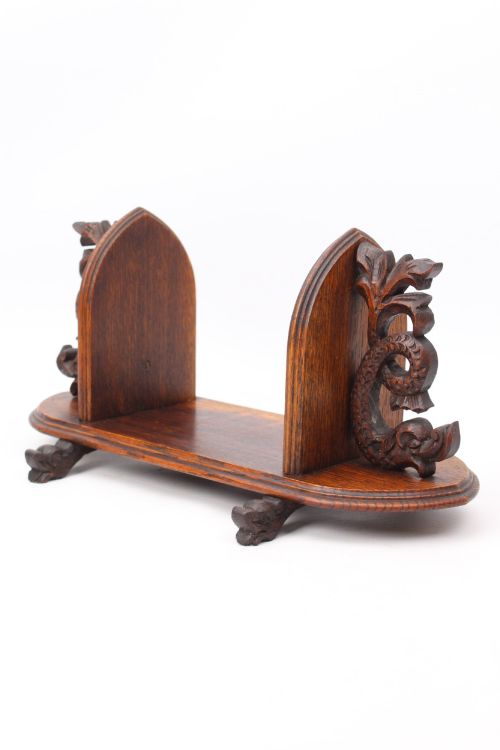
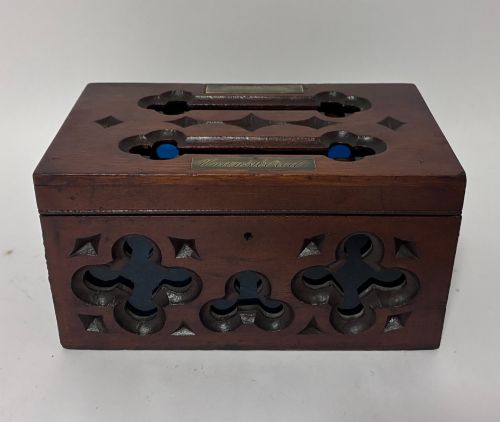
Beyond standard writing tables, the form extends to partners desks, kneehole desks, and revolving desk chairs designed to match the architectural weight of the writing surface. These pieces utilise pointed arches, quatrefoils, and carved motifs such as green men and lion heads to establish their distinct period character.
Materials and construction methods
Solid oak serves as the structural foundation for the vast majority of these desks, providing the dense grain required to support deep relief carving and structural pigeonholes. Cabinetmakers of the period utilised traditional joinery, integrating pegged mortise and tenon joints to withstand heavy daily use.
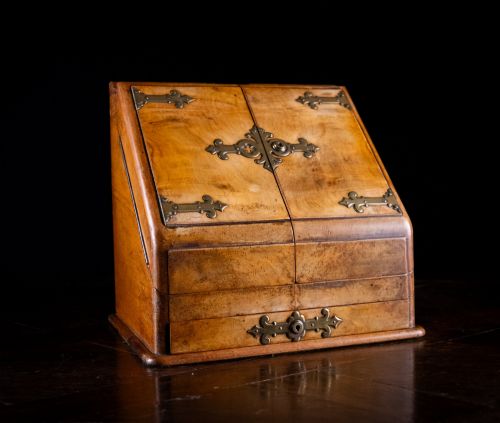
Secondary materials such as brass fittings, tooled leather writing surfaces, and cast iron components appear frequently to accent the dark timber. Pitch pine and walnut also enter the construction, particularly in pieces displaying regional Scottish cabinetmaking traditions or specific Gothic Revival interpretations.
Several Victorian desks feature hidden compartments designed to securely store private correspondence away from prying eyes.
Distinctions in craftsmanship and design
Quality separates simple utilitarian furniture from master-carved expressions of the Gothic Revival through the depth and execution of the ornamentation. Superior examples feature crisp, hand-carved details like green man masks, linenfold panels, and structural tracery rather than applied mass-produced mouldings.
The choice of timber and the integrity of internal secondary woods heavily influence the standing of a piece. Desks retaining original tooled leather inserts, functional brass hardware, and solid backboards command greater appreciation among collectors than altered or stripped examples.
Gillows·Winterhalder·Richard Winter·Osborne Garrett Co
The Victorian Gothic Desk Glossary
- Gothic Revival
- An architectural and decorative style originating in the mid-nineteenth century that imitates medieval ecclesiastical structures. It utilises pointed arches, ribbed vaults, and ornate tracery.
- Partners Desk
- A large double-sided pedestal desk designed with drawers and cupboards on both faces so two people could work opposite one another. These often feature inset leather writing surfaces.
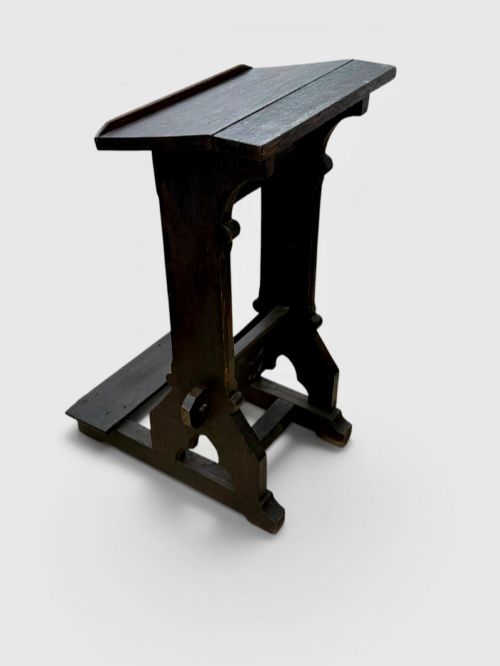
- Prie-Dieu
- A devotional desk or kneeling chair featuring a sloping shelf for books and a padded rail for prayer. These ecclesiastical forms frequently incorporate carved oak and hinged storage compartments.
- Green Man
- A sculptural architectural ornament depicting a human face surrounded by or sprouting from foliage. This motif appears frequently in nineteenth-century wood carvings on furniture and church fittings.
- Pitch Pine
- A heavy, resinous softwood utilised in nineteenth-century cabinetmaking for its distinctive grain pattern and durable surface. It offered an alternative to traditional hardwoods in regional workshops.
Victorian Gothic Desk: Frequently Asked Questions
What defines a victorian gothic desk?
A victorian gothic desk relies on heavy oak construction, medieval architectural motifs like pointed arches and quatrefoils, and dark timber finishes. These pieces echo the ecclesiastical and collegiate aesthetic popular during the nineteenth-century revival.
Such desks range from modest writing tables with single drawers to massive double-sided partners desks featuring intricate wood carvings, green man masks, and fitted interior stationery compartments.
How do I identify the wood used?
Oak forms the primary material for the vast majority of these pieces, showing prominent medullary rays and an open grain pattern. Walnut, mahogany, and pitch pine also appear, each identifiable by distinct weight, colouration, and grain density.
Examining secondary timbers inside drawer linings and backboards helps confirm the original materials used during nineteenth-century construction.
Were these desks used in homes?
While many stylistic elements derive from churches and monasteries, these desks were built primarily for Victorian libraries, studies, and offices. Wealthy homeowners adopted the Gothic Revival style to create scholarly, solemn interior spaces.
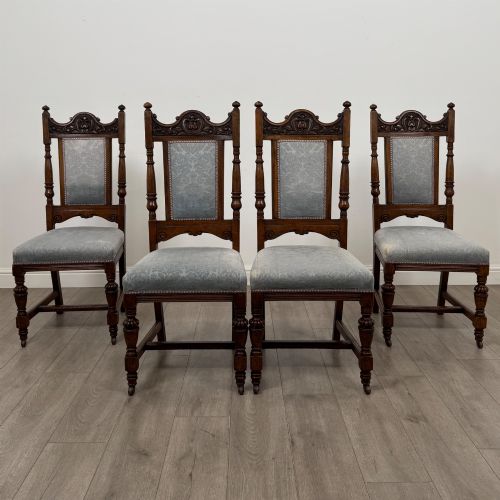
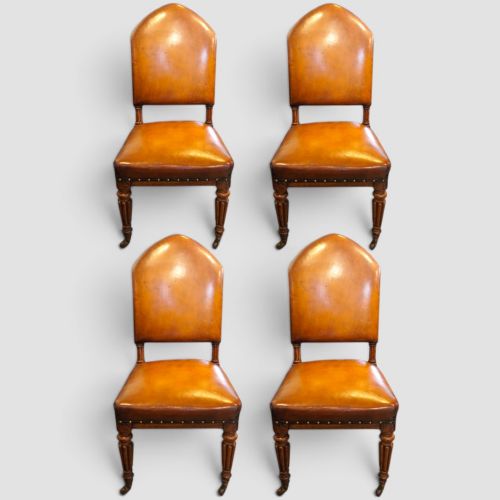
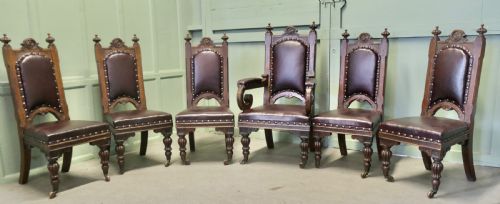
Corresponding seating, such as high-back carved chairs and revolving desk chairs with leather seats, completed these domestic study arrangements.
How should I care for the leather top?
The inset leather writing surface requires gentle cleaning with a slightly damp cloth followed by neutral leather creams to prevent drying and cracking. Avoid harsh chemical cleaners that can strip the original tooling and gilding.
Maintaining a stable room humidity protects both the leather insert and the solid oak carcass from seasonal expansion and contraction.