

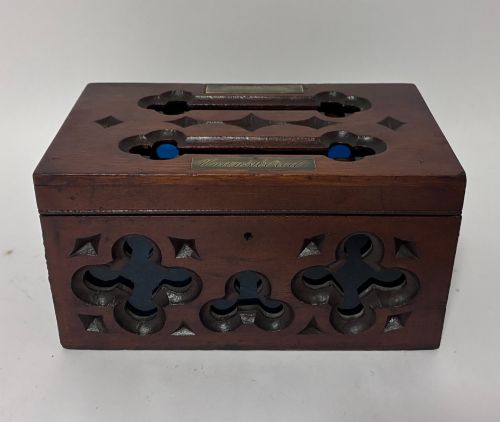
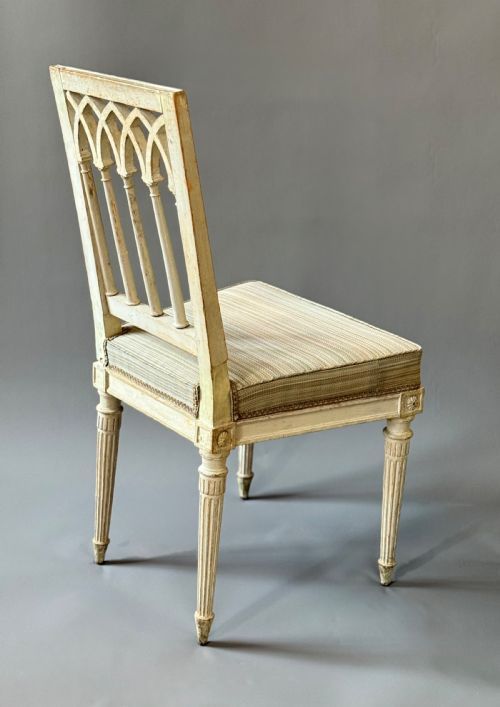
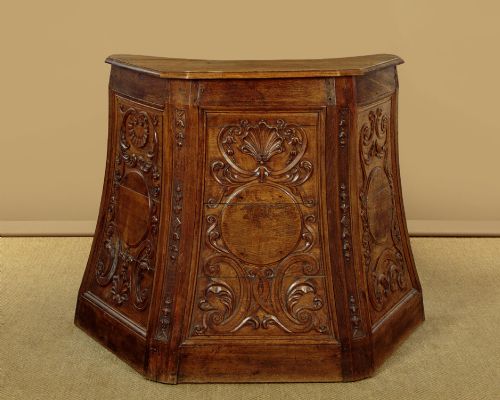
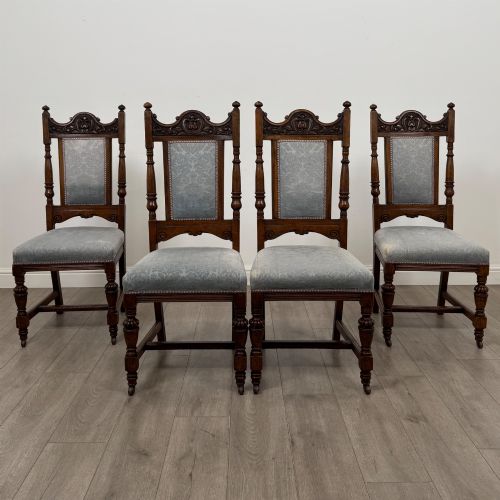
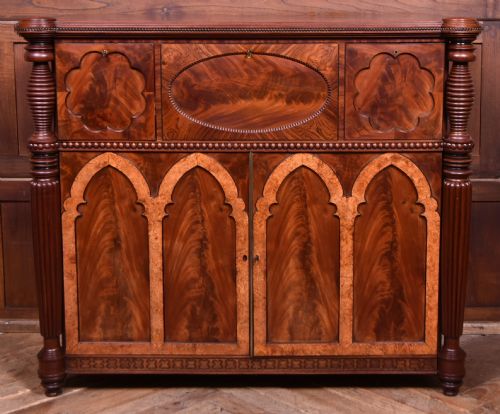
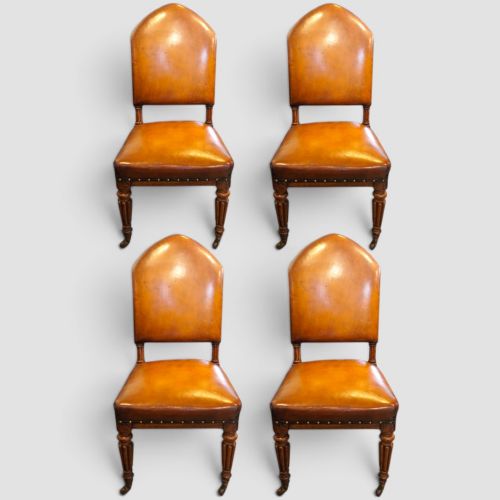
Gothic Carved Desk
A gothic carved desk brings heavy timber, pointed arches and medieval ornament straight into a study.
Gothic Carved Desk
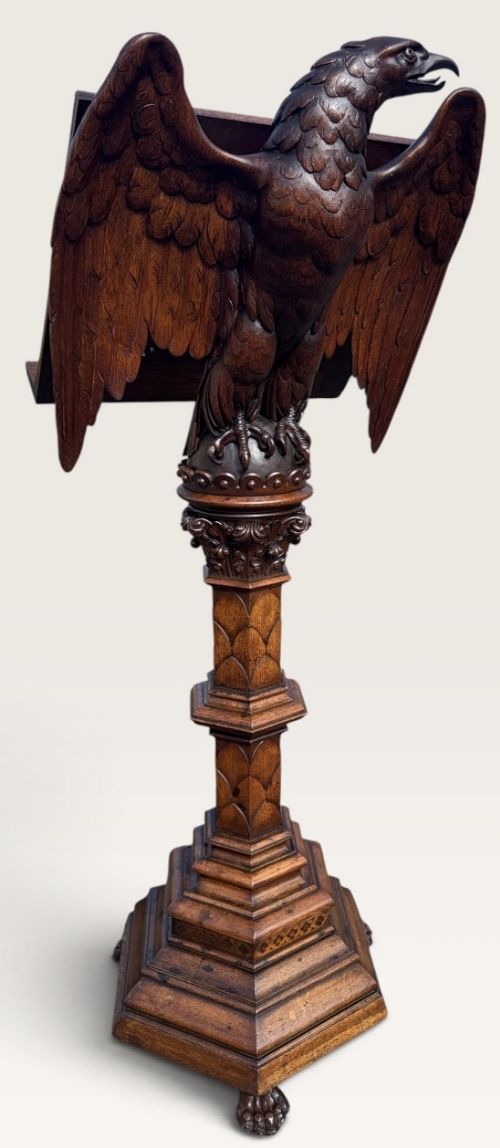
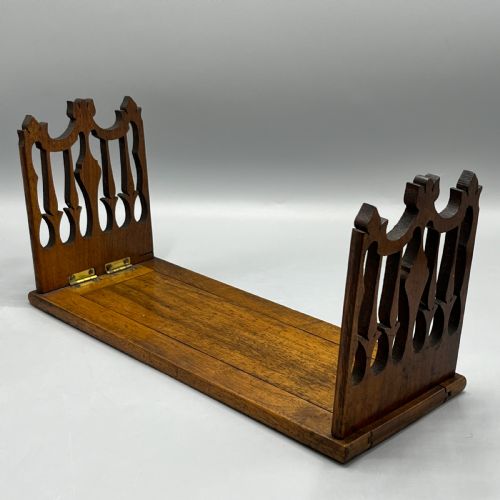
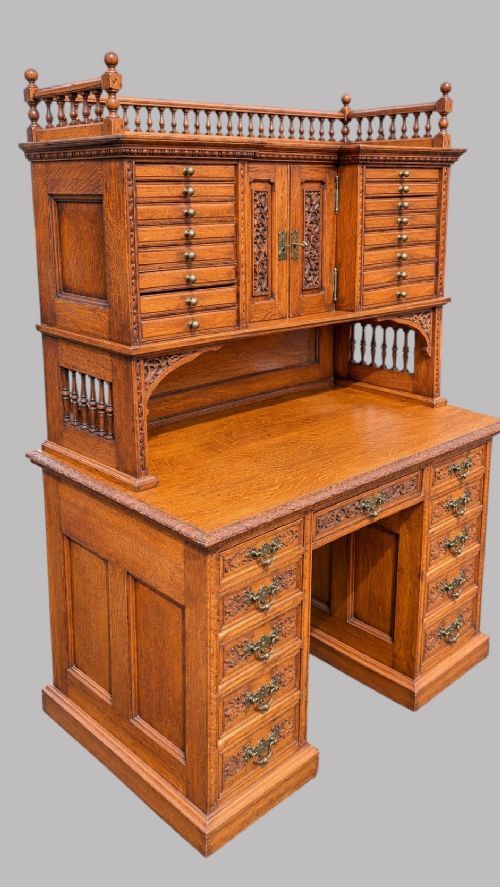
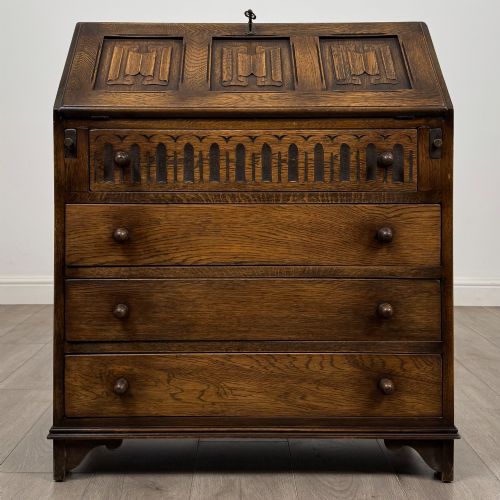
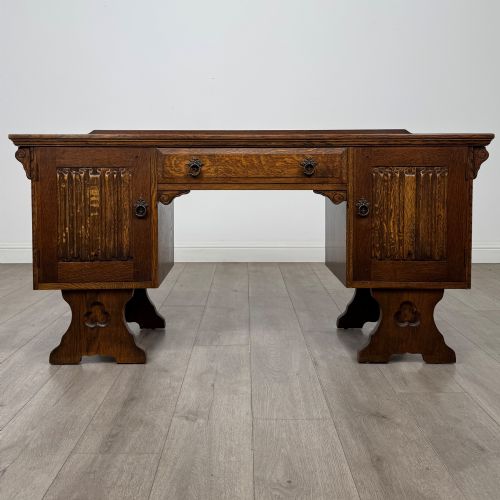
When you search for a gothic carved desk, you encounter heavy Victorian and Edwardian writing furniture fashioned predominantly from solid oak. These pieces range from compact kneehole writing tables and fitted bureaus to large partners desks featuring drawers and cupboards.
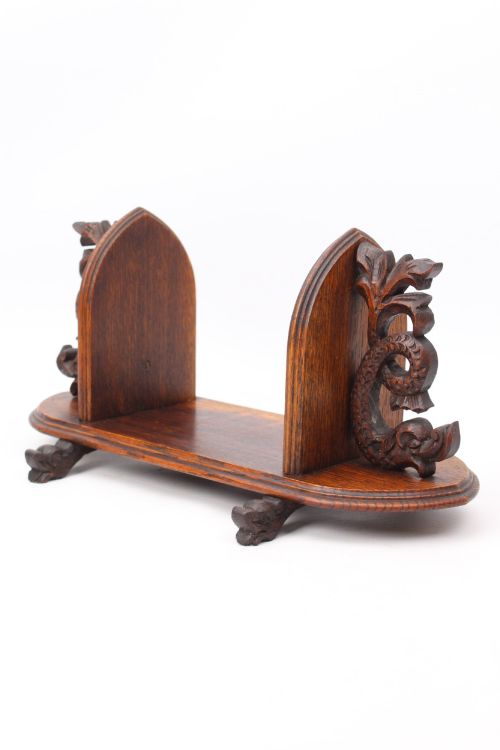
The aesthetic draws heavily on medieval architecture, displaying pointed arches, linenfold panels, trefoils and bold figural carvings such as Green Men and lion heads. Most examples date from the nineteenth century, reflecting the nineteenth-century Gothic Revival movement across Britain.
How they were made
Cabinetmakers built these desks from solid oak, utilising traditional mortise and tenon joints to withstand heavy daily use. Surfaces often incorporate inset leather writing panels framed by carved mouldings and brass hardware.
Carvers executed the detailed ornamentation entirely by hand, chiselling deeply into the timber to create crisp tracery, foliage and grotesque masks. Secondary woods appeared inside drawers, while swivel chairs used iron mechanisms paired with oak frames.
Listings span periods from eighteen-hundred through to nineteen-twenty, featuring oak, brass, leather, and iron.
What varies in quality
The distinction between ordinary and superior pieces rests on the depth and sharpness of the hand carving. Crisp undercutting on foliage and expressive detail in Green Man masks separate workshop masterpieces from mechanically produced later items.
Timber selection and structural proportion dictate overall merit, with figured grain and substantial brass fittings elevating a pedestal writing table above simpler side tables fitted with a single drawer.
Gillows·Arthur Simpson of Kendal·Bruce James Talbert·Winterhalder
The Gothic Carved Desk Glossary
- Gothic Revival
- An architectural and decorative style reviving medieval forms during the nineteenth century. It heavily influenced domestic furniture production.
- Green Man
- A sculptural motif depicting a human face surrounded by or disgorged from foliage. It symbolises rebirth and appears frequently on Victorian carved furniture.
- Linenfold
- A style of wood carving that imitates folded linen cloth. It typically decorates panels on bureaus and cabinet doors.
- Kneehole desk
- A freestanding desk featuring a central recess for the user's legs flanked by pedestals of drawers. It provides substantial storage space.
- Partners desk
- A large double-sided writing table designed for two people to work opposite one another. These often incorporate cupboards and drawers on both faces.
Gothic Carved Desk: Frequently Asked Questions
What periods do these desks come from?
The available pieces originate primarily from the nineteenth and early twentieth centuries, spanning the Victorian and Edwardian eras. Earlier influences from the eighteenth century appear occasionally alongside revival styles.
Most items date specifically between eighteen-sixty and nineteen-twenty, aligning with the peak of the Gothic Revival movement in British interior design.
How do I identify a partners desk?
A partners desk provides workspace on both sides, featuring drawers and cupboards accessible from either end of the piece. They are exceptionally deep and heavy furniture designed for shared offices.
Smaller single-sided kneehole desks place drawers against a finished back panel, restricting seating to one side only.
What wood was used for these desks?
Oak is the dominant timber across almost all listed items, chosen for its strength, weight and traditional association with medieval buildings. Cabinetmakers utilised both English oak and imported varieties.
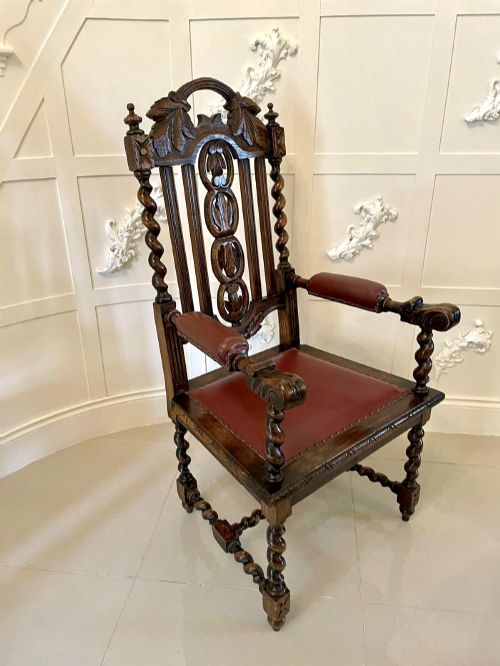
Secondary materials include brass for handles and locks, plus leather inserts for writing surfaces. Walnut and rosewood appear on select associated seating.
How should I care for the leather top?
Leather writing surfaces require gentle cleaning with a slightly damp cloth followed by a neutral leather cream to prevent cracking. Avoid harsh chemical cleaners that strip the original dye.
Protect the surface from direct sunlight and excessive heat to maintain the supple texture of the hide over decades of use.