




Edwardian Gothic Writing Table
These edwardian gothic writing table pieces combine architectural gravity with practical utility, offering robust workspace surfaces built to endure.
Edwardian Gothic Writing Table
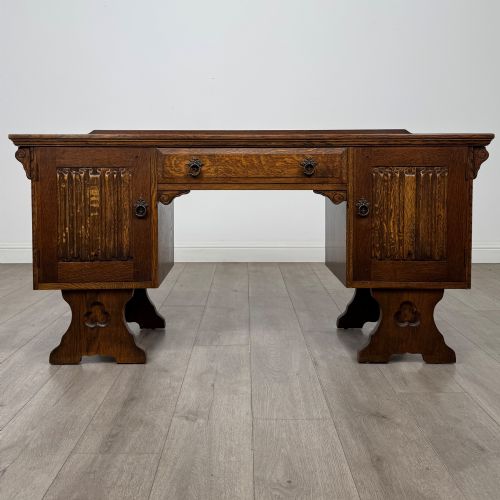
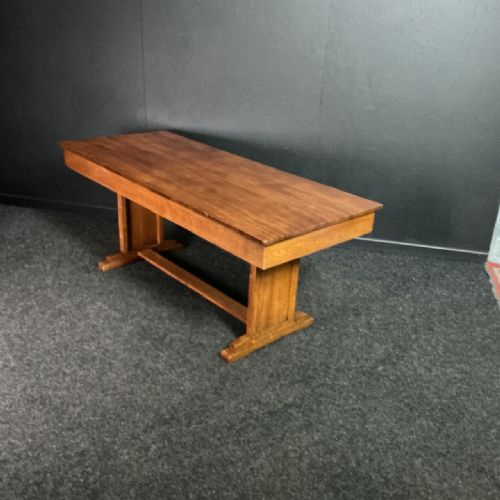
When buyers search for an edwardian gothic writing table, they are looking at heavy timber furniture rooted in revivalist architecture. The listings show forms ranging from kneehole desks and Davenport profiles to library tables and side desks.
Most examples encountered here span the Victorian and Edwardian eras, utilising oak, mahogany, pitch pine, and walnut. These surfaces provide solid workspace utility with distinct period joinery.
Makers often drew inspiration from Gothic Revival, Reformed Gothic, and Arts and Crafts movements. The resulting pieces balance monastic austerity with domestic function.
Materials and construction
Construction relies heavily on dense timbers such as oak, mahogany, and pitch pine, shaped to withstand daily administrative work. These woods are frequently joined with traditional framing methods that ensure structural stability over decades.
Detailing often incorporates carved ornamentation like Green Man motifs or crisp architectural mouldings. Surfaces occasionally feature inset tooled leather tops designed to provide a smooth writing substrate.
Edwardian Gothic Writing Table Retail Price Guide 2026
Typical asking prices for edwardian gothic writing table among the pieces listed under this phrase on Sellingantiques today, from the lower quarter to the upper quarter. They describe what is for sale here now, not the wider market.
Listings span oak, mahogany, walnut, and pitch pine, alongside stylistic influences from Reformed Gothic to Arts and Crafts.
Judging quality in construction and material
Quality rests upon the selection of timber and the precision of the joinery rather than superficial decoration alone. Denser woods and well-executed structural framing separate durable examples from simpler utilitarian pieces.
The integrity of secondary elements, such as brass mounts and original leather writing surfaces, dictates the overall execution. Pieces that retain their period hardware and uncompromised timber display superior craftsmanship.
The Edwardian Gothic Writing Table Glossary
- Gothic Revival
- An architectural style that influenced furniture design by incorporating pointed arches, trefoils, and heavy structural forms. It dominated much of the nineteenth century.
- Reformed Gothic
- A lighter subset of the Gothic Revival style focused on functional design, straightforward construction, and geometric ornament. It emerged in the later Victorian period.
- Kneehole desk
- A writing desk featuring a central recess for the user's legs, flanked by pedestals of drawers or cupboards. This form became standard for domestic and institutional administration.
- Tooled leather
- Leather decorated with blind or gold-stamped patterns applied using heated metal tools. It provides a durable and tactile writing surface on desk tops.
Edwardian Gothic Writing Table: Frequently Asked Questions
What defines an edwardian gothic writing table?
These pieces are sturdy timber desks that incorporate architectural motifs derived from medieval buildings. They combine functional writing surfaces with revivalist design elements.
Such furniture often utilises solid oak or pitch pine, featuring structural bracing and carved details that reflect nineteenth and early twentieth century aesthetics.
How were these tables used originally?
They served as dedicated furniture for correspondence, record-keeping, and study in homes, schools, and institutions. The surfaces accommodated heavy ledgers and writing materials.
Drawers and compartments provided secure storage for paper, ink, and correspondence instruments, supporting daily administrative tasks.
How do I care for a wood writing surface?
Maintain the timber by avoiding direct heat sources and excessive moisture which can warp older boards. Regular dusting preserves the finish without damaging the grain.
Condition leather inserts with appropriate dressings if present, ensuring the material remains supple and resistant to cracking.
How can I tell different revival styles apart?
Gothic Revival pieces often feature heavy carved ornament, pointed arches, and deep mouldings. Reformed Gothic examples tend to emphasise geometric lines and structural honesty.
Arts and Crafts pieces focus on visible joinery and simpler materials, distinguishing them from the more ornate ecclesiastical interpretations.