

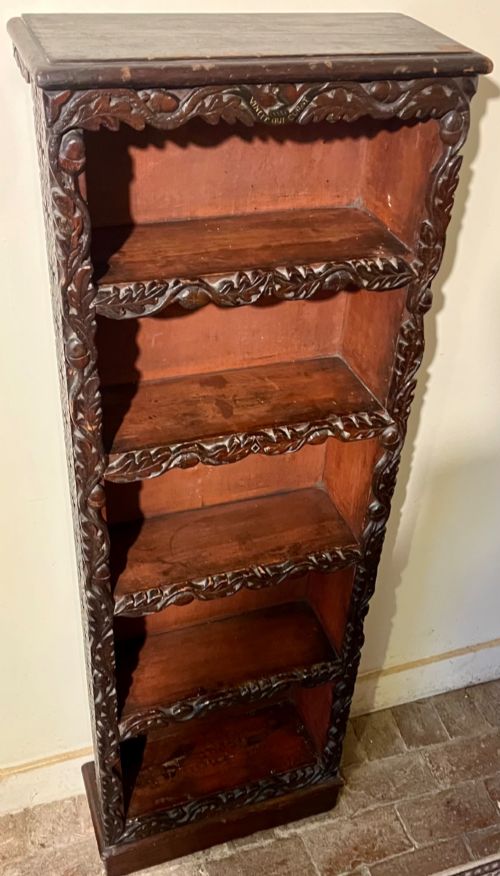
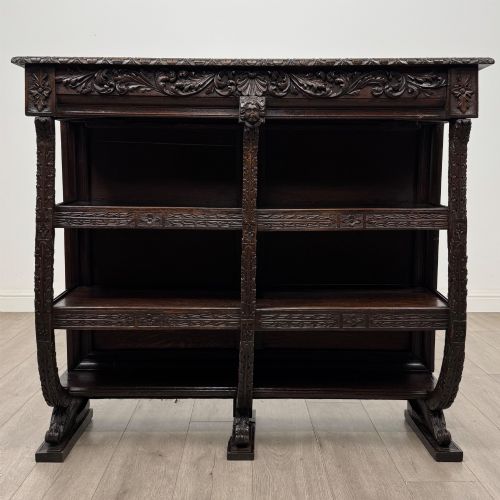
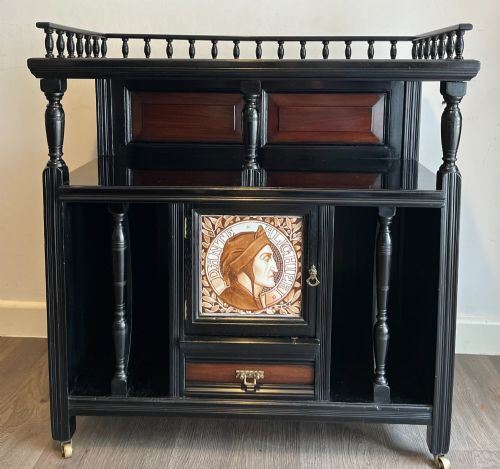
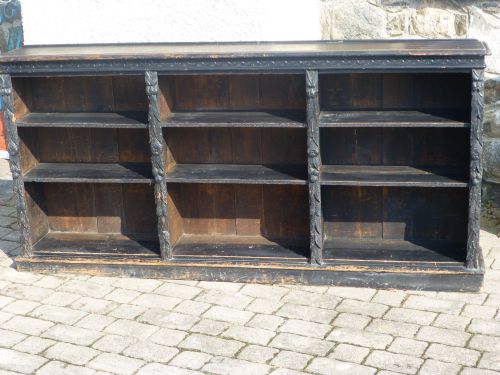
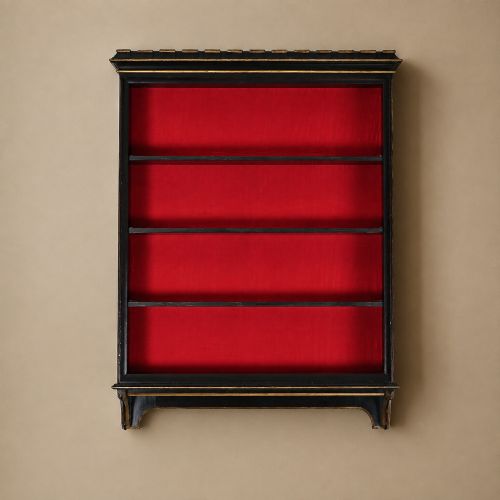


Victorian Gothic Bookshelf
These robust pieces bring architectural heft to a room, offering sturdy housing for volumes through carved detail and dark timber.
Victorian Gothic Bookshelf
A victorian gothic bookshelf combines the vertical emphasis and pointed arch forms of medieval architecture with nineteenth-century utility. Buyers searching this phrase encounter low open dwarf bookcases, wall shelves, and tall cupboard bases designed to hold heavy libraries.
Most examples originate in the nineteenth century, utilising styles such as Gothic Revival, Aesthetic Movement, and Victorian Renaissance Revival. Formats range from freestanding double bookcases to wall-hung display shelves and compact desk accessories.
How they were made
Construction relies heavily on oak, solid oak, and ebonised oak, often complemented by secondary timbers like beech, limewood, satin birch, walnut, and coromandel. Cabinetmakers shaped these dense woods through deep carving and applied mouldings to achieve architectural depth.
Makers integrated functional brass hardware, ceramic details, and glass panels into the woodwork. Adjustable shelving systems allowed owners to alter shelf heights for varying volume sizes.
Victorian Gothic Bookshelf Retail Price Guide 2026
Typical asking prices for victorian gothic bookshelf among the pieces listed under this phrase on Sellingantiques today, from the lower quarter to the upper quarter. They describe what is for sale here now, not the wider market.
Oak dominates the material record, appearing alongside ebonised wood, mahogany, walnut, and coromandel.
What varies in quality
The distinction between standard utility pieces and finer examples rests on the depth and execution of the carving. Elaborate figural work, such as green man motifs, and the integration of ebonised finishes separate ambitious cabinet work from plain storage.
Structural complexity also dictates standing, with double bookcases and pieces exhibiting specific designer attribution commanding greater architectural presence than simple open wall shelves.
George Edmund Street·John Moyr Smith
The Victorian Gothic Bookshelf Glossary
- Gothic Revival
- An architectural and decorative style drawing on medieval forms, pointed arches, and heavy proportions. It dominated much nineteenth-century design.
- Ebonised Wood
- Timber treated with a dark stain or finish to imitate ebony. This technique was popular in Victorian and Aesthetic Movement cabinet making.
- Green Man
- A sculptural motif representing a human face engrafted with leaves or vines. It appears frequently in carved nineteenth-century woodwork.
- Book Slide
- A portable desk accessory designed to hold a small selection of books upright. Expanding ends usually incorporate brass or matching timbers.
- Whatnot
- An open set of tiered shelves used for displaying ornaments or books. Nineteenth-century examples often feature turned supports and cupboard bases.
Victorian Gothic Bookshelf: Frequently Asked Questions
How do I use a wall bookcase?
Wall-mounted versions provide book storage while freeing up floor space in smaller rooms. Secure fixings are essential due to the weight of solid oak and glass components.
They suit studies or hallways where traditional freestanding furniture might obstruct movement.
How were green man carvings used?
Carvers applied foliage-masked faces to drawer fronts, pediments, and uprights to symbolise rebirth and nature. This medieval motif experienced a major revival during the nineteenth century.
Such details indicate more ambitious workshop production.
How do I distinguish revival styles?
Gothic Revival focuses on structural medievalism and heavy timber, while Aesthetic Movement pieces often utilise ebonised finishes and simpler lines. Renaissance Revival introduces classical symmetry alongside architectural mass.
Examining the carved ornament and secondary woods helps clarify the specific design influence.