



Gothic Carved Bookshelf
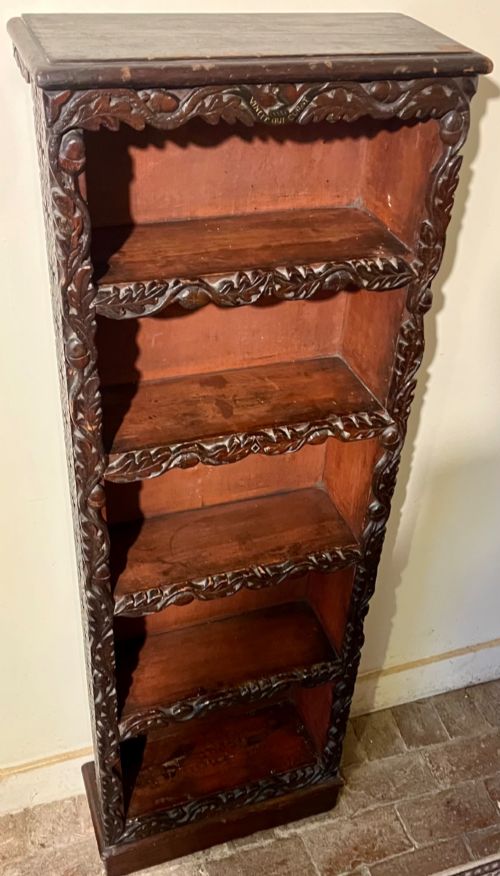
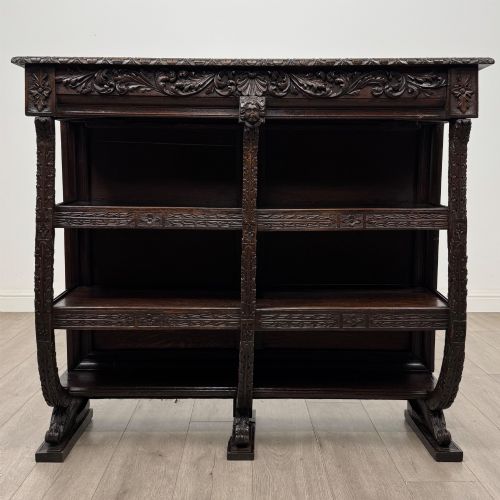
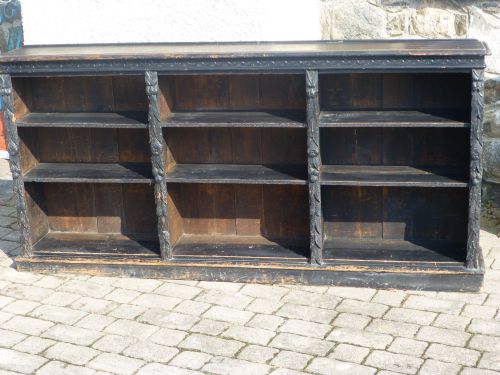
These gothic carved bookshelf pieces bring architectural timberwork and deep relief carving into domestic rooms, offering sturdy storage for heavy volumes.
Gothic Carved Bookshelf
A gothic carved bookshelf combines heavy architectural timber with deep relief work, forming sturdy storage for volumes in domestic spaces. These pieces appear most frequently in Victorian Gothic Revival forms, alongside Arts and Crafts and Aesthetic Movement interpretations.
The inventory centres on open bookcases, wall shelves, and dwarf bookcases, often fitted with adjustable shelves. Pieces emerge primarily from the nineteenth century, including specific dates such as eighteen eighty and eighteen seventy, as well as Edwardian examples.
How they were made
Makers utilised solid oak, ebonised oak, walnut, satin birch, and limewood, occasionally pairing oak with beech. Structural integrity relied on solid timber construction, while decorative impact came from carved green man motifs and architectural tracery.
Hardware additions included iron and brass elements, and some cabinetry incorporated glass doors or ceramic details. Surfaces were finished to highlight the dense grain of the timber and the depth of the carving.
Gothic Carved Bookshelf Retail Price Guide 2026
Typical asking prices for gothic carved bookshelf among the pieces listed under this phrase on Sellingantiques today, from the lower quarter to the upper quarter. They describe what is for sale here now, not the wider market.
Listings feature oak, ebonised oak, walnut, satin birch, limewood, iron, brass, glass, and ceramic elements across nineteenth-century and Edwardian periods.
What varies in quality
The distinction between standard utility items and exceptional pieces rests in the depth and execution of the carving. Elaborate green man masks, crisp architectural mouldings, and balanced proportions separate standard production from finer workshop output.
Material selection also dictates the hierarchy, where dense solid oak and finely grained satin birch command greater attention than mixed timber construction. The presence of adjustable shelving systems and branded maker attribution further elevates the standing of a piece.
John Moyr Smith·Pugin
The Gothic Carved Bookshelf Glossary
- Gothic Revival
- An architectural and decorative style drawing on medieval forms, pointed arches, and heavy timber framing. This movement shaped much of the nineteenth-century furniture found here.
- Green Man
- A sculptural motif depicting a human face surrounded by or sprouting from foliage. It appears frequently in carved woodwork across this selection.
- Dwarf Bookcase
- A low open bookcase designed to sit beneath window height or along smaller wall spaces. These items often feature adjustable internal shelves.
- Aesthetic Movement
- A late nineteenth-century design current emphasising visual beauty and artistic reform over heavy historical revivalism. Pieces from this context show distinct linear refinement.
- Satin Birch
- A pale, lustrous hardwood utilised for decorative surfaces and cabinet interiors. Its grain provides a bright contrast to darker carved oak elements.
Gothic Carved Bookshelf: Frequently Asked Questions
What is a gothic carved bookshelf?
A gothic carved bookshelf is a nineteenth-century timber storage piece decorated with medieval architectural motifs, pointed arches, and relief carvings. These items range from small wall-hung shelves to large freestanding double bookcases.
Most examples are built from solid oak and follow Victorian Gothic Revival or Arts and Crafts design principles. They were constructed to house substantial libraries while serving as striking architectural furniture in studies and libraries.
How do I date a gothic carved bookshelf?
Dating relies on examining the timber species, construction methods, and stylistic markers such as ebonising or specific revival sub-movements. Nineteenth-century pieces often display hand-cut joinery and heavy oak framing, while later Edwardian examples show subtle shifts in proportion.
Maker attributions or documented design influences like Pugin or the Aesthetic Movement provide further chronological markers. Hardware elements such as brass screws and iron brackets also help confirm the period of manufacture.
Where should I place wall shelves?
Wall shelves require sturdy wall fixings to support the considerable weight of solid oak, limewood, or walnut timbers. They work effectively above desks, low cabinets, or in alcoves where floor space is limited.
Keeping them away from direct heat sources prevents the timber from warping or splitting over time. Positioning them at eye level allows the carved details and green man motifs to be appreciated fully.
How do I care for antique oak?
Antique oak benefits from stable room temperatures and protection from direct sunlight to preserve the finish of the wood. Regular dusting with a dry, soft cloth prevents particulate buildup in the deep recesses of the carving.
Occasional applications of appropriate wax feed the timber without leaving a heavy film. Avoiding excess moisture is essential for maintaining both the structural wood and any iron or brass fittings.