
Victorian Glazed Pottery
Victorian glazed pottery brings together heavy earthenware bodies and glossy surface treatments, offering collectors a rich variety of nineteenth-century decorative and functional forms.
Victorian Glazed Pottery
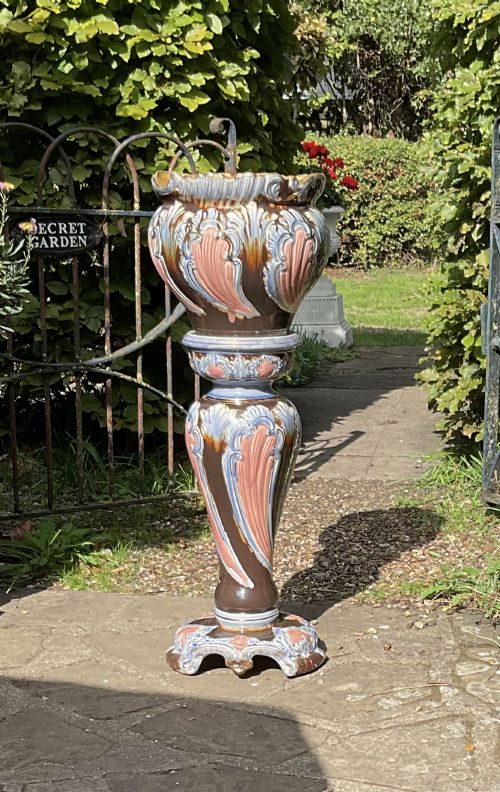
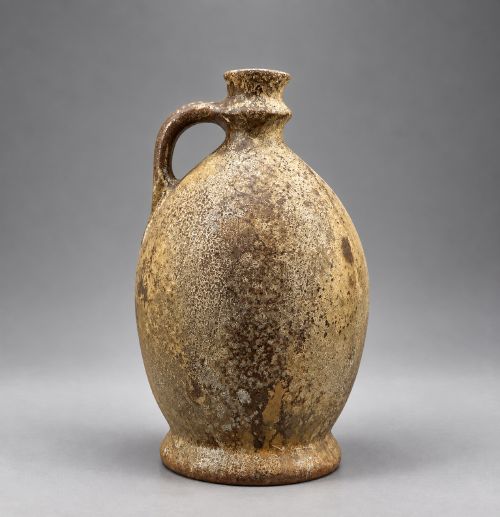
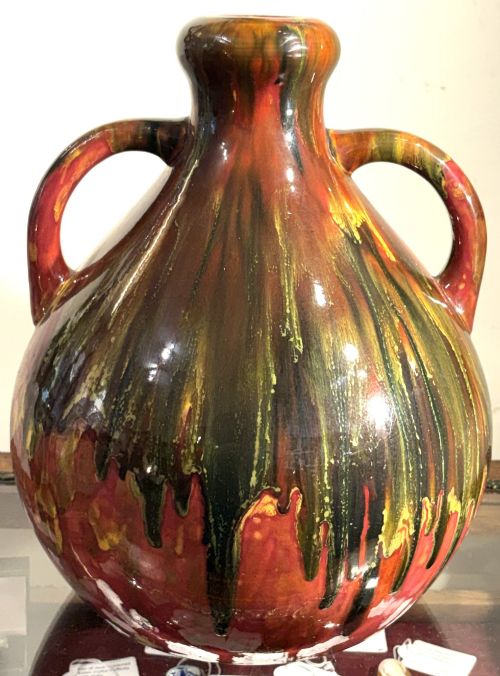
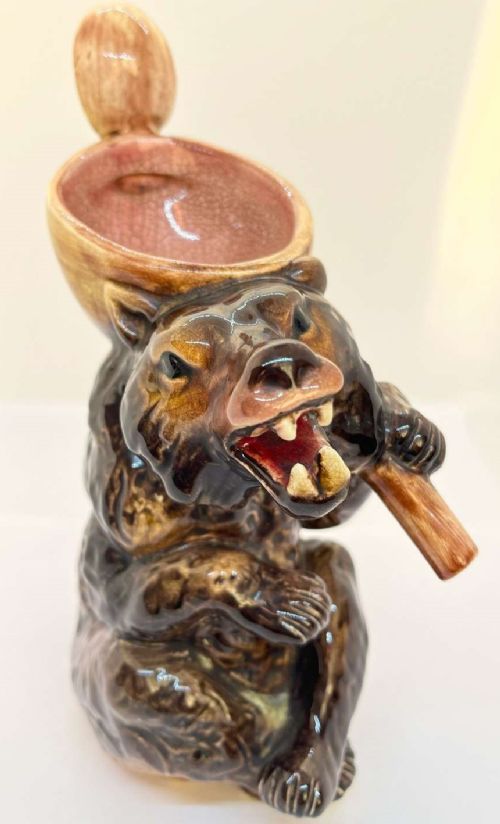
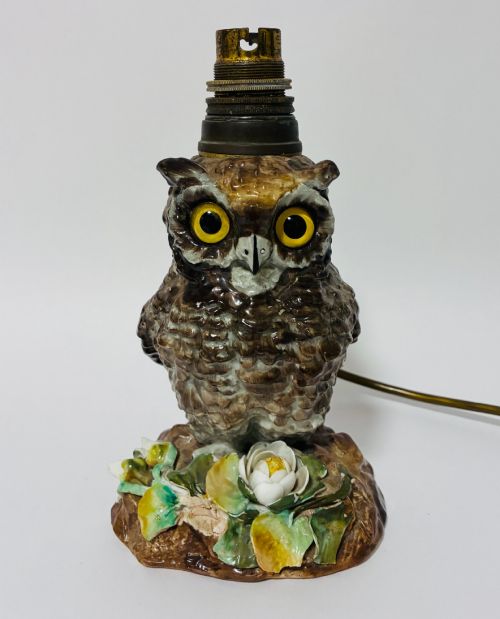
Victorian glazed pottery encompasses a diverse selection of nineteenth-century ceramics, ranging from large utilitarian vessels to intricate decorative figures and jardinieres. When exploring victorian glazed pottery, buyers encounter functional items such as dairy bowls, flasks, and toby jugs alongside ornamental spill vases and majolica boxes.
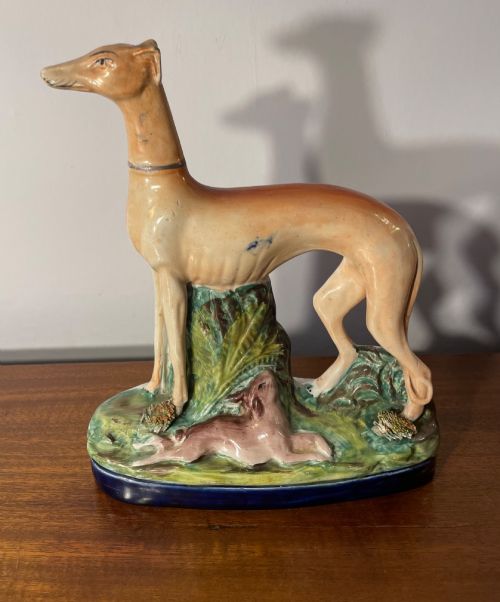
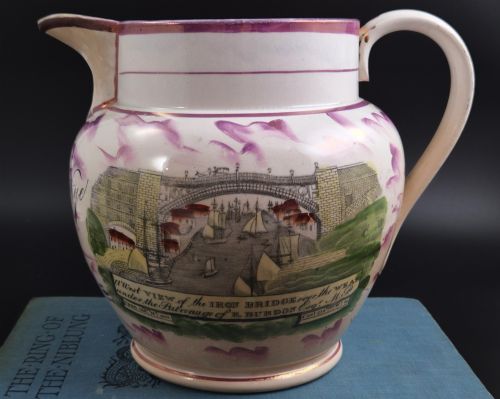
The objects span multiple decades of the nineteenth century, reflecting regional British traditions from Staffordshire, Sunderland, and Scotland alongside continental European workshops. Figures, animal spill vases, and relief-moulded jugs dominate the selection, often bearing specific historical associations or commemorative prints from the period.
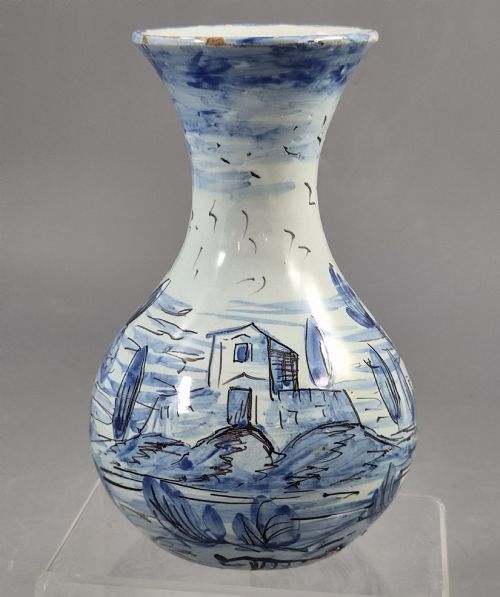
Makers utilised various regional clays and firing methods to produce earthenware, stoneware, and faience pieces. These items serve equally well as standalone cabinet displays or functional additions to period interiors.
Materials and Techniques
Potters shaped local clays into utilitarian and decorative forms before applying specialised glazes including tin enamel, salt glaze, and colourful majolica finishes. Many pieces utilised slip decoration or transfer printing to achieve detailed pictorial surfaces before a final high-temperature kiln firing.
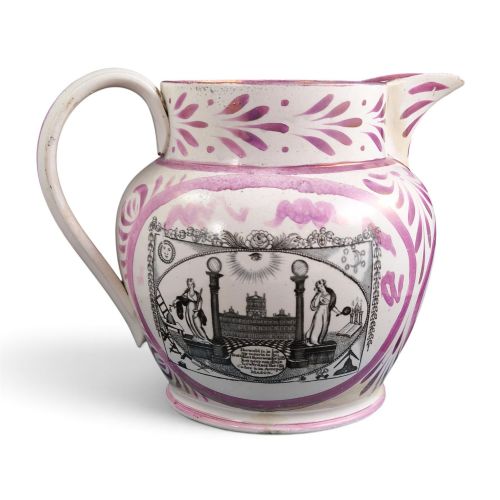
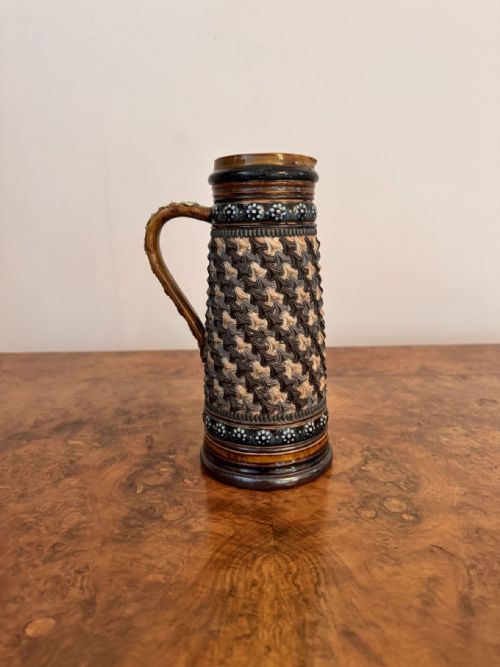
Specialised techniques such as pink lustre application and incised art pottery decoration required precise chemical control during firing. Workshops in Lambeth, Staffordshire, and Scotland combined traditional wheel-throwing and mould-pressing methods with innovative surface treatments.
Nineteenth-century dairymaids and farm animals feature prominently, proving that cows and sheep held deep sentimental appeal on the Victorian mantelpiece.
Assessing Quality and Execution
Quality in these ceramics depends heavily on the crispness of the mould-press work and the depth of the glaze application. Superior examples display clean lines on figures and animals, along with evenly distributed colour pigments that did not run excessively during firing.
The skill of the decorator dictates the refinement of hand-painted details, transfer prints, and incised patterns. Workshop signatures and date stamps often distinguish standard production pieces from exceptional artisan outputs.
Doulton Lambeth·Cantagalli·Minton·George Jones·Seaton Pottery
The Victorian Glazed Pottery Glossary
- Majolica
- A colourful lead-glazed earthenware popular during the nineteenth century, known for vibrant hues and naturalistic plant or animal motifs.
- Lustreware
- Pottery treated with a metallic film that produces an iridescent sheen, often seen in pink or copper tones on nineteenth-century jugs.
- Spill vase
- A hollow vertical vessel designed to hold thin wooden spills used for lighting pipes, candles, or fires.
- Stoneware
- A dense, impermeable ceramic fired at high temperatures, frequently utilised for durable bottles, jars, and architectural vessels.
- Toby jug
- A pottery jug shaped as a full-bodied figure, typically a stout seated person holding a mug and a pipe.
Victorian Glazed Pottery: Frequently Asked Questions
What is majolica pottery?
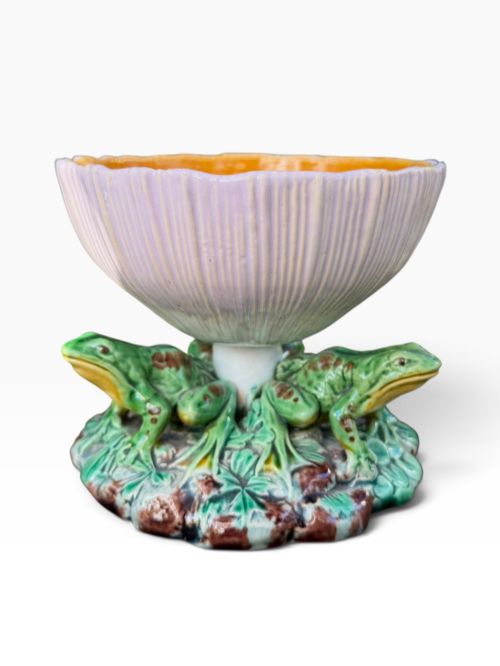
Majolica is a type of lead-glazed earthenware featuring vibrant, opaque coloured glazes applied over a white ground. The style became immensely popular in the mid-nineteenth century for decorative domestic objects.
Common forms include sardine boxes, jardinieres, and ewers adorned with naturalistic plant and animal designs.
How were spill vases used?
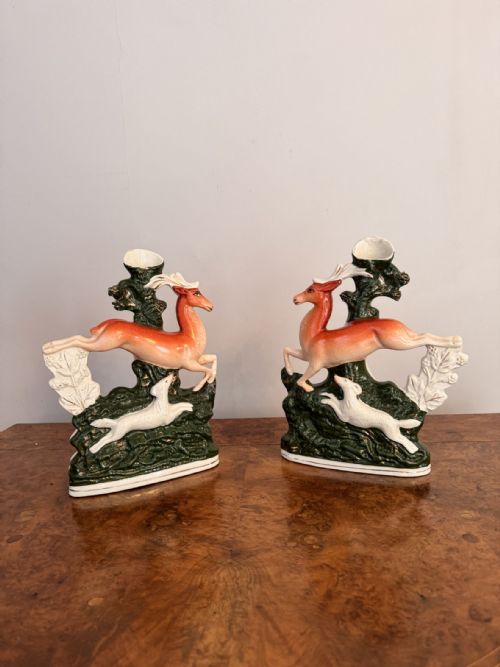
Spill vases held thin wooden tapers called spills, which were used to transfer fire from a hearth to candles, lamps, or pipes before the widespread availability of matches. They sat on mantelpieces alongside decorative figures and ceramic groups.
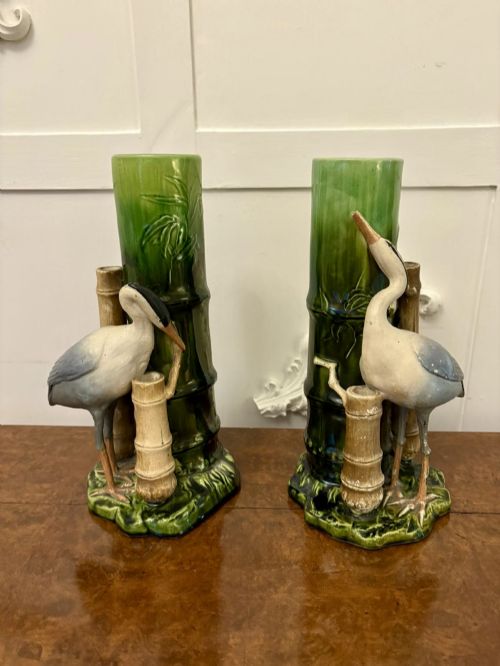
Pairs of animals, such as deer or sheep, frequently incorporated hollow tree trunks behind them to serve this dual decorative and practical purpose.
What distinguishes stoneware from earthenware?
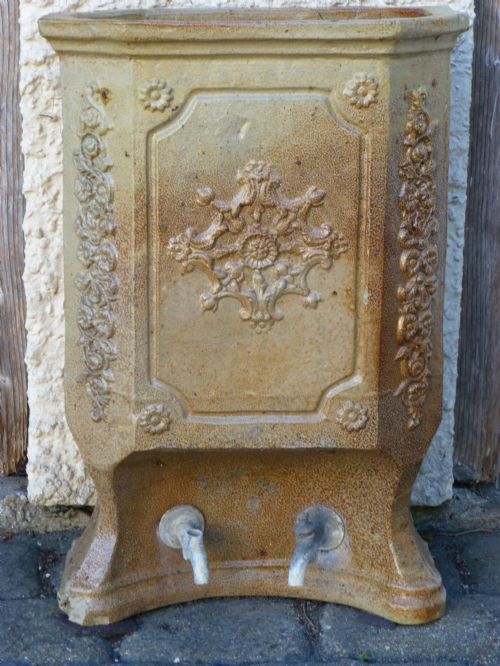
Stoneware is fired at significantly higher temperatures than earthenware, causing the body to vitrify and become completely waterproof without needing an interior glaze. This made it ideal for heavy-duty containers like ginger beer bottles and water filtration fountains.
Earthenware remains porous unless sealed with a glaze, and typically has a coarser, more absorbent clay body.