


Late Victorian Faience Pottery
Late Victorian faience pottery brings rich glaze work and bold form into a room, offering striking pieces for the collector of nineteenth-century ceramics.
Late Victorian Faience Pottery
Late Victorian faience pottery encompasses glazed earthenware and ceramic pieces produced during the nineteenth century, reflecting the vibrant decorative movements of the period. When you search for late victorian faience pottery, you encounter domestic items and display objects made across this era, capturing the shifting tastes from revival styles to the Arts and Crafts movement.
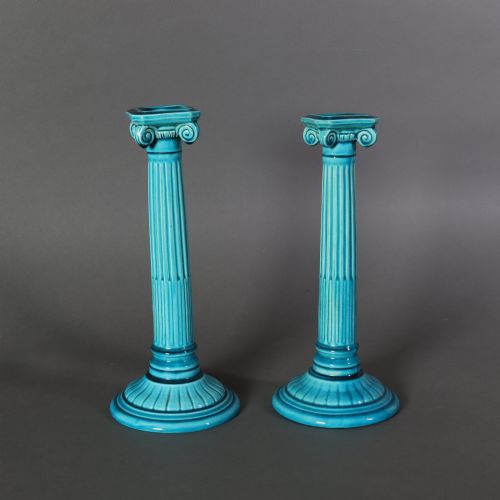
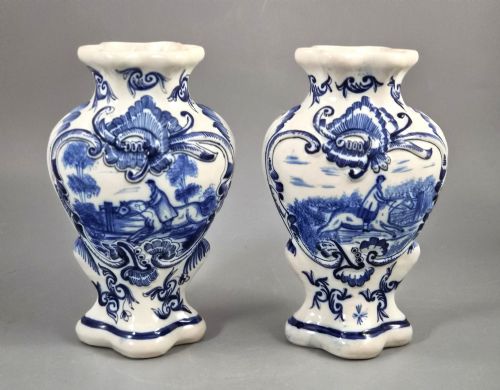
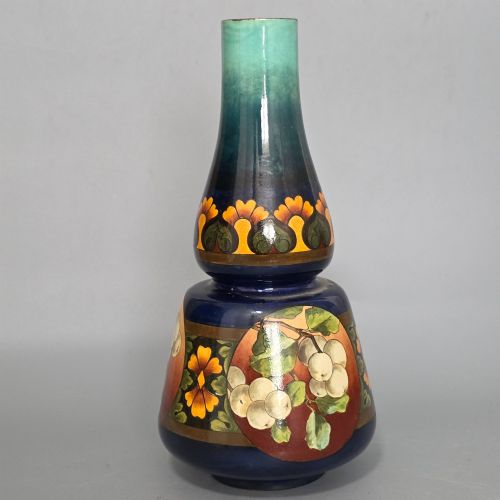
The selections on this page most commonly include vases, decorative vessels, candlesticks, plant stands, and inkstands. These forms originate from British potteries such as Burmantofts and Doulton Lambeth, alongside continental European makers working in Dutch Delft and French Rococo Revival traditions.
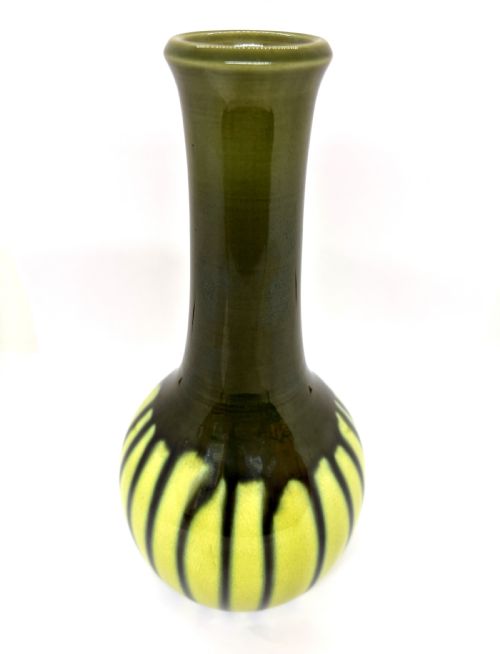
Makers of these items utilised distinct glazing techniques to achieve varied surface textures, ranging from glossy finishes to complex patterned designs like the Intarsio style. The physical presence of these ceramic pieces relies on substantial clay bodies shaped into sturdy vessels and desktop accessories.
How they were made
Potters formed these items from earthenware clay, shaping the body on a wheel or in a mould before applying ceramic glaze to the surface. The pieces were then fired to fix the glaze, creating the characteristic shiny or matte finishes seen across the inventory.
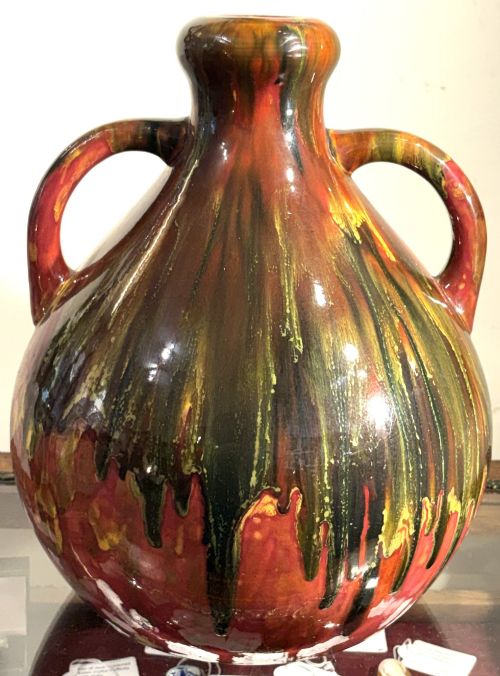
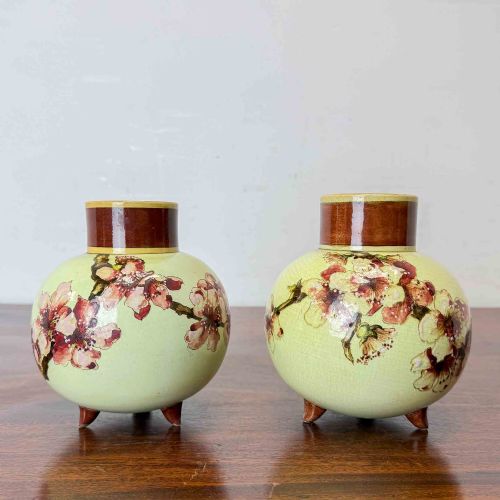
Decoration involved hand-painted motifs, such as cherry blossom designs, or specialist glaze techniques like the sunburst effect developed by workshops like Burmantofts. Some works incorporated complex multi-coloured patterns beneath the glaze, requiring precise control during the kiln firing process.
What varies in quality
The success of a piece depends on the depth and evenness of the ceramic glaze, with richer applications creating more visual movement across the surface. Skilled application ensures the colours remain vibrant and the underlying clay body is uniformly sealed.
Form and proportion dictate the distinction between standard production items and ambitious display pieces. Hand-painted detail work and ambitious potting, such as twin-handled vessels or tall pedestals, demand greater technical mastery from the potter.
Burmantofts·Doulton Lambeth·Fourmaintraux-Courquin
The Late Victorian Faience Pottery Glossary
- Faience
- Tin-glazed earthenware or pottery decorated on an opaque white glaze. This technique allows for detailed painted motifs across the ceramic surface.
- Earthenware
- Porous pottery fired at lower temperatures than stoneware or porcelain. It forms the standard ceramic base for the glazed pieces found in this category.
- Intarsio
- A decorative ceramic technique developed by Doulton Lambeth. It creates a marquetry-like effect using coloured clays beneath a transparent glaze.
- Arts and Crafts
- A design movement valuing traditional craftsmanship and natural motifs. It heavily influenced late nineteenth-century pottery production and form.
- Glaze
- A glassy coating fused to ceramic surfaces through firing. It waterproofs the clay body and provides colour, texture, and pattern.
Late Victorian Faience Pottery: Frequently Asked Questions
What is late victorian faience pottery?
Late victorian faience pottery refers to glazed earthenware and ceramic objects produced during the latter half of the nineteenth century. These items include decorative vases, candlesticks, and inkstands created by prominent British and European potteries.
The category spans several stylistic movements, incorporating everything from traditional blue and white delft designs to vibrant Arts and Crafts glaze effects. Each piece demonstrates the period's fascination with colourful surface decoration and varied ceramic forms.
How do I date these ceramics?
Dating these ceramics relies on identifying maker marks, stylistic clues, and known production periods recorded in the evidence. Pieces typically date from the 1880s through the 1890s, aligning with the height of Victorian art pottery.
Specific aesthetic markers, such as cherry blossom motifs or sunburst glazes, help narrow down the decade of manufacture. Maker stamps on the underside of the earthenware body provide definitive confirmation of origin.
How were these items used originally?
These ceramic pieces served both decorative and functional roles in nineteenth-century interiors. Vases and plant stands displayed floral arrangements or stood as ornamental centerpieces in parlours.
Items like desktop inkstands and candlesticks fulfilled daily domestic requirements while adding colourful artistic flair to workspaces. Their substantial earthenware construction made them durable enough for everyday use.
Where were these pieces made?
Production took place in established pottery workshops across Britain and continental Europe. British centres like Burmantofts in Leeds and Doulton Lambeth in London produced much of the inventory seen here.
Continental contributions include French workshops in Desvres and Dutch Delft traditions. Each region imparted distinct local techniques and stylistic preferences to the finished earthenware.
How do I care for faience pottery?
Caring for faience involves gentle dusting with a soft, dry cloth to protect the glaze surface. Avoid using harsh chemical cleaners or submerging porous earthenware in water for extended periods.
Display the pieces away from direct sunlight and areas subject to sudden temperature fluctuations. This preserves the integrity of the ceramic body and prevents crazing in the glaze.