


Pair Blue Candlesticks
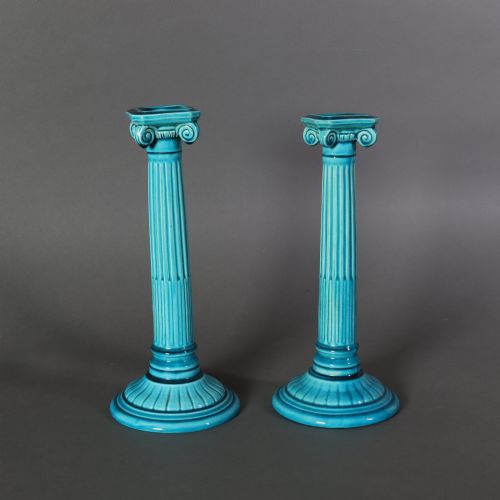
Pair antique blue candlesticks bring domestic illumination from the nineteenth century in ceramic, brass, and gilt bronze.
Pair Blue Candlesticks
Pair antique blue candlesticks comprise matched lighting supports originating primarily from the nineteenth century, including Victorian, Arts and Crafts, and French designs. Buyers searching this phrase encounter candlesticks, candelabra, and candlestands incorporating ceramic, earthenware, and enamel elements.
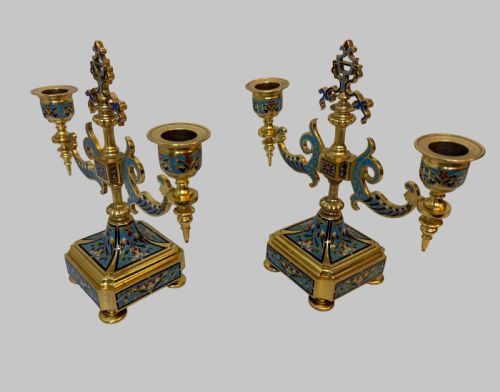
Makers and potteries represented include Burmantofts Faience, Wedgwood, Decoro England, and Liberty and Co with designs by Archibald Knox. French examples frequently combine cloisonné, champleve, or Sevres style porcelain with ormolu and gilt bronze mountings.
Materials and construction methods
Ceramic and earthenware components utilise coloured glazes, jasperware bodies, faience, and porcelain, often paired with cast brass, bronze, or spelter structures. Enamel work appears in champleve and cloisonne techniques alongside decorative ormolu and gilt bronze mounts.
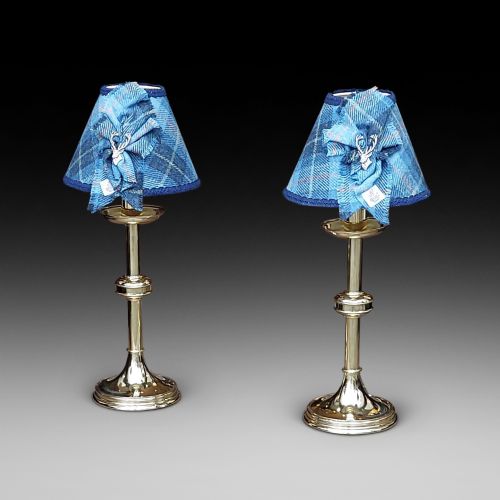
Metalwork construction combines cast brass and bronze components with applied patination, gilding, and structural fastening. Pewter appears in specific Arts and Crafts designs alongside enamel inlays and fabric elements.
Several pairs feature cherubs holding light sockets, apparently determined to illuminate rooms regardless of their heavy ceramic burdens.
Distinctions in quality
Quality rests upon the crispness of casting detail in ormolu and brass elements, the depth and execution of enamel work, and the refinement of ceramic bodies. Finer pieces demonstrate superior integration between metal mounts and ceramic or glass components.
Design integrity separates standard production from exceptional examples, particularly in pieces bearing attribution to known makers or distinctive stylistic movements such as the Arts and Crafts or Aesthetic Movement.
Burmantofts Faience·Archibald Knox for Liberty and Co·Wedgwood·Decoro England
The Pair Blue Candlesticks Glossary
- Ormolu
- Gilded bronze mounts applied to furniture, clocks, and candlesticks. This technique was widely utilised in French decorative arts during the nineteenth century.
- Cloisonne
- Enamelwork created by soldering wire compartments onto a metal base before filling them with paste and firing. The technique produces intricate coloured patterns across metal surfaces.
- Jasperware
- A fine-grained, unglazed stoneware developed by Wedgwood, typically featuring white applied reliefs against a coloured background such as blue.
- Champleve
- Enamel technique where troughs or cells are hollowed out of a metal plate and filled with vitreous enamel before firing. It creates bold coloured designs set within metal borders.
- Faience
- Tin-glazed earthenware produced in imitation of Italian majolica, noted for its opaque coloured glazes and decorative pottery forms.
Pair Blue Candlesticks: Frequently Asked Questions
How do I clean antique brass and ceramic candlesticks?
Use a soft, dry cloth to remove dust from both metal and ceramic surfaces. Avoid harsh chemical polishes that can strip original patination from brass or damage delicate glaze layers.
Keep moisture away from any fabric components and unglazed earthenware bodies. Gentle wiping preserves the historic surface finish without causing abrasion.
Were these candlesticks originally used with candles or lamps?
Most examples in this selection were designed specifically to hold wax candles for domestic illumination. Some variations include twin-light candelabra configurations or adapted forms featuring electrical fittings.
Examine the socket interiors and base wiring holes to determine whether electrification was added later. Original fixtures retain their traditional form for holding taper candles.
How can I identify French nineteenth century candlesticks?
French pieces frequently combine gilt bronze, ormolu, and cloisonne or champleve enamel work. Their stylistic vocabulary often draws upon Louis XVI or Sevres porcelain traditions.
Heavier casting quality and detailed chasing on the metal mounts also point toward continental workshops. Look for distinct colour palettes in the enamels and ceramics.