
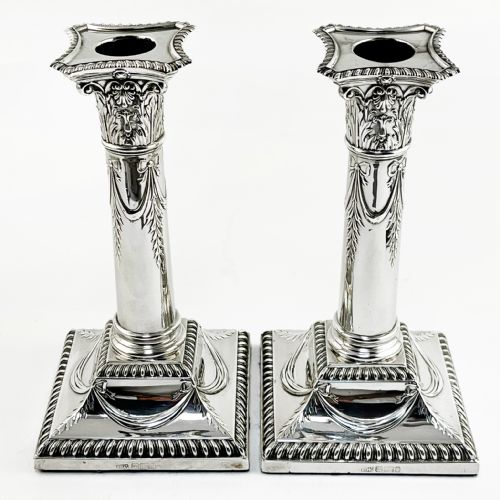

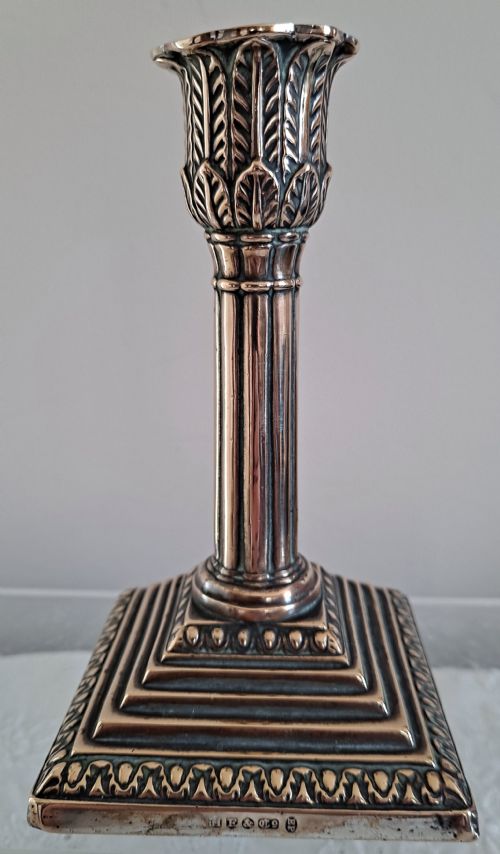
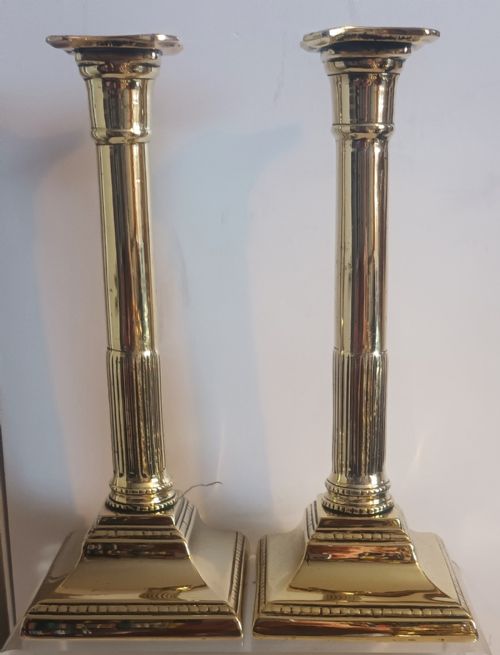
Antique Column Candle Holders
These antique column candle holders bring architectural form and steady light to a room, drawing the eye with classic proportions.
Antique Column Candle Holders
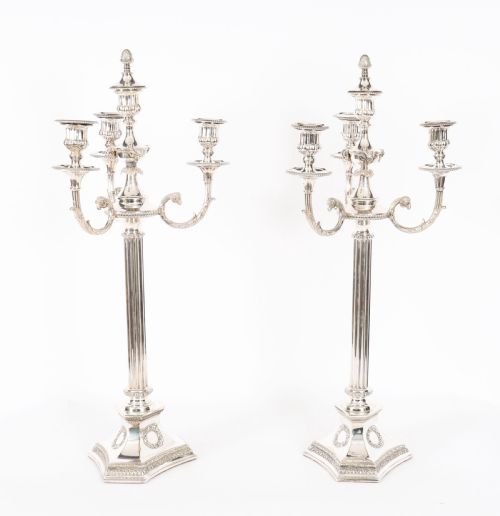
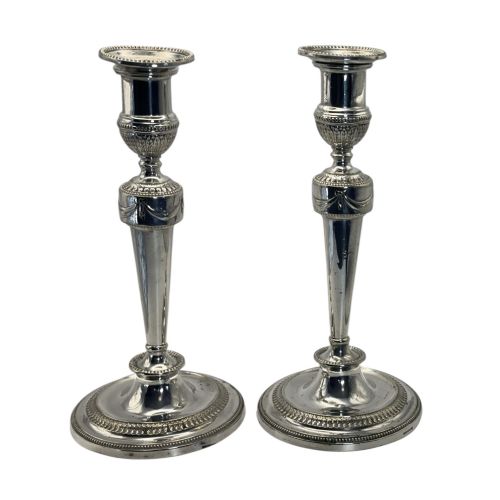
Antique column candle holders encompass candlesticks, candelabra, and torcheres shaped by classical orders and later revivals. The versions met most frequently on this page date from the nineteenth and early twentieth centuries, spanning Victorian, Edwardian, and Georgian styles.
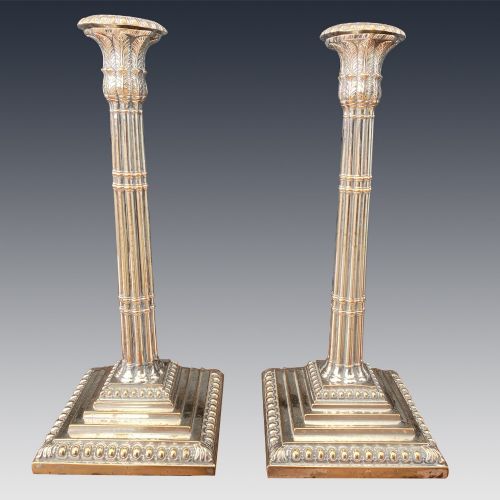
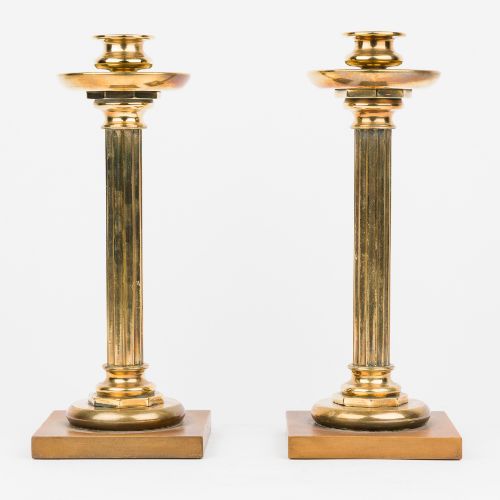
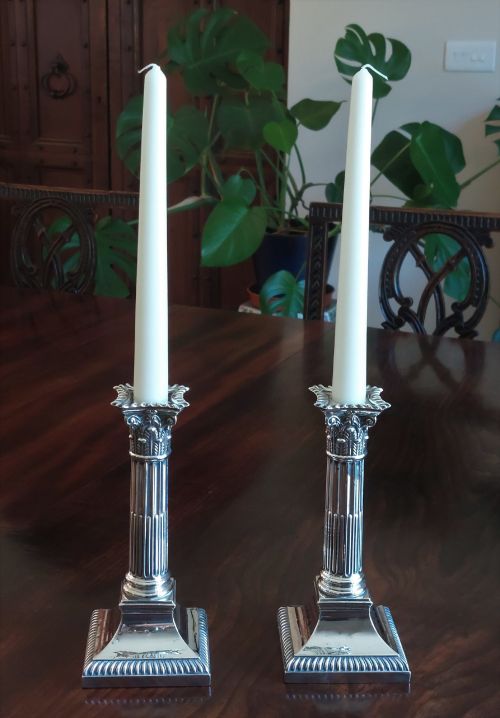
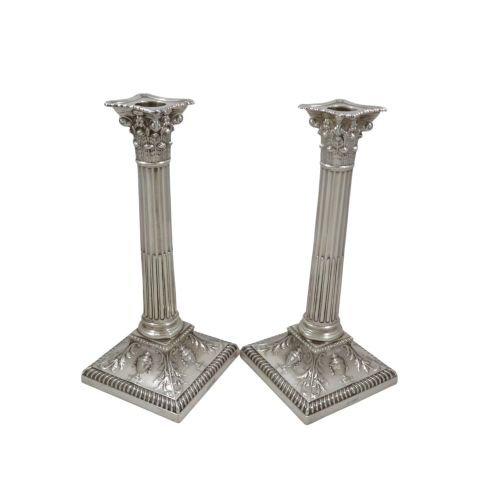
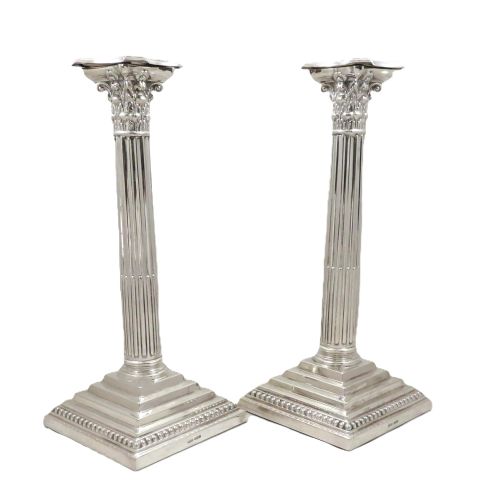
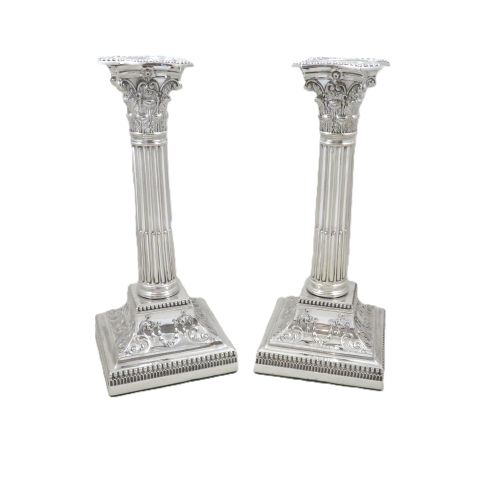
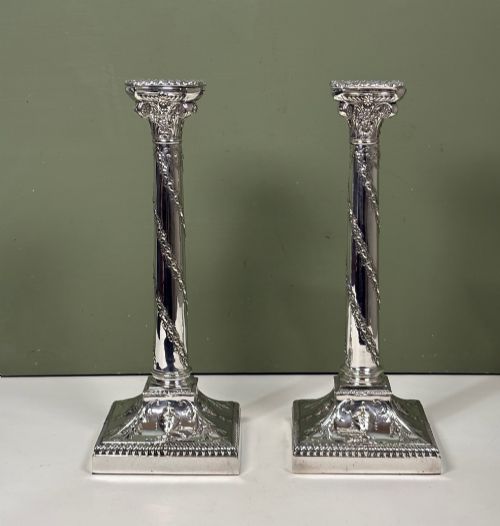
Makers drew heavily on architectural motifs, producing shafts fluted or plain, topped with Corinthian or Doric capitals. Brass, silver plate, and sterling silver dominate the forms, offering either utilitarian strength or formal dining table brilliance.
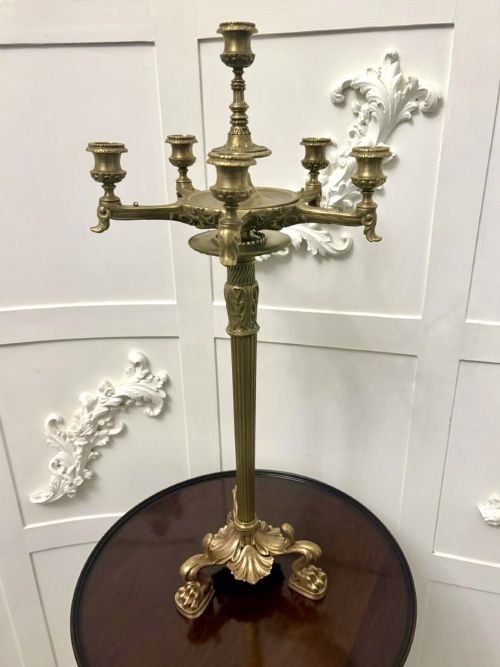
Alongside standard pairs of candlesticks, the selection includes multi-light candelabra, desk pieces, and taller floor torcheres. These pieces served both domestic illumination and ceremonial or lodge functions, preserving centuries of metalworking skill.
How they were made
Metals such as brass, bronze, copper, and silver plate were cast, spun, or hammered into shape, often utilising weighted bases to ensure stability for tall shafts. Sterling silver examples typically bear hallmarks denoting the assay office and year of production.
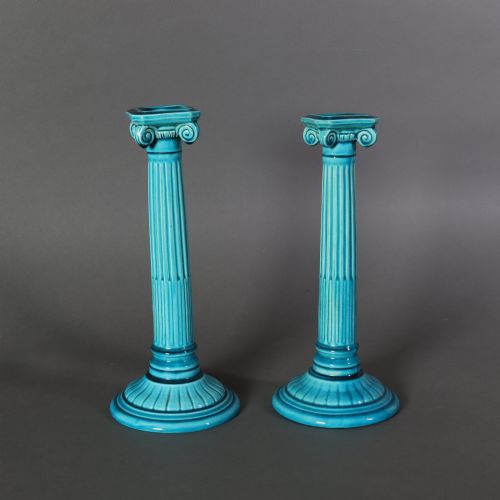
Silver-plated items frequently employ Old Sheffield Plate or electroplating over a base metal core, while ceramic and wood variants introduce faience, carved walnut, and pinewood to the structural repertoire. Artisans assembled composite columns from separate turned or cast sections, joining them securely at the capital and base.
What varies in quality
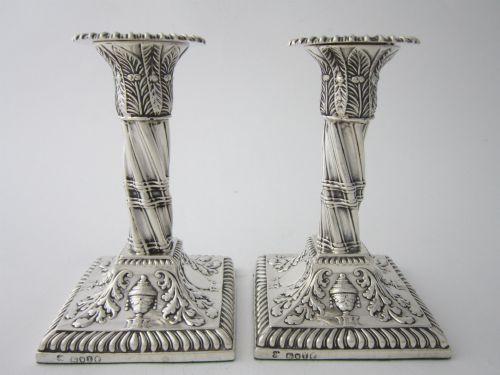
The distinction between ordinary and exceptional pieces lies in the crispness of the casting and the fidelity of the architectural detailing. Sharp acanthus leaves on a Corinthian capital and well-defined fluting on the column shaft indicate superior craftsmanship.
Substance and balance define the better examples, where weighted bases provide a reassuring heft and proportions remain harmonious. Original matching pairs with intact plating or unpolished patination command greater appreciation than mismatched or heavily worn assemblies.
Burmantofts Faience·Garrard & Co·Mappin & Webb·Humphrey Hopper·John Pound & Co·J. Miller
The Antique Column Candle Holders Glossary
- Corinthian column
- A classical pillar style featuring an ornate capital decorated with rows of acanthus leaves. This motif appears frequently on formal nineteenth-century candlesticks.
- Old Sheffield Plate
- An early fusing technique where a thin sheet of silver is fused to a copper base. It is identified by the subtle gleam of copper showing through high points.
- Candelabra
- A branched candlestick holding multiple lights on a single stem. They often convert into larger table centrepieces.
- Torchere
- A tall stand or candlestick designed to elevate a light source above furniture level. They are carved from wood or cast in metal.
- Hallmark
- An official stamp applied to precious metals indicating purity, maker, and date. They provide precise historical provenance for silver pieces.
Antique Column Candle Holders: Frequently Asked Questions
How do I clean silver plated column candlesticks?
Use a soft cloth and a mild, non-abrasive silver cleaner to remove tarnish gently without wearing away the thin metal plating.
Avoid aggressive scrubbing, particularly around raised architectural details and recessed fluting where the underlying base metal might become exposed.
What is a Corinthian column candlestick?
It is a candle holder styled after classical architecture, featuring a capital adorned with carved or cast acanthus leaves.
This design gained immense popularity during the Victorian and Edwardian periods for formal dining settings and mantelpieces.
Are these candle holders weighted?
Many metal candlesticks contain a weighted interior base filled with resin, pitch, or plaster to provide stability.
This counterbalances the height of the column, preventing the piece from tipping over when supporting a heavy taper candle.
How do I date a brass column candlestick?
Examine the construction methods, tool marks, and base assembly, as older Georgian pieces differ in casting texture from Victorian ones.
Stylistic shifts in the column proportions and capital design also offer clues to the decade of manufacture.