
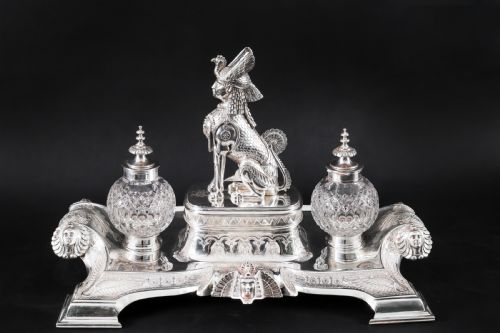
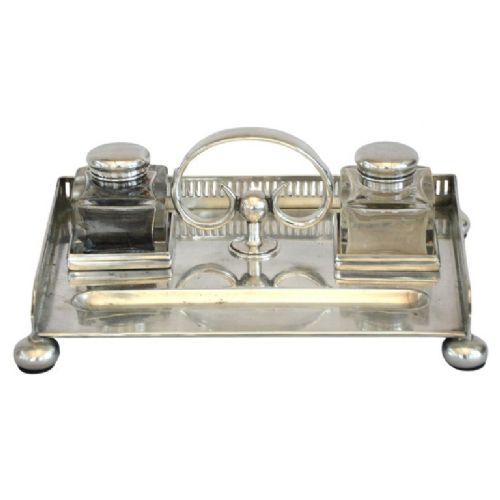


Victorian Glass Writing Set
A victorian glass writing set brings together functional desk organisation and decorative glass craftsmanship from the nineteenth century.
Victorian Glass Writing Set
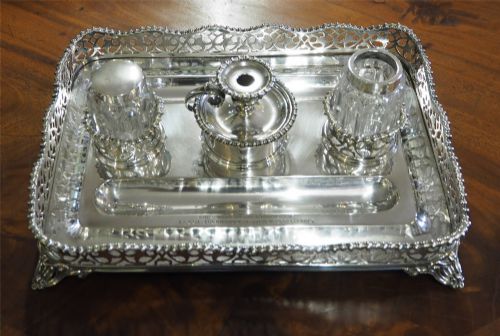
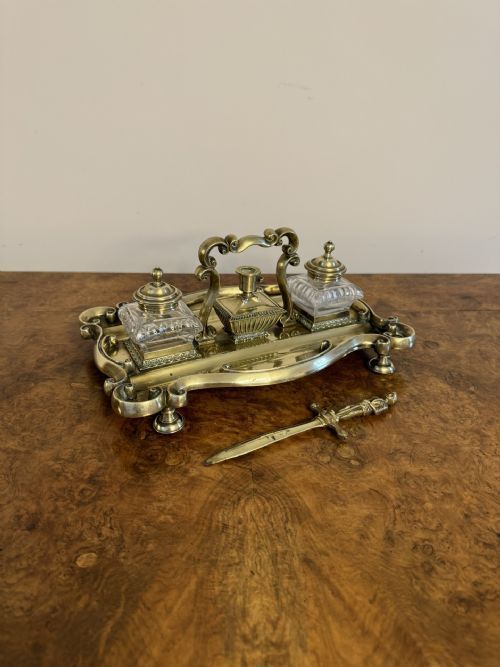
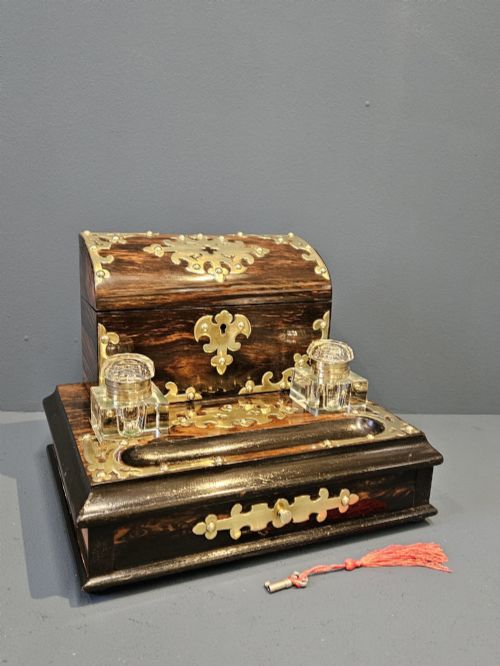
The most common examples on this page include inkstands and desk stands incorporating cut glass or glass inkwells paired with metal or wooden bases. Makers integrated hinged lids, pen rests, and sometimes match holders or chambersticks into the overall design.
What varies in quality
The distinction between tiers rests upon the precision of the joinery, the clarity and depth of the glass cutting, and the sophistication of the secondary materials like tortoiseshell or mother-of-pearl. Finer examples display meticulous metal mounting and integrated silver components rather than simpler plated fittings.
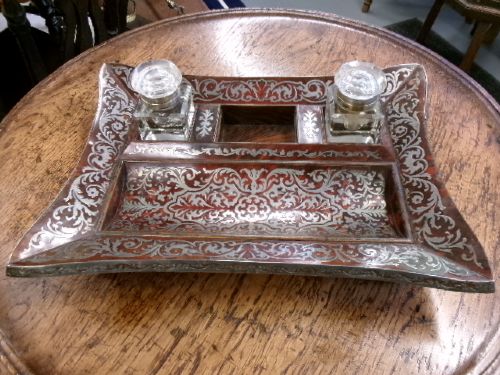
Design complexity also separates standard items from exceptional ones, particularly where stands take figurative forms or employ labour-intensive decorative techniques such as French boulle work.
Listings feature oak, walnut, coromandel, and mahogany alongside cut glass, brass, and silver plate across Victorian and Edwardian periods.
Elkington·Wilkinson And Co·Walker And Hall·Rupert Favell·James Cartland And Sons·Moser
The Victorian Glass Writing Set Glossary
- Inkstand
- A portable tray or stand holding one or more inkwells and often a pen rest. These served as the central writing accessory on a Victorian desk.
- Boulle work
- A form of marquetry using brass and tortoiseshell inlaid into wood surfaces. This technique originated in France and appeared on decorative nineteenth-century desk stands.
- Chamberstick
- A short portable candlestick with a pan to catch dripping wax. Some large Victorian desk sets incorporated these for sealing letters with hot wax.
- Standish
- An alternative term for a desk stand or inkstand. It frequently denotes a more elaborate desk accessory equipped with multiple containers for ink, sand, and wafers.
Victorian Glass Writing Set: Frequently Asked Questions
What is included in a writing set?
These sets typically comprise a base tray fitted with one or two glass inkwells and spaces for resting pens. Some larger configurations include compartments for stationery, drawers, or matching chambersticks.
Buyers often find that complete sets retain their original matching glass inserts, which adds significantly to their historical integrity.
How do I care for wooden desk stands?
Wood surfaces require gentle dusting and occasional treatment with appropriate conservation wax to maintain the finish. Moisture should be kept away from wooden bases to protect inlaid brass and mother-of-pearl elements.
Glass inkwells can be removed and washed carefully by hand using mild soap and lukewarm water.
How are different periods identified?
Dating relies on stylistic clues such as revival motifs, hardware construction, and maker marks stamped into metal mounts. Victorian pieces span several decades with distinct aesthetic shifts from mid-century French influences to later arts and crafts styles.
Examining the type of wood and the manufacturing techniques used on the underside often reveals the period of manufacture.
Were these sets used daily?
Libraries and offices relied on these accessories daily for correspondence before the widespread adoption of fountain pens. Inkwells required regular refilling and cleaning to prevent ink from crusting inside the glass reservoirs.
Many surviving pieces display minor wear consistent with active use in nineteenth-century households.