


Traditional Writing Desk Accessories
Traditional writing desk accessories bring period character to a working surface, offering practical desk sets, inkstands and inkwells in glass, brass and oak.
Traditional Writing Desk Accessories
Traditional writing desk accessories comprise functional items designed for correspondence and paperwork, featuring inkstands, inkwells, paperweights and desk sets. Buyers searching for traditional writing desk accessories encounter pieces originating primarily from the Victorian and Edwardian eras, spanning the late nineteenth and early twentieth centuries.
The selection on this page centres upon desk items rendered in brass, oak, cut glass and silver plate, alongside ceramic examples like Dutch Delft faience. Forms range from simple glass inkwells and large desk blotters to substantial fitted inkstands incorporating multiple materials.
How they were made
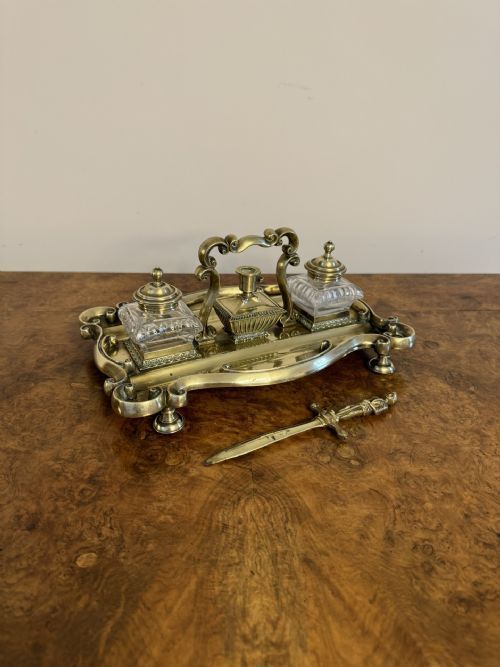
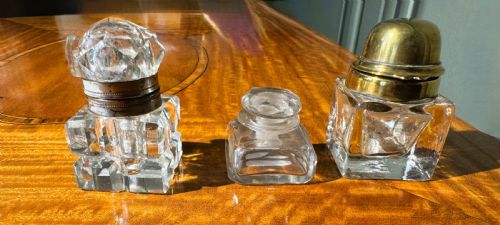
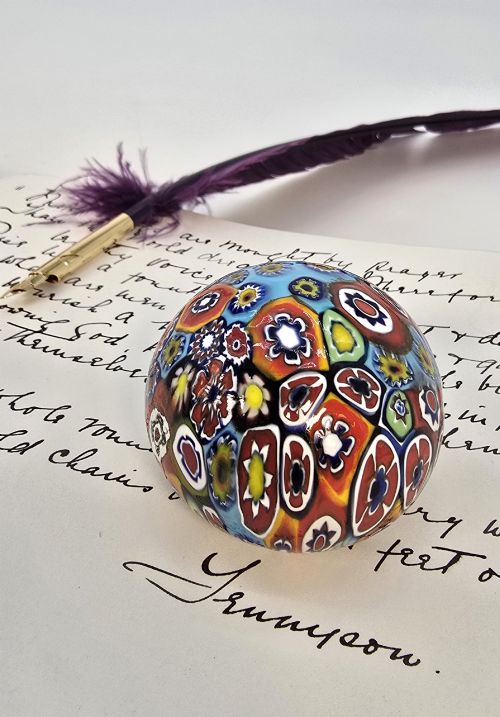
Makers utilised durable hardwoods such as solid oak alongside cast and worked brass to build robust desk stands capable of holding heavy inkwells. Glass elements were shaped through cutting and mould-blowing, producing heavy inkwells and decorative paperweights including millefiori designs.
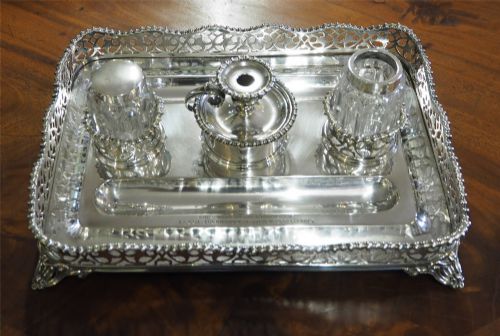
Metalwork often involved silver plating over a base metal, seen in pieces produced by firms like Elkington, while ceramic pieces employed tin-glazed earthenware decorated with blue and white tin-glazes in the Dutch Delft tradition.
Materials represented across the collection include oak, brass, cut glass, silver plate, ceramic and tin-glazed earthenware.
What varies in quality
Quality in traditional writing desk accessories depends upon the solidity of the materials and the precision of the manufacturing, distinguishing substantial cast brass or thick-gauge silver plate from lighter, simpler items. The integration of fitted elements, such as matched glass inkwells within heavy oak or brass stands, also marks out better examples.
Decorative refinement separates standard utility items from finer pieces, whether through the intricacy of Anglo-Indian brass work, detailed millefiori glass patterns, or carefully hand-painted Dutch Delft faience.
Elkington
The Traditional Writing Desk Accessories Glossary
- Inkstand
- A fitted tray or stand designed to hold one or more inkwells, often incorporating pen grooves and sanders. These pieces sat permanently on a desk.
- Millefiori
- A glasswork technique producing multicoloured mosaic patterns resembling flowers, commonly seen in desk paperweights. The term translates from Italian as a thousand flowers.
- Silver Plate
- A thin layer of silver fused or electroplated onto a base metal such as copper or brass. Firms like Elkington perfected this process during the nineteenth century.
- Tin-Glazed Earthenware
- Pottery coated in a tin oxide glaze that turns white and opaque when fired, providing a smooth surface for painted decoration. Dutch Delft pieces utilise this method.
- Desk Blotter
- A protective pad or portable folder fitted with blotting paper used to absorb excess ink from handwritten letters. Large versions formed part of nineteenth-century desk sets.
Traditional Writing Desk Accessories: Frequently Asked Questions
What is an inkstand?
An inkstand is a combined desk stand that holds an inkwell, pen rests and sometimes a matching sander or stamp box. These were standard writing implements on nineteenth-century desks.
They protect the desktop and keep writing tools organised in one dedicated place.
How do I date these accessories?
Dating relies on material combinations, manufacturing techniques and stylistic cues such as Victorian brass casting or Edwardian oak joinery. Maker marks and silver plating methods also help narrow down the period.
Comparing the weight, form and decorative motifs against known nineteenth and early twentieth-century examples provides a reliable guide.
Are glass inkwells removable?
Most glass inkwells sit within dedicated recesses on brass, ceramic or wooden stands and can be lifted out for cleaning and refilling. Some fitted desk sets include hinged lids attached directly to the stand.
Checking how the inkwell sits helps determine if it is original to the base stand.
How do I care for brass desk items?
Brass accessories require gentle dusting with a soft dry cloth to preserve their surface finish and natural ageing. Avoid harsh chemical cleaners that strip away patination accumulated over decades.
Keeping them away from damp environments prevents corrosion of the metal and protects attached wooden elements.