




Victorian Glass Wine Pitcher
These robust vessels bring elegance to the dining table, combining clear or coloured glass with intricate metal mounts.
Victorian Glass Wine Pitcher
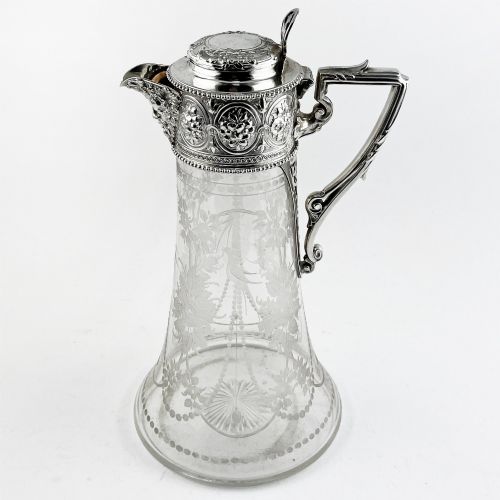
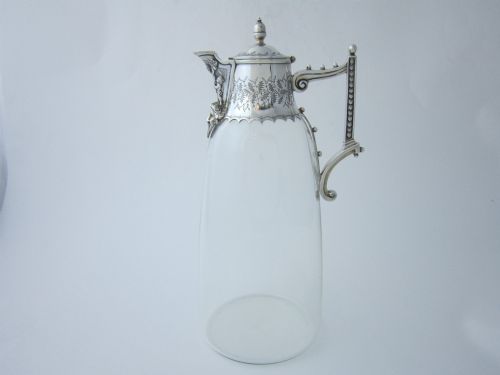
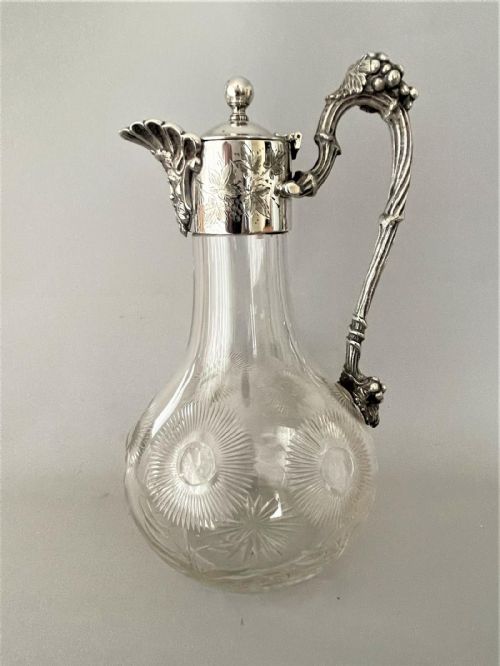
The version most commonly met on this page combines a blown or cut glass body with a hinged metal mount, handle, and pouring lip. These vessels originate from English, Bohemian, Italian, and French makers working in styles ranging from Rococo Revival to Art Nouveau.
How they were made
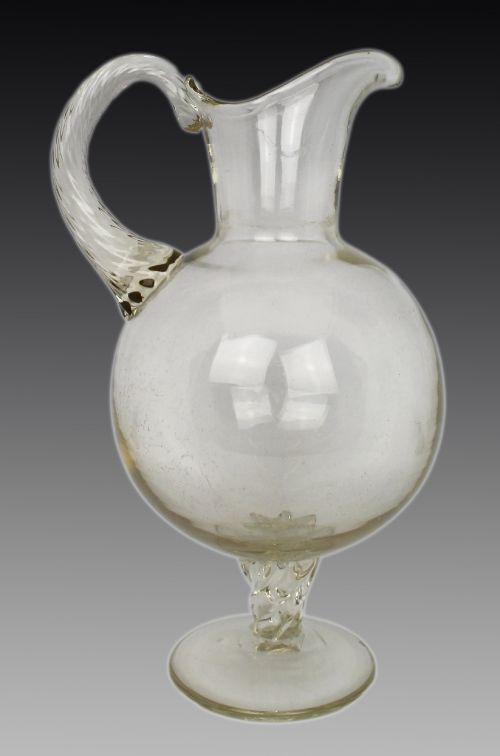
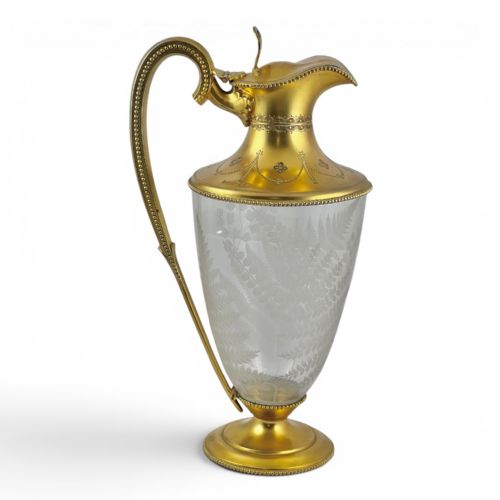
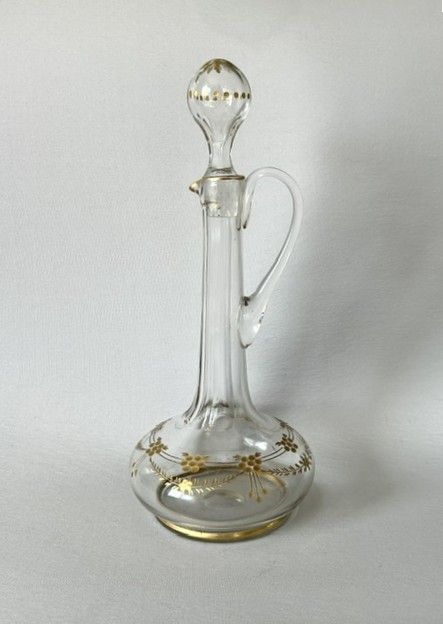
Glass bodies were formed through hand-blowing or moulding, often utilising clear crystal, cranberry glass, or overlaid glass coloured green and amber. Artisans then decorated the surfaces through wheel-cutting, etching, engraving, enamel painting, or latticinio techniques.
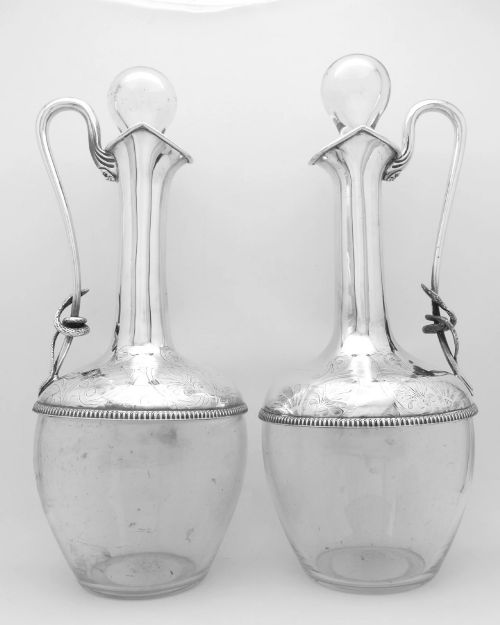
Mounts, handles, and hinged covers were fashioned from sterling silver, silver gilt, or silver plate. Metal components frequently incorporated sculptural elements such as serpent handles, bacchus masks, or floral motifs secured firmly to the glass.
Serpent handles writhe down the side of the glass, ensuring that pouring the evening wine comes with a slight hiss of imagination.
What varies in quality
The distinction between standard production and superior craftsmanship rests in the weight and clarity of the glass, alongside the depth and crispness of the wheel-cutting or etching. Heavier crystal bodies and intricate, hand-engraved vegetal motifs elevate a piece significantly.
Mount quality separates finer examples from ordinary ones through the gauge of the silver or silver plate used for the handle and collar. Well-balanced proportions between the metal mounts and the glass body indicate superior design and execution.
Asprey and Co. Ltd·Elkington
The Victorian Glass Wine Pitcher Glossary
- Claret jug
- A specialised pouring vessel designed for serving red wine, typically featuring a hinged metal lid and handle attached to a glass body.
- Ewer
- A large jug with a wide spout and a decorative handle, rooted in classical forms and adapted for nineteenth-century dining.
- Cranberry glass
- A rich red-pink transparent glass coloured with gold chloride, widely utilised for decorative tableware during the Victorian era.
- Latticinio
- A glassblowing technique incorporating fine opaque white or coloured glass threads twisted within a clear glass matrix.
- Silver plate
- A base metal, often copper or Britannia metal, coated with a thin layer of silver using electroplating or older techniques.
Victorian Glass Wine Pitcher: Frequently Asked Questions
How were these pitchers used?
These vessels served wine at the dining table, allowing hosts to decant and pour claret or other vintages smoothly. The hinged lid kept the contents covered between pours.
They stood as centrepieces during formal meals, reflecting the gaslight or candlelight of nineteenth-centuries dining rooms through their cut and engraved surfaces.
Are the metal mounts solid silver?
The metal mounts vary between solid sterling silver, silver gilt, and silver-plated base metals depending on the specific piece. Hallmarks on the silver components often reveal the assay office and year of production.
Silver plate was equally common, produced by reputable firms using durable plating methods over Britannia metal or copper.
What styles appear in these pitchers?
The designs reflect the shifting tastes of the nineteenth century, encompassing ornate French Rococo Revival curves and naturalistic Aesthetic Movement motifs. Later examples incorporate the flowing lines of Art Nouveau.
Bohemian and English makers produced distinct variations, ranging from heavily gilded cut glass to delicate etched floral patterns.