




Victorian Ruby Glass Carafe
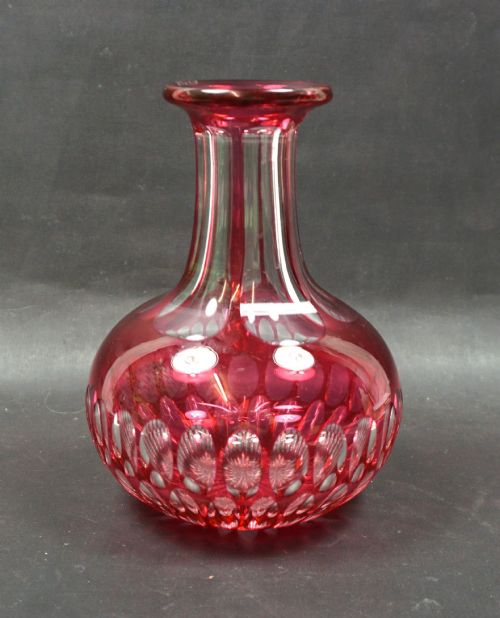
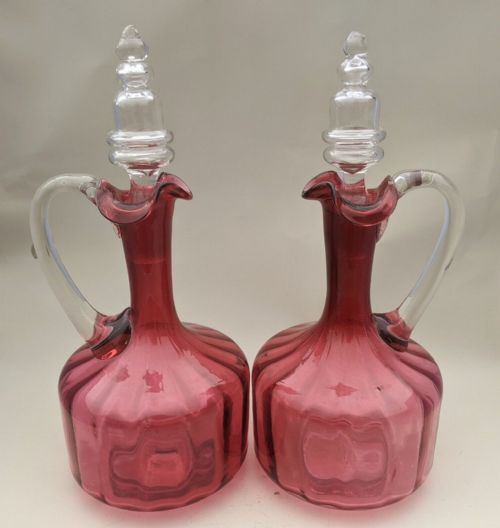
These Victorian ruby glass carafes bring rich crimson hues and striking cut crystal work to the table, offering a vibrant centrepiece for any dining room.
Victorian Ruby Glass Carafe
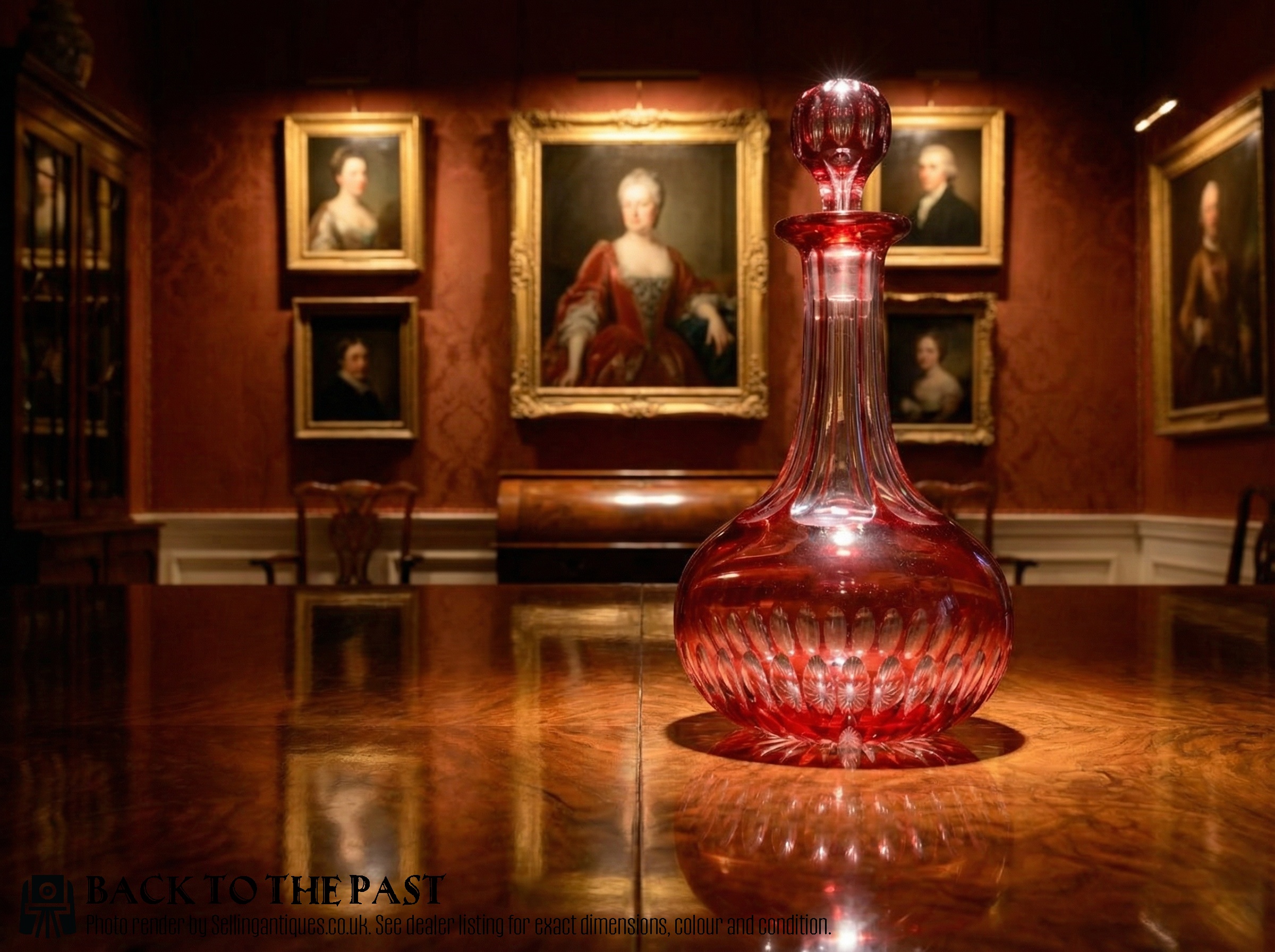
A victorian ruby glass carafe stands as a striking example of nineteenth-century table ware, designed primarily for serving wine and claret. These vessels appear in forms ranging from straightforward serving bottles to elaborate decanters fitted with silver plate mounts.
The pieces on this page span the Victorian and Edwardian eras, with notable representation from around eighteen-sixty. Buyers frequently encounter cranberry glass variants alongside deep ruby overlays and clear crystal combinations.
Materials and Techniques
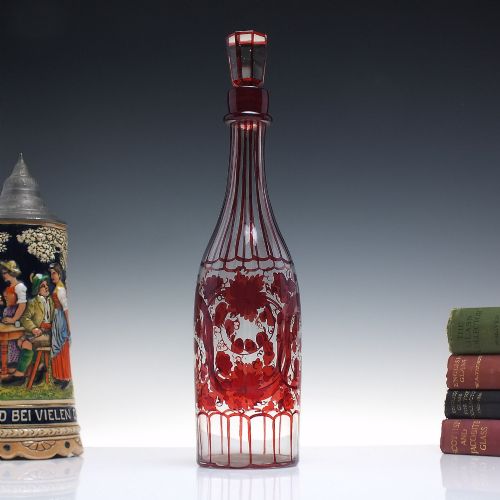
Glassmakers created these vessels using rich cranberry and ruby glass, often employing an overlay technique that fused red glass over clear crystal. This layered construction allowed artisans to cut through the outer red stratum to reveal the clear glass beneath.
Decoration relied heavily on hand painting and fine wheel engraving, frequently depicting natural motifs such as fruiting vines. Selected examples incorporated silver plate and silver mounts to form complete claret jugs and wine decanters.
The listings here encompass pieces dated from eighteen-forty through the Edwardian period, utilising cranberry glass, ruby overlay, and silver plate.
Judging Quality
Quality rests upon the precision of the glass cutting and the depth of the ruby colour achieved in the molten batch. Superior pieces display crisp facets that catch the light cleanly, while lesser examples show softer edges from hurried finishing.
The presence of hand painted details and integrated silver plate mounts elevates a piece significantly. Artisanal care in engraving fruiting vines distinguishes the finest items from standard production glassware.
The Victorian Ruby Glass Carafe Glossary
- Cranberry glass
- A transparent pinkish-red glass coloured by the addition of gold chloride to the molten batch. This distinctive tone defines many nineteenth-century table wares.
- Ruby overlay
- A manufacturing method where a thin layer of red glass is fused over a thicker body of clear crystal. Cutting through the top layer exposes the clear glass underneath.
- Claret jug
- A specialised vessel designed specifically for serving red wine at the table. These often feature elaborate handles and pouring spouts.
- Serving bottle
- An alternative term for a decanter or carafe used to hold and pour beverages. They appear frequently in nineteenth-century domestic settings.
- Silver plate
- A thin coating of silver applied to a base metal mount or handle. This technique provided the appearance of solid silver at a lower cost.
Victorian Ruby Glass Carafe: Frequently Asked Questions
How were these carafes used originally?
Households utilised these vessels to serve claret and other red wines during formal meals. The rich colour helped mask the sediment typical of older vintages.
They sat upon the dining table or sideboard, ready to be poured into glasses as the meal progressed. Many featured stoppers to preserve the contents.
How do I care for antique glass?
Wash these pieces gently by hand using warm water and mild soap, avoiding harsh scrubbing. Extreme temperature changes can crack old glass, so water should remain lukewarm.
Store them securely away from table edges and remove stoppers when putting them into storage. Proper handling preserves both the glass and any silver plate mounts.
How can I tell the period?
Dating relies on examining the weight of the glass, the style of the cutting, and any associated mounts. Victorian pieces often display heavier lead crystal and deeper ruby overlays.
Edwardian items tend to show lighter forms while maintaining the traditional cranberry and ruby colourways. Comparing handle styles and engraving motifs helps confirm the era.