


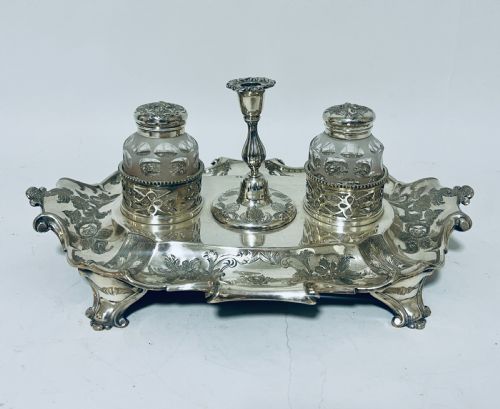

Victorian Glass Inkwell Tray
These nineteenth-century writing accessories combine fitted glass reservoirs with substantial trays, offering a practical workspace centrepiece.
Victorian Glass Inkwell Tray
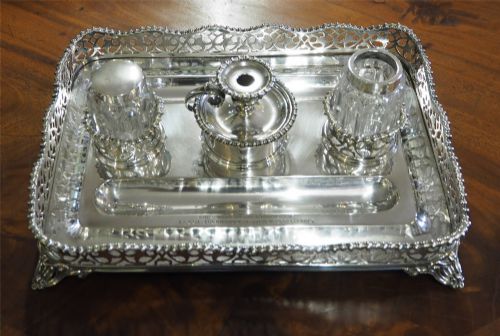
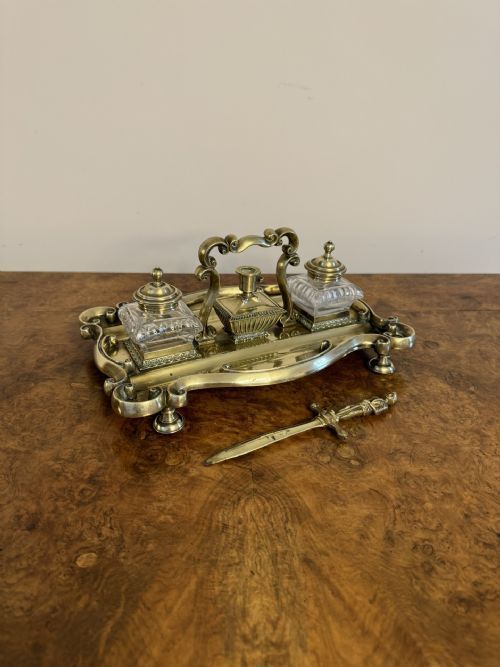
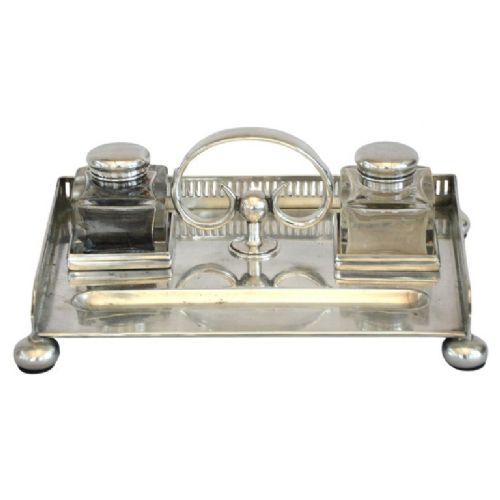
A victorian glass inkwell tray gathers inkwells, pen rests, and sometimes chambersticks onto a single fitted platform for desk use. Buyers searching for a victorian glass inkwell tray will encounter varied forms, from simple wooden bases to elaborate double inkstands with silver mounts.
The objects span the nineteenth century, reflecting periods from the mid-Victorian decade through the Edwardian era. Trays appear in materials such as coromandel, brass, oak, and papier-mâché, each holding glass ink containers securely.
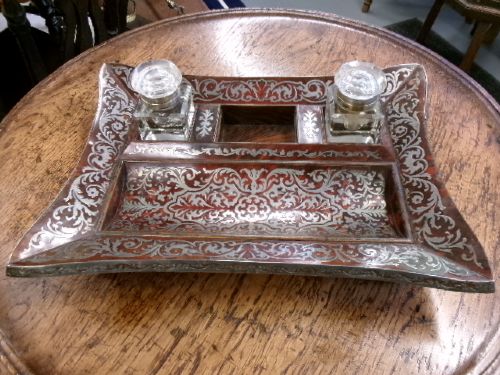
Many examples incorporate decorative styles including Art Nouveau, Black Forest carving, and Napoleon III Boulle work. The configuration ranges from single glass wells on small trays to massive double-sided desk sets with multiple compartments.
Materials and construction methods
Glass ink reservoirs are paired with trays fashioned from dense hardwoods like coromandel, walnut, and mahogany, or formed from cast brass and silver plate. Artisans mounted metal collars and hinges directly onto the timber or papier-mâché bases to secure the glass components.
Inlays of brass, mother-of-pearl, and satinwood decorate the wooden trays, while other examples utilise carved wooden elements such as Black Forest bears or eagles. Silver mounts and sterling silver lids provide functional closure for the glass inkwells.
Listings feature items from the Victorian, Edwardian, and Regency periods, utilising glass, coromandel wood, brass, silver plate, and mother-of-pearl.
Factors determining quality
The calibre of a desk stand depends on the weight and clarity of the glass reservoirs alongside the precision of the woodwork and metal mounts. Superior pieces display intricate inlay work, substantial silver or brass mountings, and robust timber construction that resists warping.
Makers integrated materials thoughtfully, balancing heavy glass inkwells securely within fitted trays of coromandel, walnut, or oak. Pieces bearing identifiable maker stamps or fine hand-carved details represent the upper tier of nineteenth-century desk accessories.
Elkington·Walker And Hall·Rupert Favell·James Cartland And Sons·W M F
The Victorian Glass Inkwell Tray Glossary
- Inkstand
- A fitted tray or stand holding one or more inkwells, pen trays, and sometimes a sander or taper stick. These accessories organised writing implements on nineteenth-century desks.
- Boulle work
- A decorative technique using marquetry of tortoiseshell and brass, popular in Napoleon III pieces. This ornamentation creates intricate metallic patterns against a dark ground.
- Papier-mâché
- A composite material made from paper pulp mixed with glue and oil, pressed and cured to form rigid objects. It provided a smooth surface for lacquer and inlaid mother-of-pearl.
- Silver plate
- A layer of silver fused to a base metal such as copper or Britannia metal. This technique offered the appearance of solid silver for desk accessories.
Victorian Glass Inkwell Tray: Frequently Asked Questions
What is an inkstand?
An inkstand is a portable or stationary tray designed to hold inkwells, pens, and related writing tools together in one place on a desk.
These pieces served as functional desktop equipment for correspondence and record-keeping throughout the nineteenth century.
How do I date a desk stand?
Dating relies on stylistic clues, timber choices, metal mounts, and occasionally assay marks on silver components. Mid-century examples often feature coromandel and brass inlay, while later pieces show oak or Art Nouveau motifs.
Examining the construction of the wooden tray and the style of the glass inkwells helps narrow the production period within the Victorian era.
Were these trays used in offices?
Desk sets were used in private studies, libraries, and administrative offices by individuals who wrote correspondence by hand.
Larger double-sided stands accommodated multiple users or heavier daily writing tasks in formal rooms.
How do I clean wooden desk stands?
Wood surfaces require gentle dusting and occasional waxing with a suitable paste wax to preserve the finish without harming any brass or mother-of-pearl inlay.
Glass inkwells can be removed and washed separately in warm water to clear dried ink residue from the interior.
What materials are common on these stands?
Trays are frequently constructed from hardwoods like coromandel, walnut, mahogany, and oak, alongside brass, silver plate, and papier-mâché.
Fitted components combine cut glass inkwells with metal lids and decorative mounts.