




Brass Mounted Desk Tidy
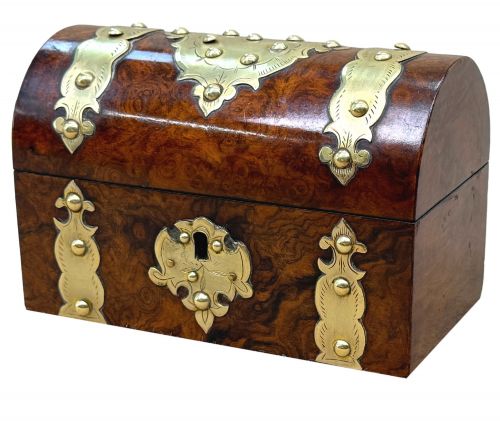
These pieces, known as a brass mounted desk tidy, organise correspondence and writing instruments while displaying the rich timber and metalwork of the eighteenth, nineteenth, and early twentieth centuries.
Brass Mounted Desk Tidy
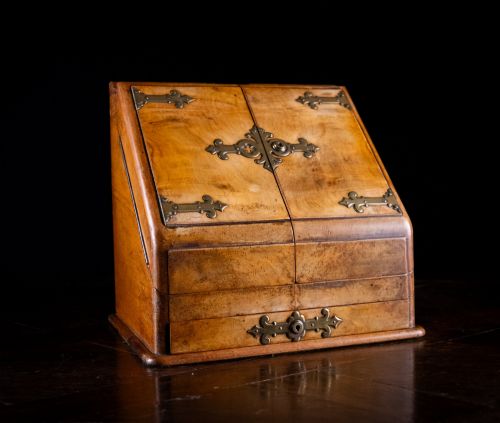
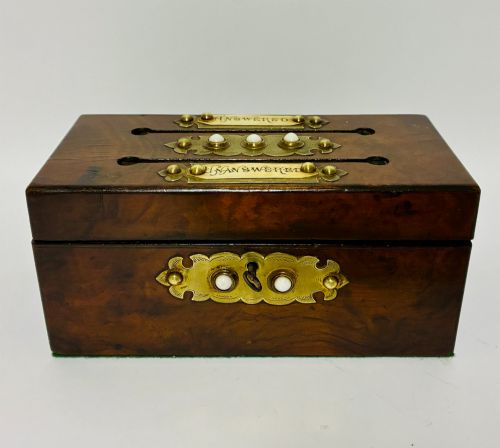
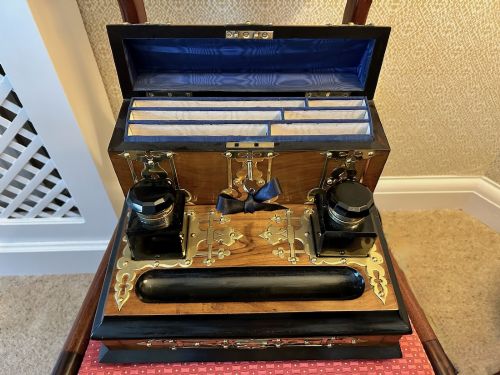
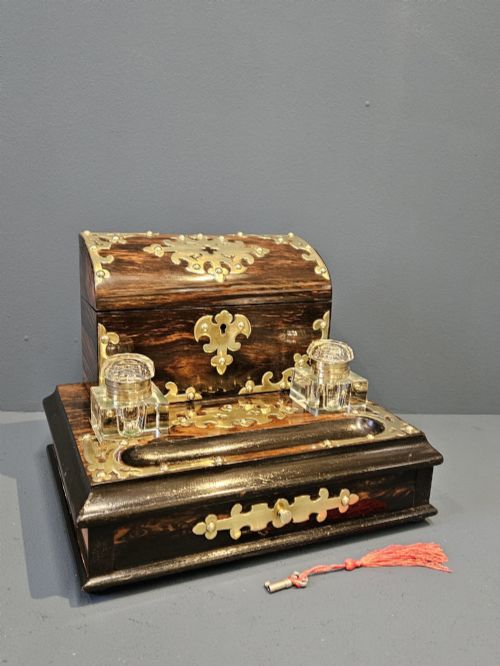
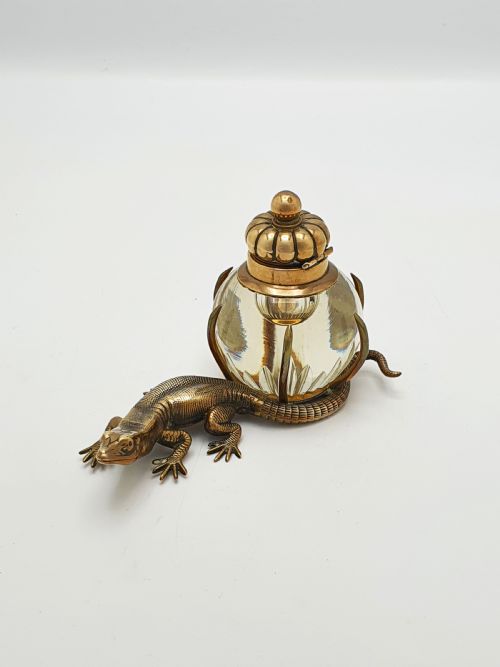
A brass mounted desk tidy gathers inkwells, pens, and paper into a single decorative receptacle designed for the writing table. These accessories take various forms, from stationery boxes and correspondence cabinets to inkstands, book slides, and writing boxes.
The pieces seen here span from the eighteenth century through the Victorian and Edwardian eras, encompassing styles such as Gothic Revival, Napoleon III, Louis XV, and Anglo Indian. Walnut, oak, burr walnut, and coromandel provide the primary structural timbers for these desk accessories.
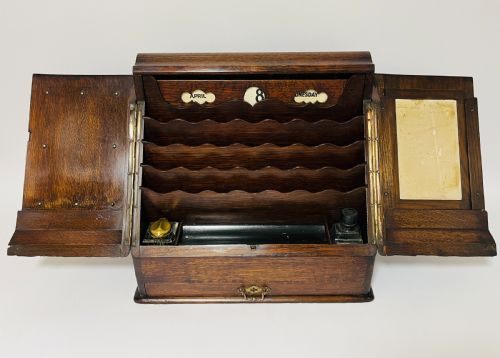
Victorian examples dominate the selection, often incorporating fall fronts, double-sided compartments, or bound brass edges. Buyers encounter both utilitarian oak containers and highly decorative items embellished with tortoiseshell, bone, and inlaid brass.
Distinctions in quality
Quality rests upon the selection of timber veneers and the precision of the brass mountings. Dense, highly figured burr walnut or figured coromandel indicates superior material choice compared to plain utility timbers.
The execution of brass inlay and the weight of the cast mounts separate standard production from exceptional work. Integrated fittings, such as original matched glass inkwells and functioning locks with keys, elevate the standing of a desk tidy.
Current listings feature desk tidies spanning the eighteenth century through the Edwardian era, constructed in oak, walnut, coromandel, and tortoiseshell.
Houghton and Gunn·Gillows of Lancaster
The Brass Mounted Desk Tidy Glossary
- Coromandel
- A dense, heavily grained exotic timber from Southeast Asia with dark brown and black streaks. It was frequently utilised for luxury Victorian stationery boxes and writing cabinets.
- Stationery box
- A desk accessory featuring tiered compartments or a fall-front door designed to hold paper, envelopes, and correspondence. These often display extensive brass binding and mounts.
- Inkstand
- A portable tray or stand holding one or more inkwells, sanders, and pen recesses. They frequently incorporate materials like glass, tortoiseshell, and brass.
- Burr walnut
- Walnut timber taken from the gnarled growth of the tree, yielding intricate, swirling grain patterns. It served as a premium veneer for nineteenth-century desk sets.
- George IV period
- The architectural and decorative style spanning the early nineteenth century. Pieces from this era often exhibit refined classical proportions and rosewood construction.
Brass Mounted Desk Tidy: Frequently Asked Questions
What is a brass mounted desk tidy used for?
These accessories served to organise writing paper, envelopes, ink, and pens on nineteenth-century writing desks and library tables. They kept correspondence neat and protected valuable writing materials.
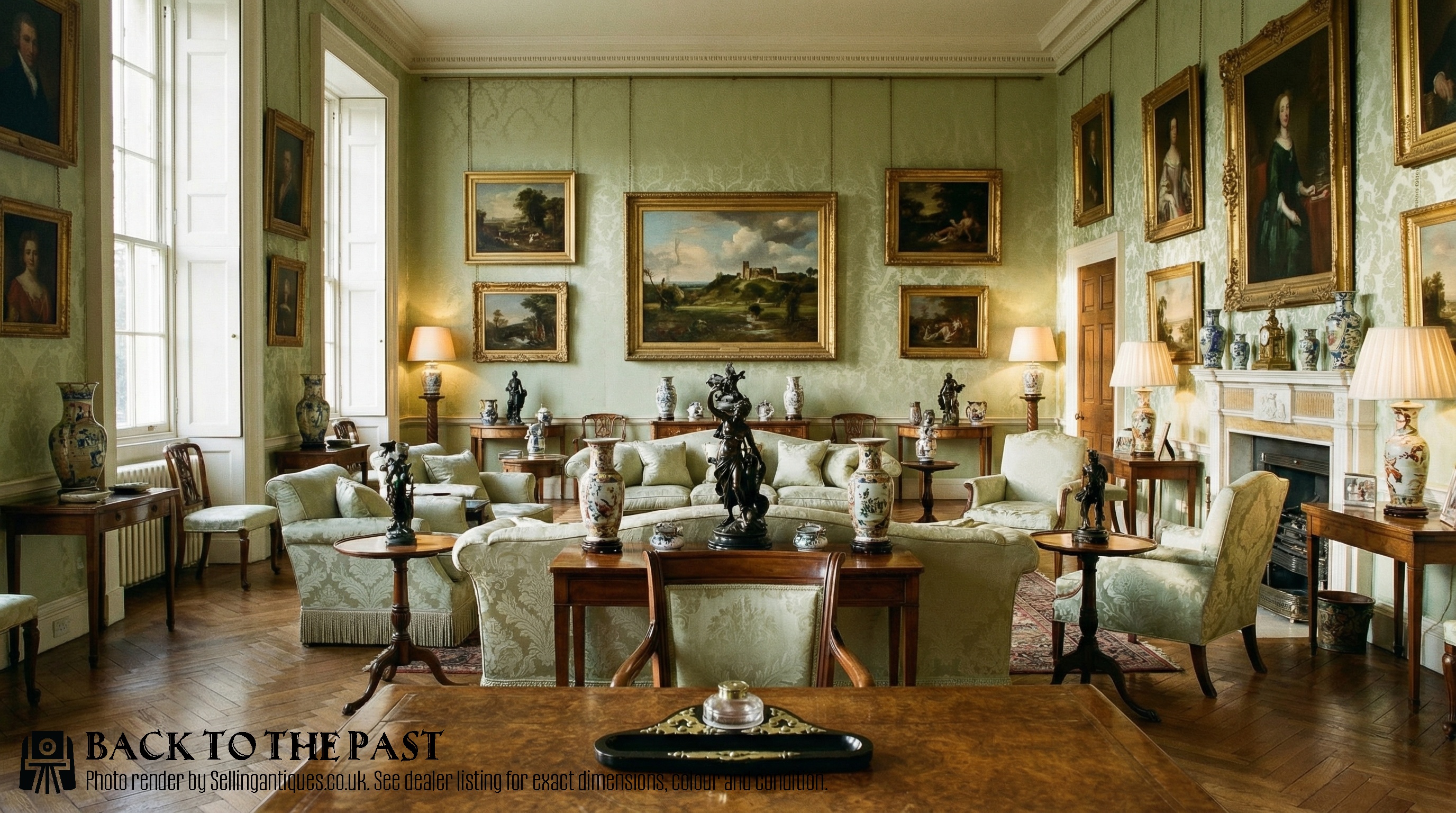
Today, collectors utilise them on modern desks or mantelpieces to store letters, modern stationery, and small personal items while adding period character to a room.
How do I distinguish Victorian from Edwardian pieces?
Victorian examples often feature heavier brass mounts, darker ebonised or coromandel woods, and elaborate Gothic or Napoleon III stylistic influences. The construction tends to be robust and heavily ornamented.
Edwardian pieces generally present lighter golden oak timbers and simpler, cleaner lines with restrained brass hardware reflecting the changing aesthetic of the early twentieth century.
What woods were commonly used for desk tidies?
Cabinet makers relied primarily on oak for sturdy, everyday utility boxes and walnut or burr walnut for more decorative domestic settings. Exotic woods like coromandel appear on luxury examples.
These timbers were often combined with contrasting brass mounts, tortoiseshell, and bone inlay to enhance the visual appeal of the writing accessory.
Are inkstands and stationery boxes considered desk tidies?
Yes, the term encompasses various fitted containers designed to organise a desk surface, including inkstands, correspondence boxes, and stationery cabinets. Each serves the shared purpose of holding writing equipment.
Formations range from open trays with glass inkwells to enclosed cabinets with fall-front doors and internal letter slots.