

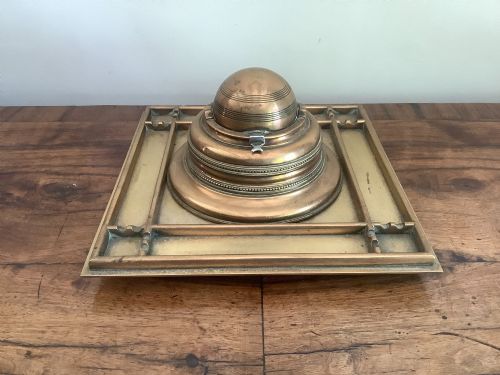


Antique Inkwell Desktop Stand
These antique inkwell desktop stand pieces are functional desk accessories designed for writing, prized by collectors for their period craftsmanship and materials.

Antique Inkwell Desktop Stand
An antique inkwell desktop stand provides a dedicated desk accessory for holding writing fluid and pens, originating primarily from the nineteenth and early twentieth centuries. These items range from simple glass receptacles to elaborate multi-piece sets incorporating bells, pocket watches, or book boxes.
You will most commonly encounter Victorian examples on this page, alongside Edwardian and earlier nineteenth-century forms. Materials span from brass and sterling silver to faience, glass, and exotic woods like coromandel and ebonised timber.
How they were made
Metals such as sterling silver, brass, ormolu, and Sheffield plate were cast, chased, and mounted to form the structural body or protective collars of the inkwells. Woodworkers utilised coromandel, papier-mâché, and ebonised bases, frequently embellishing surfaces with mother of pearl inlay.
Glassmakers produced heavy cut glass and pressed vessels to contain the ink safely within the metal or ceramic mounts. Potters shaped tin-glazed earthenware and faience for Dutch Delft desktop pieces, applying blue and white pigments under a glaze.
Antique Inkwell Desktop Stand Retail Price Guide 2026
Typical asking prices for inkwell desktop stand among the pieces listed under this phrase on Sellingantiques today, from the lower quarter to the upper quarter. They describe what is for sale here now, not the wider market.
Some nineteenth-century desk designers hid inkwells inside miniature book boxes and ringing bell assemblies.
What varies in quality
The sophistication of the materials dictates much of the distinction, separating simple utilitarian glass vessels from heavy sterling silver, ormolu bronze, and finely inlaid coromandel stands. Integrated complications such as mounted pocket watches, bells, or book box mechanisms elevate the ambition of the piece.
Execution in the decorative details separates standard production from superior examples, visible in the precision of cut glass facets, the crispness of brass casting, and the careful fitting of mother of pearl.
The Antique Inkwell Desktop Stand Glossary
- Inkstand
- A complete desktop stand holding one or more inkwells, often with channels for quill pens and sanders. These larger pieces served as the centrepiece of a gentleman's writing desk.
- Capstan inkwell
- A low, wide inkwell shaped like a ship's capstan, typically featuring a hinged silver lid sloping down to a wider circular base. This heavy design prevented the inkpot from tipping over during use.
- Sheffield plate
- A material made by fusing a thin sheet of sterling silver onto a thicker copper base, common on earlier nineteenth-century desk stands before electroplating was introduced.
- Ormolu
- Gilt bronze ornamentation applied to nineteenth-century decorative objects and desk stands. The technique involves a mercury-gilding process that imparts a rich golden sheen to the bronze beneath.
Antique Inkwell Desktop Stand: Frequently Asked Questions
How were these inkstands used?
They sat on writing desks to provide a steady supply of ink for dipping quill or steel nib pens.
Many stands included matching compartments for blotting paper, sanders to dry wet ink, or bells to summon servants.
How do I date an antique ink stand?
Dating relies on stylistic clues, manufacturing techniques, and hallmarks stamped onto silver components.
Victorian and Edwardian examples often feature registration marks, specific material combinations like ebonised wood, or hallmarks that point to a precise year of assay.
How do I care for silver and brass inkwells?
Silver and brass components require gentle cleaning with appropriate metal polishes to prevent tarnish while preserving the original finish.
Glass inserts and ceramic pots should be removed and washed carefully with warm water to clear out dried residual ink.
Can I still use an antique inkwell?
Many antique inkwells remain fully functional and can hold modern fountain pen ink if the glass or ceramic liner is intact.
Care should be taken with historical metal stands to ensure acidic ink does not contact vulnerable base metals.