


Glass Inkwell Stand
These pieces combine heavy glass reservoirs with fitted bases of brass, silver and exotic woods to anchor a desk.

Glass Inkwell Stand
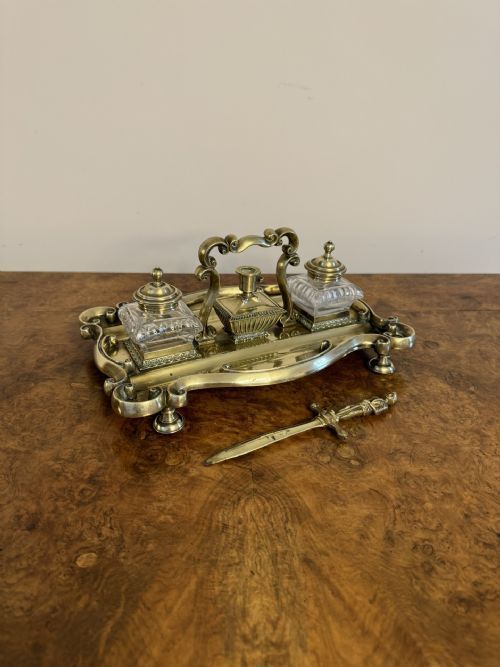
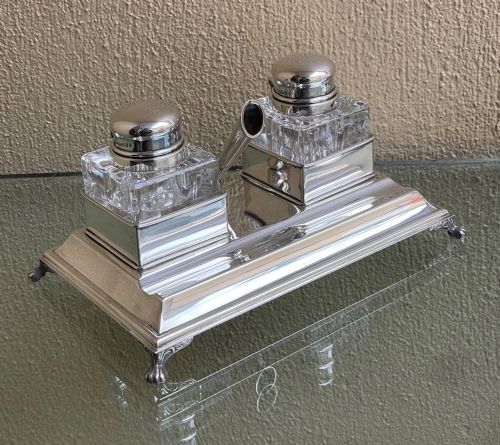
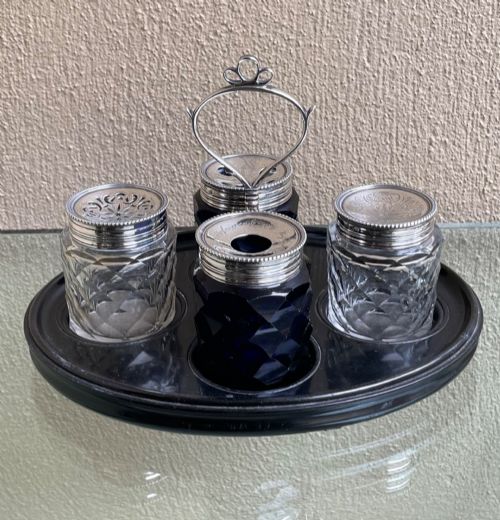
A glass inkwell stand houses one or more glass ink bottles within a portable tray or base designed to hold pens and keep writing materials organised on a desk. Most examples encountered here date from the Victorian period through to the Edwardian era, constructed alongside larger desk sets and stationary boxes.
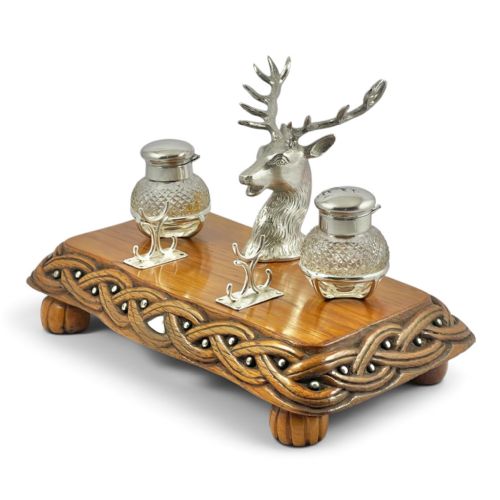
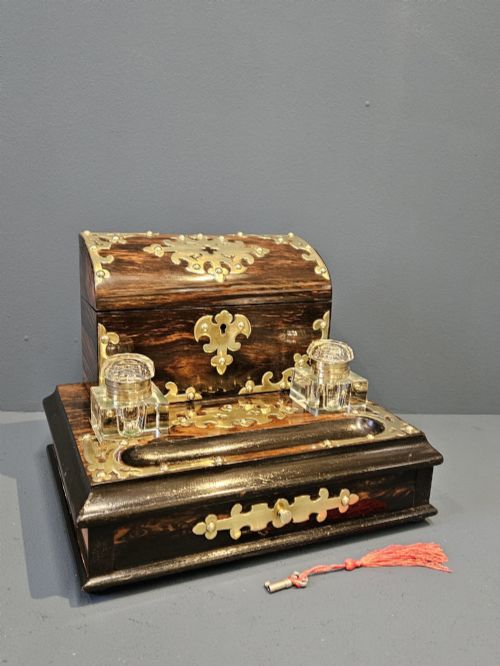
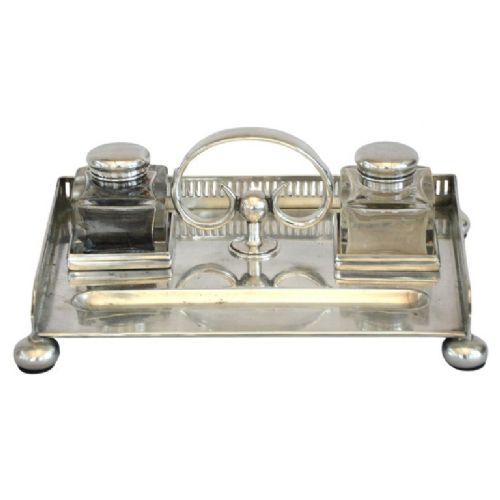
The objects vary from simple trays holding a single glass insert to elaborate double inkstands featuring chambersticks, pen rests and drawers. Woods such as coromandel, walnut and rosewood frequently form the base, fitted with glass wells that often retain their original hinged metal lids.
Materials and construction
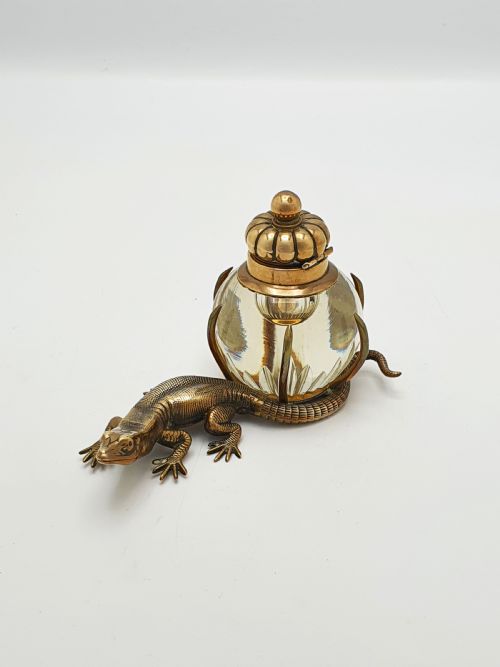
Makers combined heavy cast brass, cut glass and sterling silver with dense timber foundations like oak, mahogany and coromandel. Glass inserts were typically heavy-pressed or hand-cut to withstand the daily insertion of steel or quill dip pens without cracking.
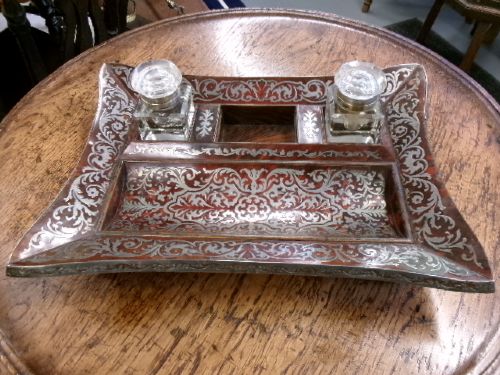
Wooden and papier-mâché bases often received intricate brass stringing, mother-of-pearl inlay or Boulle work featuring tortoiseshell and brass. Silver mounts and gallery rails were secured to the timber bases using small threaded pins or flush-fitting screws.
The archive and current selection span the Regency, Victorian, Edwardian and Art Nouveau periods, alongside Napoleon III and Gothic Revival styles.
Factors determining quality
Quality rests on the weight and depth of the materials used, particularly the thickness of the glass inserts and the density of the hardwood base. Superior examples display crisp chasing on brass mounts, fully hallmarked silver components and precise joinery in inlaid timber cases.
The presence of matching original glass bottles with undamaged rims and matching lids distinguishes better pieces from those assembled later. Finer stands also integrate functional additions such as working drawers, pen grooves and heavy cast handles.
James Cartland and Sons·Walker and Hall·William Hutton·Rupert Favell·Frederik Haberling
The Glass Inkwell Stand Glossary
- Inkstand
- A portable tray or stand holding inkwells, pen trays and sometimes a sandbox or bell for writing use. They range from simple wooden troughs to grand silver and glass table pieces.
- Cut glass
- Glass decorated by cutting facets or patterns into the surface using a wheel. This technique adds considerable weight and sparkle to inkwell inserts.
- Boulle work
- An ornate marquetry technique using brass and tortoiseshell inlaid in counter-changed patterns. It is frequently seen on mid-nineteenth-century French and English desk stands.
- Chamberstick
- A low portable candlestick fitted with a handle and a drip pan. These are occasionally integrated into larger Victorian double inkstands for lighting sealing wax.
Glass Inkwell Stand: Frequently Asked Questions
How do I date a desk inkstand?
Dating relies on a combination of hallmarks on silver mounts, the style of the timber cabinetwork and the manufacturing method of the glass. Victorian pieces often use heavy brass and exotic woods, while Edwardian examples tend to feature lighter silver mounts.
Maker marks and registration numbers stamped into the metal components provide the most precise manufacturing dates. stylistic cues like Art Nouveau curves or Regency brass inlays also narrow down the era of production.
Are the glass inserts usually original?
Many surviving stands retain their original glass inserts, though heavy use often resulted in replacements over the decades. Original bottles typically fit the aperture precisely and match the wear patterns on the surrounding tray.
Collectors look for matching glass pairs in double inkstands and check for uniform age-related scratches on the base of the glass. Replacements are common due to the fragile nature of glass inkwells.
How do I clean a brass and glass inkstand?
Glass inserts can be removed and washed carefully in warm soapy water to dissolve dried ink residue. Avoid soaking wooden bases or exposing silver-plated and brass mounts to harsh chemical cleaning agents.
Metal components benefit from gentle dusting with a soft cloth to preserve their natural patination. Wooden trays can be treated periodically with traditional paste wax to maintain the moisture in the timber.