




Victorian Glass Dressing Jar
A victorian glass dressing jar sits upon the dressing table as a sturdy container for oils, powders, and pins.
Victorian Glass Dressing Jar
A victorian glass dressing jar serves as a container for vanity items, powders, or scents, appearing in various forms across the nineteenth and early twentieth centuries. These vessels emerge as small scent bottles, trinket boxes, and tall vanity jars designed for daily use on dressing tables.
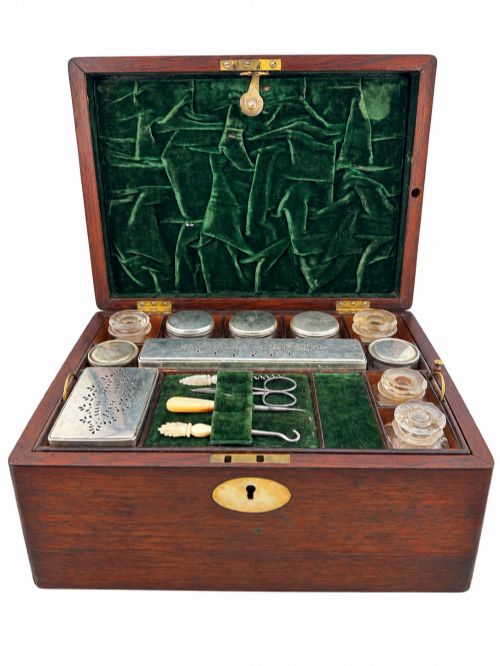
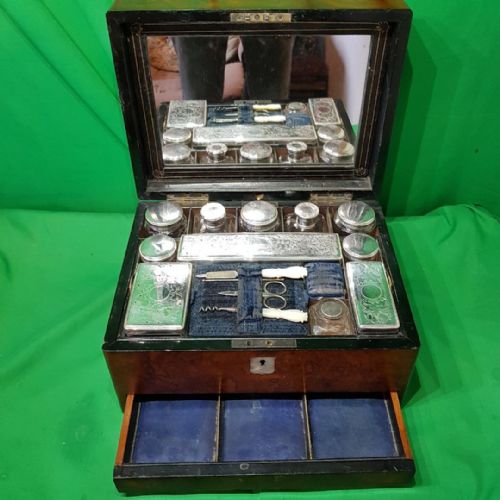
The pieces on this page span the Victorian and Edwardian eras alongside nineteenth-century French workshops, reflecting diverse origins. Makers housed these items within travelling cases or displayed them alongside larger sets made of burr walnut and rosewood.
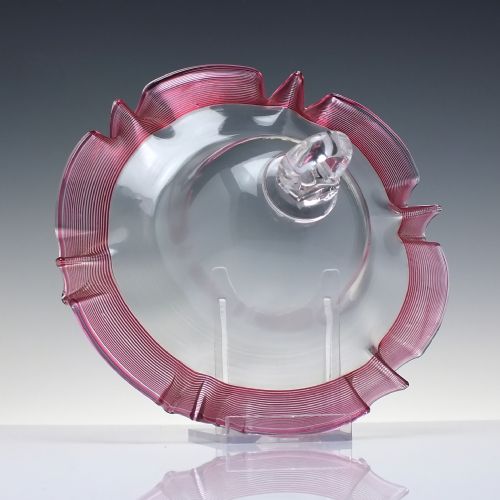
Buyers encounter distinct colour palettes, including cranberry glass, Bristol blue, amethyst, and green alongside clear cut crystal. Many pieces feature fitted sterling silver, silver gilt, brass, or tortoise shell lids that secure the contents within.
How they were made
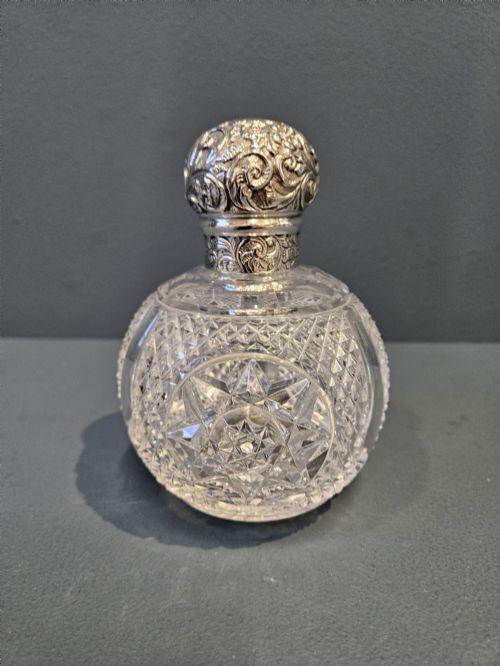
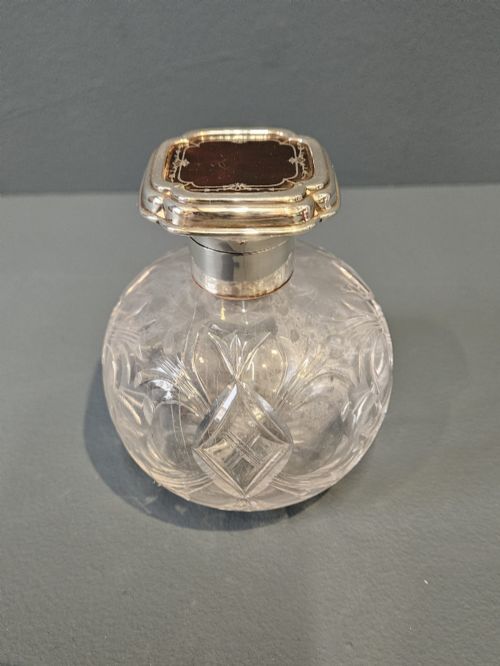
Artisans formed the vessels using heavy lead glass, crystal, or coloured glass bodies, often applying deep cut glass patterns or slice-cutting techniques to catch the light. Workshops in Bohemia, France, and England produced these blanks before sending them to silversmiths for mounts.
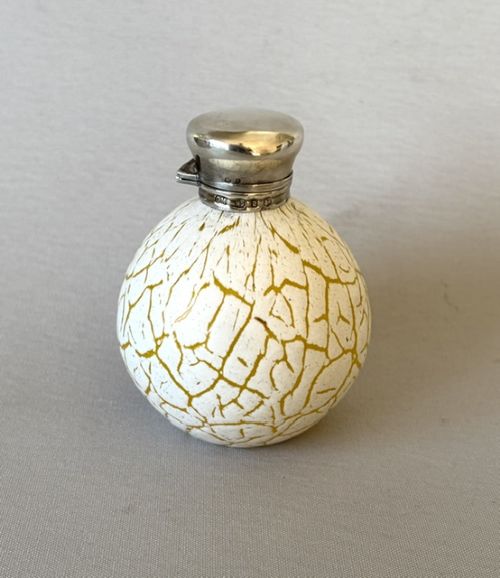
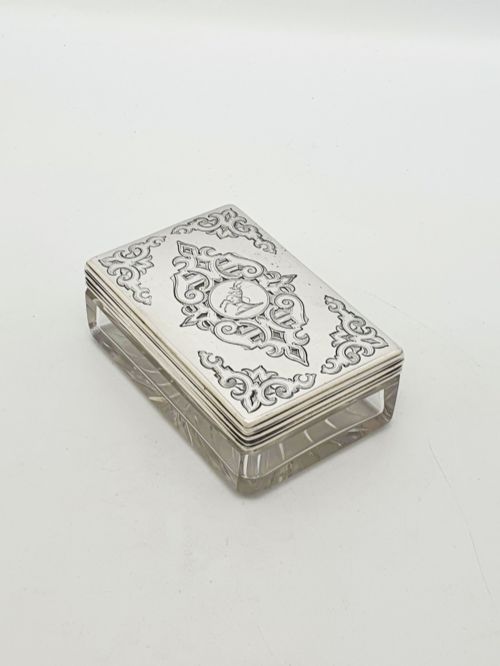
Silver lid mounts, collars, and hinged tops carry hallmarks indicating towns such as Birmingham and London alongside specific assay dates. Additional decorative elements include enamel painting, tortoise shell insets, celluloid, and velvet linings fitted inside travel boxes.
Victorian Glass Dressing Jar Retail Price Guide 2026
Typical asking prices for victorian glass dressing jar among the pieces listed under this phrase on Sellingantiques today, from the lower quarter to the upper quarter. They describe what is for sale here now, not the wider market.
Gentlemen enjoyed locking up their cologne bottles in the nineteenth century, ensuring nobody else tampered with their morning fragrance.
What varies in quality
The weight and clarity of the glass set the foundation for quality, with heavy, deeply cut crystal outperforming thin, plain moulded vessels. Crispness in the facet cuts and brilliance in coloured glass such as cranberry and Bristol blue indicate superior craftsmanship.
The metalwork on the lids dictates the overall finish, where solid sterling silver or silver gilt mounts with clear, legible hallmarks elevate a piece above plated or unmarked brass alternatives. Intricate hand-painted enamel work and secure, well-fitted hinges further distinguish finer examples.
Thomas Ingleton·Jenner and Knewstub
The Victorian Glass Dressing Jar Glossary
- Cut Glass
- Glass shaped and patterned by grinding wheels and polishing stones to create sharp facets. This technique gives the surface brilliant light-reflecting properties.
- Cranberry Glass
- Transparent pinkish-red glass produced by adding gold chloride to the molten batch. It gained immense popularity during the Victorian era for decorative tableware and vanity items.
- Hallmark
- Official stamps applied to precious metals indicating the standard of purity, the assay office, and the year of testing. These marks provide precise dating for silver mounts on dressing items.
- Silver Gilt
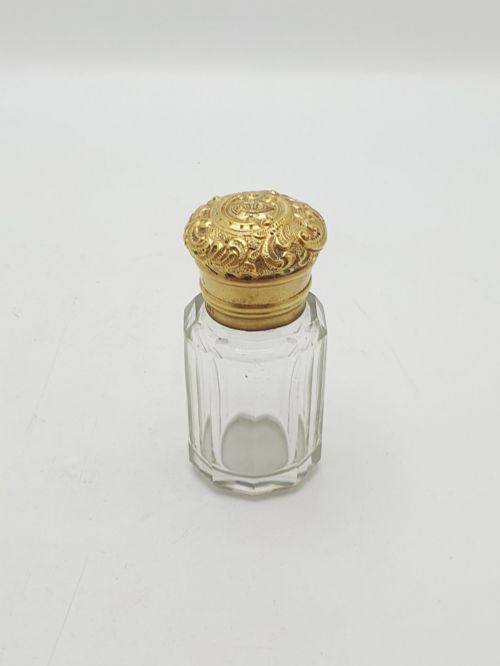
- Sterling silver that has been coated with a thin layer of real gold. This treatment adds a warm, rich tone to the interior or exterior of bottle caps and jar lids.
- Vanity Jar
- A small container utilised on dressing tables for holding creams, pins, or cosmetics. They frequently feature fitted metal lids to protect the contents.
Victorian Glass Dressing Jar: Frequently Asked Questions
What are victorian glass dressing jars used for?
These jars held powders, pins, scents, and toiletries on dressing tables or inside travelling cases. Their secure lids kept delicate cosmetics contained during daily use.
Today, collectors utilise them on modern dressing tables to store small jewellery items or cotton buds while adding period character to a room.
How do I date a silver mounted glass jar?
Silver mounts usually carry hallmarks that indicate the assay office, the maker's mark, and a specific date letter. These stamps provide a reliable year of manufacture for the metal lid.
The style of the glass cutting and the overall form of the jar offer further clues to align the vessel with its proper Victorian or Edwardian period.
What is cranberry glass?
Cranberry glass is a distinct red-pink glass created by mixing gold into the molten batch during production. It became a fashionable material for decorative vanity items throughout the nineteenth century.
Its rich tone ranges from pale pink to deep ruby depending on the concentration of gold and the firing temperature used by the glasshouse.
Can I travel with these antique scent bottles?
Original Victorian travelling sets and scent bottles were engineered for carriage transport with secure screw or pull-off lids. However, antique glass can be fragile and internal washers often degrade over time.
Displaying them safely at home preserves the delicate cut glass facets and antique silver mounts from modern transit accidents.
How do French dressing jars differ from English ones?
French dressing jars from the nineteenth century frequently incorporate decorative enamel work and coloured glass bodies sourced from makers like Clichy. They lean towards ornate, artistic presentations for affluent boudoirs.
English pieces tend to feature heavy cut crystal paired with marked sterling silver lids tied directly to Birmingham or London silversmiths.